
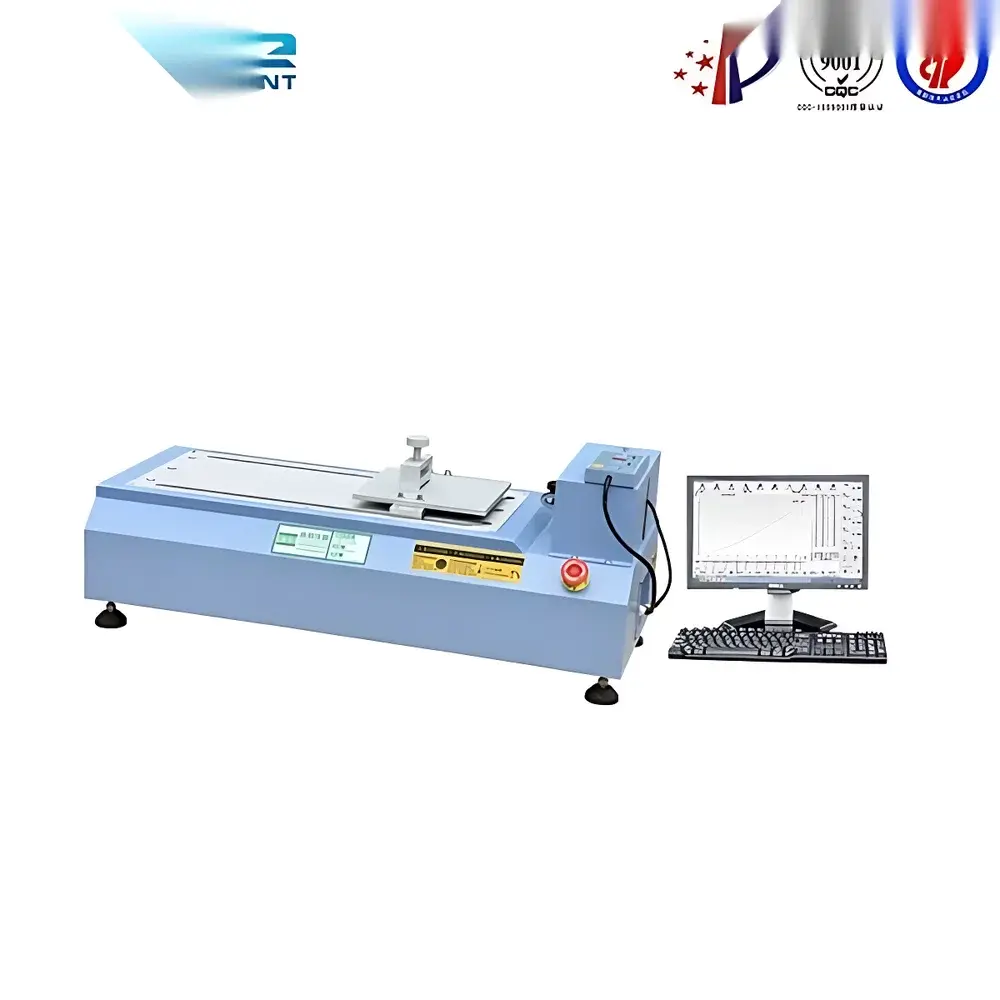
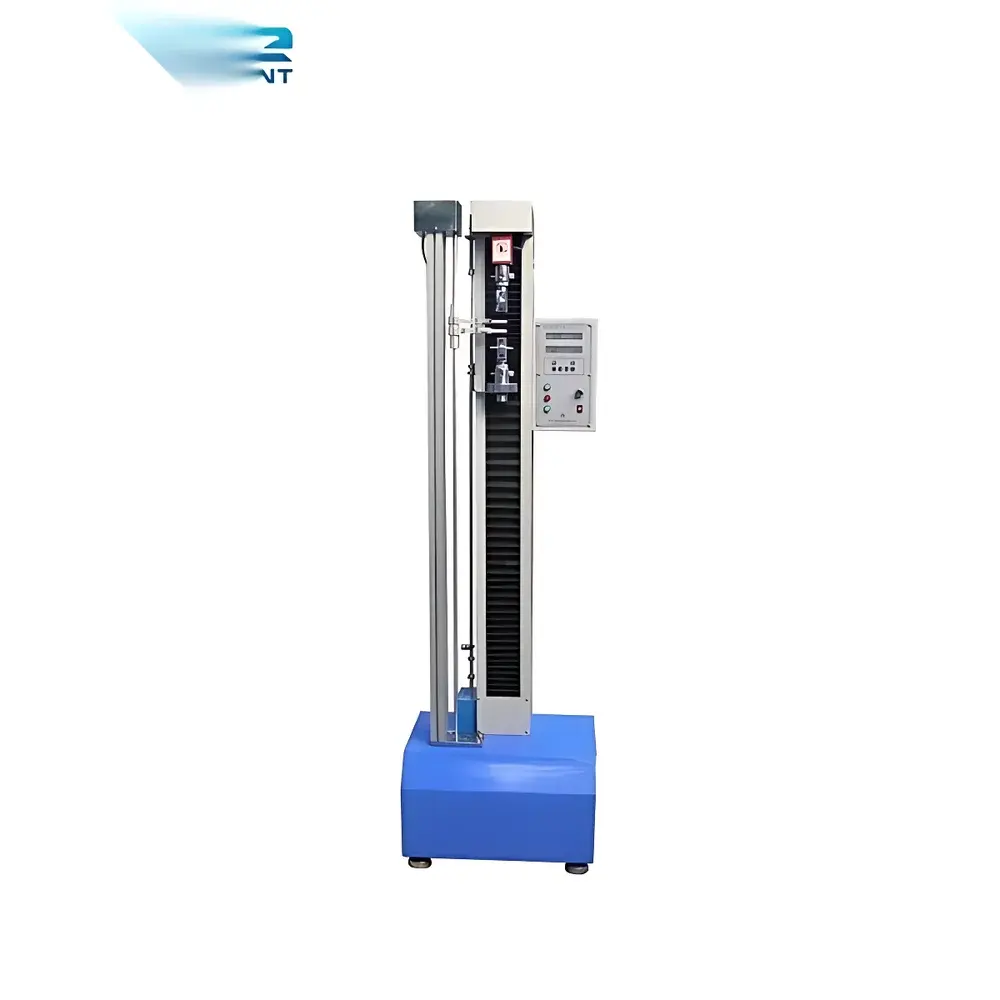
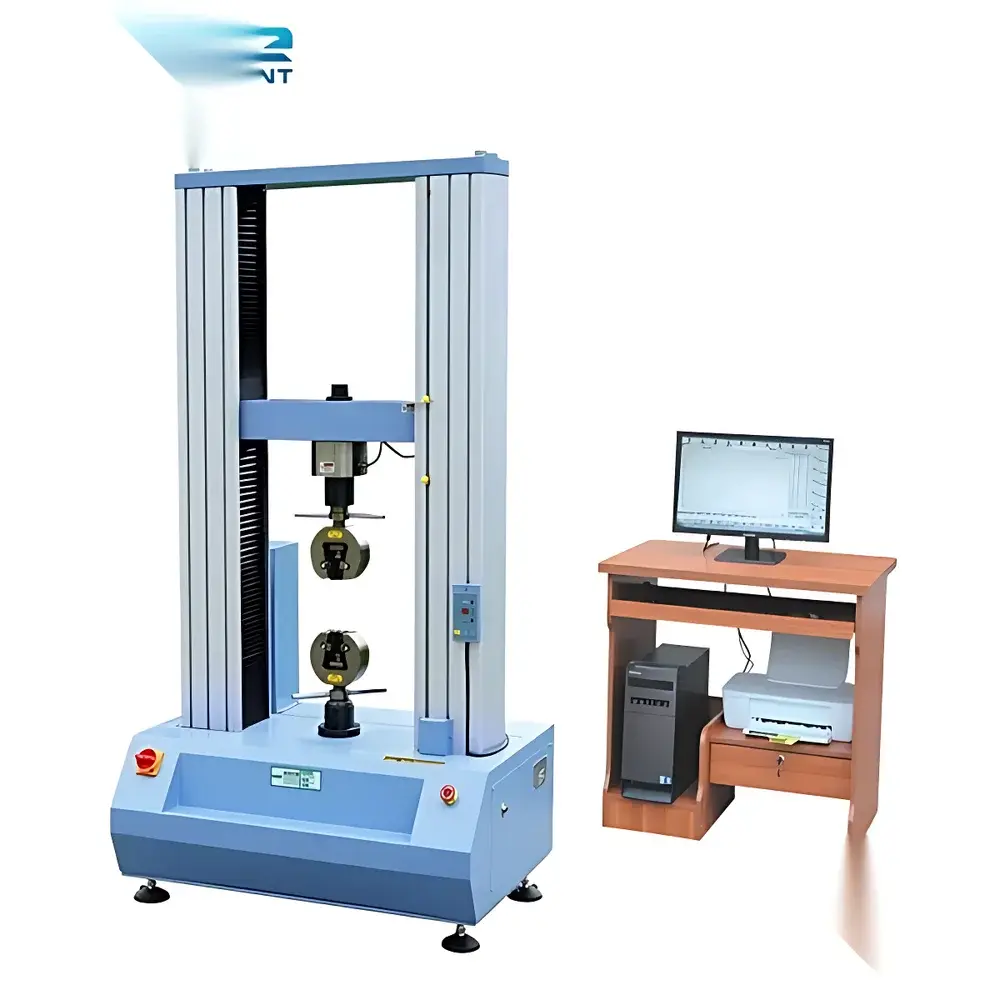
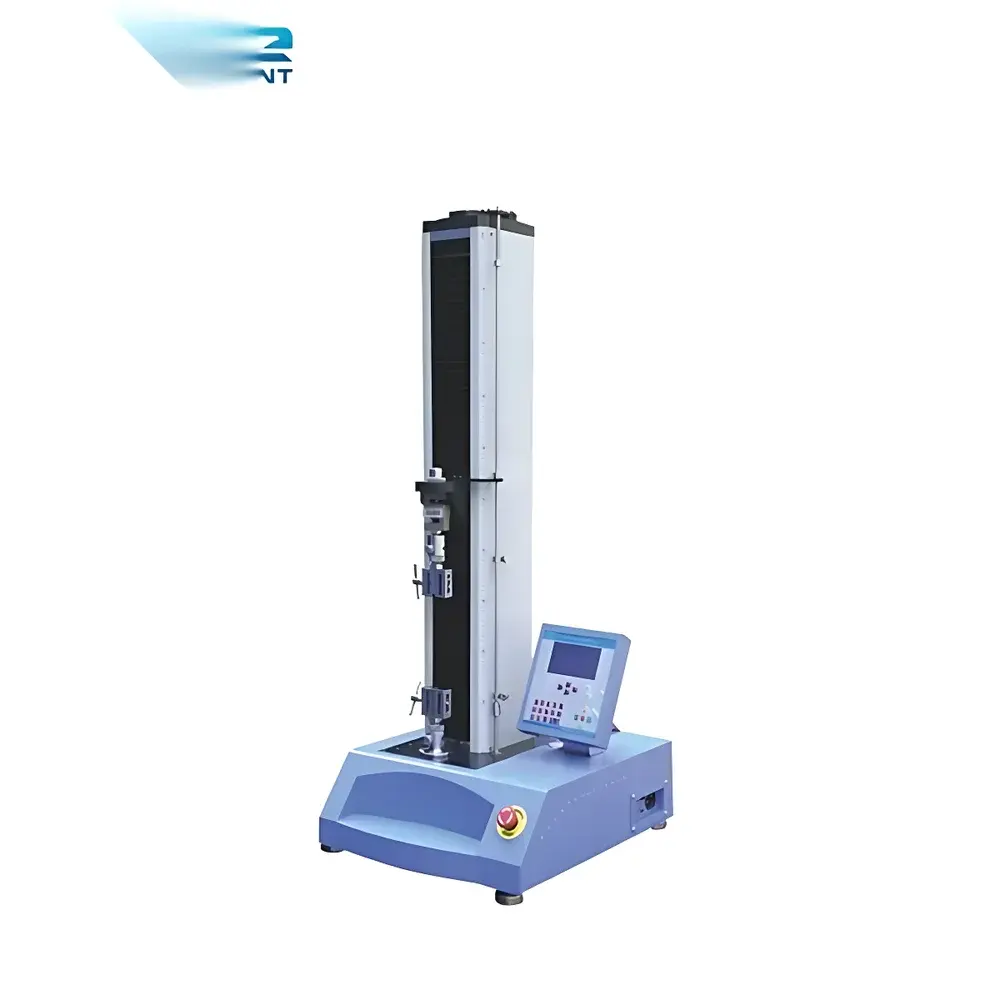
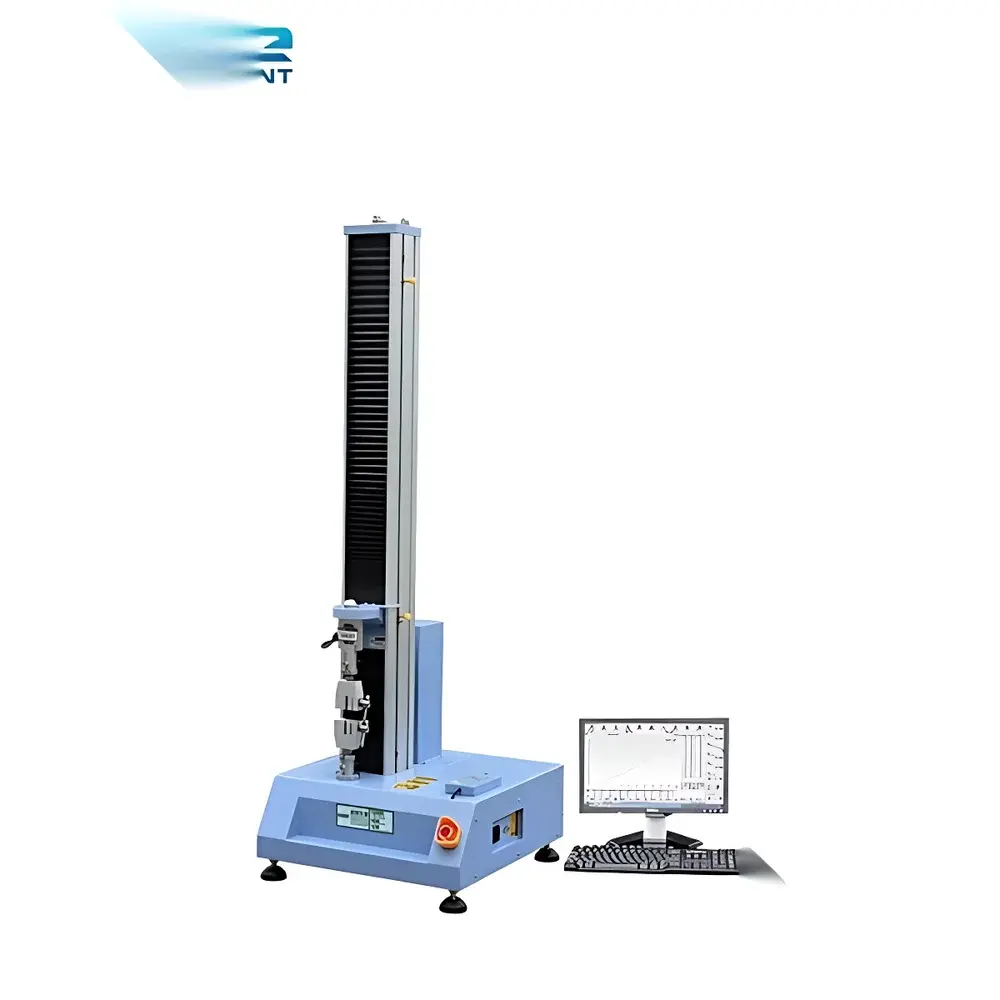
Universal Tensile Testing Machine for Plastics and Polymers
| Brand | OEM |
|---|---|
| Origin | Imported |
| Manufacturer Type | Authorized Distributor |
| Price | USD 3,200 (FOB) |
| Standards Compliance | ASTM D638, ISO 527-1/2, GB/T 1040.1–2018, GB/T 16491–2008, GB/T 2792–2014, GB/T 2790–1995, GB/T 2791–1995, GB/T 13022–1991, GB/T 3923.1–2013, GB/T 528–2018, GB/T 6344–2008, GB/T 20310–2006, GB/T 3690–2009, GB/T 4944–2019, GB/T 3686–2014, GB/T 529–2008, GB/T 6344–2008, GB/T 17200–2008, GB/T 16825.1–2008, GB/T 3923.1–2013, GB/T 8808–1988, GB/T 2611–2007, GB/T 1040.2–2022 |
| Load Cell Accuracy | ±0.03% FS |
| Overload Capacity | 150% of rated capacity |
| Encoder Resolution | 2500 pulses/rev |
| Drive System | Panasonic AC servo motor |
| Transmission | Precision preloaded ball screw + linear guideways |
| Safety Features | Mechanical stroke limit switches, software-based overload warning, automatic emergency stop |
Overview
The Universal Tensile Testing Machine for Plastics and Polymers is a statically calibrated, microprocessor-controlled electromechanical testing system engineered for precision mechanical property characterization of polymeric, elastomeric, fibrous, and composite materials. Based on the fundamental principles of uniaxial force-displacement transduction, it applies controlled quasi-static loads in tension, compression, flexure, peel, shear, and tear modes—enabling full stress-strain curve generation per ASTM D638, ISO 527-1/2, and GB/T 1040 series standards. Its modular architecture supports interchangeable load cells (ranging from 10 N to 50 kN), extensometers (contact and non-contact), and fixture sets—including pneumatic grips, wedge-action clamps, peel fixtures (90°/180°), and custom-designed holders for films, foams, fibers, and thin-walled tubing. Designed for laboratory-grade repeatability and long-term stability, the system meets essential requirements for GLP-compliant quality control environments and R&D validation workflows.
Key Features
- High-precision preloaded ball screw transmission paired with hardened linear guideways ensures smooth, low-noise actuation and sub-micron positioning resolution across full stroke range.
- Panasonic AC servo motor drive with 2500-pulse-per-revolution optical encoder delivers consistent speed control (0.001–500 mm/min), high torque density, and dynamic response suitable for both slow creep tests and rapid rupture evaluation.
- Explosion-proof precision load cell with integrated thermal drift compensation provides force measurement accuracy of ±0.03% full scale (FS), zero drift <0.01% FS/°C, and transient overload tolerance up to 150% FS without calibration loss.
- Dual-stage safety architecture includes hardware-based mechanical stroke limit switches and real-time software monitoring with programmable upper/lower load and displacement thresholds—automatically triggering emergency halt upon violation.
- Modular test frame design accommodates vertical configurations (standard) and optional horizontal or inverted orientations for specialized applications such as cable pull-out or large-part bending.
Sample Compatibility & Compliance
This tensile tester accommodates specimens ranging from ultra-thin polymer films (≥12 µm thickness) to rigid engineering plastics (e.g., PEEK, PC, PA66), elastomers (NR, SBR, TPU), composites (CFRP, GFRP), nonwovens, geotextiles, metallic foils, and coated substrates. It fully supports standardized specimen geometries per ISO 527 Type 1A/1B, ASTM D638 Type I/IV, GB/T 1040.2 dumbbell shapes, and custom geometries via CAD-integrated fixture design. All mechanical and electrical subsystems comply with IEC 61000-6-2 (EMC immunity) and IEC 61000-6-4 (EMC emission) standards. Force and displacement calibration traceability is maintained to NIST-traceable reference standards, supporting audit readiness for ISO/IEC 17025-accredited laboratories and FDA-regulated manufacturing sites operating under 21 CFR Part 11 data integrity requirements.
Software & Data Management
Bundled with Windows-based testing software compliant with 21 CFR Part 11 Annex 11 requirements, the system offers role-based user access control, electronic signatures, full audit trail logging (including parameter changes, test initiation, and result export), and automatic report generation in PDF/XLS formats. Real-time plotting of stress–strain, load–displacement, and modulus-vs.-strain curves is supported, along with automated calculation of key mechanical indices: Young’s modulus, yield strength, ultimate tensile strength (UTS), elongation at break, Poisson’s ratio (with dual-axis extensometry), tear resistance (ASTM D624), and peel adhesion energy (ASTM D903). Raw data export is available in CSV and universal .tdms formats for third-party statistical analysis (e.g., JMP, Minitab) or integration into LIMS platforms.
Applications
- Quality assurance of injection-molded plastic components (automotive interior trim, medical device housings, consumer electronics casings).
- Development and validation of biodegradable polymers (PLA, PHA, PBAT) under ambient and elevated temperature conditions.
- Characterization of adhesive bond strength in laminated packaging structures (e.g., PET/AL/PE pouches) per GB/T 2792 and ASTM D3330.
- Mechanical screening of nanocomposite films for barrier and structural performance optimization.
- Validation of fiber-reinforced thermoplastic tapes (UD tapes) used in automated tape laying (ATL) processes.
- Regulatory submission support for ISO 10993-12 cytotoxicity testing sample preparation and mechanical preconditioning protocols.
FAQ
What standards does this machine support for plastic tensile testing?
It complies with ASTM D638, ISO 527-1/2, GB/T 1040.1–2018, GB/T 16491–2008, and over 20 additional national and international standards for tensile, peel, tear, and compression testing.
Can the system be configured for high-temperature testing?
Yes—optional environmental chambers (−70°C to +300°C) with integrated load train isolation are available and validated for use with standard load cells and extensometers.
Is the software validated for regulated industries?
The software includes 21 CFR Part 11 compliance features: electronic signatures, audit trails, user permission levels, and secure data archiving—fully documented for IQ/OQ/PQ execution.
What is the maximum test speed and resolution?
Speed range: 0.001–500 mm/min; displacement resolution: ≤0.1 µm; force resolution: ≤0.001% FS depending on selected load cell range.
Does the system support automated multi-step test sequences?
Yes—programmable test profiles allow sequential application of preload, ramp-to-load, hold, relaxation, cyclic loading, and return-to-zero steps—all with independent parameter control and conditional branching logic.



