
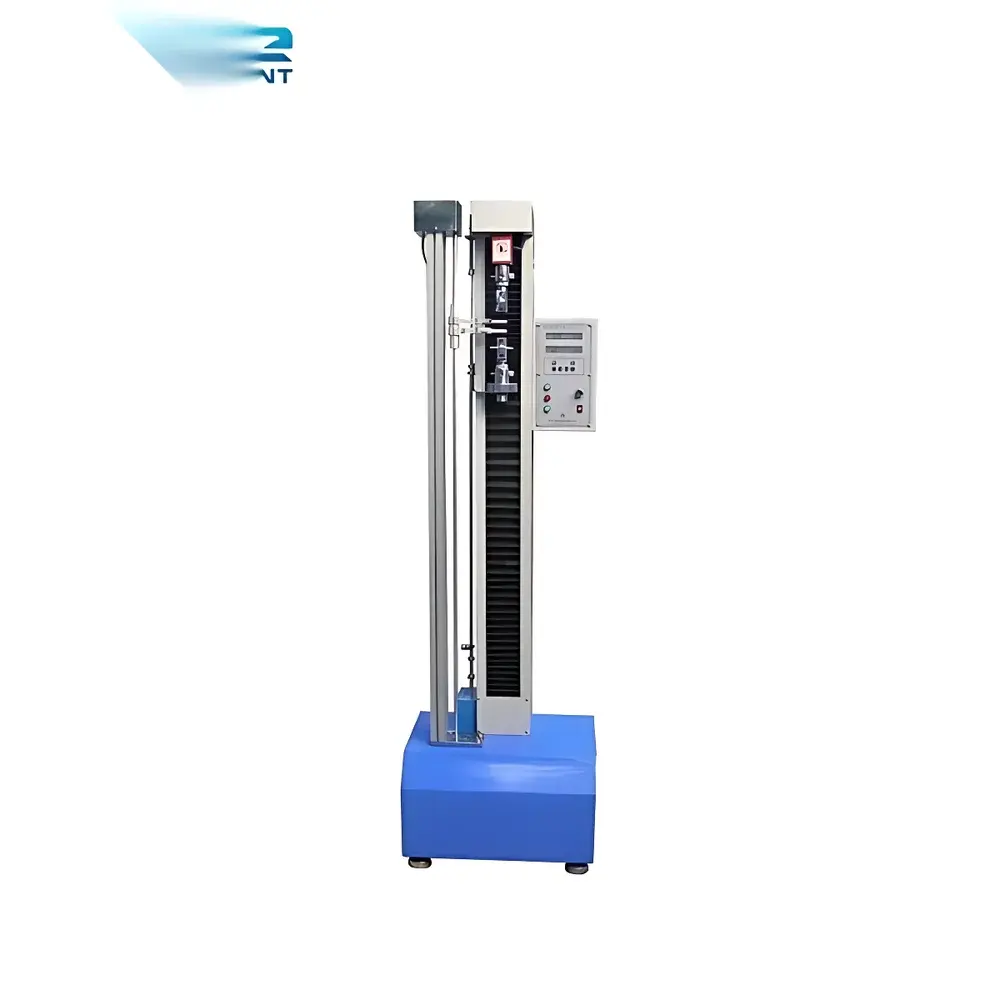
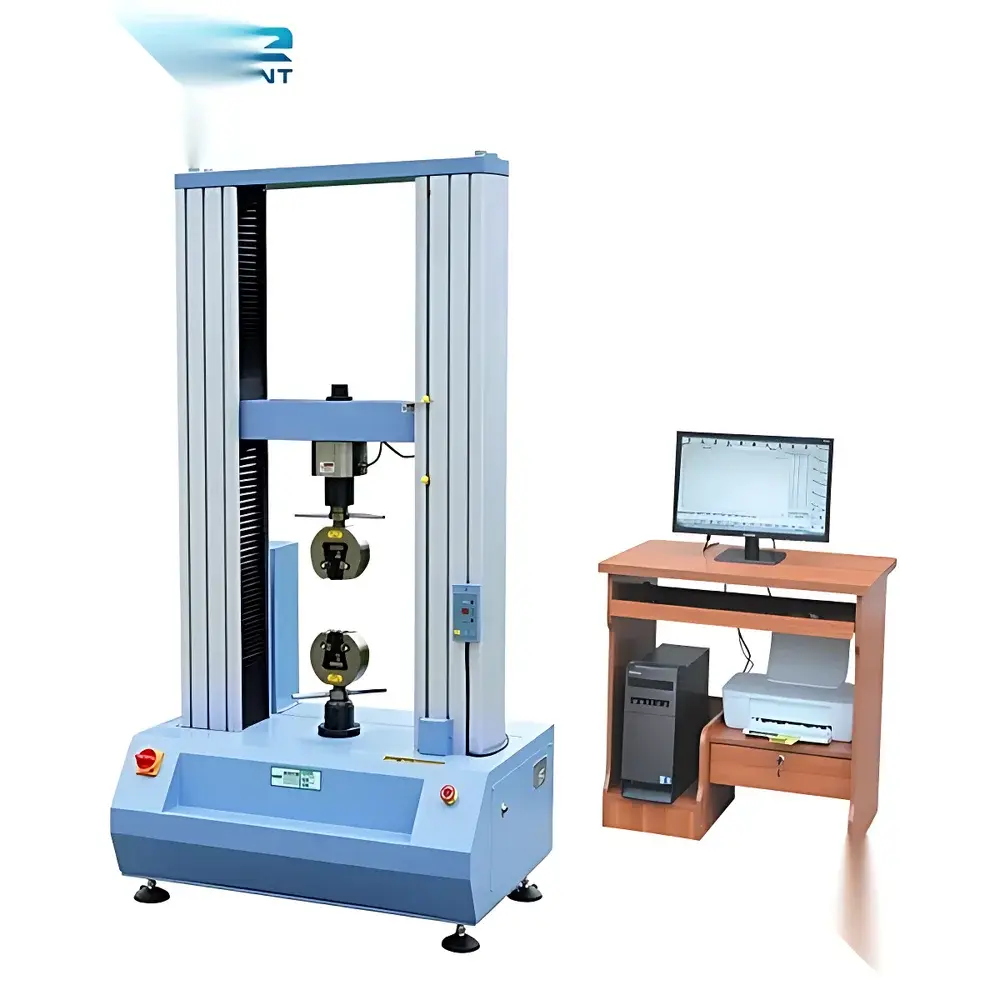
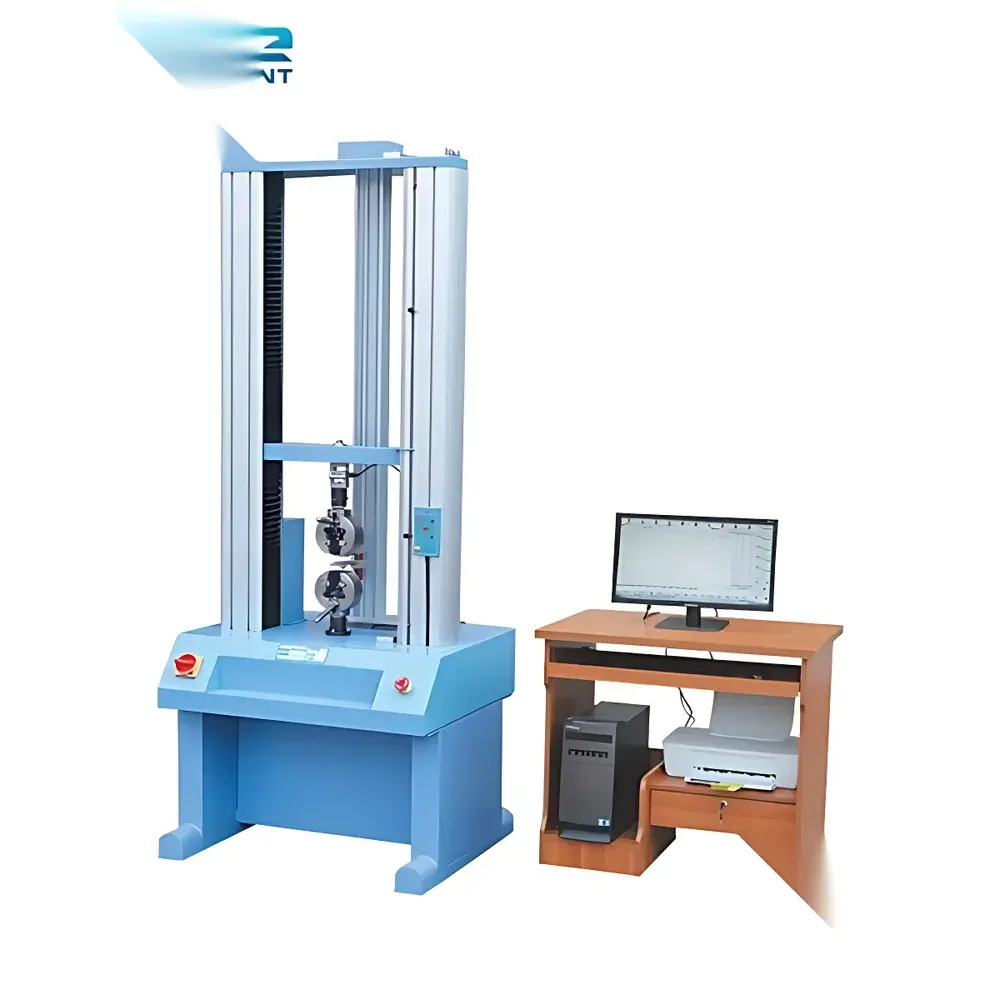
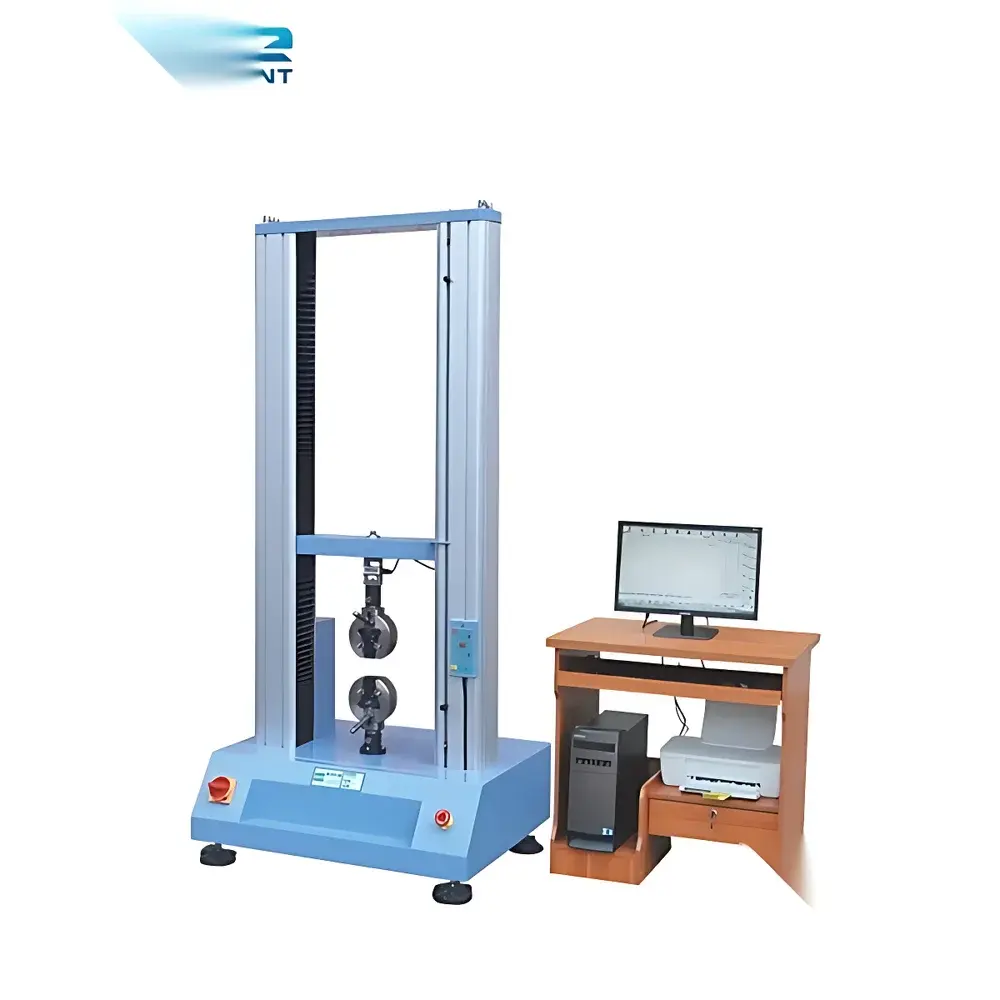
Universal Tensile Testing Machine for Thin Films and Flexible Materials
| Brand | OEM / Private Label |
|---|---|
| Origin | Imported |
| Supplier Type | Authorized Distributor |
| Price | USD 3,200 (FOB) |
| Compliance | GB/T 16491, GB/T 1040, GB/T 8808, GB/T 13022, GB/T 2790–2792, GB/T 16825, GB/T 17200, GB/T 3923.1, GB/T 528, GB/T 2611, GB/T 6344, GB/T 20310, GB/T 3690, GB/T 4944, GB/T 3686, GB/T 529 |
| Force Accuracy | ±0.03% FS |
| Load Cell Overload Capacity | 150% |
| Position Resolution | 1/100,000 full scale |
| Encoder | 2500 PPR AC servo motor with Panasonic drive |
| Motion System | Precision ground ball screw + linear guide rails |
| Safety Features | Stroke limit switch, overload warning, automatic stop-on-break, real-time load monitoring |
Overview
The Universal Tensile Testing Machine for Thin Films and Flexible Materials is an electromechanical testing system engineered for precision mechanical property characterization of low-thickness, high-ductility specimens under controlled uniaxial loading conditions. Based on the principle of servo-controlled displacement-driven force measurement, it applies calibrated tensile, compressive, flexural, peel, shear, and tear loads to specimens while continuously recording load–displacement–time data. Designed specifically for thin-film substrates—including polymer films, laminated packaging, metallized foils, elastomeric sheets, and nanocomposite membranes—the instrument delivers traceable, repeatable results compliant with international standard test methods for modulus, yield strength, ultimate tensile strength, elongation at break, and energy absorption. Its rigid frame architecture, coupled with a high-stiffness transmission system and temperature-stable load cell electronics, ensures minimal compliance error and high signal-to-noise ratio across sub-newton to multi-kilonewton force ranges.
Key Features
- Panasonic AC servo motor drive with 2500 pulses per revolution encoder for precise speed control (0.001–500 mm/min), enabling stable low-speed creep testing and high-speed rupture capture
- High-precision preloaded ball screw and hardened linear guideways ensure axial alignment tolerance < ±0.02 mm over 1000 mm travel, minimizing lateral friction and torque-induced measurement drift
- Explosion-proof precision load cell with ±0.03% full-scale accuracy, zero drift compensation algorithm, and 150% transient overload tolerance—certified per ISO 376 Class 0.5
- Real-time data acquisition at ≥1 kHz sampling rate; software-resolved position resolution of 1 part in 100,000 full scale
- Integrated hardware safety chain: dual-limit mechanical stroke switches, dynamic overload warning, automatic emergency stop upon specimen rupture, and real-time load ceiling enforcement
- Modular fixture interface supporting ASTM D882-compliant film grips, 90°/180° peel fixtures (ASTM D903), loop tack holders (ASTM D6195), and pneumatic clamping options for low-force specimens
Sample Compatibility & Compliance
This system accommodates specimens ranging from 1 µm-thick polyimide films to 5 mm-thick elastomer slabs, with width up to 100 mm and gauge length adjustable from 10 mm to 250 mm. It supports standardized test geometries per ISO 527-3 (plastics—films), ASTM D882 (thin plastic sheeting), ISO 1184 (cellulosic films), EN 1392 (textile laminates), and JIS Z 1707 (packaging films). All mechanical and electrical components conform to IEC 61000-6-2 (EMC immunity) and IEC 61000-6-4 (EMC emission) standards. The machine’s calibration traceability aligns with ISO/IEC 17025 requirements when used with NIST-traceable reference standards, and its operational logs support GLP/GMP audit readiness via timestamped event recording.
Software & Data Management
The embedded Windows-based control and analysis software provides full test method configuration, real-time curve overlay, automatic parameter extraction (e.g., Young’s modulus from initial slope, yield point via 0.2% offset method), and statistical reporting per ISO 5725. Raw data export is available in CSV, XML, and universal .tdms formats compatible with MATLAB, Python (NumPy/Pandas), and LabVIEW. Audit trail functionality records user login, test initiation, parameter changes, and result modifications with digital signature timestamps—meeting FDA 21 CFR Part 11 requirements for electronic records and signatures when deployed in regulated environments. Multi-language UI (English, German, Japanese, Chinese) and customizable report templates facilitate global laboratory integration.
Applications
- Quality control of BOPP, PET, PE, and PVDC barrier films in food and pharmaceutical packaging lines
- Mechanical validation of stretchable electronics substrates and conductive ink-coated flexible circuits
- Adhesion strength assessment of pressure-sensitive tapes, medical transdermal patches, and laminated wound dressings
- Tensile fatigue and creep behavior evaluation of biodegradable polymer films (e.g., PLA, PHA) under accelerated aging protocols
- Interfacial shear strength measurement in multilayer coextruded films using modified ASTM D1876 T-peel methodology
- Validation of ASTM D3776 (woven fabric strength) and ISO 9073-3 (nonwovens tensile) for hygiene and filtration media
FAQ
What is the minimum measurable thickness for film specimens?
Specimens as thin as 1 µm can be tested reliably using vacuum-assisted film grips and low-force load cells (1 N or 5 N range); optimal performance is achieved with thicknesses ≥5 µm and width ≥10 mm.
Does the system support automated batch testing with barcode-triggered method recall?
Yes—optional barcode scanner integration enables automatic loading of pre-configured test methods, specimen IDs, and pass/fail criteria, reducing operator input errors in high-throughput QC labs.
Can the software generate reports compliant with ISO/IEC 17025 accreditation requirements?
Yes—the software includes configurable uncertainty calculation modules, calibration certificate linkage, and full electronic audit trails required for ISO/IEC 17025 Clause 7.7 and Clause 8.9 documentation.
Is thermal environmental control available as an accessory?
Yes—integrated chamber options (-40°C to +150°C) with ±0.5°C stability are available, supporting ASTM D638 Annex A3 (temperature-dependent tensile testing) and ISO 62 (hygrothermal conditioning).
How is force calibration verified during routine operation?
The system supports daily verification using certified deadweight standards traceable to national metrology institutes; automated calibration check routines compare real-time sensor output against reference values and flag deviations exceeding ±0.1% FS.



