
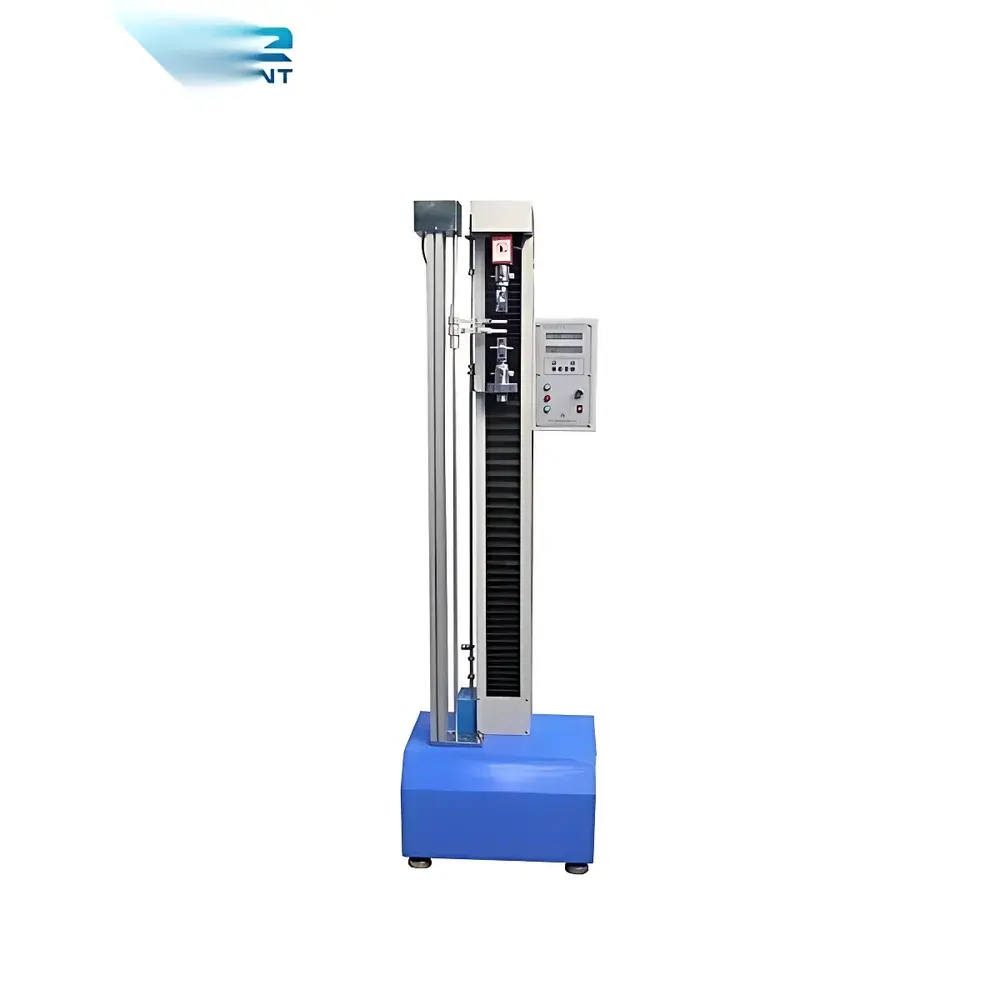
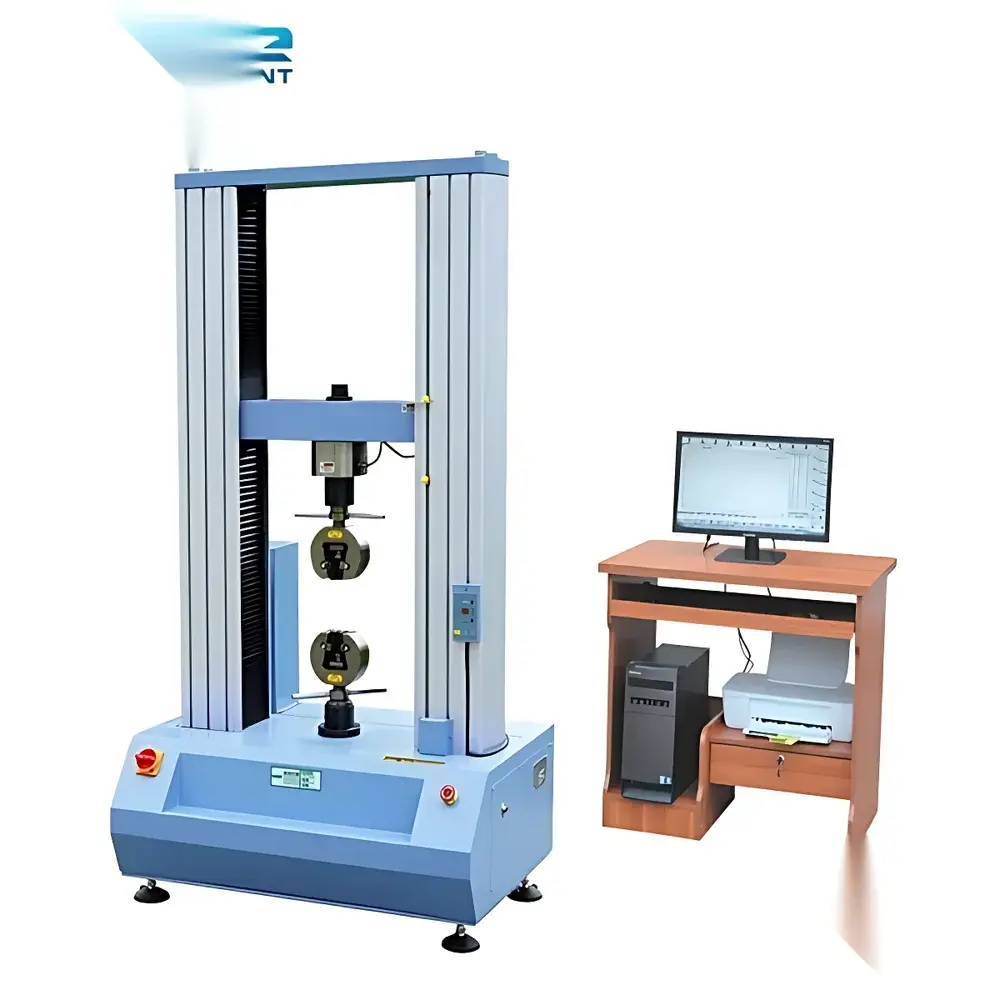
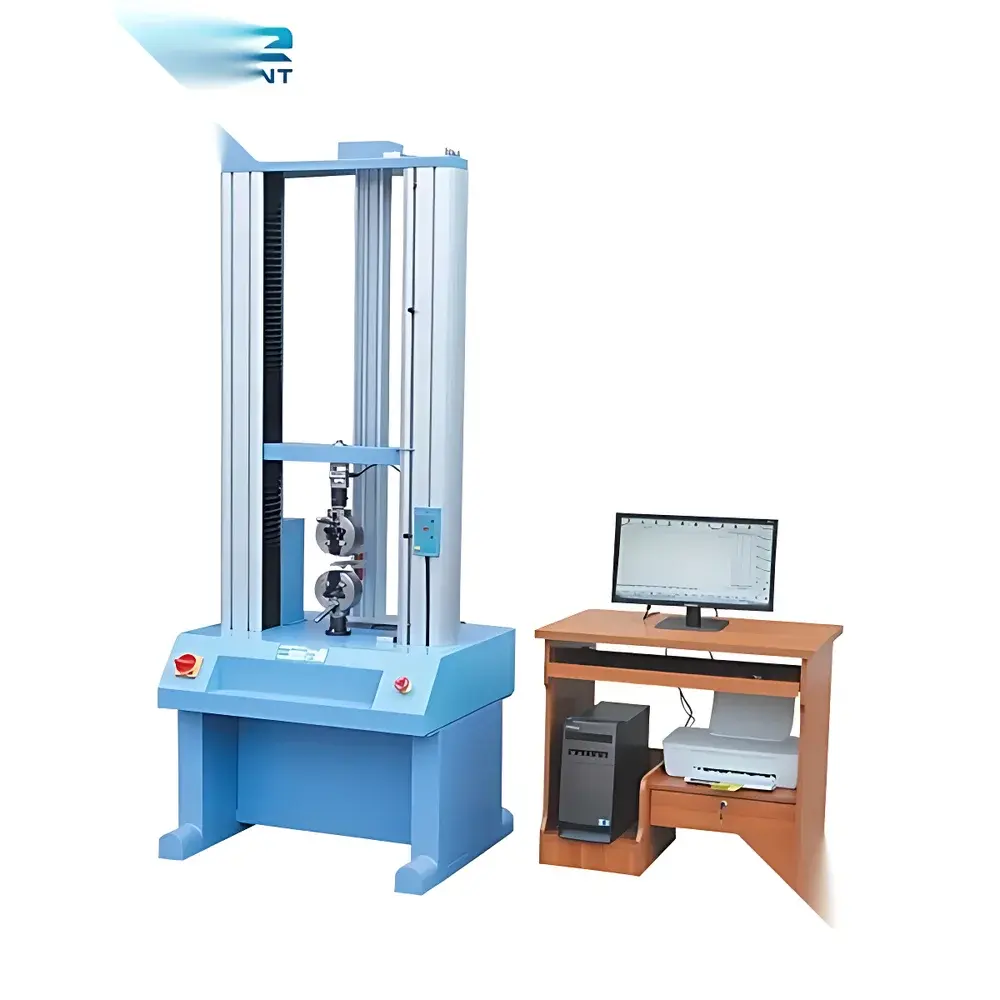
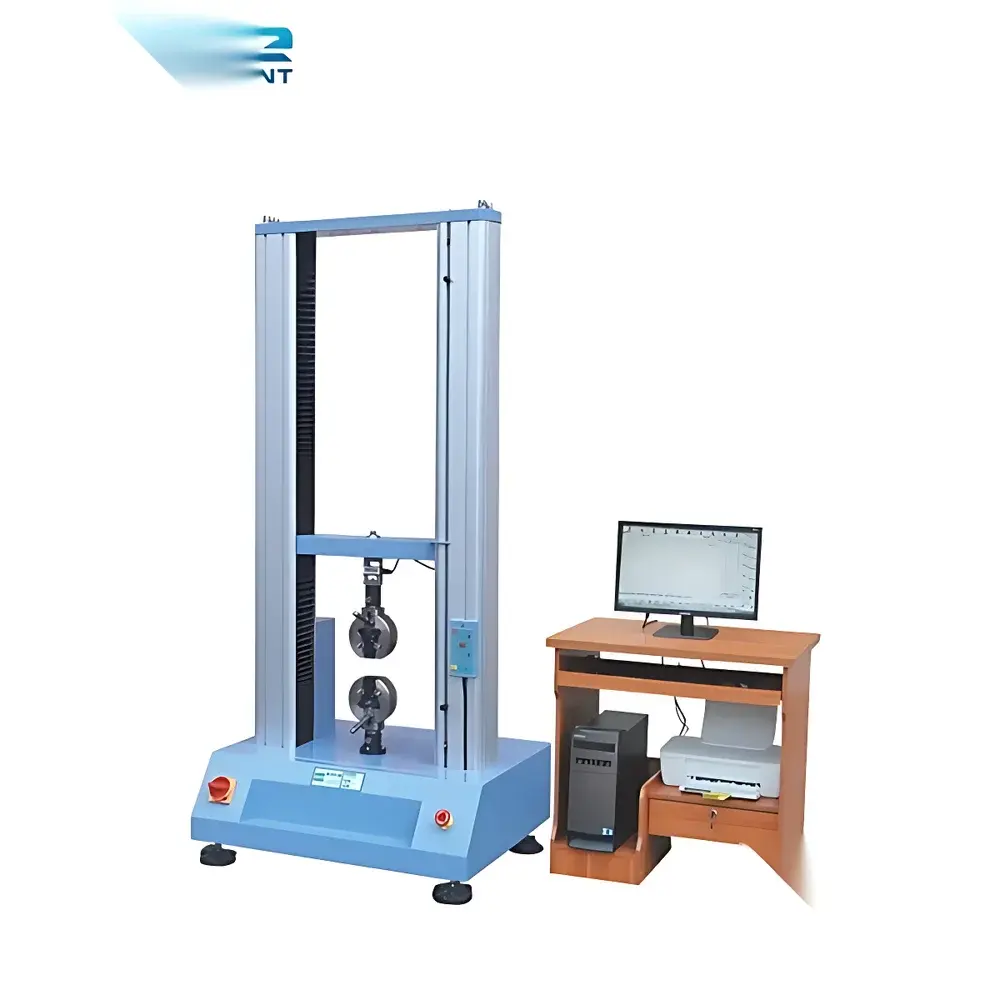
Universal Testing Machine UTM-5000 Series
| Key | Brand: Other Brands |
|---|---|
| Origin | Imported |
| Manufacturer Type | General Distributor |
| Price | USD 3,200 (FOB) |
| Drive System | Panasonic AC Servo Motor |
| Encoder Resolution | 2500 PPR |
| Load Cell Accuracy | ±0.03% F.S. |
| Overload Capacity | 150% F.S. |
| Displacement Resolution | 1/100,000 full scale |
| Protection Features | Mechanical travel limit, overload alarm, automatic stop at break |
| Compliance Standards | GB/T 16491, GB/T 1040, GB/T 8808, GB/T 13022, GB/T 2790–2792, GB/T 16825, GB/T 17200, GB/T 3923.1, GB/T 528, GB/T 2611, GB/T 6344, GB/T 20310, GB/T 3690, GB/T 4944, GB/T 3686, GB/T 529 |
Overview
The Universal Testing Machine UTM-5000 Series is an electromechanical static testing system engineered for precision mechanical property characterization of both metallic and non-metallic materials under uniaxial loading conditions. Based on the principle of controlled displacement actuation via servo-driven ball-screw transmission, it delivers high-fidelity force-displacement data for tensile, compression, flexural, peel, shear, and tear testing modalities. Designed to meet the structural integrity verification requirements of R&D laboratories, quality control departments, and third-party certification bodies, this machine operates in strict accordance with internationally recognized test methodologies—including ISO 6892-1 (metallic tensile), ISO 527-1 (plastics), ASTM D638/D3039 (tensile strength of plastics/composites), and ASTM D790 (flexural properties). Its robust architecture ensures long-term stability, minimal thermal drift, and repeatable performance across diverse environmental conditions typical of industrial lab environments.
Key Features
- Panasonic AC servo motor drive with closed-loop feedback control, delivering smooth, low-noise operation and precise speed regulation from 0.001 to 500 mm/min.
- High-resolution 2500 pulses per revolution (PPR) optical encoder for accurate crosshead displacement measurement and real-time strain calculation.
- Explosion-proof precision load cell with ±0.03% full-scale (F.S.) accuracy, zero drift compensation, and transient overload tolerance up to 150% F.S.
- Preloaded high-precision ground ball screw and linear guideways ensure axial alignment fidelity, minimal friction loss, and extended service life.
- Integrated hardware-based safety interlocks: mechanical stroke limit switches, programmable upper-load alarm threshold, and automatic emergency stop upon specimen rupture.
- Dual-mode control interface supporting standalone operation via digital panel or PC-based software with real-time curve plotting, peak force retention, auto-stop-on-break, and unit conversion (N, kN, lbf, kgf).
Sample Compatibility & Compliance
The UTM-5000 accommodates a broad spectrum of specimen geometries and material classes—ranging from thin polymer films (≥10 µm thickness) and elastomeric strips to metallic rods (up to Ø25 mm), composite laminates, textile yarns, adhesive bonds, and automotive gaskets. Gripping configurations include pneumatic wedge grips, hydraulic self-tightening clamps, peel fixtures (90°/180°), and custom-designed shear and bending jigs. All test protocols align with national and international regulatory frameworks: GB/T series standards (China), ISO 179/ISO 527/ISO 604 (plastics), ISO 6892-1 (metals), ASTM E4/E8/E9/E21 (calibration and testing of metallic materials), and EN 10002-1. The system supports audit-ready documentation required for GLP/GMP compliance and ISO/IEC 17025-accredited laboratories.
Software & Data Management
The proprietary UTMControl v4.2 software provides full test configuration, execution, analysis, and reporting capabilities. It enables user-defined test sequences, multi-curve overlay comparison, modulus calculation (secant/tangent/Chord), yield point detection (0.2% offset method), and elongation-at-break derivation. Raw data is stored in ASCII CSV format for traceability and external statistical processing. Audit trail functionality logs all operator actions, parameter changes, and calibration events—meeting FDA 21 CFR Part 11 requirements for electronic records and signatures when deployed with validated user access controls and digital signature modules. Export options include PDF test reports with embedded graphs, Excel spreadsheets, and XML for LIMS integration.
Applications
- Mechanical validation of thermoplastics, thermosets, and biodegradable polymers per ISO 527 and ASTM D638.
- Tensile strength and elongation profiling of medical device tubing, catheter materials, and surgical meshes.
- Peel adhesion testing of pressure-sensitive tapes, laminated packaging, and flexible electronics substrates (ASTM D903, GB/T 7122).
- Compression testing of foams, elastomers, and lightweight composites used in automotive seating and NVH damping.
- Bending stiffness evaluation of paperboard, corrugated fiberboard, and sustainable packaging materials (ISO 5628, TAPPI T811).
- Quality conformance checks for wire harnesses, cable insulation, and connector crimp joints in electronics manufacturing.
FAQ
What is the maximum test speed supported by the UTM-5000?
The crosshead speed range spans 0.001 to 500 mm/min, adjustable in 0.001 mm/min increments for fine-grained control during low-strain-rate creep or high-speed impact simulation.
Does the system support ASTM and ISO standard test methods out-of-the-box?
Yes—preconfigured test templates are included for ASTM D638, D790, D1709, D903, ISO 6892-1, ISO 527-1, and GB/T 1040, with automatic calculation of modulus, yield strength, ultimate tensile strength, and elongation.
Can the load cell be recalibrated in-house?
Calibration requires NIST-traceable deadweight standards and must be performed by authorized personnel; however, zero-balance and sensitivity verification routines are accessible via the software diagnostics menu.
Is the software compatible with Windows 10/11 and networked laboratory environments?
UTMControl v4.2 supports Windows 10/11 (64-bit), TLS 1.2 encrypted communication, and secure deployment on domain-joined PCs with role-based access control.
What maintenance intervals are recommended for optimal performance?
Lubrication of ball screws and guideways every 500 operational hours; annual verification of load cell linearity and encoder resolution using certified reference standards.



