
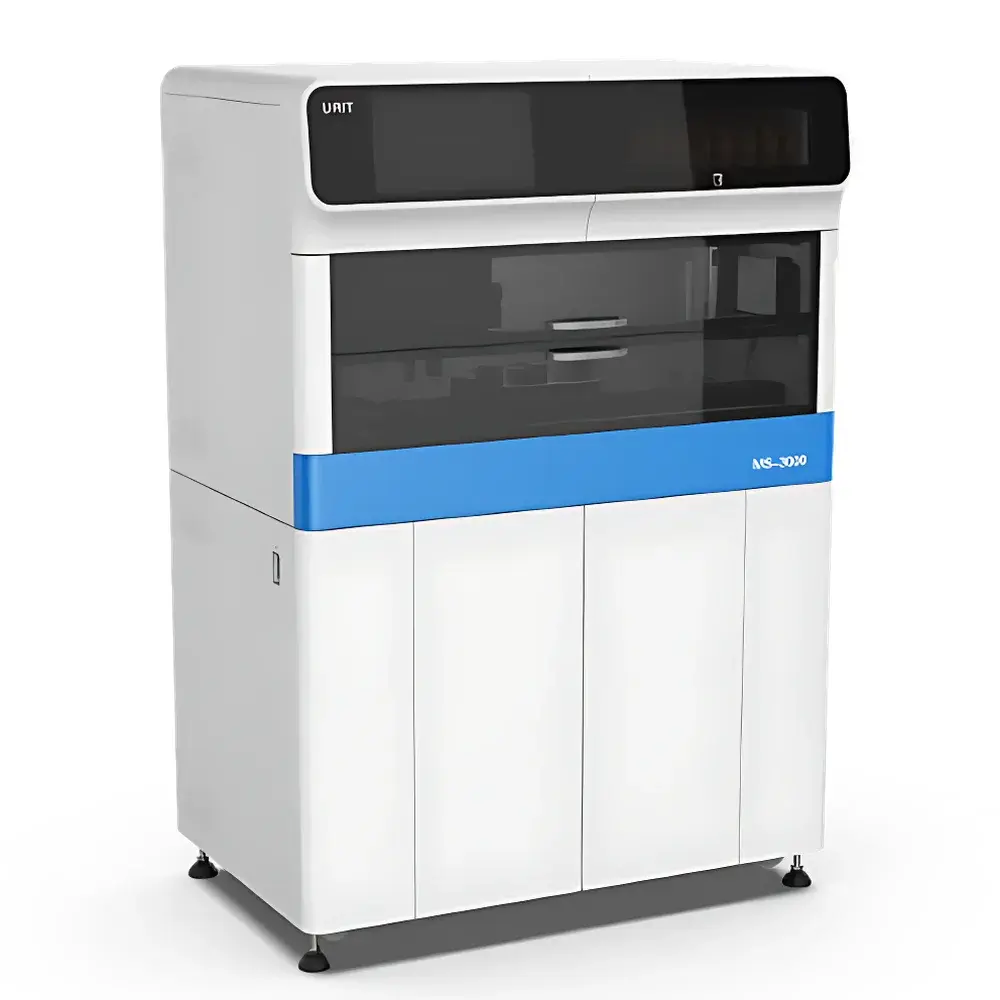
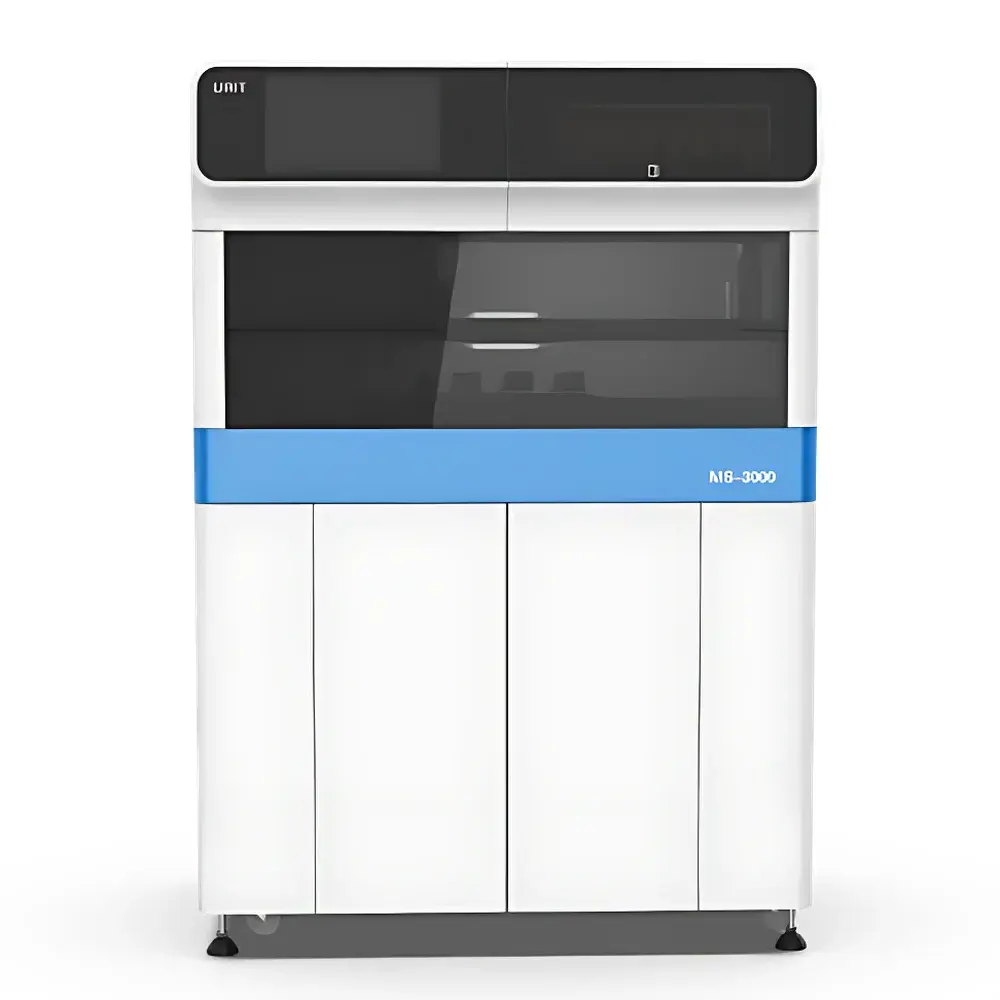
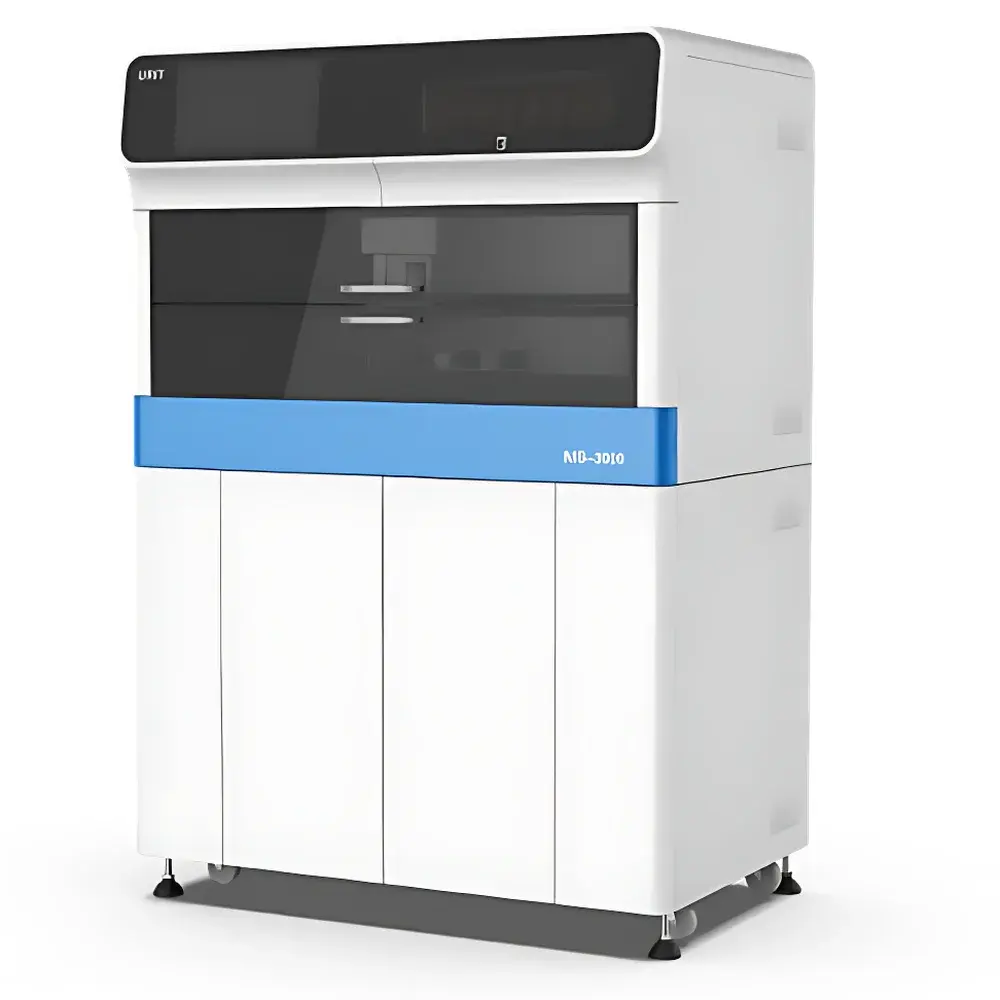
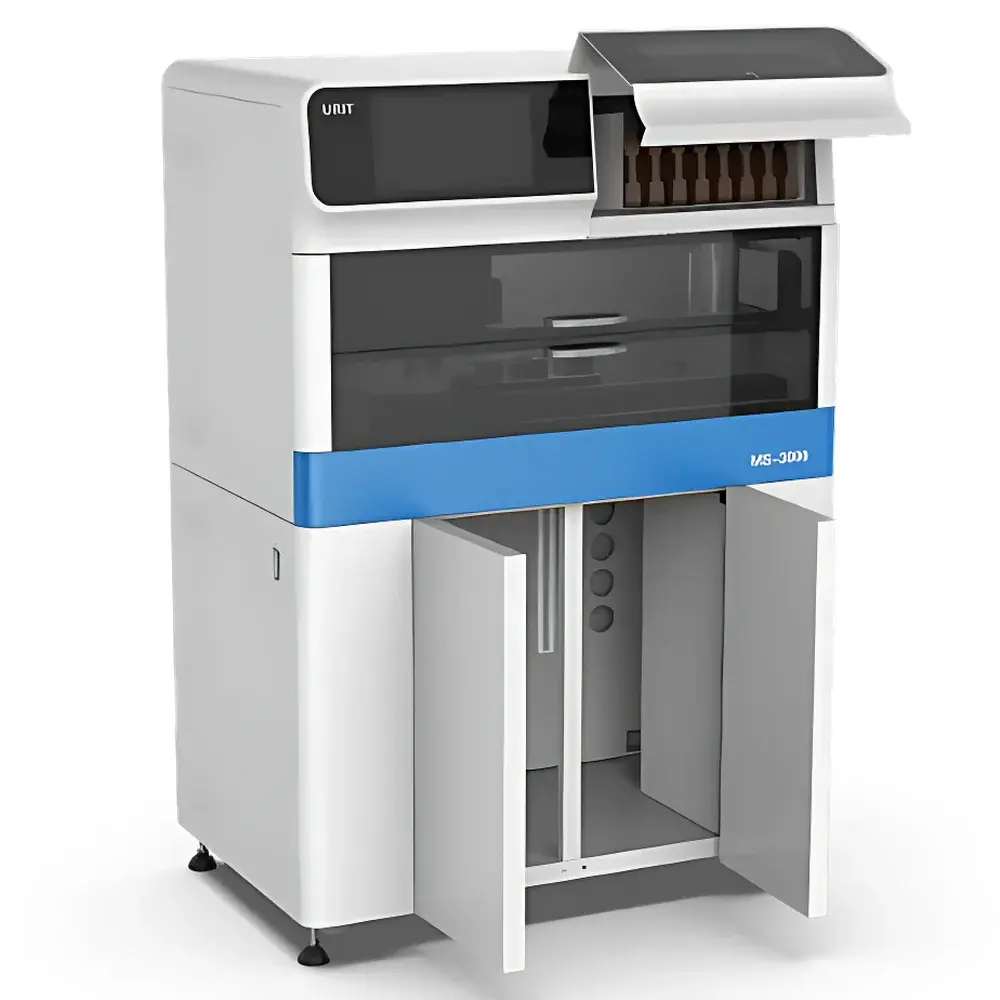
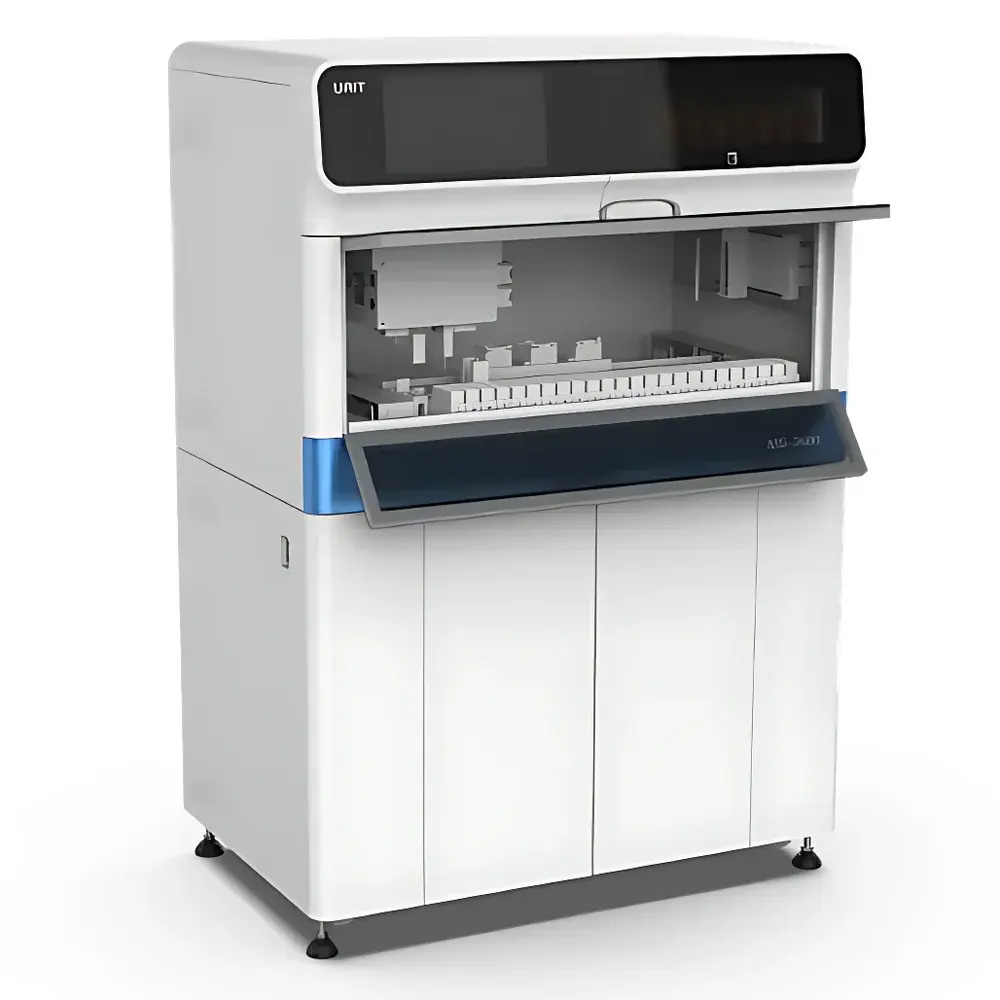
URIT MS-3000 Fully Automated Hematoxylin-Eosin (H&E) Staining and Coverslipping System
| Brand | URIT |
|---|---|
| Origin | Guangxi, China |
| Manufacturer Type | Original Equipment Manufacturer (OEM) |
| Product Origin | Domestic (China) |
| Model | MS-3000 |
| Price Range | USD 14,000 – 115,000 |
Overview
The URIT MS-3000 is a fully integrated, benchtop hematoxylin-eosin (H&E) staining and coverslipping system engineered for high-throughput histopathology laboratories. It implements a precise, programmable reagent delivery architecture based on individual slide-level droplet dispensing—eliminating conventional bulk immersion baths and minimizing inter-slide carryover. The instrument operates on the principle of controlled aqueous-phase dye kinetics: hematoxylin (a basic dye binding nuclear chromatin) and eosin (an acidic dye targeting cytoplasmic proteins and extracellular matrix) are applied sequentially in discrete, volume-calibrated micro-droplets directly onto each deparaffinized and rehydrated tissue section. This approach ensures uniform dye penetration depth and consistent nuclear-cytoplasmic contrast across all slides, independent of tissue thickness or fixation variability. Designed for routine diagnostic workflow integration, the MS-3000 conforms to CLIA-equivalent operational rigor and supports traceable, repeatable staining under defined temperature, dwell time, and rinse cycle parameters.
Key Features
- Single-slide droplet dispensing technology: Each glass slide receives independently metered reagent volumes (hematoxylin, acid alcohol differentiation, bluing solution, eosin), eliminating cross-contamination and enabling true “one-slide-one-stain” reproducibility.
- Integrated staining and coverslipping: Post-staining dehydration, clearing, and mounting occur within the same closed processing chamber—no manual transfer between instruments or workstations required.
- High-capacity slide handling: Accommodates up to 15 standard slide racks (20 slides per rack; total capacity = 300 slides per run), with automatic rack recognition and position tracking via optical encoding.
- Alcohol- and xylene-free reagent compatibility: Optimized for water-based, low-toxicity H&E formulations meeting OSHA Hazard Communication Standard (29 CFR 1910.1200) and EU REACH Annex XVII restrictions on hazardous solvents.
- Modular thermal management: Independent temperature control (±0.5 °C) for staining, rinsing, and mounting modules ensures consistent reaction kinetics across ambient lab conditions (18–28 °C).
Sample Compatibility & Compliance
The MS-3000 processes standard 1″ × 3″ (25 × 75 mm) microscope slides with frosted ends, accommodating both manually and automated-sectioned paraffin-embedded tissue specimens. It accepts routine formalin-fixed, paraffin-embedded (FFPE) blocks processed using standard tissue processors (e.g., Leica ASP300S, Sakura Tissue-Tek VIP). All staining protocols comply with CAP (College of American Pathologists) Checklist ANP.42500 (Staining Quality Control) and support GLP/GMP-aligned documentation requirements—including user-defined protocol versioning, audit trail logging (user ID, timestamp, parameter changes), and electronic signature capability per FDA 21 CFR Part 11 when paired with URIT’s optional LIMS interface module. Reagent kits are supplied with CoA (Certificate of Analysis) and stability data compliant with ISO 13485:2016 manufacturing standards.
Software & Data Management
The MS-3000 runs on URIT PathSoft™ v3.2, a Windows-based control platform featuring intuitive touch-screen navigation and role-based access control (administrator, technician, QA reviewer). Protocols are stored as encrypted XML files with checksum validation. Each run generates a comprehensive digital log containing slide ID mapping, reagent lot numbers, temperature/time profiles, and real-time error flags (e.g., insufficient reagent volume, rack misalignment). Data export supports CSV, PDF, and HL7-compatible formats for integration into major anatomical pathology LIS systems (e.g., Sunquest, Cerner CoPath, McKesson Horizon AP). Audit trails retain ≥18 months of activity history and are exportable for internal QA review or regulatory inspection.
Applications
- Routine diagnostic H&E staining for surgical pathology, cytology, and biopsy interpretation in hospital and reference labs.
- Standardization of staining across multi-site laboratory networks—ensuring inter-laboratory concordance for tumor grading (e.g., Nottingham grading, Gleason scoring).
- Pre-analytical preparation for downstream IHC, ISH, and digital pathology scanning where staining consistency directly impacts AI algorithm training fidelity.
- Research histology core facilities requiring reproducible baseline morphology assessment prior to molecular profiling.
- Training environments where visual consistency aids resident education in pattern recognition and diagnostic criteria application.
FAQ
Does the MS-3000 support custom staining protocols beyond standard H&E?
Yes—up to 20 user-defined protocols can be programmed, including modified H&E variants (e.g., progressive vs. regressive hematoxylin, extended eosin incubation) and pre-stain antigen retrieval steps compatible with aqueous-based epitope unmasking solutions.
Is third-party reagent compatibility validated?
URIT provides a list of pre-qualified reagent partners (e.g., Dako, Agilent, ScyTek); non-listed reagents require formal compatibility testing documented in the Lab Validation Report template provided with the system.
What maintenance intervals are recommended?
Daily wipe-down of dispensing nozzles and fluid paths; monthly calibration of droplet volume verification using gravimetric assay; annual preventive maintenance by URIT-certified field service engineers.
Can the system be integrated into an existing digital pathology workflow?
Yes—the MS-3000 outputs standardized slide metadata (including stain batch ID and processing timestamp) compatible with Philips IntelliSite, Hamamatsu NanoZoomer, and 3DHISTECH Pannoramic scanners via DICOM-SR or vendor-specific API extensions.




