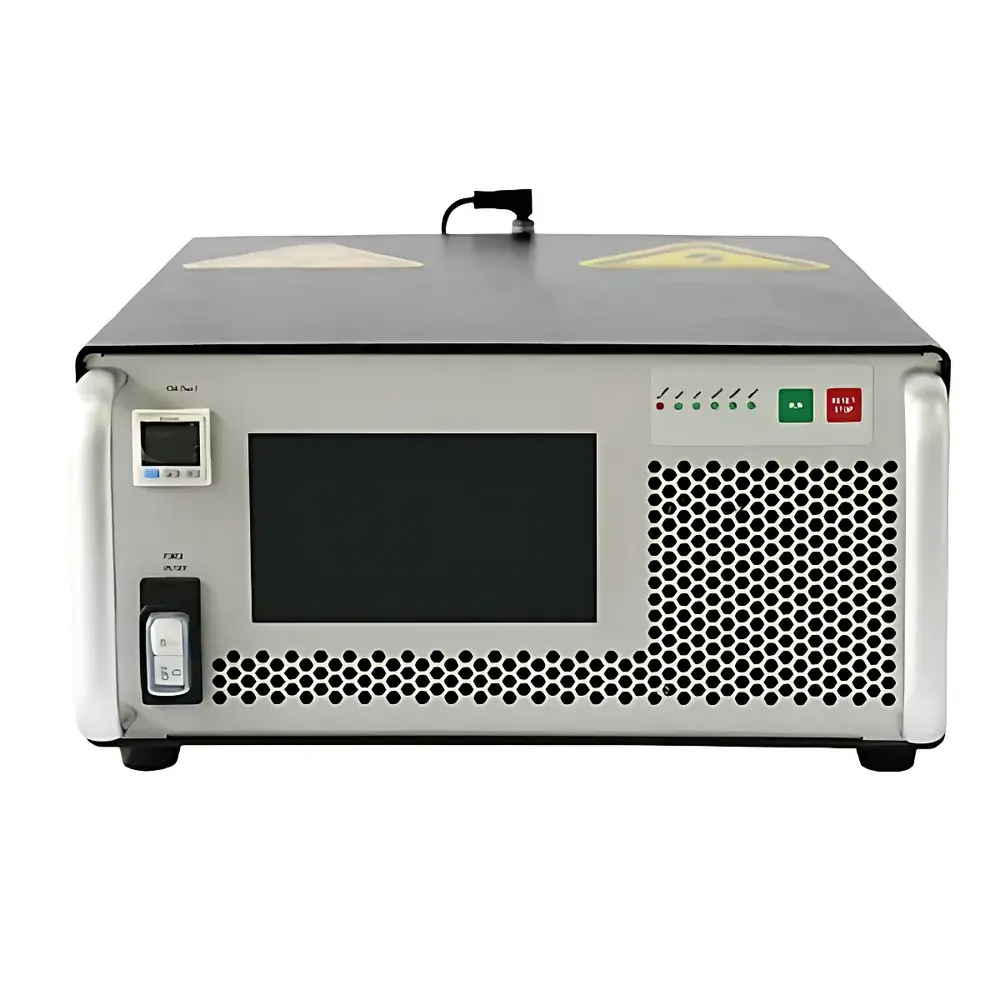
Vaisala Optimus™ OPT100 DGA Online Dissolved Gas Analyzer
| Brand | Vaisala |
|---|---|
| Origin | Finland |
| Manufacturer | Vaisala Oyj |
| Type | Optimus™ OPT100 DGA |
| Application | Online dissolved gas analysis (DGA) for sealed power transformers |
| Measurement Principle | Non-dispersive infrared (NDIR) spectroscopy with vacuum-assisted headspace gas extraction |
| Calibration | Automatic in-situ zero/span correction using internal reference gas cell |
| Materials in contact with oil | 316 stainless steel and anodized aluminum |
| Pumping system | Magnet-driven gear pump |
| Maintenance interval | Maintenance-free design (no consumables, no scheduled servicing) |
| Installation time | <2 hours |
| Data output interval | Configurable down to 1-hour intervals (no data averaging required) |
| User interface | Web-based HTML5 interface with TLS-secured remote access |
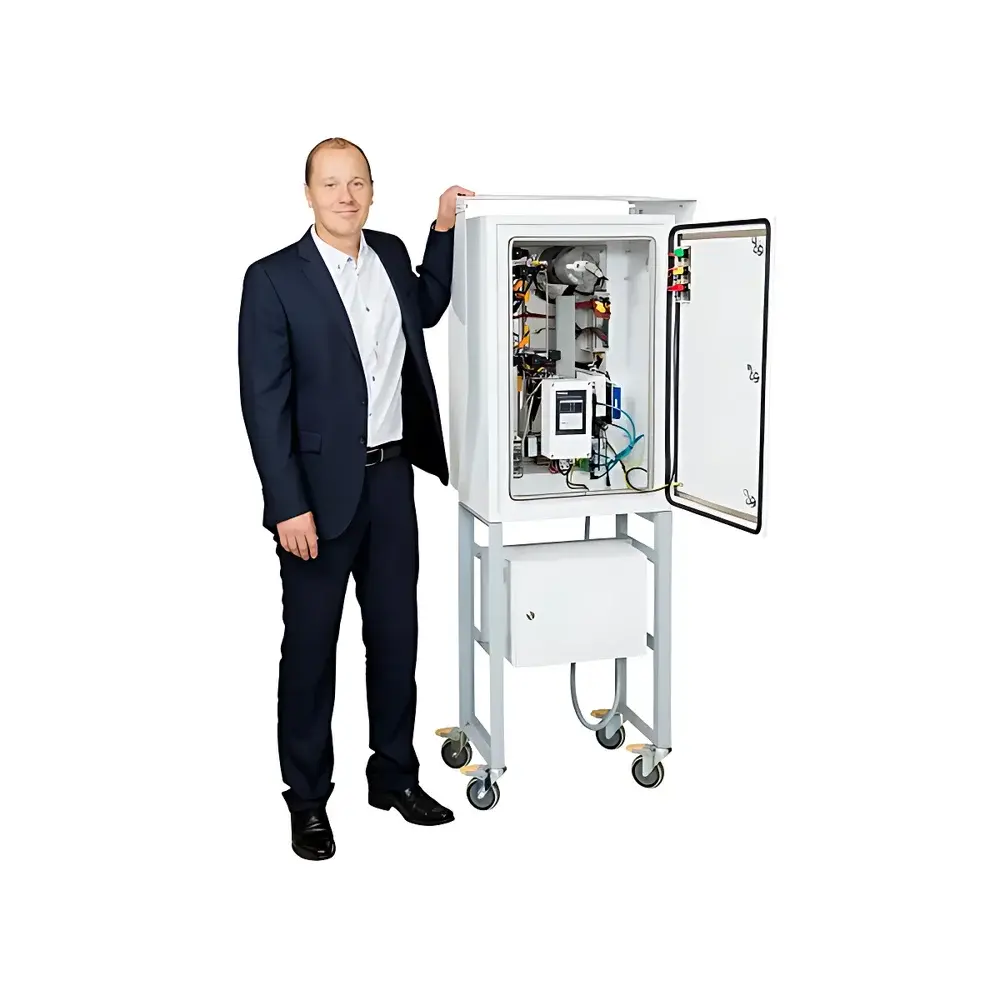
| Environmental rating | IP65 enclosure |
| Compliance | Designed for IEC 60599, IEEE C57.104, and compatible with ISO/IEC 17025-accredited DGA workflows |
Overview
The Vaisala Optimus™ OPT100 DGA is a fully automated, maintenance-free online dissolved gas analyzer engineered for continuous condition monitoring of insulating oil in sealed power transformers. Unlike conventional DGA systems relying on gas chromatography or electrochemical sensors, the OPT100 employs a proprietary vacuum-assisted headspace extraction method coupled with high-stability non-dispersive infrared (NDIR) spectroscopy. This approach enables direct, real-time quantification of key fault gases—including hydrogen (H₂), methane (CH₄), ethane (C₂H₆), ethylene (C₂H₄), acetylene (C₂H₂), carbon monoxide (CO), and carbon dioxide (CO₂)—without oil sampling, carrier gases, or consumable reagents. Critically, the system integrates total gas pressure measurement as a diagnostic parameter to detect ambient air ingress—indicative of seal failure or vacuum loss—thereby extending transformer reliability assessment beyond traditional gas ratio analysis. All optical components are assembled and calibrated in Vaisala’s ISO Class 5 cleanroom facility in Vantaa, Finland, ensuring long-term spectral fidelity and inter-unit reproducibility.
Key Features
- Vacuum-driven headspace gas extraction: Independent of oil temperature and pressure fluctuations, delivering consistent gas-phase concentration sampling across operational load cycles.
- Multi-gas NDIR detection with spectral scanning: Individual gas channels utilize dedicated optical filters and thermopile detectors; spectral resolution eliminates cross-sensitivity between overlapping absorption bands (e.g., CH₄ and CO₂).
- Self-calibrating architecture: An integrated reference gas cell and dual-beam optical path enable automatic zero and span verification at user-defined intervals—eliminating drift-related recalibration needs over the instrument’s service life.
- Hermetically sealed, pressure-rated mechanical design: Housing and wetted parts (including sample lines, valves, and pump head) are constructed from 316 stainless steel and anodized aluminum to withstand repeated vacuum cycles and transient overpressures up to 2 bar(g).
- Brushless magnet-driven gear pump: Delivers >100,000 hours MTBF with zero lubricant migration into the oil stream—ensuring dielectric integrity and eliminating pump oil replacement schedules.
- Web-native HMI: Responsive HTML5 interface accessible via standard browsers; supports role-based authentication, audit-trail logging (aligned with FDA 21 CFR Part 11 requirements), and secure TLS 1.2+ data transmission.
Sample Compatibility & Compliance
The OPT100 is validated for use with mineral oil, silicone-based fluids, and ester-based insulating oils meeting IEC 60296 and ASTM D3487 specifications. It operates within oil temperature ranges of −40 °C to +80 °C and ambient temperatures from −25 °C to +60 °C. The system meets IEC 61000-6-2 (immunity) and IEC 61000-6-4 (emissions) for industrial environments. Its measurement methodology aligns with the interpretive frameworks of IEC 60599 (interpretation of dissolved gases in mineral oil-filled electrical equipment) and IEEE C57.104 (guide for the statistical interpretation of gas-in-oil data). For laboratories performing accredited DGA, the OPT100 supports traceable calibration records and GLP-compliant data export (CSV, PDF, XML) with embedded timestamps and operator IDs.
Software & Data Management
Firmware v3.2+ includes embedded data historian with 12-month local storage (non-volatile flash memory) and configurable export protocols (FTP/S, MQTT, OPC UA). Raw spectra, gas concentrations, total pressure, oil temperature, and diagnostic flags are timestamped with microsecond precision. The web interface provides real-time trend visualization, alarm thresholds per gas (adjustable per IEC 60599 alert levels), and automated report generation compliant with utility-specific formats (e.g., EPRI TR-102705, NERC PRC-005). Audit logs record all configuration changes, user logins, and calibration events—retained for ≥18 months and exportable for regulatory review. Remote firmware updates are digitally signed and verified via RSA-2048.
Applications
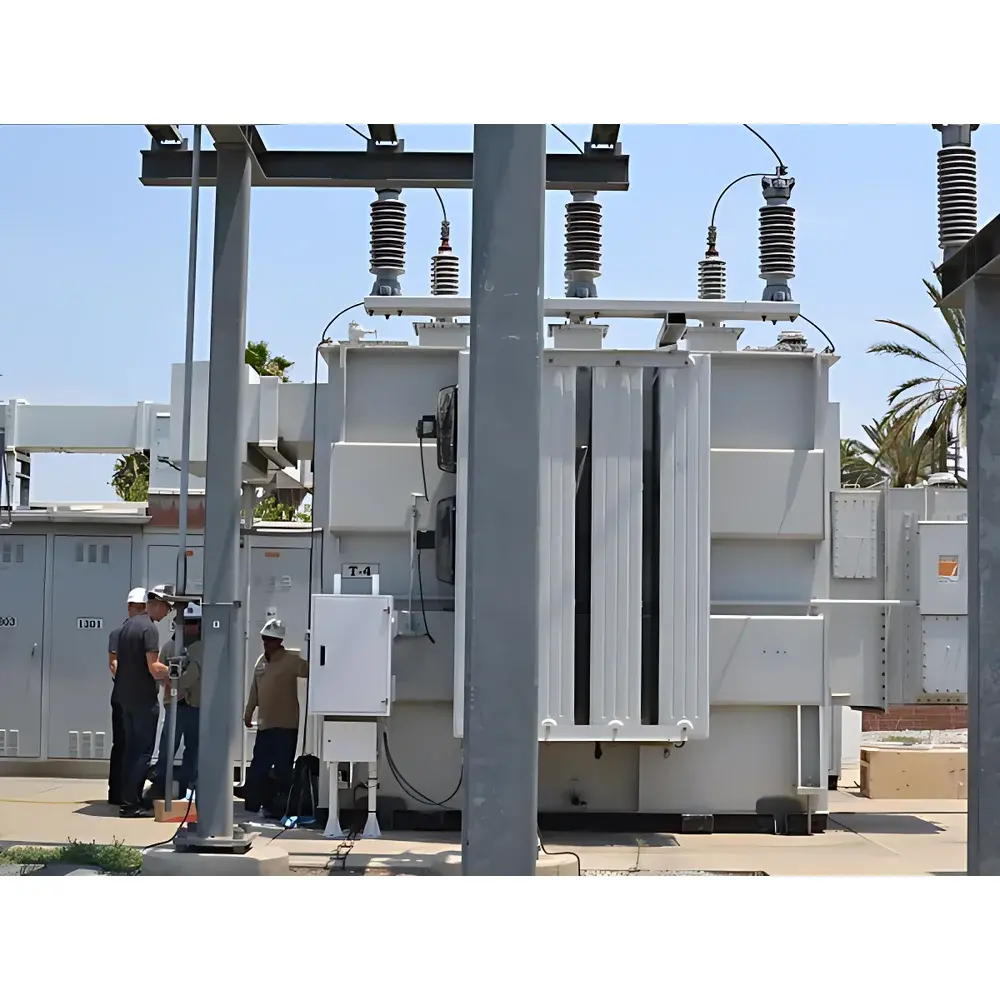
- Continuous health monitoring of critical transmission and distribution transformers in substations, wind farms, and hydroelectric plants.
- Early detection of incipient faults—including partial discharge (H₂, CH₄), thermal degradation (C₂H₄, C₂H₆), arcing (C₂H₂), and cellulose overheating (CO, CO₂).
- Seal integrity verification via sustained total pressure deviation—enabling predictive maintenance scheduling before moisture ingress or oxygen-induced oxidation occurs.
- Integration into SCADA and asset management platforms (e.g., GE Digital APM, Siemens Desigo CC) via standardized communication protocols.
- Support for condition-based maintenance strategies aligned with ISO 55001 and IEEE 1410 lifecycle cost models.
FAQ
Does the OPT100 require periodic sensor replacement or consumables?
No. The NDIR optical modules contain no replaceable light sources or detectors; the magnet-driven pump has no wear-prone seals or lubricants. The system is certified maintenance-free for its full 10-year design life.
How does the system handle oil viscosity changes during cold startup?
Vacuum extraction decouples gas transfer kinetics from oil rheology—unlike membrane-permeation methods—ensuring stable headspace equilibrium regardless of kinematic viscosity shifts between −40 °C and +80 °C.
Can the OPT100 be retrofitted onto existing transformer manifolds?
Yes. It interfaces with standard 1/2″ NPT or ISO-KF flange ports and includes configurable mounting brackets for vertical/horizontal installation on conservator tanks or Buchholz relay housings.
Is raw spectral data accessible for third-party algorithm development?
Yes. Full-resolution interferograms (1 cm⁻¹ resolution, 600–4000 cm⁻¹ range) and calibrated absorbance spectra are available via REST API or direct SD card export for advanced analytics or AI-driven fault classification.
What cybersecurity certifications apply to the web interface?
The device complies with IEC 62443-4-2 SL2 requirements, implements TLS 1.2+ with certificate pinning, disables insecure legacy ciphers, and undergoes annual penetration testing by an ISO/IEC 17025-accredited lab.
Related Products