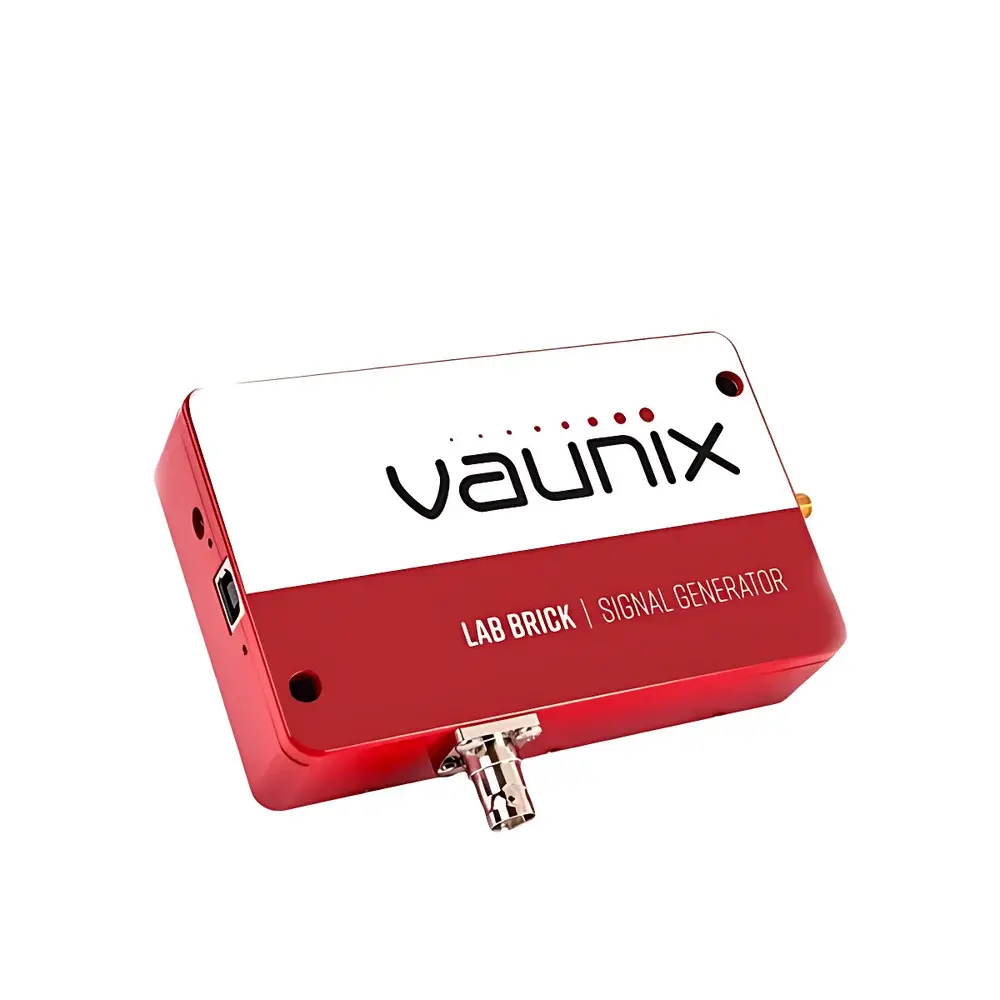
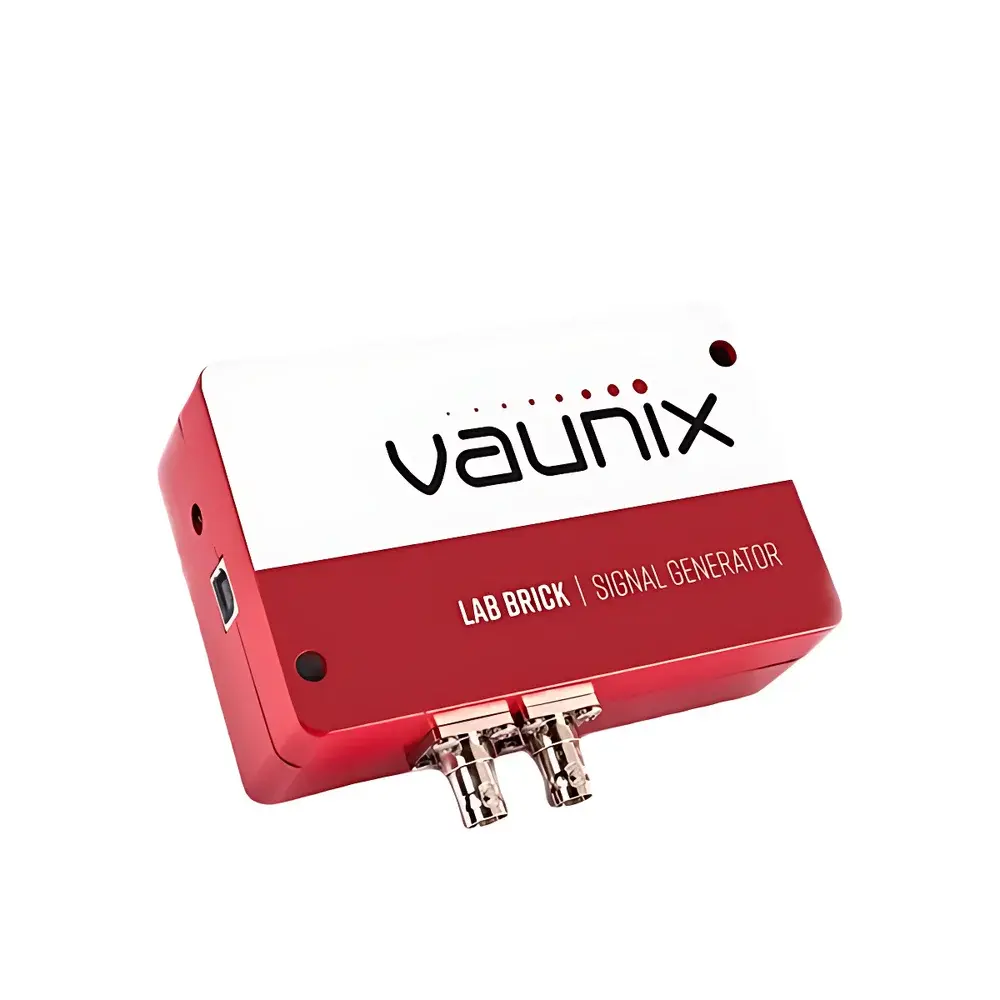
Vaunix LMS-103 Compact Miniature Microwave Signal Generator
| Brand | Vaunix |
|---|---|
| Origin | USA |
| Model | LMS-103 |
| Frequency Range | 5–10 GHz |
| Phase Noise | –81 dBc/Hz @ 10 kHz, –89 dBc/Hz @ 100 kHz offset |
| Frequency Resolution | 100 Hz |
| Frequency Switching Time | 0.1 ms |
| Output Power Range | +10 to –40 dBm |
| Spurious Signals | –80 dBc (typ.) |
| Harmonics | –20 dBc (typ.) |
| Reference Input | 10 MHz (standard) |
| Sweep Mode | Linear (standard), Triggered Sweep (optional) |
| Pulse Modulation | Optional |
| Control Interface | USB 2.0 (SCPI-compliant) |
Overview
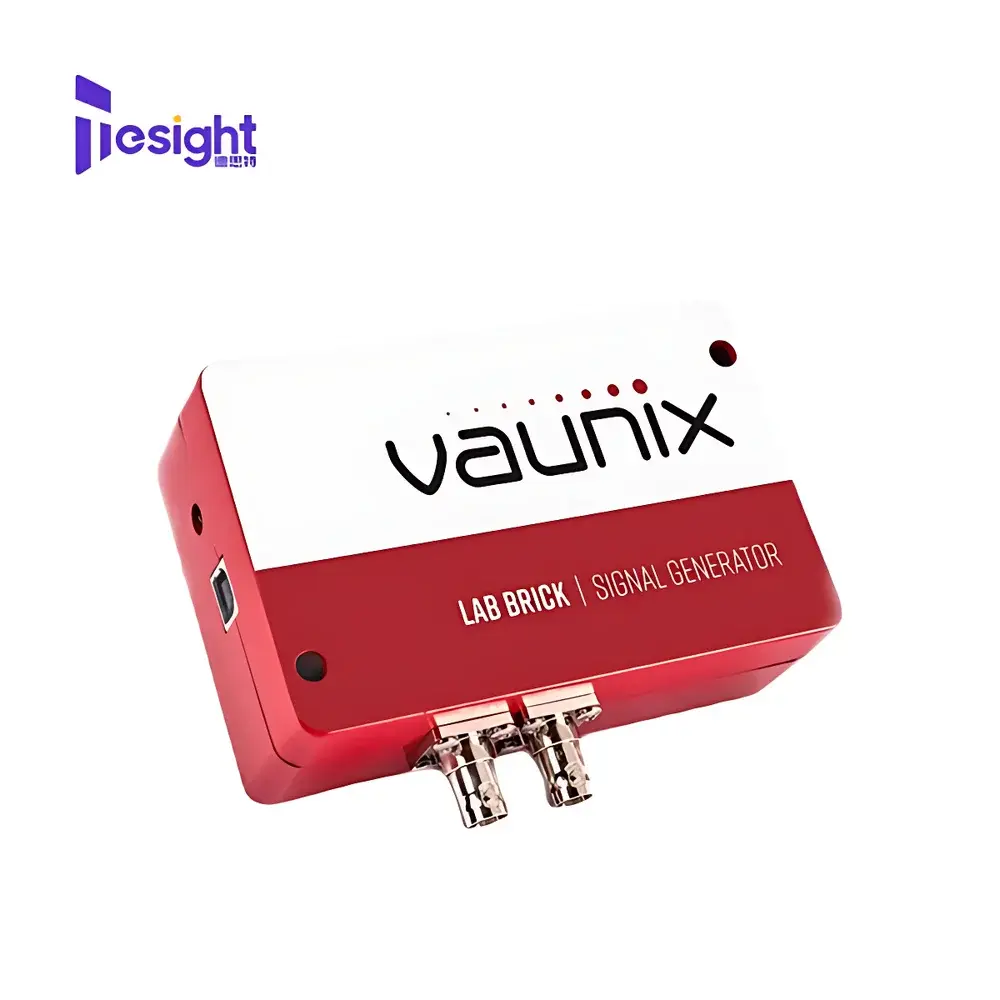
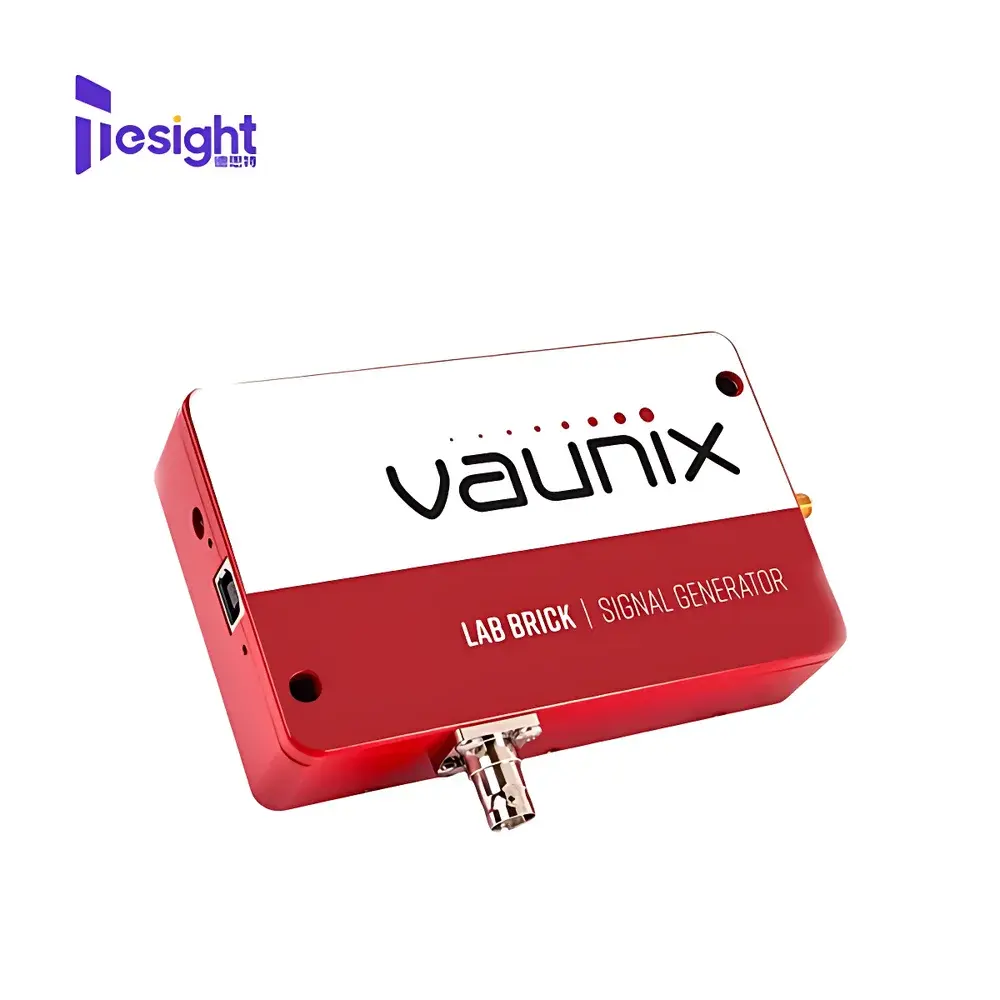
The Vaunix LMS-103 is a compact, USB-controlled microwave signal generator engineered for precision RF test environments where space, power efficiency, and repeatability are critical. Operating in the 5–10 GHz frequency band, it employs direct digital synthesis (DDS) coupled with analog upconversion to deliver stable, low-phase-noise continuous-wave (CW) output. Its architecture is optimized for integration into automated test systems (ATE), benchtop validation setups, and embedded calibration workflows—particularly in aerospace subsystem verification, radar component characterization, and wireless communications R&D labs. Unlike traditional rack-mounted synthesizers, the LMS-103 eliminates external power supplies and cooling fans, relying on passive thermal management and low-voltage USB bus power (5 V DC, <1.5 W). The device conforms to IEEE Std 1139–2008 definitions for frequency stability and phase noise measurement methodology, and its output spectral purity meets typical requirements for pre-compliance testing per MIL-STD-461G CS114 and RTCA DO-160 Section 20.
Key Features
- Compact footprint (2.75″ × 1.5″ × 0.6″) and lightweight design (≤120 g) for PCB-level integration or dense instrument racks
- Ultra-fast frequency switching (≤0.1 ms) enabled by on-board FPGA-based control logic and zero-wait-state DAC sequencing
- Phase noise performance of –81 dBc/Hz at 10 kHz offset and –89 dBc/Hz at 100 kHz offset—validated per IEEE 1139 Annex C using cross-correlation techniques
- Output power range from +10 dBm to –40 dBm, digitally calibrated across temperature (–10 °C to +60 °C) with ≤0.5 dB linearity error
- Standard 10 MHz reference input/output for system synchronization; supports external clock locking with ±5 ppm tolerance
- USB 2.0 interface compliant with SCPI-1999 (IEEE 488.2) command set; no proprietary drivers required—compatible with Windows, Linux, and macOS via libusb
- On-device nonvolatile memory stores up to 16 user-defined frequency/power presets for rapid recall without host intervention
Sample Compatibility & Compliance
The LMS-103 is designed for use with standard 50 Ω RF test fixtures, SMA-female connectors, and common coaxial cabling (e.g., RG-316, LMR-195). It complies with FCC Part 15 Subpart B Class A emissions limits and meets CE marking requirements under EU Directive 2014/30/EU (EMC) and 2011/65/EU (RoHS). For regulated laboratory applications, the instrument supports audit-ready operation when paired with validated host software: timestamped command logging, full SCPI transaction history, and deterministic reset behavior satisfy GLP/GMP documentation prerequisites. While not FDA 21 CFR Part 11–certified as a standalone unit, its deterministic USB protocol and repeatable output enable traceable calibration workflows compliant with ISO/IEC 17025:2017 Clause 6.5.2 (Equipment Management).
Software & Data Management
Vaunix provides the free, open-source LMS Control Suite—a Python 3.8+ library (PyPI: vaunix-lms) and GUI application supporting real-time parameter sweeps, multi-instrument synchronization via shared trigger lines, and CSV-based waveform export. All firmware updates are delivered as signed binary packages with SHA-256 checksums and require explicit user confirmation. Configuration files adhere to IETF RFC 8259 (JSON) schema, enabling version control integration and CI/CD pipeline compatibility. For enterprise deployment, the SDK includes LabVIEW VIs, MATLAB Instrument Control Toolbox drivers, and .NET Standard 2.0 wrappers—each implementing strict timeout handling and CRC-16 frame validation to prevent command corruption over noisy USB links.
Applications
- Radar front-end alignment and LO injection testing in X-band transceivers
- Pre-compliance EMI susceptibility screening of avionics modules per DO-160 Section 20
- Local oscillator substitution in SDR-based spectrum monitoring receivers
- Calibration source for vector network analyzers (VNA) requiring known CW stimuli between 5–10 GHz
- Education labs: hands-on microwave fundamentals instruction, including frequency agility, phase noise impact on QPSK BER, and sweep-triggered demodulation analysis
- Production test: high-throughput parametric verification of GaN MMIC amplifiers and waveguide filter passbands
FAQ
Does the LMS-103 support AM/FM modulation?
No—the LMS-103 is a CW-only analog signal generator. For modulated output, users must pair it with an external IQ modulator or use the optional pulse modulation feature (sold separately) for gated RF bursts.
Can multiple LMS-103 units be synchronized?
Yes—via daisy-chained 10 MHz reference distribution and external TTL trigger inputs. Firmware v2.4+ enables master-slave mode with sub-microsecond inter-unit timing alignment.
What is the recommended warm-up time for specified accuracy?
15 minutes at ambient temperature ≥20 °C ensures full thermal stabilization of the VCO and DAC reference chain, meeting datasheet specifications for frequency accuracy (±1 ppm) and power flatness (±0.3 dB).
Is calibration certificate included?
A NIST-traceable factory calibration report (including phase noise, output power, and frequency accuracy data) is provided with each unit. ISO/IEC 17025 accredited calibration services are available through Vaunix-authorized labs.
How is firmware updated?
Using the LMS Control Suite GUI or command-line utility (lms_update); updates preserve user presets and require physical USB reconnection to complete.