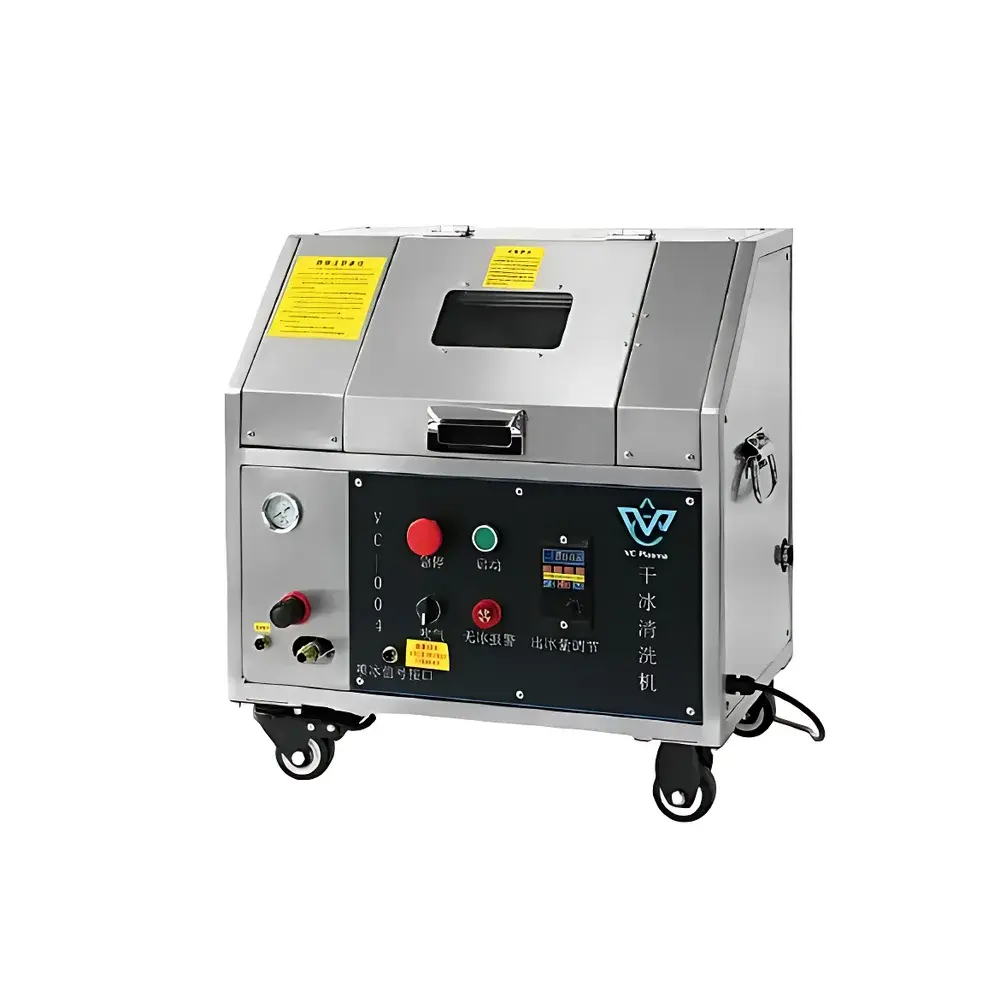
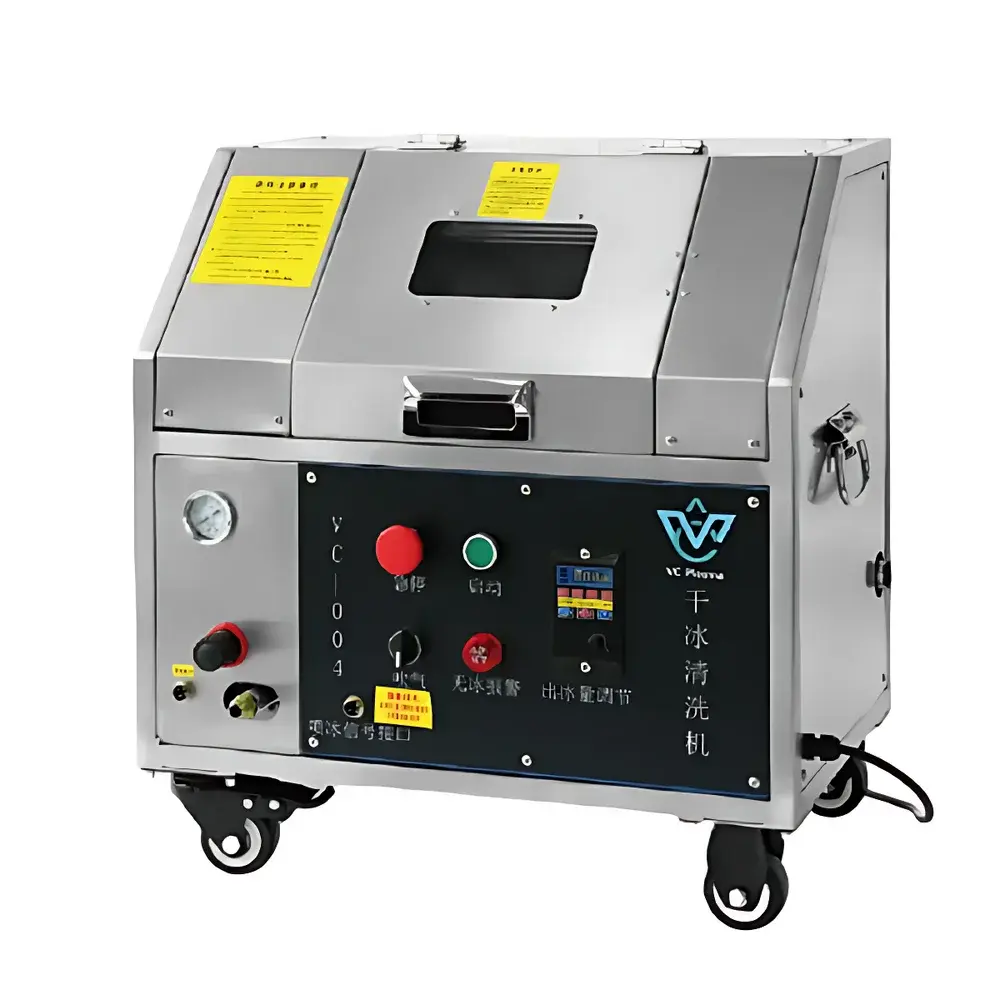
VC Plasma VC-004 Dry Ice Blasting System for Semiconductor Wafer and PCBA Cleaning
| Brand | VC Plasma |
|---|---|
| Origin | Guangdong, China |
| Manufacturer Type | Authorized Distributor |
| Country of Origin | China |
| Model | VC-004 |
| Pricing | Available Upon Request |
Overview
The VC Plasma VC-004 Dry Ice Blasting System is an engineered solution for non-abrasive, residue-free dry cleaning in high-precision semiconductor manufacturing environments. Designed specifically for post-etch, pre-bonding, and rework-stage cleaning of silicon wafers, bare dies, and populated printed circuit board assemblies (PCBAs), the system employs cryogenic micro-pellet dry ice (solid CO₂) accelerated through a supersonic nozzle to remove organic contaminants—including flux residues, photoresist remnants, particle adhesion layers, and thin-film oxides—without thermal shock or surface erosion. Unlike solvent-based or plasma ashing methods, dry ice blasting operates at ambient pressure and requires no vacuum chamber, enabling rapid inline integration into cleanroom-compatible workflows (Class 100–1000). The VC-004 implements a closed-loop air-assisted delivery architecture with adjustable mass flow control, ensuring repeatable kinetic energy transfer while minimizing CO₂ consumption and particulate rebound.
Key Features
- Targeted cleaning resolution down to 50 µm feature geometry on PCBAs and wafer-level interconnects
- Adjustable blast pressure (0.2–0.7 MPa) and dry ice mass flow rate (1–15 kg/h) via digital HMI interface
- Integrated HEPA-filtered exhaust recirculation unit compliant with ISO 14644-1 Class 5 ambient air discharge standards
- Modular nozzle design supporting straight, angled, and rotary configurations for conformal access to BGA underfills, QFN leads, and stacked-die packages
- Real-time monitoring of blast temperature (−78.5 °C nominal), nozzle wear status, and compressed air dew point (≤ −40 °C)
- CE-marked electrical architecture with IP54-rated enclosure; compatible with SEMI S2/S8 safety protocols
Sample Compatibility & Compliance
The VC-004 is validated for use on 150 mm to 300 mm silicon wafers, 2.5D/3D IC packages, ceramic substrates, and FR-4/FR-5 PCBAs containing RoHS-compliant solder finishes (SAC305, SnAgCu), gold wire bonds, and low-k dielectrics (SiCOH, porous SiOCH). It meets material compatibility requirements per IPC-J-STD-033D for moisture-sensitive devices and demonstrates no measurable ion contamination (Na⁺, Cl⁻, K⁺) post-cleaning per JIS C 5017-2 extraction testing. Process validation supports GLP-aligned documentation per ISO/IEC 17025:2017, including full traceability of parameter logs, operator ID, and environmental conditions (temperature, humidity, particle count).
Software & Data Management
The embedded control software (v3.2.1) provides audit-trail functionality compliant with FDA 21 CFR Part 11 requirements, including electronic signatures, immutable parameter history, and time-stamped event logging. All cleaning cycles are exportable as CSV or XML files with metadata fields: cycle ID, start/stop timestamps, CO₂ mass consumed, nozzle type, target location coordinates (via optional machine vision alignment module), and pass/fail flag based on integrated optical inspection feedback. Remote diagnostics support via TLS-encrypted Ethernet connection enables predictive maintenance alerts for filter saturation, air dryer desiccant depletion, and nozzle orifice degradation.
Applications
- Removal of uncured epoxy mold compound residues from fan-out wafer-level packaging (FOWLP) prior to redistribution layer (RDL) patterning
- Cleaning of flip-chip underfill voids and edge bleed without delamination risk
- Post-reflow flux removal from fine-pitch QFN and LGA packages without disturbing solder joint integrity
- Pre-wire bonding surface activation of Al/Cu bond pads to reduce intermetallic formation variability
- Recovery of contaminated probe cards and test sockets in ATE environments without disassembly
- Non-destructive cleaning of MEMS inertial sensors and RF front-end modules with fragile cantilevers or acoustic cavities
FAQ
Is the VC-004 suitable for cleaning copper pillar bumps on 2.5D interposers?
Yes — its low-momentum micro-pellet delivery mode (≤ 0.8 g/cm² impulse density) has been verified to remove organic residues without mechanical deformation of sub-20 µm Cu pillars.
Does the system require nitrogen purging during operation in Class 10 cleanrooms?
No — the exhaust filtration and CO₂ sublimation pathway eliminate moisture condensation risk; nitrogen purging is optional only for ultra-low-humidity (<5% RH) processes.
Can the VC-004 be integrated with SECS/GEM protocol for factory automation?
Yes — optional SECS/GEM v5.0 driver package supports HSMS communication and equipment status reporting (E49/E50 messages) to MES platforms.
What is the maximum allowable surface temperature rise during extended cleaning of GaN-on-Si power devices?
Thermal imaging confirms ≤ +2.3 °C peak delta-T over 60 s exposure at rated parameters, well within JEDEC JESD22-A104 reliability thresholds.
How frequently must the primary HEPA filter be replaced under continuous 8-hour shifts?
Filter service interval is 1,200 operational hours when paired with upstream coalescing pre-filters; automated pressure-drop alarm triggers at 95% saturation.
Related Products