Vector Scientific SLKX-102-11 High-Vacuum Interconnected Physical Vapor Deposition (PVD) System
| Brand | Vector Scientific |
|---|---|
| Origin | Guangdong, China |
| Model | SLKX-102-11 |
| Film Thickness Uniformity | ≤±2.5% over 4-inch wafer area, ≤±3.5% over 8-inch wafer area (measured on Ti film, 200–500 nm, edge exclusion of 5 mm, 5-point random sampling) |
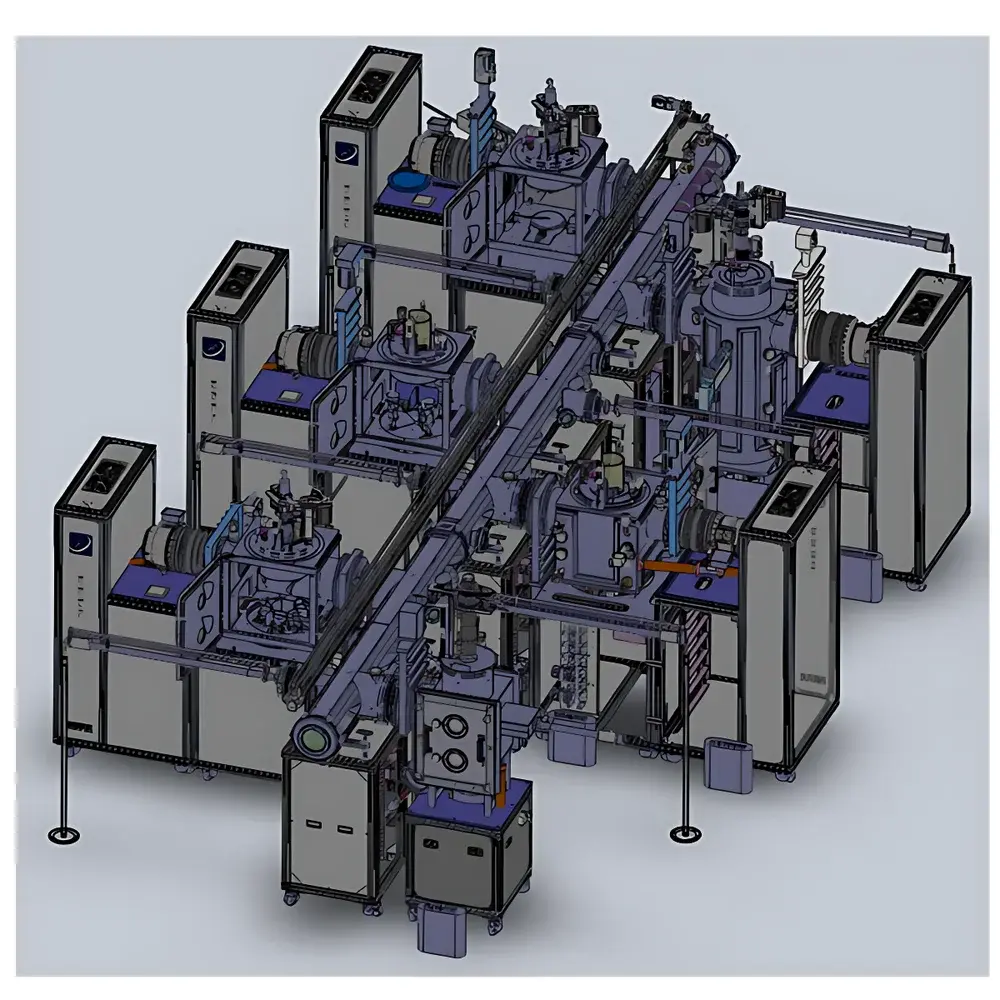
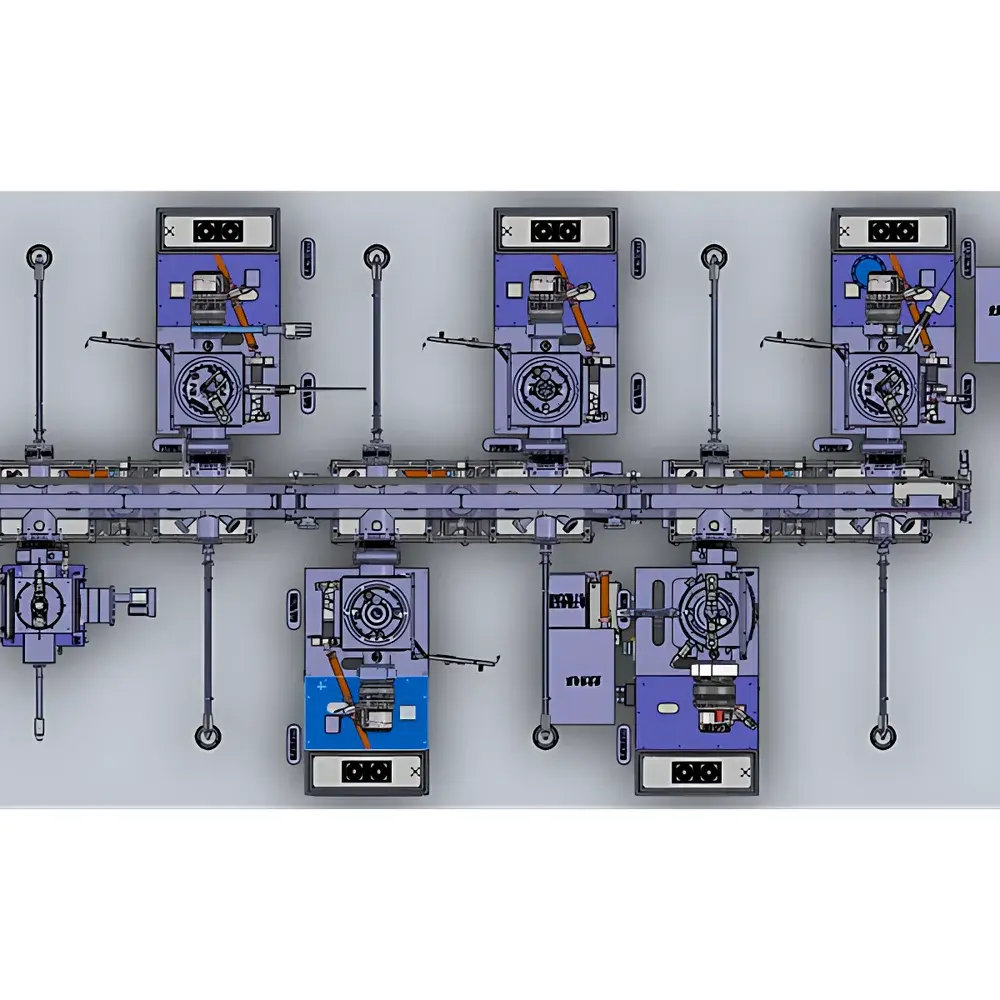
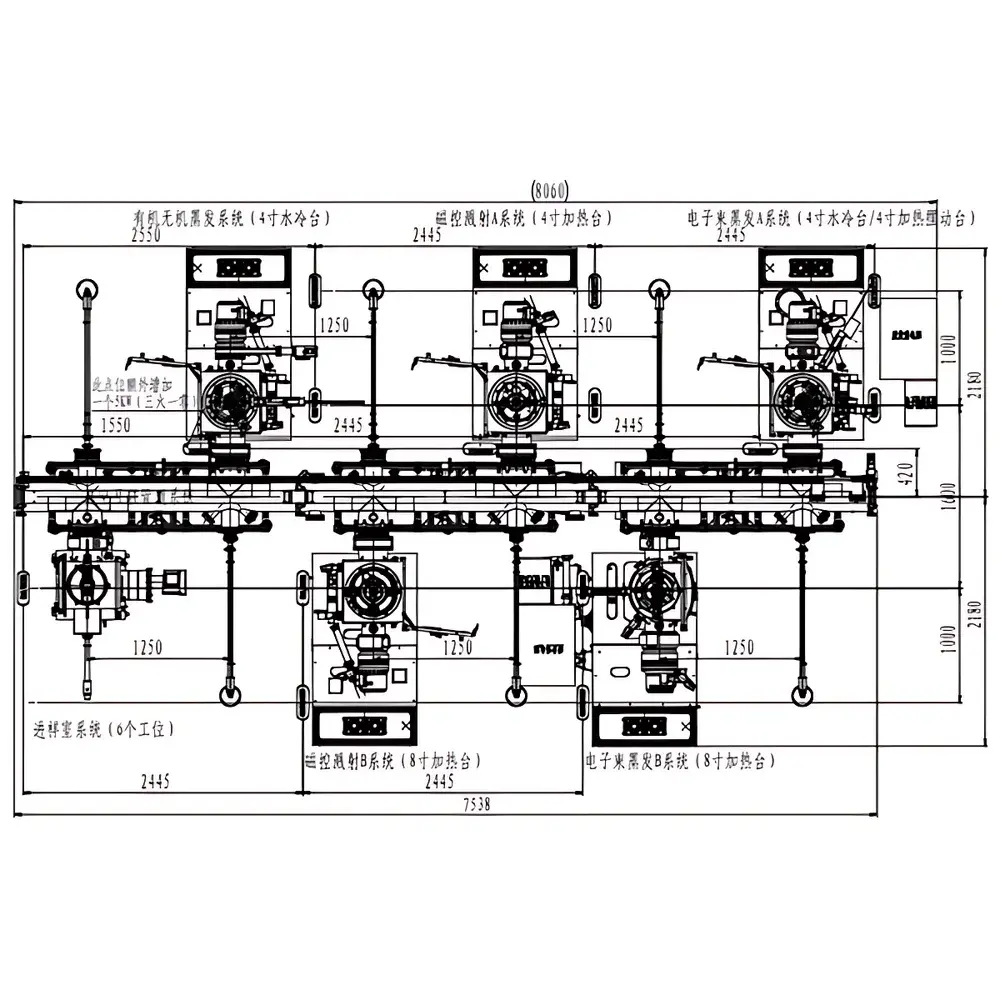
| System Architecture | Interconnected multi-chamber PVD platform with load-lock and transfer robot |
| Base Pressure | ≤5×10⁻⁸ Torr (typical, after bake-out) |
| Chamber Interface Standard | CF flanges (DN100/DN160 compatible) |
| Target-to-Substrate Distance | Externally adjustable manually |
| Control Architecture | Modular PLC + real-time OS with role-based user permissions |
| Compliance | Designed to support GLP/GMP-aligned process documentation |
Overview
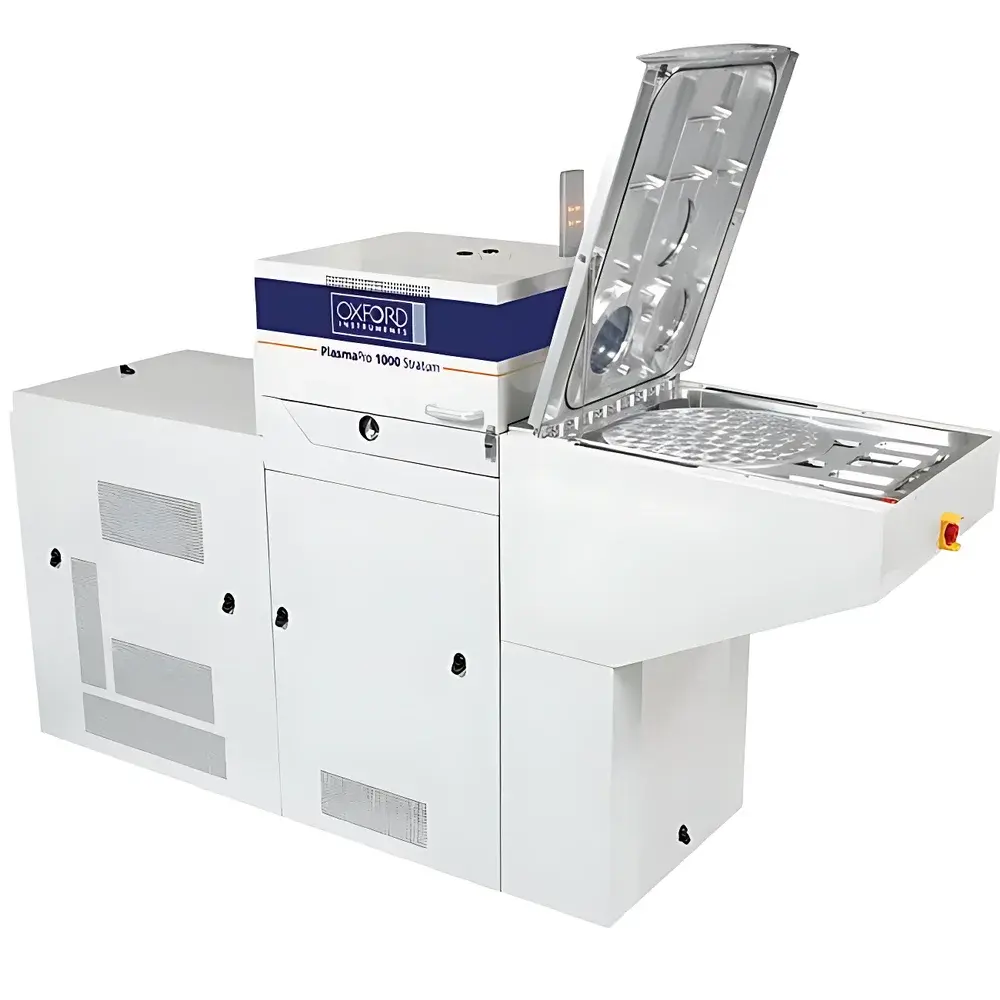
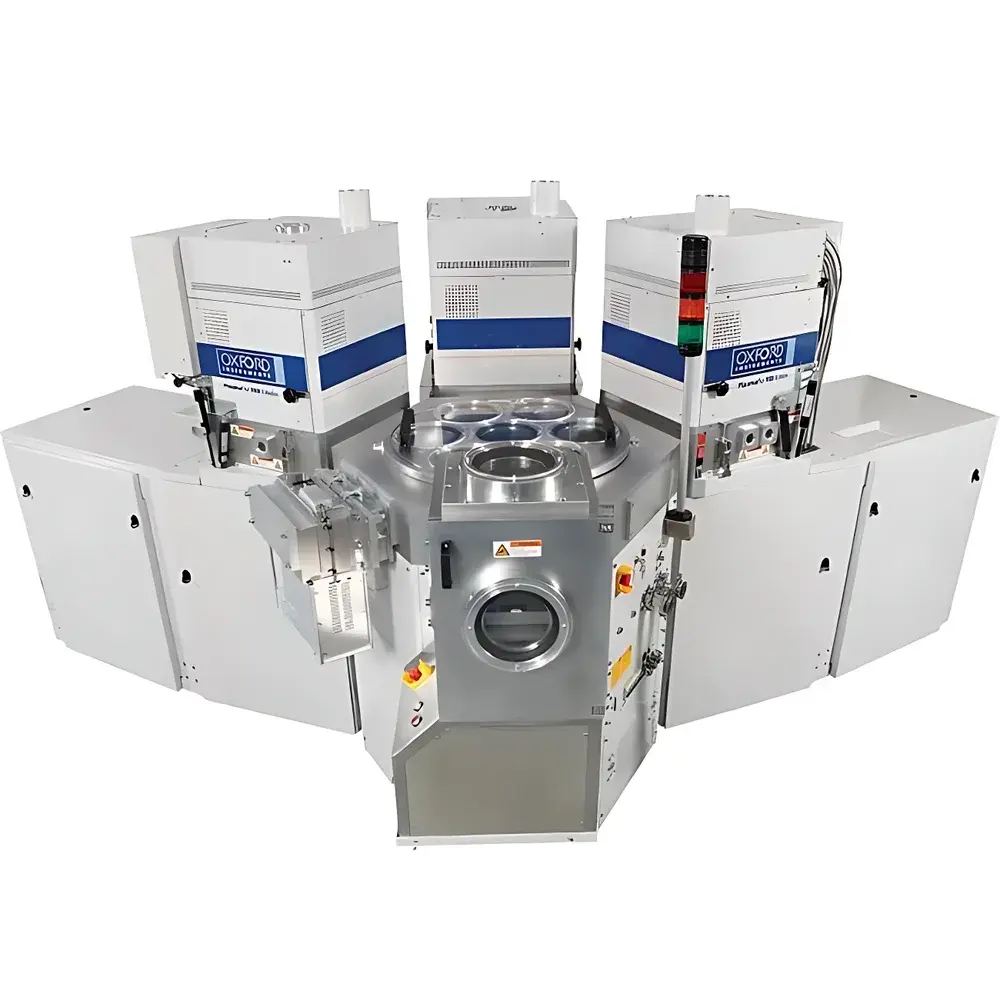
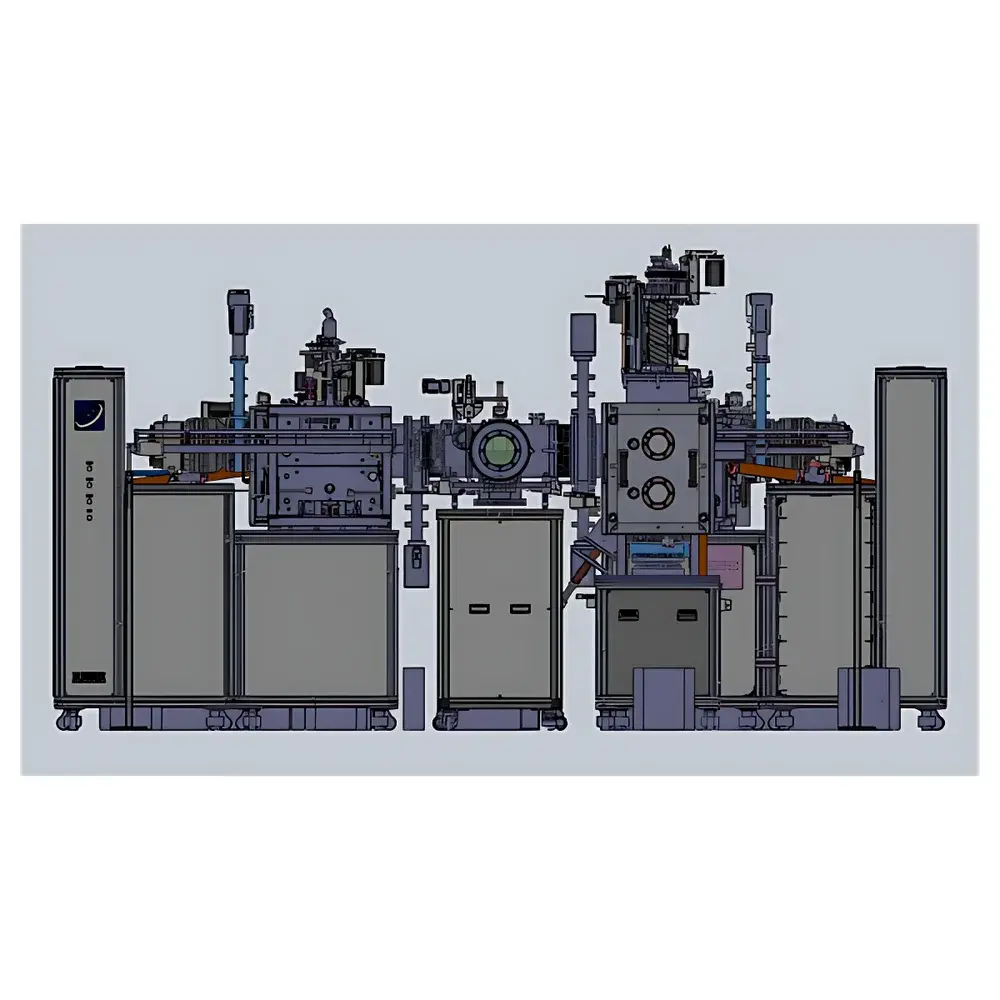
The Vector Scientific SLKX-102-11 is a high-vacuum, interconnected Physical Vapor Deposition (PVD) system engineered for reproducible thin-film fabrication under ultra-clean, oil-free vacuum conditions. It integrates multiple deposition modules—including magnetron sputtering (single/multi-target), electron-beam evaporation, resistive thermal evaporation, ion beam sputtering, and arc plasma sources—within a unified UHV-compatible interconnect architecture. The system operates at base pressures ≤5×10⁻⁸ Torr (after standard bake-out), minimizing hydrocarbon contamination and enabling atomic-level control over nucleation, stoichiometry, and microstructure in functional thin films. Its modular design supports sequential or combinatorial processing across chambers without air exposure, preserving surface integrity for multilayer heterostructures used in semiconductor devices, optical coatings, spintronic stacks, and transparent conductive oxides (TCOs). The platform is purpose-built for R&D labs requiring cross-process correlation, pilot-scale process transfer, and qualification-grade repeatability.
Key Features
- Interconnected multi-chamber architecture with load-lock entry/exit stations, linear transfer tube, and vacuum-compatible robotic arm—enabling fully automated sample handoff between PVD modules without venting.
- Oil-free vacuum system based on turbomolecular pumps backed by dry scroll pumps and cryo-traps, delivering sustained ultra-high vacuum (UHV) performance and eliminating hydrocarbon backstreaming.
- Modular source compatibility: standardized CF-flanged interfaces allow rapid reconfiguration between RF/DC magnetron sputtering (up to 4 targets), e-beam evaporators (2–5 kW), resistive boats (W, Mo, Ta), ion beam sources (1–10 keV), and cathodic arc units.
- Precision substrate handling: motorized rotation, heating (up to 600 °C), and biasing (RF/DC) integrated into a height-adjustable stage (center height: 1360 mm above floor); target-to-substrate distance externally adjustable via micrometer-driven feedthroughs.
- Dual-mode control system: real-time deterministic OS for process execution, paired with a hierarchical PLC-based safety layer; supports manual override, remote operation via Ethernet, and secure web-based monitoring (local LAN required).
- Process automation framework with recipe-driven workflow engine, version-controlled parameter sets, and full audit trail logging—including operator ID, timestamp, setpoint deviations, and chamber status snapshots—aligned with FDA 21 CFR Part 11 data integrity principles.
Sample Compatibility & Compliance
The SLKX-102-11 accommodates substrates up to 200 mm (8-inch) diameter, including Si, GaAs, sapphire, fused silica, quartz, and flexible polymer foils (with thermal stabilization). Compatible materials span elemental metals (Au, Ag, Pt, W, Mo, Ta, Ti, Al, Cu, Fe, Ni), refractory compounds (TiN, TaN, Al₂O₃, TiO₂, ZrO₂), and complex oxides (ITO, AZO). Film uniformity is validated per ASTM F1938-22 methodology: ±2.5% (4-inch) and ±3.5% (8-inch) thickness variation across the active area, measured via ellipsometry or XRF on Ti films (200–500 nm), excluding 5 mm edge zones. System design adheres to ISO 27427 (vacuum equipment safety), SEMI S2-0217 (equipment safety guidelines), and supports integration into ISO/IEC 17025-accredited laboratories through traceable calibration protocols and electronic logbook functionality.
Software & Data Management
The proprietary VectorPVD Control Suite provides role-based access (Administrator, Engineer, Operator), configurable alarm thresholds, and closed-loop feedback for pressure, power, temperature, and film thickness (via optional in-situ quartz crystal monitor or optical endpoint detection). All process data—including sensor streams, actuator states, and user actions—are timestamped and stored in encrypted SQLite databases compliant with ICH-GCP and ALCOA+ principles. Historical runs can be replayed, statistically compared (e.g., Cpk analysis per batch), and exported in CSV or HDF5 format. Optional cloud synchronization enables off-site backup and cross-lab benchmarking. Software updates are delivered via signed firmware packages with SHA-256 verification.
Applications
- Semiconductor R&D: Metal gate stacks (TiN/TaC), barrier layers (TaN), seed layers (Cu), and passivation films (Al₂O₃) for advanced node development.
- Optoelectronics: High-LIDT dielectric mirrors (Ta₂O₅/SiO₂), anti-reflective coatings, and tunable plasmonic metasurfaces.
- Energy devices: ITO and AZO electrodes for perovskite solar cells; LiCoO₂ and NMC cathode precursors for solid-state battery research.
- Magnetic memory: CoFeB/MgO tunnel junctions, synthetic antiferromagnets (SAFs), and exchange-biased spin valves.
- MEMS/NEMS: Stress-engineered TiW adhesion layers, Cr/Au RF interconnects, and DLC protective coatings for high-frequency resonators.
FAQ
What vacuum level does the SLKX-102-11 achieve, and how is it maintained during extended deposition runs?
Base pressure ≤5×10⁻⁸ Torr is achieved using a combination of turbomolecular pumping, cryogenic trapping, and all-metal sealing. During operation, dynamic pressure remains stable at ≤2×10⁻⁶ Torr (sputtering) or ≤1×10⁻⁷ Torr (evaporation) via active pressure regulation and real-time gas flow compensation.
Can the system be upgraded to include in-situ characterization capabilities?
Yes—standard CF ports support retrofitting of RHEED, XPS, or residual gas analyzers (RGA) without chamber modification. Integration requires coordination with Vector Scientific’s application engineering team for mechanical, electrical, and software interface alignment.
Is the control software validated for use in regulated environments such as ISO 13485 or GMP manufacturing?
The core control architecture meets foundational requirements for electronic records and signatures under FDA 21 CFR Part 11. Full validation (IQ/OQ/PQ) documentation and 21 CFR Part 11-compliant configuration are available as optional service packages.
How is film thickness uniformity verified and maintained across different substrate sizes?
Uniformity is calibrated using certified reference wafers and mapped via automated multi-point ellipsometric scanning. Real-time correction is enabled through programmable shutter sequencing, substrate rotation profiles, and azimuthal target power modulation—all accessible via the recipe editor.
Does the interconnect system support third-party process modules?
Yes—provided the external module conforms to DN100/DN160 CF flange standards, UHV-compatible materials (316L SS, oxygen-free copper), and RS-485/EtherCAT communication protocols, integration is supported under Vector Scientific’s OEM collaboration framework.