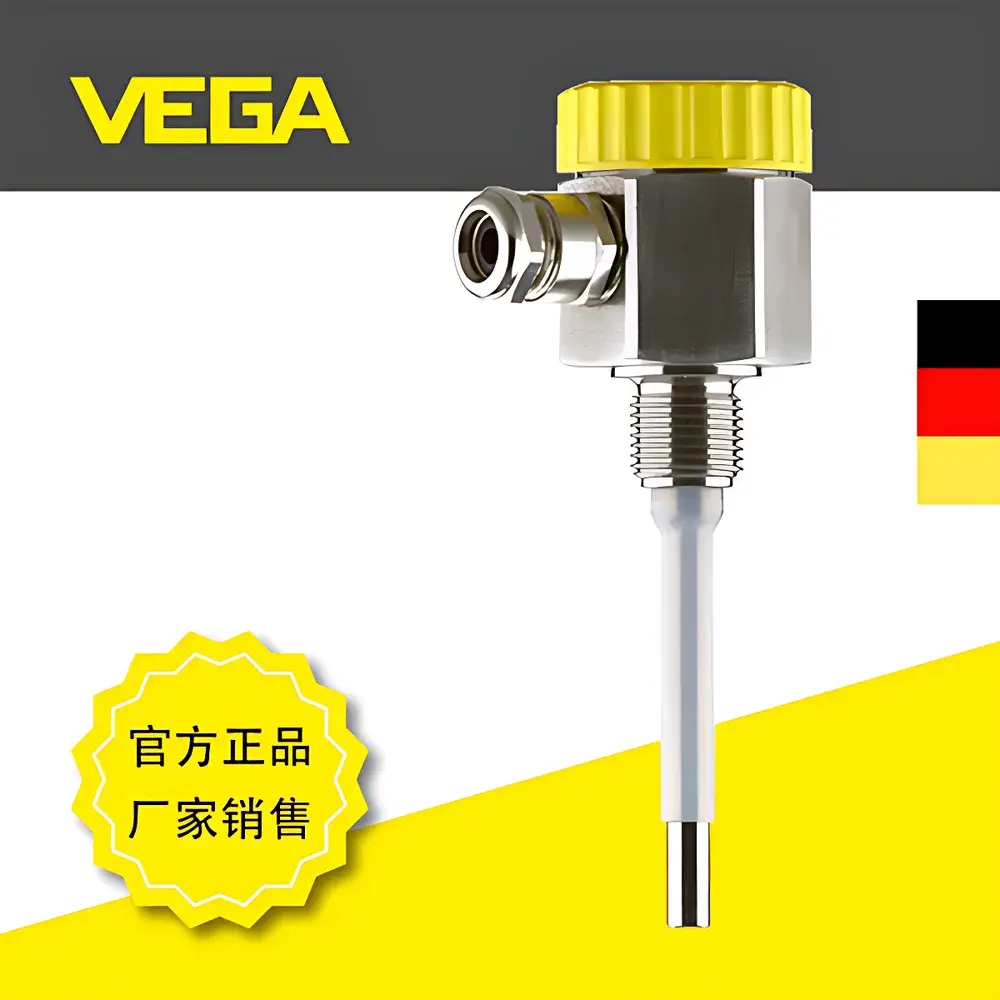
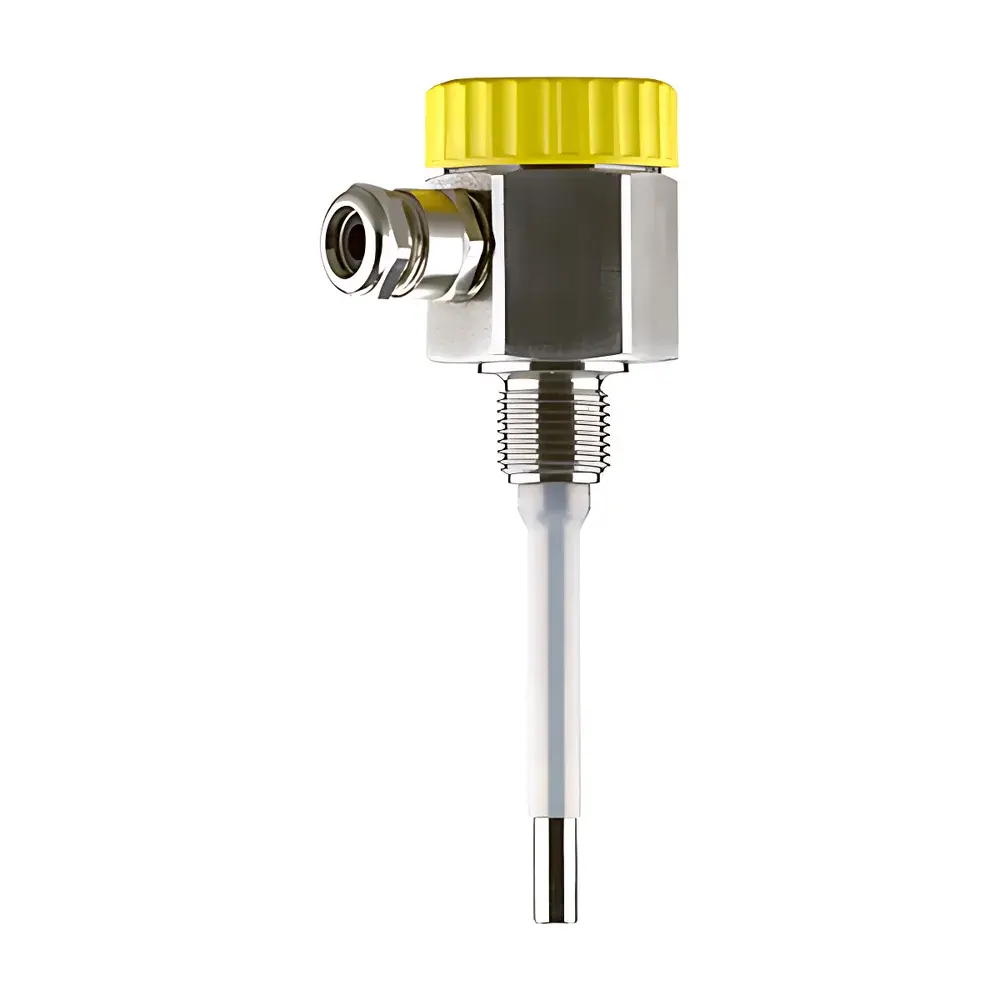
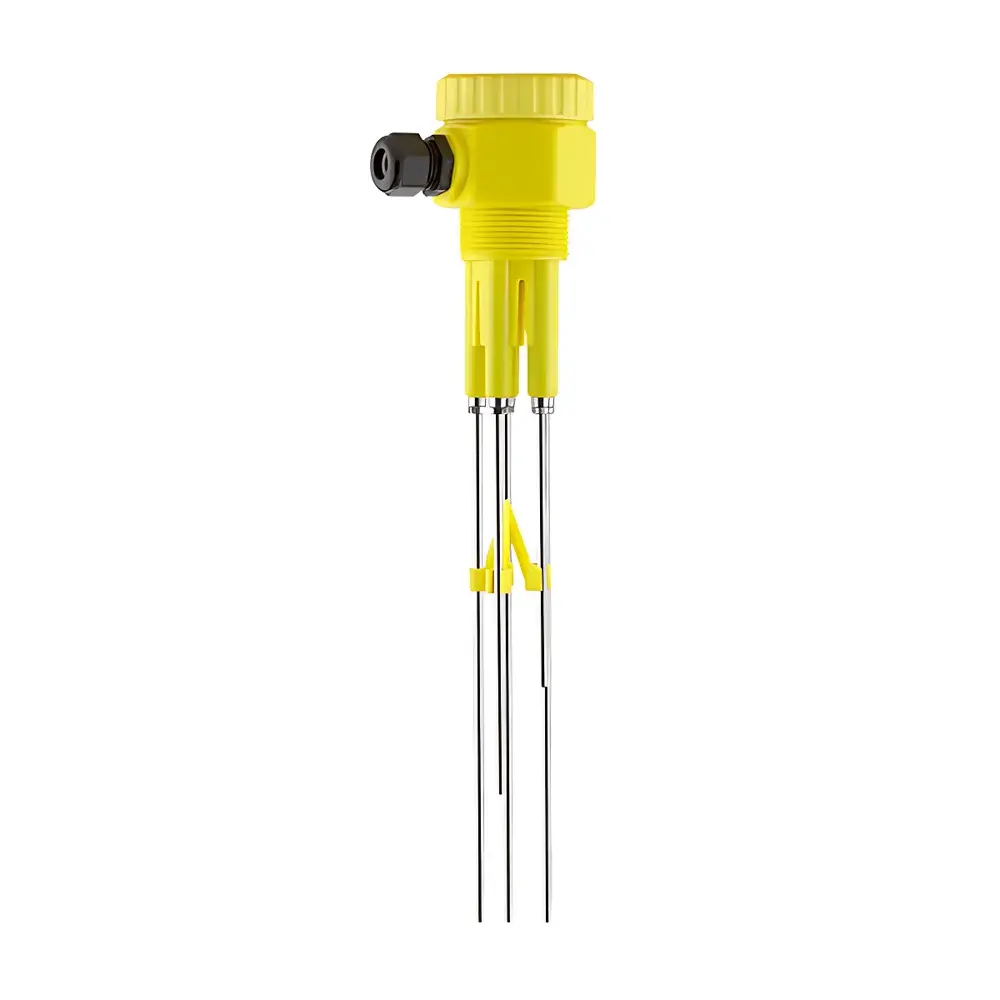
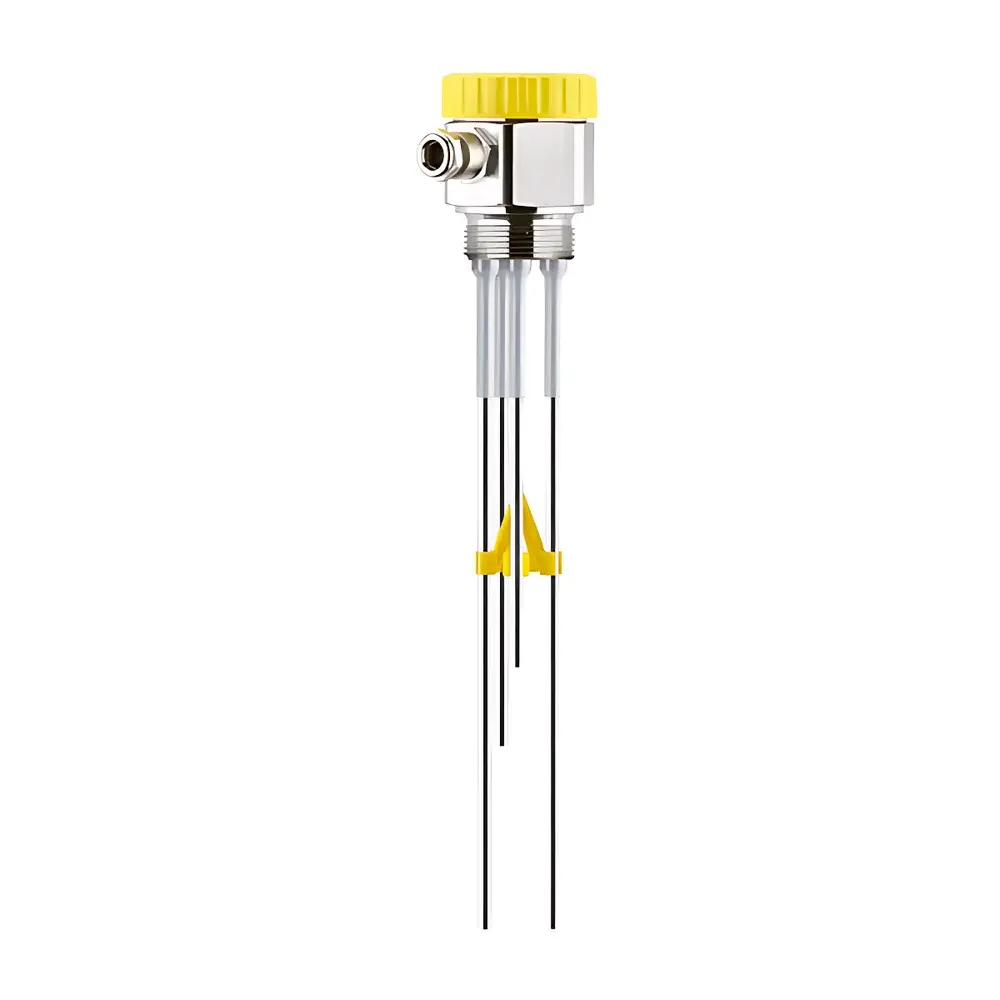
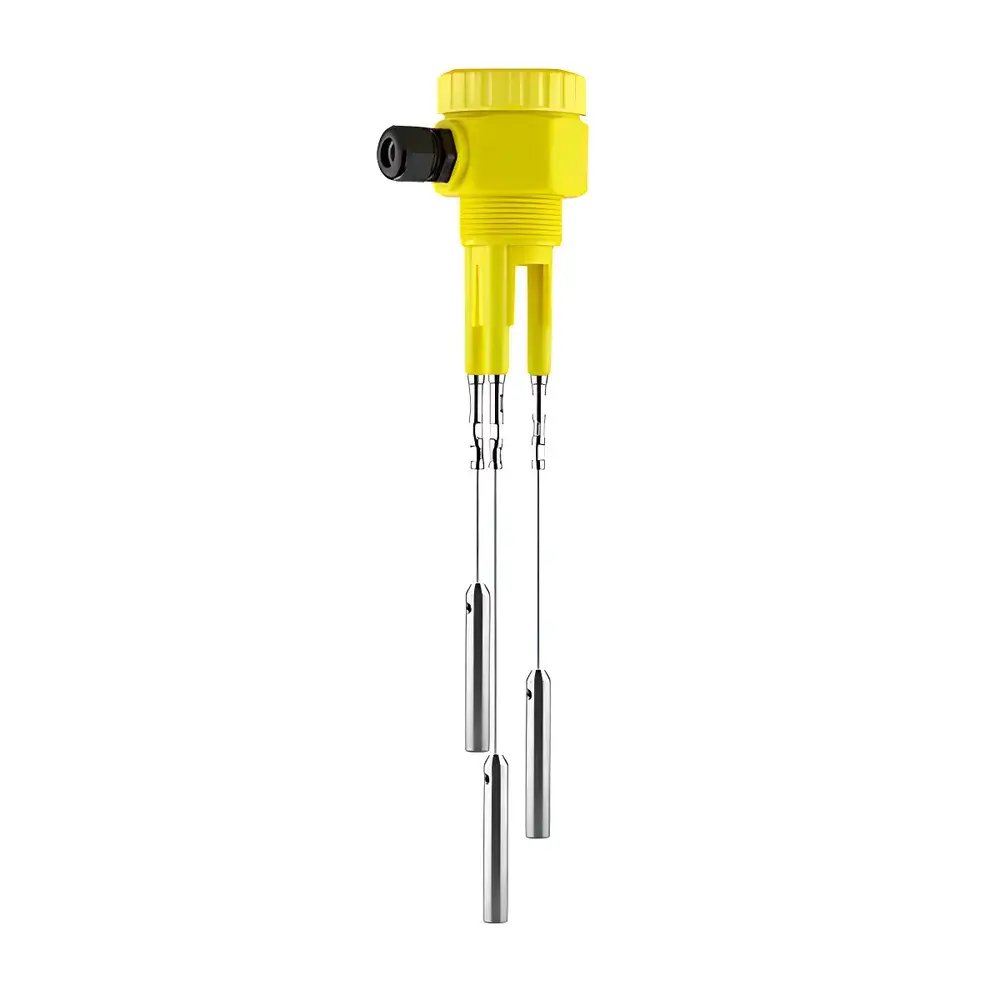
VEGA EL1 Conductive Level Switch – Rod-Type Electrode
| Brand | VEGA |
|---|---|
| Origin | Germany |
| Manufacturer | VEGA Grieshaber KG |
| Product Type | Conductive Level Switch |
| Model | EL 1 |
| Electrode Insulation | PTFE |
| Max. Electrode Length | 4 m |
| Compatible Controllers | VEGATOR 131, VEGATOR 132, VEGATOR 130 Series |
| Application | Overflow & Dry-Run Protection |
| Compliance | ATEX, IECEx, SIL 2 (per IEC 61508), RoHS, CE |
Overview
The VEGA EL1 conductive level switch is a robust, field-proven rod-type electrode designed for reliable point-level detection in conductive liquids across industrial process environments. Operating on the principle of electrical conductivity—where liquid presence completes a low-voltage circuit between the electrode and vessel wall (or reference electrode)—the EL1 delivers binary on/off signaling for critical safety and control functions. Unlike capacitive or ultrasonic alternatives, this conductive method offers high immunity to foam, vapor, coating, and turbulence, provided the medium exhibits minimum conductivity ≥ 5 µS/cm. The EL1 is not a standalone instrument; it must be integrated with a certified VEGATOR series controller (e.g., VEGATOR 131 or 132) to provide galvanically isolated switching outputs, fault diagnostics, and configurable hysteresis. Its design conforms to functional safety requirements up to SIL 2 per IEC 61508 when used in conjunction with compatible VEGATOR controllers and properly engineered safety loops.
Key Features
- PTFE-insulated stainless steel rod electrode—chemically inert, resistant to aggressive media, and rated for continuous operation from –20 °C to +120 °C (short-term up to +150 °C)
- Modular length configuration: standard lengths up to 4 m; field-trimmable to precise installation requirements without compromising insulation integrity or certification
- Compact, low-profile mechanical design enables retrofitting into confined spaces, narrow nozzles, or existing tank penetrations with minimal process interruption
- Hermetically sealed M12 or PG13.5 cable entry with IP66/IP67 ingress protection—suitable for outdoor and washdown environments
- No moving parts or internal electronics—ensures long-term stability, zero drift, and minimal maintenance over decades of service life
- Compliant with ATEX II 1/2 G Ex ia IIC T6 Ga/Gb and IECEx Ex ia IIC T6 Ga/Gb for use in Zone 0/1 hazardous areas
Sample Compatibility & Compliance
The EL1 is suitable for all electrically conductive liquids—including water-based solutions, acids, alkalis, solvents, wastewater, slurries (non-abrasive), and food-grade liquids—provided conductivity exceeds 5 µS/cm and viscosity remains below 1000 mPa·s. It is unsuitable for non-conductive media such as hydrocarbons, pure deionized water, or oils. The PTFE insulation provides resistance to corrosion, scaling, and chemical attack, enabling direct contact with media in pharmaceutical, chemical, and food processing applications. All configurations meet EU Machinery Directive 2006/42/EC, Electromagnetic Compatibility Directive 2014/30/EU, and Pressure Equipment Directive 2014/68/EU where applicable. Documentation includes full Declaration of Conformity, EC Type Examination Certificate (Notified Body 0082), and SIL verification reports traceable to TÜV Rheinland.
Software & Data Management
As a passive sensing element, the EL1 does not incorporate embedded firmware or digital communication protocols. Configuration, diagnostics, and alarm logic are managed exclusively through the connected VEGATOR controller—available with HART, IO-Link, or relay output interfaces. VEGATOR controllers support audit-trail logging, event timestamping, and diagnostic status reporting compliant with FDA 21 CFR Part 11 when deployed with validated system architecture. Engineering tools such as VEGA Tools enable parameterization of response delay, dry-run timeout, and self-test intervals—facilitating alignment with plant-wide automation systems (DCS/PLC) and supporting GLP/GMP documentation workflows in regulated industries.
Applications
The EL1 is routinely deployed for overflow prevention in chemical dosing tanks, dry-run protection of centrifugal pumps in water treatment plants, high/low-level alarms in pharmaceutical buffer vessels, and interface detection in separator sumps. Its reliability in viscous or foaming media makes it preferred over float switches in pulp & paper stock chests and bioreactor harvest tanks. In energy infrastructure, it safeguards fuel oil day tanks and condensate receivers. End-user sectors include municipal water/wastewater, fine chemicals, bulk pharmaceuticals, dairy processing, and mining leach circuits—where mechanical simplicity, intrinsic safety, and long calibration intervals are operational imperatives.
FAQ
Can the EL1 be used in explosive atmospheres?
Yes—the EL1 rod electrode carries ATEX and IECEx certification for Zone 0/1 (gas) environments when paired with an intrinsically safe VEGATOR controller.
Is calibration required after installation?
No—conductivity-based switching requires no periodic calibration; however, functional testing using a test resistor per IEC 61511 is recommended during commissioning and at scheduled maintenance intervals.
What is the minimum conductivity threshold for reliable operation?
The EL1 requires ≥ 5 µS/cm; conductivity below this value may result in unstable switching or failure to detect level.
Can multiple EL1 electrodes connect to one VEGATOR controller?
Yes—VEGATOR 132 supports up to two independent electrode inputs, enabling dual-point level monitoring (e.g., high and low alarm) from a single controller unit.
Does PTFE insulation affect response time?
No—response is governed solely by liquid conductivity and electrode geometry; PTFE’s dielectric properties do not introduce measurable delay in switching behavior.