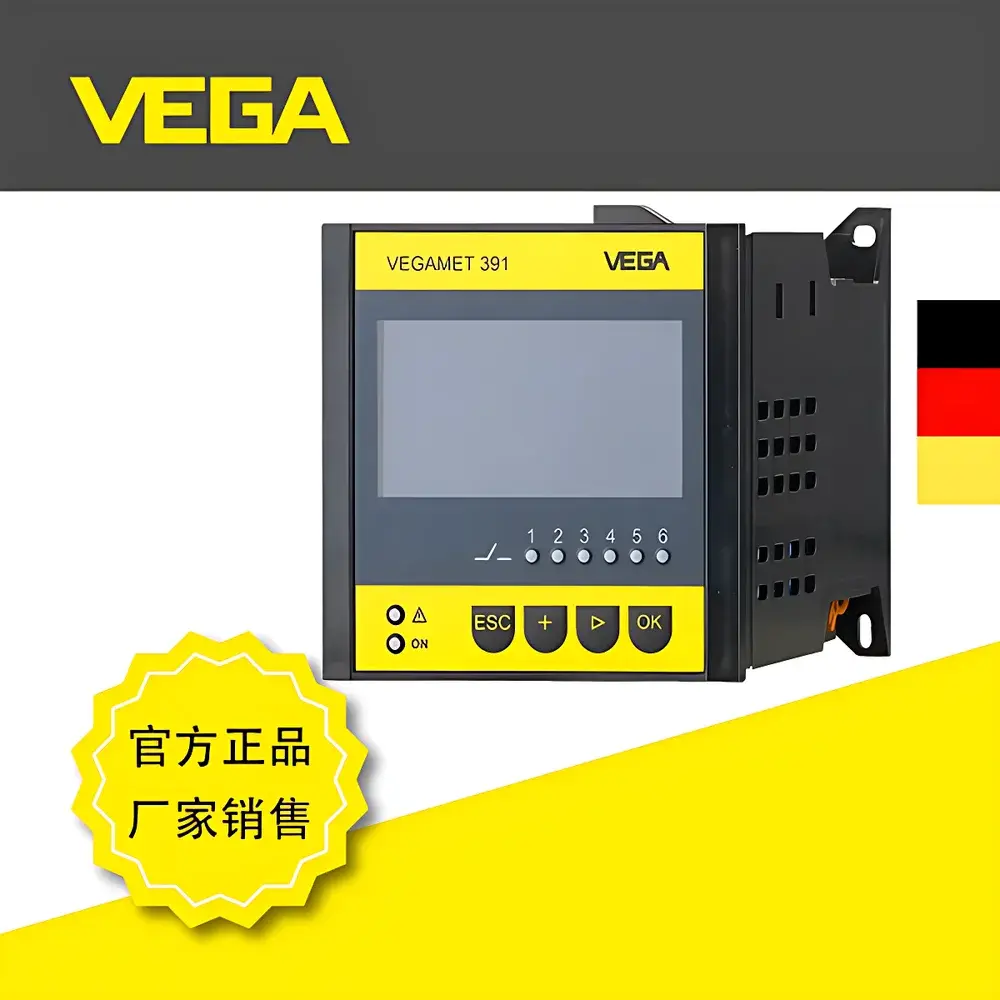
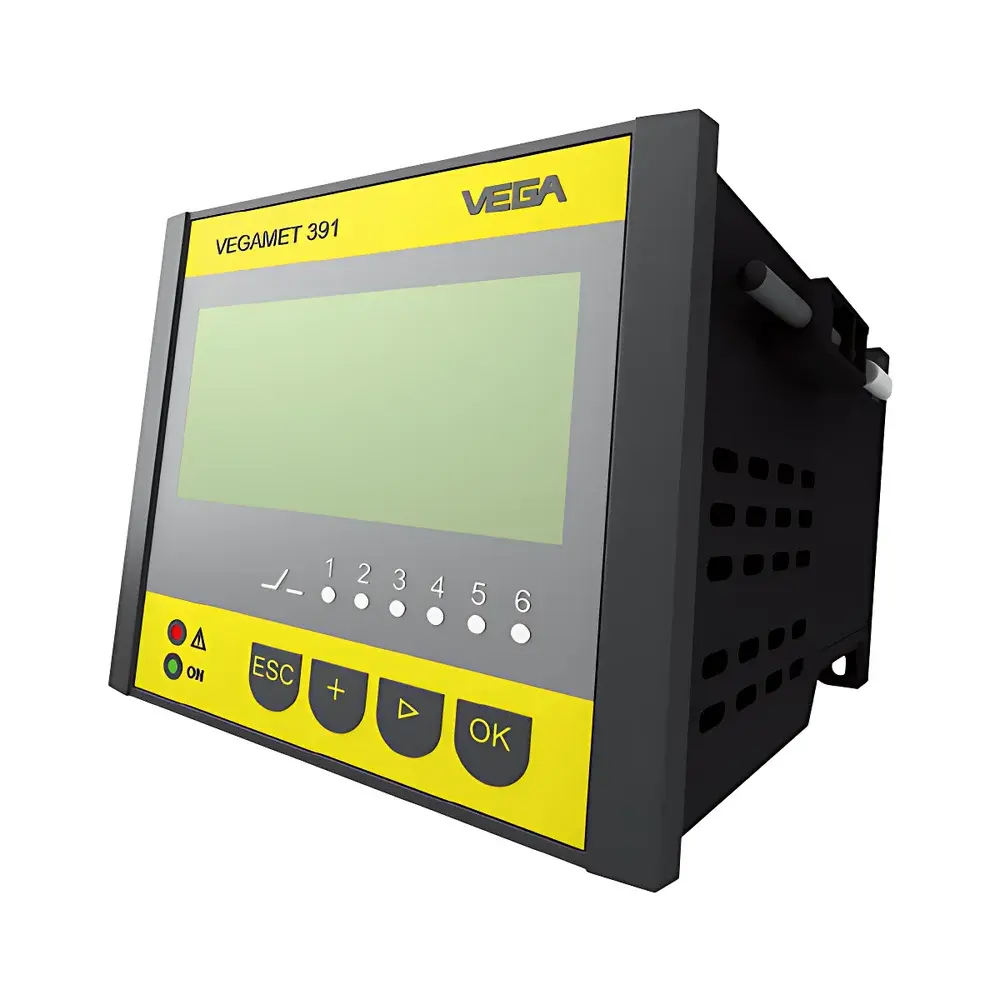
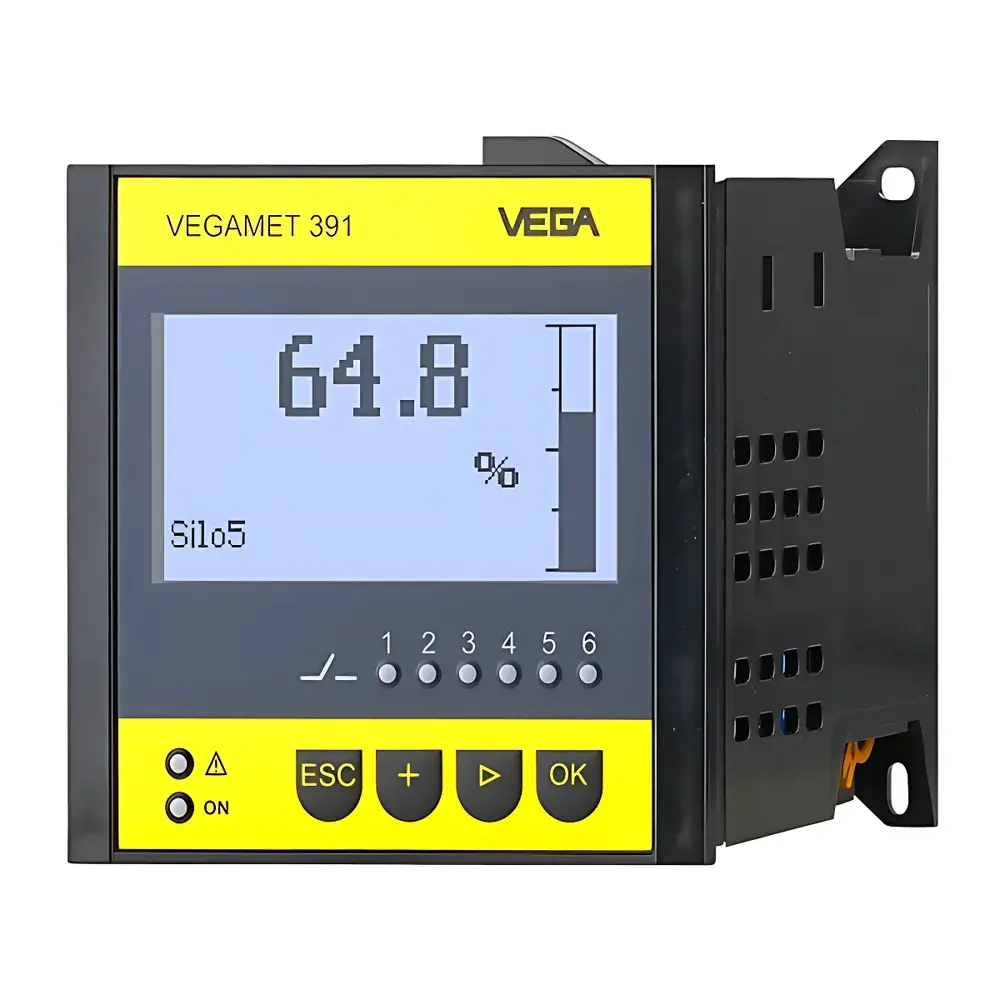
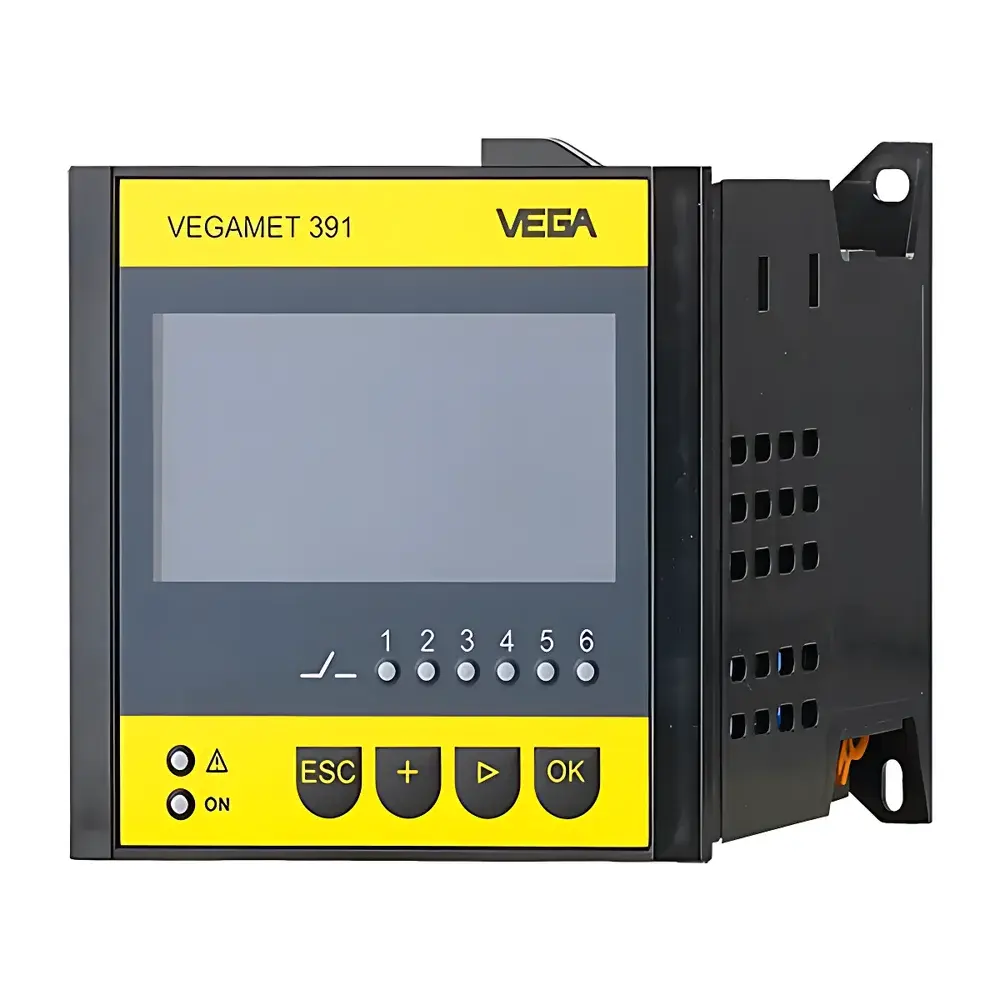
VEGA VEGAMET 391 Universal Process Display and Control Instrument
| Brand | VEGA |
|---|---|
| Origin | Germany |
| Manufacturer | VEGA Grieshaber KG |
| Product Type | Industrial Display & Controller |
| Model | VEGAMET 391 |
| Input Signal | 4–20 mA / HART |
| Power Supply | Loop-powered or external 24 V DC |
| Communication | Integrated web server, HART multiplexing support |
| Enclosure Rating | IP66/IP67 (front), NEMA 4X |
| Operating Temperature | –20 to +60 °C |
| Certifications | ATEX, IECEx, UL/cUL, FM, SIL 2 (per IEC 61508), GLP/GMP-compliant data logging capability |
| Compliance | EN 61000-6-2/-6-4, EMC Directive 2014/30/EU, RoHS, WEEE |
Overview
The VEGA VEGAMET 391 is a DIN-rail mountable, universal process display and control instrument engineered for reliable integration into water and wastewater treatment plants, municipal utilities, industrial process skids, and remote monitoring infrastructure. Designed around the core principle of analog signal conditioning and intelligent local control, it accepts standard 4–20 mA current loop inputs—compatible with HART-enabled level, pressure, flow, and temperature transmitters—and provides real-time visualization, configurable alarm handling, and deterministic logic-based control functions without requiring a PLC or DCS. Its architecture supports both standalone operation and seamless fieldbus-adjacent deployment, serving as a primary human-machine interface (HMI) at the device layer while maintaining full traceability and audit readiness per regulatory frameworks including FDA 21 CFR Part 11 (when used with compliant software workflows) and ISO/IEC 17025-aligned calibration documentation practices.
Key Features
- Integrated web server enabling secure HTTP(S) access via internal network or demilitarized zone (DMZ)-configured external gateways—no proprietary software required for basic configuration or live value monitoring
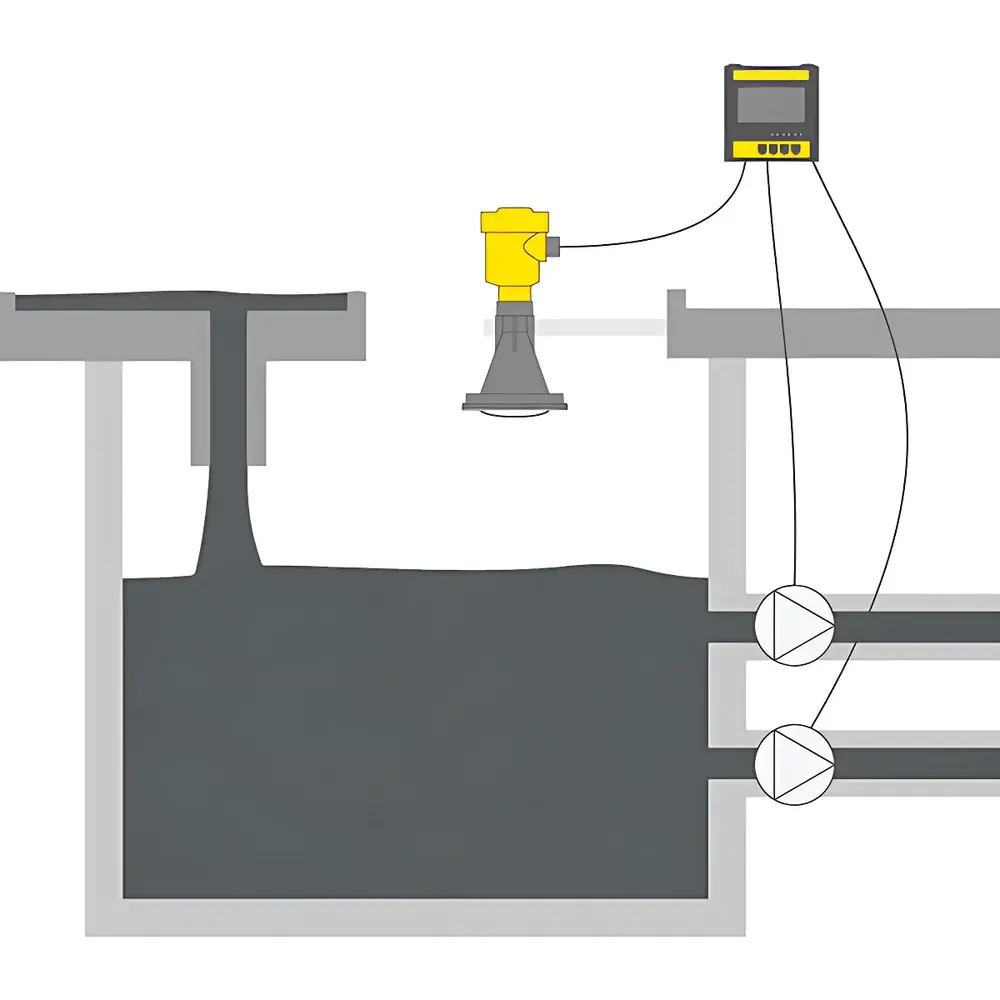
- Dual-channel pump control logic with load balancing, dry-run protection, and staggered start/stop sequencing to extend equipment service life and reduce peak power demand
- Onboard flow computation engine supporting volumetric flow rate calculation (e.g., from differential pressure or ultrasonic transit-time inputs), cumulative totalization, and time-based trend logging (up to 30 days of 1-minute intervals)
- Configurable 4–20 mA output with HART transparency for retransmission to central SCADA systems or cascade control loops
- Field-programmable relay outputs (2 × SPDT) with user-defined alarm thresholds, hysteresis, and delay timers for safety-critical shutdown or notification actions
- Rugged aluminum front housing rated IP66/IP67 and certified for hazardous areas (ATEX Zone 1, IECEx Zone 1, Class I Div 1), suitable for outdoor enclosures and wet-process environments
Sample Compatibility & Compliance
The VEGAMET 391 interfaces natively with all VEGA 4–20 mA/HART transmitters—including VEGAPULS radar, VEGASONIC ultrasonic, VEGABAR pressure, and VEGAFLEX guided wave radar devices—as well as third-party HART-compatible sensors meeting HART Foundation specifications v5.0 or later. It complies with electromagnetic compatibility standards EN 61000-6-2 (immunity) and EN 61000-6-4 (emission), carries CE marking under the EU Low Voltage and EMC Directives, and holds functional safety certification up to SIL 2 per IEC 61508:2010 for use in safety-related control functions when implemented within a validated system architecture. For regulated laboratories and pharmaceutical water systems, its timestamped event logging, password-protected configuration access, and non-volatile memory retention support adherence to ALCOA+ data integrity principles and 21 CFR Part 11 electronic record requirements when paired with validated IT infrastructure.
Software & Data Management
Configuration is performed via an embedded HTML5 web interface accessible through any modern browser—no client installation needed. The instrument stores up to 10 independent configuration profiles, each with unique scaling, damping, alarm setpoints, and control parameters. All parameter changes are logged with operator ID (if enabled), timestamp, and pre-/post-value deltas. Historical trend data is exportable in CSV format directly via USB flash drive or HTTP GET request. Firmware updates are delivered as signed binary packages verified via SHA-256 checksums, ensuring integrity during over-the-air or local update procedures. Audit trails meet GLP/GMP expectations for change control documentation in regulated water quality monitoring applications.
Applications
- Real-time water level monitoring and pump station automation in municipal drinking water distribution and stormwater/sewage lift stations
- Inventory management (VMI) for chemical dosing tanks (e.g., chlorine, coagulants) with consumption tracking and low-level alerts
- Pressure monitoring across filtration membranes or pipeline networks with automatic pressure-compensated flow derivation
- Remote telemetry nodes where cellular or LoRaWAN gateways connect to the VEGAMET 391’s Ethernet or RS-485 port for edge preprocessing
- Redundant local display backup for critical level measurements in SIL-rated safety instrumented systems (SIS)
FAQ
Does the VEGAMET 391 support Modbus RTU or TCP communication?
No—the device does not implement Modbus protocol stacks. Communication is limited to HART (point-to-point or multidrop), HTTP(S) for configuration/data retrieval, and optional RS-485 for external serial logging devices.
Can it be used in explosion-hazardous areas?
Yes—models with intrinsic safety or flameproof enclosures are certified for ATEX Zone 1, IECEx Zone 1, and UL Class I Div 1 environments. Always verify the specific variant’s certificate number against your site classification.
Is firmware upgrade possible without physical access?
Firmware updates require either local USB connection or secure HTTP upload through the web interface; remote OTA updates via cloud platforms are not supported.
What is the maximum number of HART devices it can manage simultaneously?
The VEGAMET 391 operates as a single HART master on one loop. It supports up to four HART devices in multidrop mode (all configured to different addresses) on a single 4–20 mA line.
Does it store calibration history or sensor diagnostics?
It logs configuration changes and alarm events, but does not retain transmitter-specific diagnostic data (e.g., sensor health flags or echo curve snapshots); such data must be retrieved directly from the connected HART device using a handheld communicator or asset management software.
Related Products