
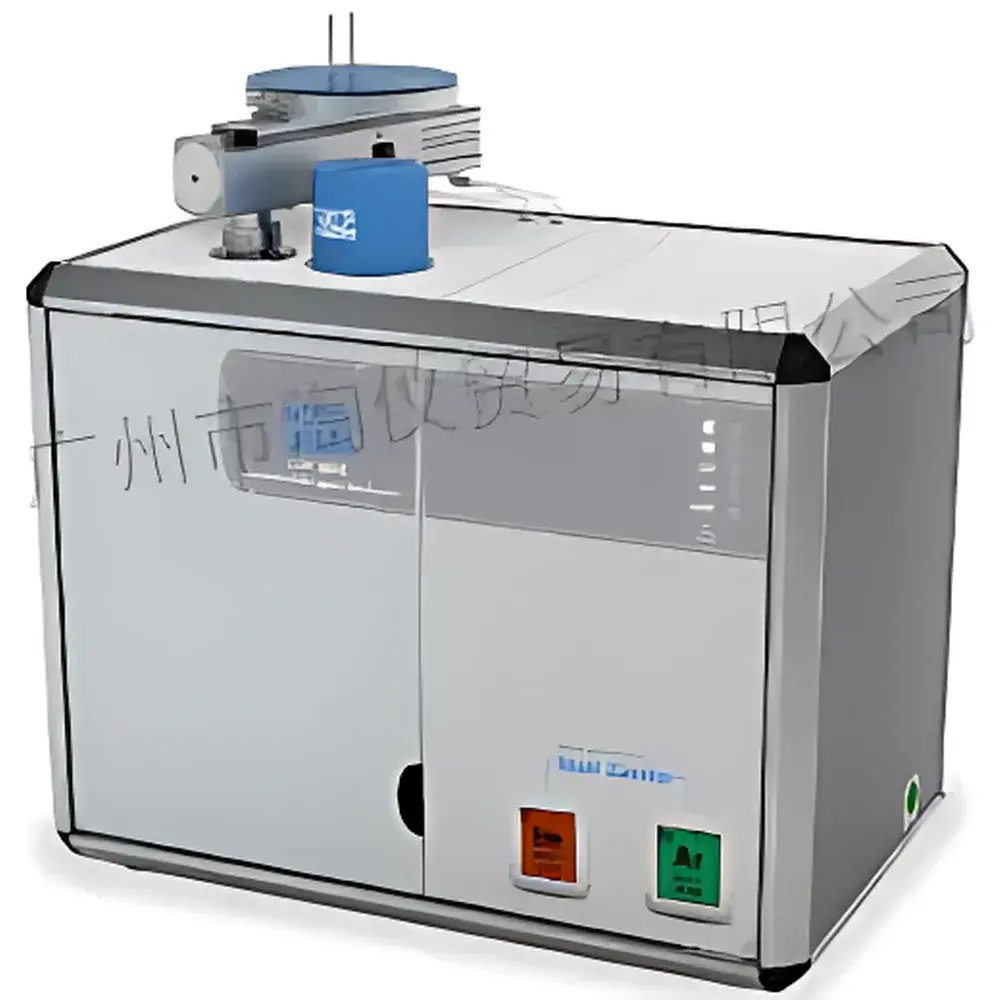
VELP CN802 Carbon/Nitrogen Elemental Analyzer
| Brand | VELP |
|---|---|
| Origin | Italy |
| Model | CN802 |
| Detection Principle | High-Temperature Combustion (Dumas Method) coupled with NDIR CO₂ detection and TCD N₂ detection |
| Sample Throughput | Up to 30 samples unattended |
| Sample Form | Solid and liquid (up to 1 g) |
| Carrier Gases | Helium or Argon (switchable without hardware modification) |
| Compliance | AOAC, AACC, ASBC, ISO, DIN, IFFO, OIV, ASTM, EPA |
| Detection Technologies | NDIR for CO₂, LoGas™ TCD for N₂ |
| Moisture Removal | DriStep™ integrated desiccant system |
| Automation | 30-position autosampler (expandable to 90 positions with additional trays) |
| Software Platform | CNSoft™ + Ermes Cloud Connectivity |
| Regulatory Support | Audit trail, user management, electronic signatures (21 CFR Part 11 ready) |
Overview
The VELP CN802 Carbon/Nitrogen Elemental Analyzer is a high-precision, combustion-based instrument engineered for the simultaneous quantitative determination of total carbon (TC), total nitrogen (TN), total inorganic carbon (TIC), total organic carbon (TOC, following acid pretreatment), and the C/N ratio in heterogeneous solid and liquid matrices. It operates on the Dumas principle—sample combustion at 1,150 °C in an oxygen-rich environment—followed by selective gas-phase detection. Unlike classical Kjeldahl or wet-chemistry methods, the CN802 eliminates hazardous reagents and lengthy digestion steps. Post-combustion gases undergo sequential purification: catalytic reduction of NOx, removal of residual water via the proprietary DriStep™ desiccant system, and separation of CO₂ and N₂ streams. CO₂ is quantified using a high-stability, temperature-compensated non-dispersive infrared (NDIR) detector, while N₂ is measured via a low-drift, high-sensitivity LoGas™ thermal conductivity detector (TCD). This dual-detection architecture ensures independent, orthogonal validation of carbon and nitrogen signals—critical for method robustness in regulated environments.
Key Features
- Ultra-rapid analysis cycle: Complete TC/TN determination in 2–5 minutes per sample, enabled by optimized furnace ramp profiles and rapid gas switching logic.
- True dual-gas flexibility: Seamless carrier gas interchange between helium and argon without mechanical valve changes or recalibration—essential for labs supporting multiple standard methods requiring different thermal conductivity baselines.
- Modular autosampling: Standard 30-position carousel supports direct solid weighing; optional expansion modules allow stacking of up to three trays (90 total positions) with programmable tray-level priority scheduling.
- DriStep™ integrated moisture management: A regenerable, self-monitoring desiccant system that maintains dew point < –40 °C throughout analysis, eliminating condensation-induced baseline drift and detector saturation.
- CNSoft™ v4.x software: Provides full method configuration, real-time chromatogram visualization, peak integration with manual override, calibration curve fitting (linear, quadratic, weighted), and automatic QC flagging based on user-defined acceptance criteria (e.g., %RSD ≤ 1.5, recovery 95–105%).
- Ermes Cloud connectivity: Enables remote instrument monitoring, secure data backup, cross-lab method sharing, and centralized audit log aggregation—fully compatible with GLP/GMP-aligned data governance frameworks.
Sample Compatibility & Compliance
The CN802 accommodates a broad range of sample types without hardware reconfiguration: agricultural soils (0.1–1.0 g), feedstuffs, pharmaceutical excipients, environmental sediments, wastewater solids (after lyophilization), and liquid standards (via ceramic boat loading). Its performance meets or exceeds requirements defined in AOAC Official Methods 993.13 and 2001.11, ISO 13878:1998, ASTM D5373-22, EPA Method 440.1, and OIV-MA-AS323-03. All critical parameters—including furnace temperature stability (±2 °C), carrier gas flow control (±0.5 mL/min), and detector response linearity (R² ≥ 0.9999 over 0–20 mg C and 0–10 mg N ranges)—are traceable to NIST-certified reference materials. The system supports 21 CFR Part 11 compliance through role-based access control, electronic signature capture, and immutable audit trails covering all method edits, calibration events, and result exports.
Software & Data Management
CNSoft™ serves as the embedded analytical engine and regulatory interface. It enforces method-defined sequence protocols, auto-calculates stoichiometric corrections (e.g., for carbonate interference in TOC mode), and generates compliant PDF reports with embedded metadata (operator ID, timestamp, instrument serial number, calibration certificate IDs). Raw chromatographic data (time-resolved detector voltage outputs) are stored in vendor-neutral .csv format alongside processed results. Ermes Cloud extends functionality by enabling automated daily backup to encrypted AWS S3 buckets, configurable email alerts for maintenance thresholds (e.g., desiccant saturation, catalyst lifetime), and version-controlled method libraries synchronized across multi-instrument deployments. All cloud interactions adhere to ISO/IEC 27001-certified infrastructure security protocols.
Applications
- Agricultural research: Soil organic carbon sequestration studies, fertilizer efficiency trials, and feed digestibility modeling via C/N ratio profiling.
- Environmental monitoring: Quantification of TC/TN in contaminated soils per EPA SW-846 Method 9060A, sediment nutrient loading assessments, and landfill leachate characterization.
- Food & feed quality control: Verification of protein content (via TN × 6.25), authenticity testing of plant-based proteins, and compliance with AAFCO and EU Regulation (EC) No 1831/2003.
- Pharmaceutical development: Residual catalyst screening in API synthesis, elemental impurity profiling per ICH Q3D, and excipient carbon content verification.
- Academic & method development labs: Reference material certification, interlaboratory comparison studies, and validation of novel sample preparation workflows (e.g., acid fumigation for TIC isolation).
FAQ
What sample preparation is required for liquid samples?
Liquid samples must be loaded into quartz boats with inert support (e.g., quartz wool) and dried prior to analysis. For TOC determination, acidification and sparging are performed offline to remove TIC; the residue is then analyzed for TOC.
Can the CN802 differentiate between organic and inorganic carbon without offline pretreatment?
No—the instrument measures total carbon (TC) natively. Differentiation requires external acidification and sparging to volatilize TIC, followed by analysis of the residual TOC fraction.
Is helium mandatory for optimal N₂ detection?
Helium is recommended for highest N₂ sensitivity due to its superior thermal conductivity contrast with N₂; however, argon may be substituted when helium supply constraints exist, with minor recalibration and reduced signal-to-noise ratio.
How often does the DriStep™ desiccant require replacement?
Under typical usage (≤60 samples/day), the DriStep™ cartridge lasts ≥6 months; the system provides real-time humidity monitoring and alerts at 85% saturation capacity.
Does CNSoft™ support LIMS integration?
Yes—via ASTM E1394-compliant ASCII file export and optional OPC UA server module for bidirectional communication with major LIMS platforms (e.g., LabWare, Thermo Fisher SampleManager).
Related Products






