
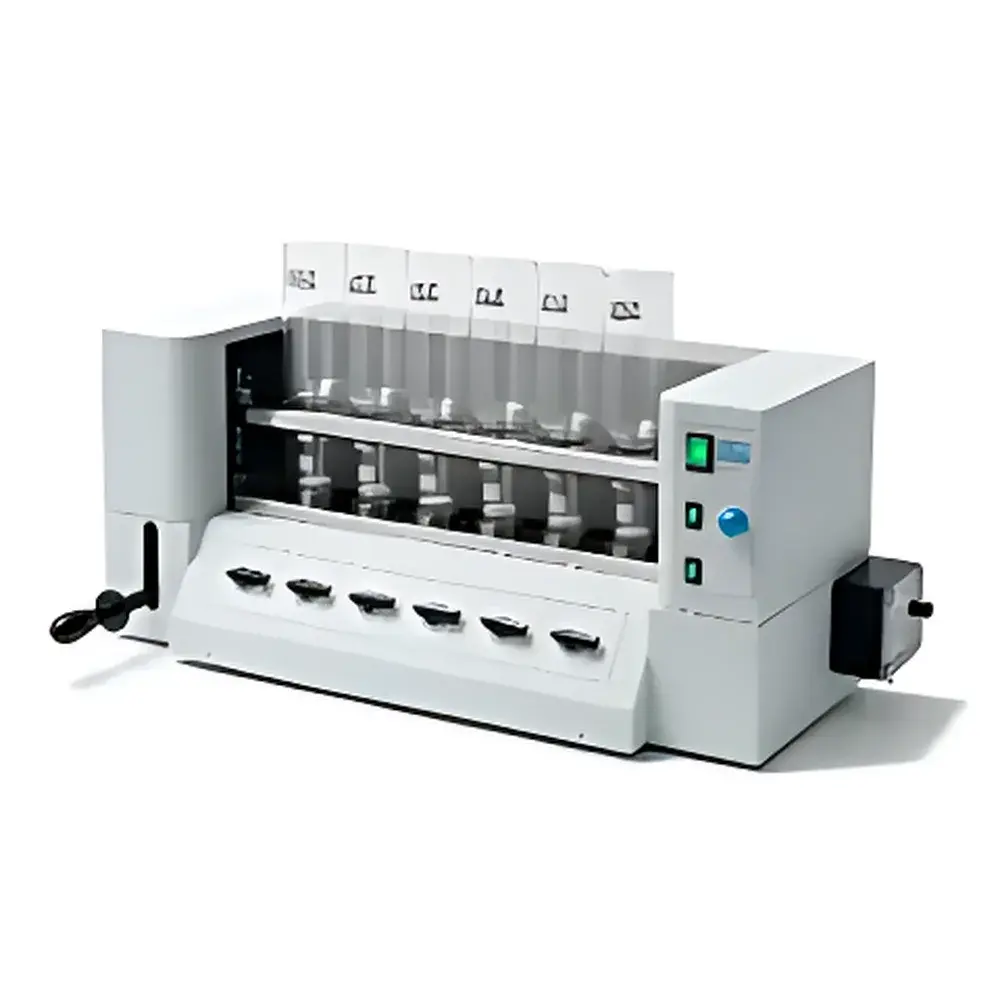
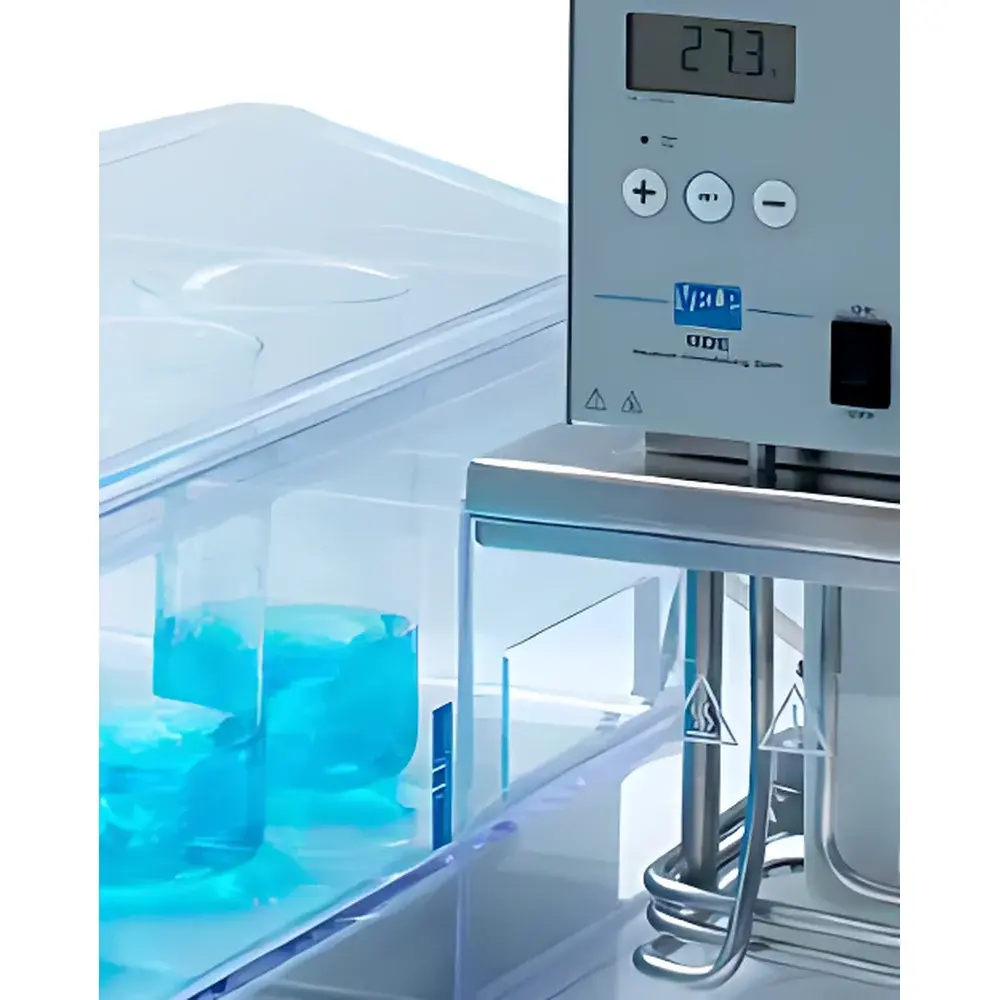
VELP CSF 6 Dietary Fiber Filtration System
| Brand | VELP |
|---|---|
| Origin | Italy |
| Manufacturer Type | Manufacturer |
| Origin Category | Imported |
| Model | CSF 6 |
| Price Range | USD 13,500 – 27,000 |
Overview
The VELP CSF 6 Dietary Fiber Filtration System is a precision-engineered, benchtop vacuum filtration unit designed exclusively for standardized enzymatic–gravimetric determination of dietary fiber fractions in food and feed matrices. It operates as the dedicated filtration module within VELP’s integrated GDE (Gravimetric Dietary Fiber Extraction) platform, complementing the enzymatic digestion system (GDE Digestion Unit) to deliver full compliance with AOAC 991.43, AACC 32–05, and ISO 13905 methodologies. The CSF 6 implements controlled vacuum-assisted gravity filtration to isolate insoluble dietary fiber (IDF), recover soluble dietary fiber (SDF) via ethanol precipitation, and perform sequential solvent washing (ethanol, acetone, hot water) under reproducible, operator-independent conditions. Its architecture centers on thermal- and chemical-resistant borosilicate glass components, ensuring compatibility with aggressive reagents—including 80% ethanol, acetone, and boiling water—while maintaining dimensional stability across repeated thermal cycles.
Key Features
- Borosilicate glass filtration manifold with six independent, calibrated funnels (each 100 mL capacity), enabling parallel processing of up to six samples per run without cross-contamination.
- Integrated vacuum control system with adjustable pressure regulation (20–100 kPa range), allowing optimization of filtration rate and cake integrity for diverse sample types—from high-viscosity cereal extracts to low-residue fruit purees.
- Ergonomic funnel design featuring wide-bore necks and tapered stems to minimize clogging, facilitate complete residue transfer, and support quantitative recovery during washing steps.
- Dedicated solvent reservoir and waste collection chamber, both constructed from chemically inert polypropylene, with level sensors and overflow protection to ensure safe, unattended operation.
- Modular interface compatible with VELP GDE Digestion Units (GDE 12 or GDE 24), enabling seamless transition from enzymatic hydrolysis (using thermostable α-amylase, protease, and amyloglucosidase) to filtration, washing, and drying workflows.
- CE-marked and compliant with IEC 61010-1 safety standards for laboratory equipment; designed for use in GLP-regulated environments requiring documented procedural consistency.
Sample Compatibility & Compliance
The CSF 6 accommodates solid, semi-solid, and homogenized food matrices—including cereals, legumes, fruits, vegetables, infant formulas, and dietary supplements—following standardized AOAC pre-treatment protocols. All wet chemistry steps—including enzyme inactivation, ethanol precipitation (4× volume), hot water washing (90–100 °C), and final acetone dehydration—are executed under gravimetrically traceable conditions. The system supports full mass balance tracking: initial dry weight, IDF residue, SDF precipitate, protein/ash correction factors, and reagent blanks are all recorded per sample. Validation data confirm inter-laboratory RSDs <5% for total dietary fiber (TDF) across matrix reference materials (e.g., NIST SRM 1849a). The workflow meets FDA requirements for nutritional labeling (21 CFR §101.9(c)(6)(i)) and aligns with EFSA Panel on Dietetic Products guidance on fiber quantification.
Software & Data Management
While the CSF 6 operates as a hardware-only filtration module, it integrates into VELP’s optional GDE Control Suite—a Windows-based application that logs instrument parameters (vacuum setpoint, filtration duration, wash cycle count), timestamps critical process milestones, and exports CSV-formatted raw data for LIMS ingestion. Audit trails comply with 21 CFR Part 11 requirements when paired with user authentication and electronic signature modules. All calibration records (funnel volume verification, vacuum sensor drift checks) and maintenance logs are stored digitally with version control and export capability.
Applications
- Regulatory nutritional labeling of packaged foods in North America, EU, and APAC markets.
- QC/QA testing in ingredient suppliers and contract manufacturing organizations (CMOs) producing high-fiber functional foods.
- Method validation and inter-laboratory comparison studies supporting AOAC Official Method development.
- Research into fiber–microbiota interactions, where precise IDF/SDF partitioning informs in vitro fermentation models.
- Development of low-glycemic-index formulations requiring accurate soluble fiber quantification (e.g., β-glucan, inulin, pectin).
FAQ
Is the CSF 6 compatible with non-VELP digestion systems?
Yes—provided the digested slurry is transferred quantitatively into the glass funnels and vacuum line connections meet ISO 23389 vacuum port specifications (DN 10 quick-release). However, full AOAC-compliant automation (e.g., timed ethanol addition, temperature-triggered wash sequences) requires integration with VELP GDE units.
What maintenance is required for long-term accuracy?
Daily rinsing with deionized water; monthly inspection of silicone gaskets and vacuum tubing for swelling or cracking; annual recalibration of vacuum transducers using a NIST-traceable reference gauge.
Can the system handle viscous samples like oat slurries without clogging?
Yes—the 30° funnel taper and 12-mm stem diameter prevent bridging; optional pre-filtration through GF/F glass microfiber filters (not included) is recommended only for exceptionally fibrous or particulate-rich matrices.
Does the CSF 6 include drying functionality?
No—it delivers dried, weighed residues ready for gravimetric analysis; users must employ a certified analytical balance and forced-air drying oven (105 °C ± 2 °C) per AOAC protocol.
Are replacement parts available globally?
Yes—VELP maintains a centralized spare parts inventory with 48-hour dispatch from Milan; glass funnels, vacuum manifolds, and solvent reservoirs carry 5-year traceability documentation.






