
Vertical + Horizontal Vibration Testing System
| Brand | OEM |
|---|---|
| Table Size | 500 × 500 mm |
| Max Load Capacity | 100 kg |
| Vibration Axes | X, Y, Z (Triaxial) |
| Frequency Range | 1–600 Hz / 1–3000 Hz / 1–5000 Hz (selectable) |
| Waveform | Sinusoidal |
| Peak-to-Peak Displacement | 0–5 mm (5 mm p-p) |
| Max Acceleration | <20 g |
| Frequency Resolution | 0.01 Hz |
| Frequency Accuracy | ±0.1 Hz |
| Test Duration | Programmable up to 9999 h/m/s |
| Power Supply | AC 220 V / 50 Hz or AC 380 V / 50 Hz |
| Control Mode | Sweep & Fixed-Frequency |
| Amplitude Control | Continuously Adjustable |
| Excitation | Four-Point Synchronous Electromagnetic Drive |
| EMI/RFI Suppression | Integrated Shielding & Noise-Immune Circuitry |
| Compliance | GB/T 2423.10–2008 |
Overview
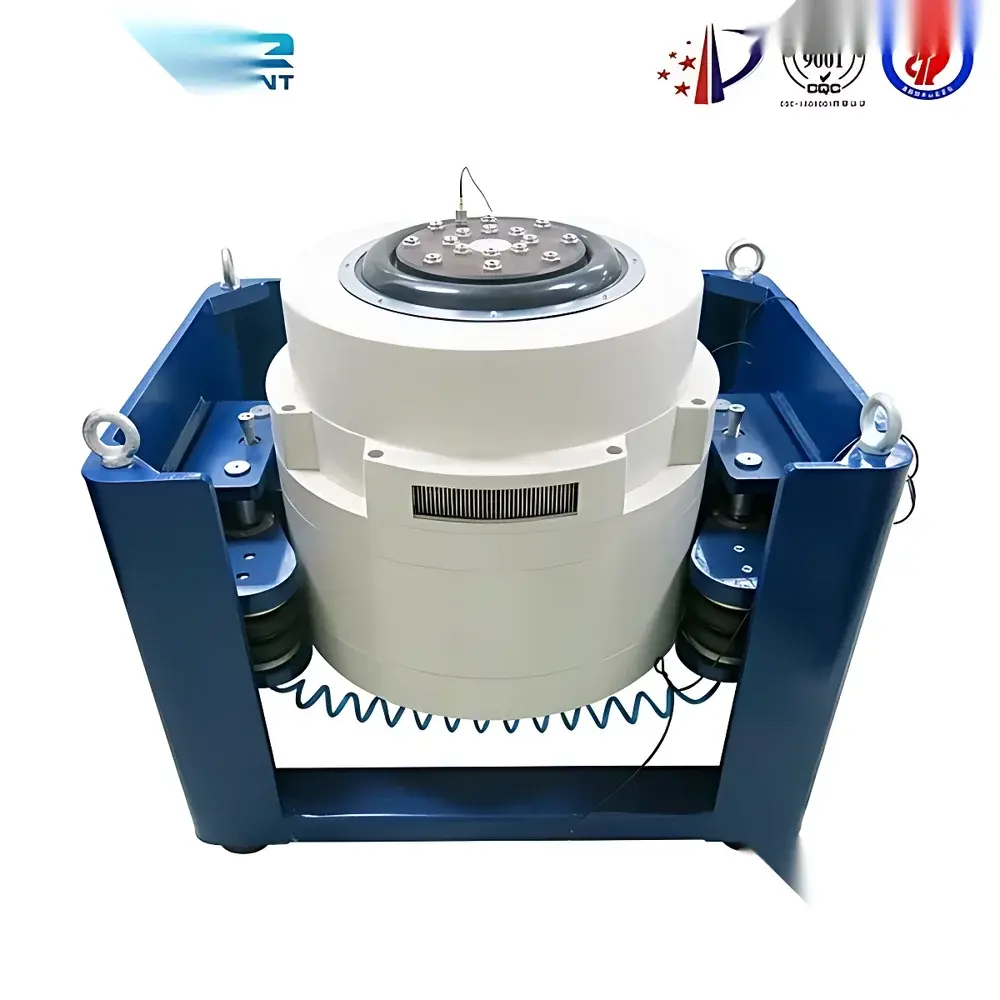
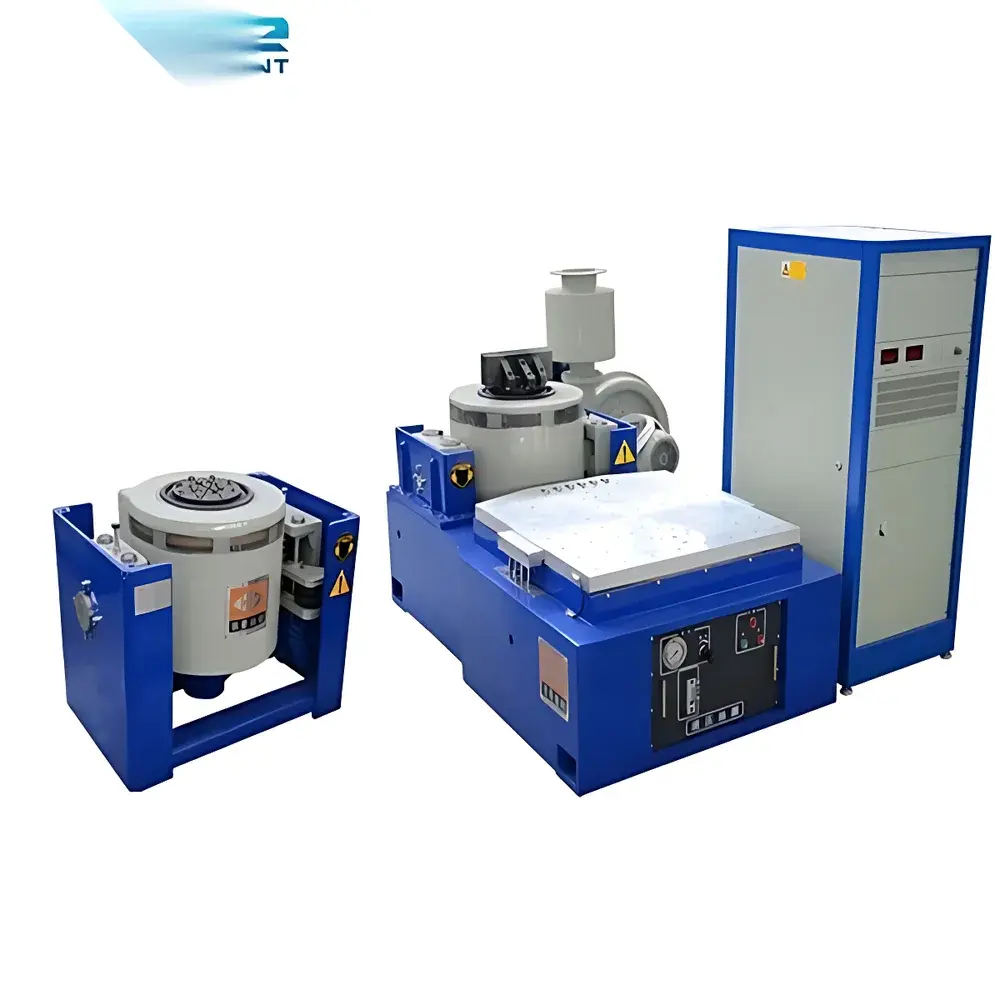
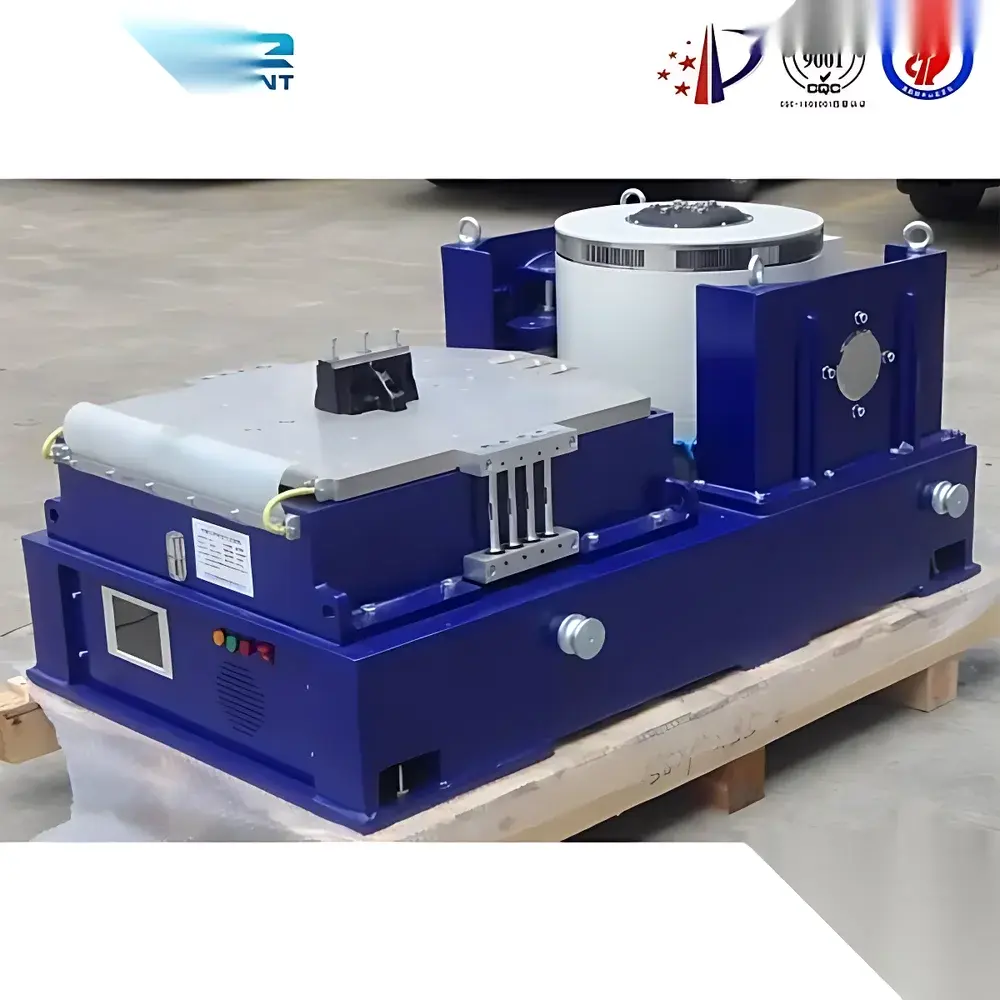
The Vertical + Horizontal Vibration Testing System is a triaxial electromagnetic shaker engineered for precise, repeatable sinusoidal vibration simulation across the X, Y, and Z axes. Designed in accordance with GB/T 2423.10–2008 (equivalent to IEC 60068-2-6), it replicates dynamic mechanical stresses encountered during transportation, handling, and operational service life—enabling structural integrity assessment, fatigue analysis, and design validation of electronic components, electromechanical assemblies, instrumentation, consumer products, and industrial equipment. Its dual-axis (vertical + horizontal) or full triaxial excitation capability supports both sequential and simultaneous multi-directional testing protocols, delivering high-fidelity acceleration profiles without mechanical coupling artifacts. The system employs a rigid, low-resonance cast-iron base and precision-machined aluminum table (500 × 500 mm) to ensure modal stability and uniform energy transmission across the test surface.
Key Features
- Triaxial electromagnetic excitation with independent or synchronized control of X, Y, and Z axes—enabling true orthogonal vibration simulation per IEC 60068-2-6 requirements.
- Four-point synchronous drive architecture ensures spatially uniform acceleration distribution across the entire 500 × 500 mm table surface, minimizing nodal distortion and edge attenuation.
- High-resolution frequency control (0.01 Hz display resolution, ±0.1 Hz accuracy) supports narrow-band resonance tracking and fine-tuned dwell testing at critical frequencies.
- Continuously adjustable peak-to-peak displacement (0–5 mm) and programmable acceleration limits (<20 g) allow precise tailoring of stress intensity to product-specific qualification criteria.
- Integrated amplitude prediction algorithm enables rapid open-loop calibration and real-time amplitude stabilization—reducing setup time and improving repeatability across test campaigns.
- Dual power input compatibility (AC 220 V / 50 Hz and AC 380 V / 50 Hz) ensures operational flexibility in diverse laboratory and production floor environments.
- EMI-hardened control electronics with galvanic isolation and active noise suppression eliminate measurement drift caused by ambient electromagnetic fields—critical for long-duration, high-sensitivity tests.
Sample Compatibility & Compliance
The system accommodates specimens up to 100 kg on its reinforced, non-magnetic aluminum table—ensuring compatibility with metallic enclosures, PCB assemblies, sensor modules, and packaged end-products. It fully satisfies the test conditions defined in GB/T 2423.10–2008 (Sinusoidal Vibration), and its performance parameters align with the functional scope of ISO 10816 (vibration severity evaluation), ASTM D999 (shipping vibration simulation), and MIL-STD-810H Method 514.8 (vibration testing). The absence of residual magnetism and static charge on the table surface prevents interference with magnetic sensors, MEMS devices, and electrostatic-sensitive components. All control firmware and hardware are designed to support GLP-compliant documentation workflows, including timestamped test logs and operator audit trails.
Software & Data Management
The embedded controller supports both sweep (linear/logarithmic) and fixed-frequency test modes, with programmable multi-segment profiles—including variable dwell times, ramp rates, and return-to-zero sequences. Users can define complex schedules (e.g., 10 Hz for 5 min → 20 Hz for 10 min → sweep 10–30 Hz × 5 cycles) via intuitive front-panel navigation or optional PC-based configuration software. Real-time monitoring includes instantaneous frequency, displacement, acceleration, and elapsed time. All test parameters and results are stored internally with UTC timestamps; data export is supported via USB 2.0 to CSV or XML formats for integration into LIMS or QA databases. Optional software add-ons provide FFT spectral analysis, resonance search routines, and automated pass/fail reporting aligned with internal quality gates.
Applications
- Pre-shipment validation of consumer electronics against transit-induced resonance failure.
- Structural modal analysis of automotive ECUs, infotainment housings, and ADAS sensor mounts.
- Reliability screening of aerospace avionics enclosures under combined-axis vibration spectra.
- Design verification of medical device casings and handheld diagnostic instruments per IEC 60601-1 mechanical stress clauses.
- Quality assurance of industrial IoT gateways, battery management systems, and robotic joint actuators.
- Research-grade fatigue testing of solder joints, flex circuits, and microelectromechanical systems (MEMS).
FAQ
What standards does this system comply with?
It meets GB/T 2423.10–2008 and is functionally compatible with IEC 60068-2-6, ASTM D999, ISO 10816, and MIL-STD-810H Method 514.8.
Can the system perform simultaneous X+Y+Z vibration?
Yes—it supports synchronized triaxial excitation as well as sequential single-axis or dual-axis testing, configurable via the control interface.
Is the vibration table magnetically inert?
Yes—the aluminum table and drive mechanism are non-ferromagnetic and electrostatically neutralized, eliminating interference with magnetic sensors and ESD-sensitive components.
How is amplitude calibrated and verified?
The system includes an embedded amplitude prediction model and supports external calibration using traceable laser Doppler vibrometers or piezoelectric accelerometers per ISO 16063-21.
Does the controller support audit trail and electronic signature for regulated environments?
Basic audit logging (operator ID, start/stop time, profile name) is built-in; full 21 CFR Part 11 compliance requires optional validated software package with role-based access and digital signature modules.



