
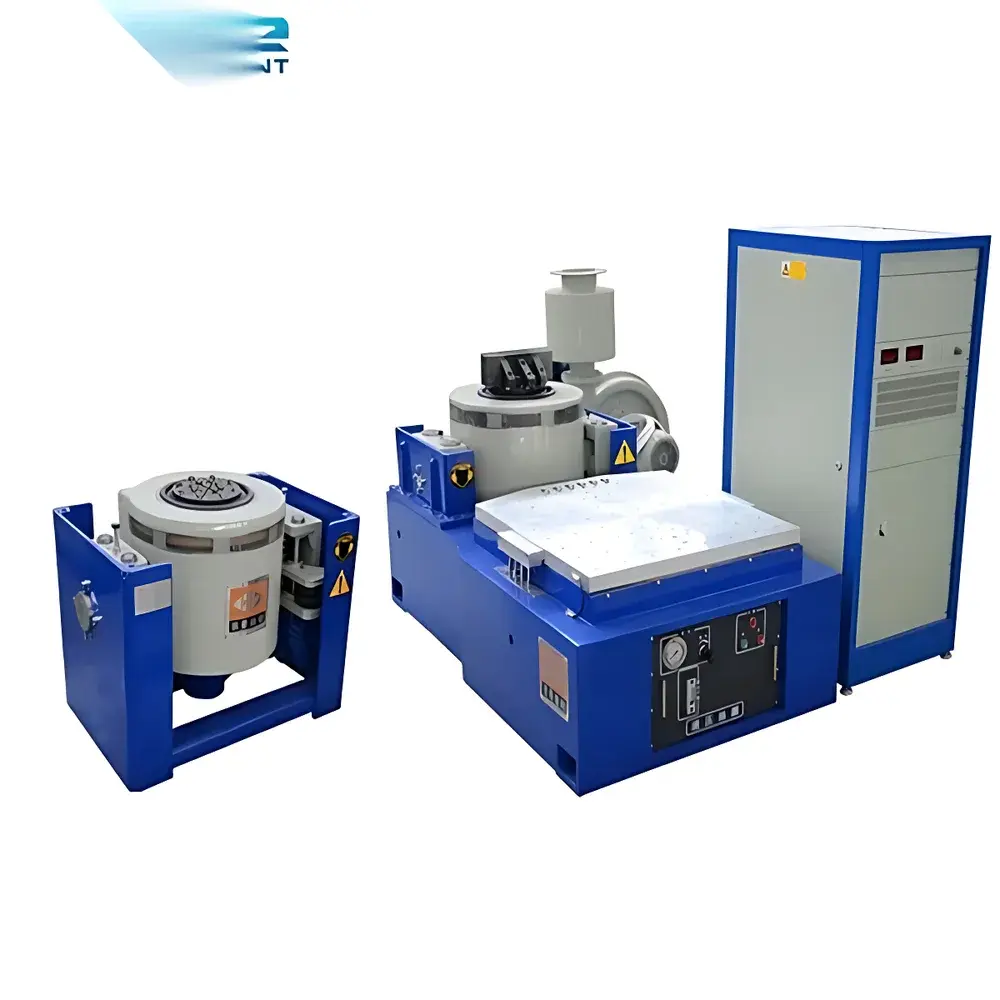
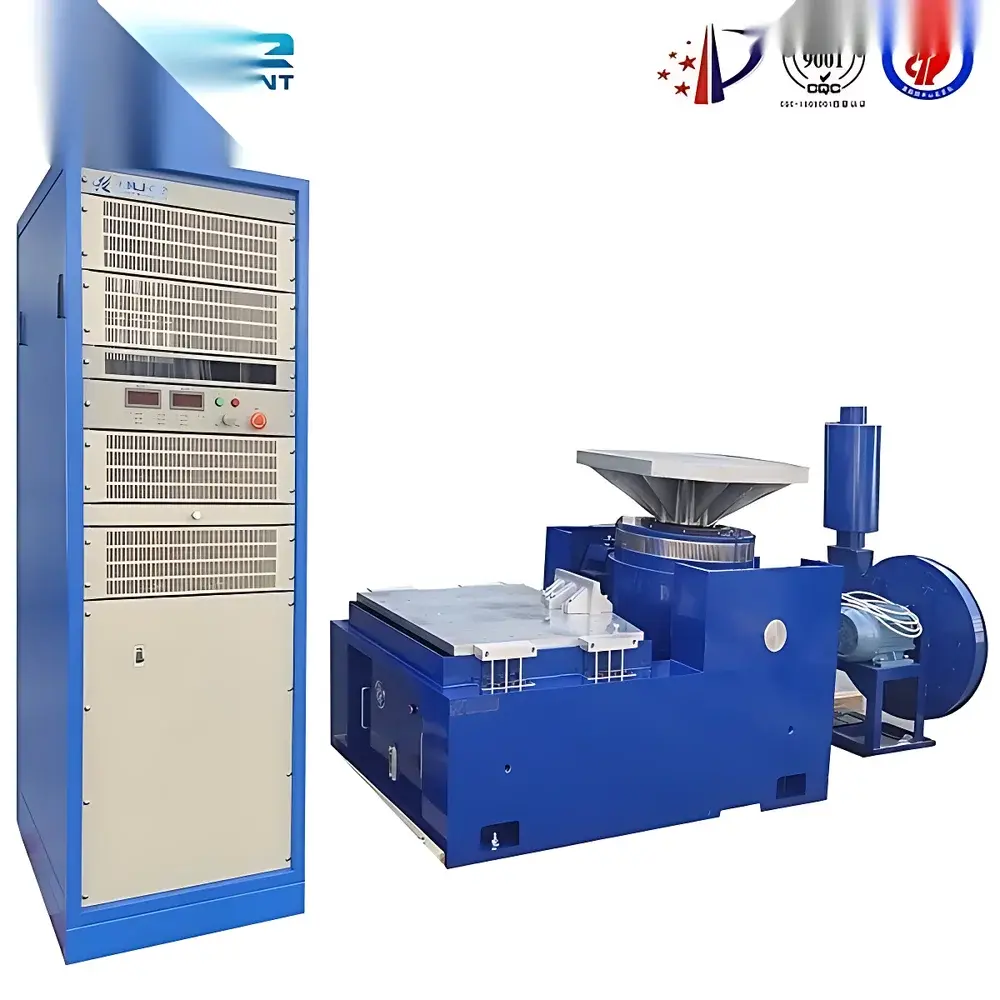
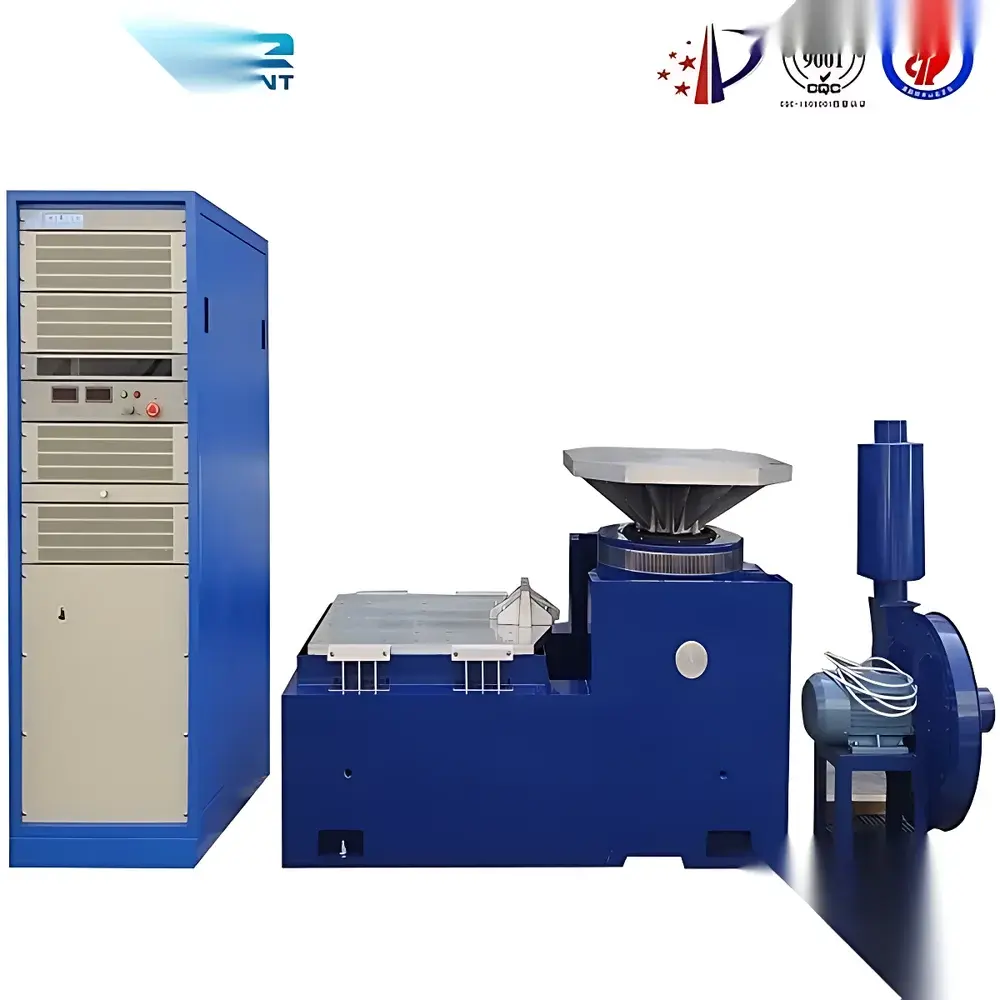
Vertical Vibration Shaker System – 1.0 m × 1.0 m Test Platform, 25.4 mm Peak-to-Peak Amplitude, 150–300 rpm Speed Range
| Brand | OEM / Custom Brand Available |
|---|---|
| Origin | Imported |
| Supplier Type | Authorized Distributor |
| Speed Range | 150–300 rpm |
| Speed Resolution | 0.1 rpm |
| Vibration Mode | Reciprocating (Linear) |
| Peak-to-Peak Amplitude | 25.4 mm |
| Load Capacity | 45.4 kg (100 lbs) |
| Effective Table Size | 1.0 m × 1.0 m |
| Timing Range | 1 s to 99 h (or 0.1 s to 300 h) |
| Start Delay Adjustment | 0–15 s |
| Motor Power | 1 HP |
| Speed Control | DC or AC Variable-Frequency Drive |
| Input Voltage | 220 V / 50–60 Hz or 380 V / 50–60 Hz |
| Compliance | ISTA 3A, EN 71-1, ASTM D999 |
Overview
The Vertical Vibration Shaker System is an electromechanical test platform engineered for controlled, repeatable linear vibration testing in laboratory and quality assurance environments. Based on a reciprocating electromagnetic actuation principle—distinct from servo-hydraulic or electrodynamic shakers—it delivers stable, low-noise vertical motion with high mechanical fidelity across its operational frequency-equivalent range (approx. 2.5–5 Hz, derived from 150–300 rpm). Its design prioritizes structural integrity, thermal management, and installation flexibility: the rigid moving-coil frame exhibits a high first-order axial resonance frequency (>150 Hz), minimizing modal interference during low-frequency transport simulation. Dual magnetic circuits ensure minimal flux leakage and uniform force distribution, while the composite guidance system—comprising rocker-arm rollers and linear bearings—provides exceptional lateral stiffness and off-center load tolerance (up to ±15% eccentricity without performance degradation). Unlike floor-mounted shakers requiring reinforced foundations, this system utilizes elastomeric pivot mounts that decouple base vibration, enabling safe operation in office buildings, shared labs, and ISO Class 7 cleanrooms without structural retrofitting.
Key Features
- High-stiffness moving-coil assembly with optimized mass-inertia ratio for enhanced transient response and reduced harmonic distortion
- Dual-magnetic-circuit topology achieving 92% energy conversion efficiency
- Hybrid guidance mechanism combining precision rocker arms and recirculating linear bearings—rated for 10⁶ cycles at full load
- Patented rail-based sample mounting interface enabling rapid, tool-free fixture attachment with ≤0.05 mm repeatability
- Integrated forced-air cooling with asymmetric airflow channeling—reducing coil temperature rise by 35% vs. conventional designs
- Load-adaptive pneumatic isolation system featuring high-static-stiffness / low-dynamic-stiffness air springs for improved low-frequency transmission control
- Low-acoustic-emission architecture (<62 dB(A) at 1 m distance), compliant with EU Directive 2000/14/EC noise limits
Sample Compatibility & Compliance
The shaker accommodates packaged goods, electronic enclosures, automotive subassemblies, and medical device cartons up to 45.4 kg on its 1.0 m × 1.0 m stainless-steel table surface (Ra ≤ 0.8 µm finish). Fixture interfaces conform to ISO 5348 mechanical mounting standards. The system meets critical regulatory benchmarks for packaging validation—including ISTA 3A (simulated truck transport), EN 71-1 (toy safety mechanical stress), and ASTM D999 (vibration testing of shipping containers). Its timing resolution (0.1 s) and programmable start delay support GLP-compliant test sequencing, while digital parameter locking prevents unauthorized configuration changes during audit-ready operation.
Software & Data Management
Operation is managed via front-panel membrane keypad with real-time LCD feedback (rpm, elapsed time, remaining duration). Optional RS-232/USB interface enables integration with LabVIEW™, MATLAB®, or custom MES platforms for automated test logging. All runtime parameters—including speed setpoint, dwell time, and start delay—are stored with timestamped audit trails satisfying FDA 21 CFR Part 11 requirements when paired with validated PC software. Calibration certificates traceable to NIST standards are provided with each unit shipment.
Applications
This shaker serves as a primary tool for early-life failure detection in electronics (e.g., solder joint fatigue, connector loosening), structural durability assessment of consumer appliances, and packaging integrity verification per global logistics protocols. It is routinely deployed in R&D labs at Tier-1 automotive suppliers for component-level road-simulation screening, in telecom equipment manufacturers for rack-mount stability qualification, and in medical device QA departments for ISO 13485-aligned transport validation. Its stable low-frequency output makes it especially suitable for simulating sea freight, over-the-road trucking, and warehouse handling vibrations—where amplitude fidelity (±0.3 mm) and speed repeatability (±0.2 rpm) directly impact test correlation to field failure modes.
FAQ
What is the maximum payload capacity with full amplitude compliance?
The system maintains rated 25.4 mm peak-to-peak displacement at 300 rpm with loads up to 45.4 kg. At higher masses, amplitude remains linear down to 22 mm at 48 kg.
Can the shaker be integrated into an automated test cell?
Yes—digital I/O signals (start/stop, fault, cycle complete) and serial command protocol are documented in the OEM Interface Manual for PLC or SCADA integration.
Is calibration certification included with purchase?
Each unit ships with a factory calibration report (traceable to NIST SRM 2197), valid for 12 months. Optional annual recalibration services are available under ISO/IEC 17025 accreditation.
Does the system meet electromagnetic compatibility (EMC) requirements for lab use?
It complies with EN 61326-1:2013 for laboratory equipment emissions and immunity, including conducted/radiated disturbance limits per CISPR 11.
What maintenance intervals are recommended?
Linear bearing lubrication every 2,000 operating hours; visual inspection of rocker-arm rollers and air spring integrity every 6 months; full dynamic alignment verification annually.



