VIGO Photonics 2–16 µm Mid- to Long-Wave Infrared Photodetector Module
| Brand | VIGO Photonics |
|---|---|
| Origin | Poland |
| Detector Material | HgCdTe (MCT) |
| Spectral Range | 2–16 µm |
| Operating Temperature | Cooled (77 K) and Uncooled (RT) Options |
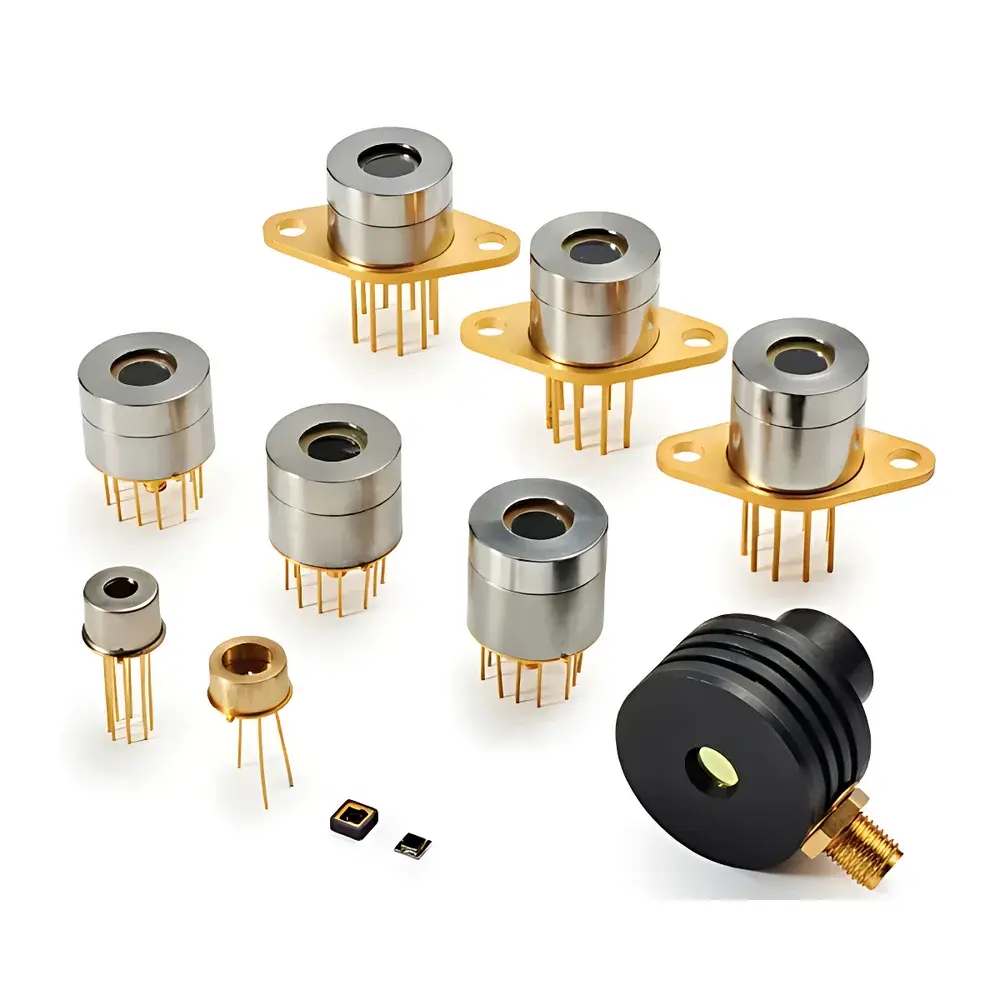
| Package | TO-8 / TO-39 / Custom Hermetic |
| Responsivity | Up to ~10⁹–10¹⁰ V/W (wavelength-dependent) |
| Bandwidth | DC to >1 GHz (depending on configuration) |
| NEP | <1 pW/√Hz (typ. at peak wavelength) |
| Output | Voltage or Current (with integrated preamplifier options) |
Overview
The VIGO Photonics 2–16 µm infrared photodetector module is a high-performance, solid-state optoelectronic sensing solution engineered for precision detection across the mid-wave infrared (MWIR: 3–5 µm) and long-wave infrared (LWIR: 8–14 µm) atmospheric transmission windows — with extended coverage from 2 µm to 16 µm. Based on mercury cadmium telluride (HgCdTe or MCT) photodiode technology, these detectors operate in either thermoelectrically cooled (77 K) or room-temperature (RT) configurations, delivering exceptional signal-to-noise ratio, sub-nanosecond rise times, and intrinsic linearity over six orders of magnitude dynamic range. Unlike microbolometer-based systems, VIGO’s photovoltaic and photoconductive MCT detectors provide true photon-counting capability with zero 1/f noise, enabling high-fidelity time-resolved measurements in demanding scientific, industrial, and defense applications.
Key Features
- Wide spectral response spanning 2–16 µm, configurable via custom cut-on/cut-off filters or substrate selection
- High-speed operation: DC-coupled bandwidth up to >1 GHz (dependent on detector area and amplifier integration)
- Low-noise performance: Noise-equivalent power (NEP) as low as 0.3–0.8 pW/√Hz across key MWIR/LWIR bands
- Flexible packaging: Standard TO-8 and TO-39 metal can housings; optional fiber-pigtailed, windowed, or vacuum-sealed variants
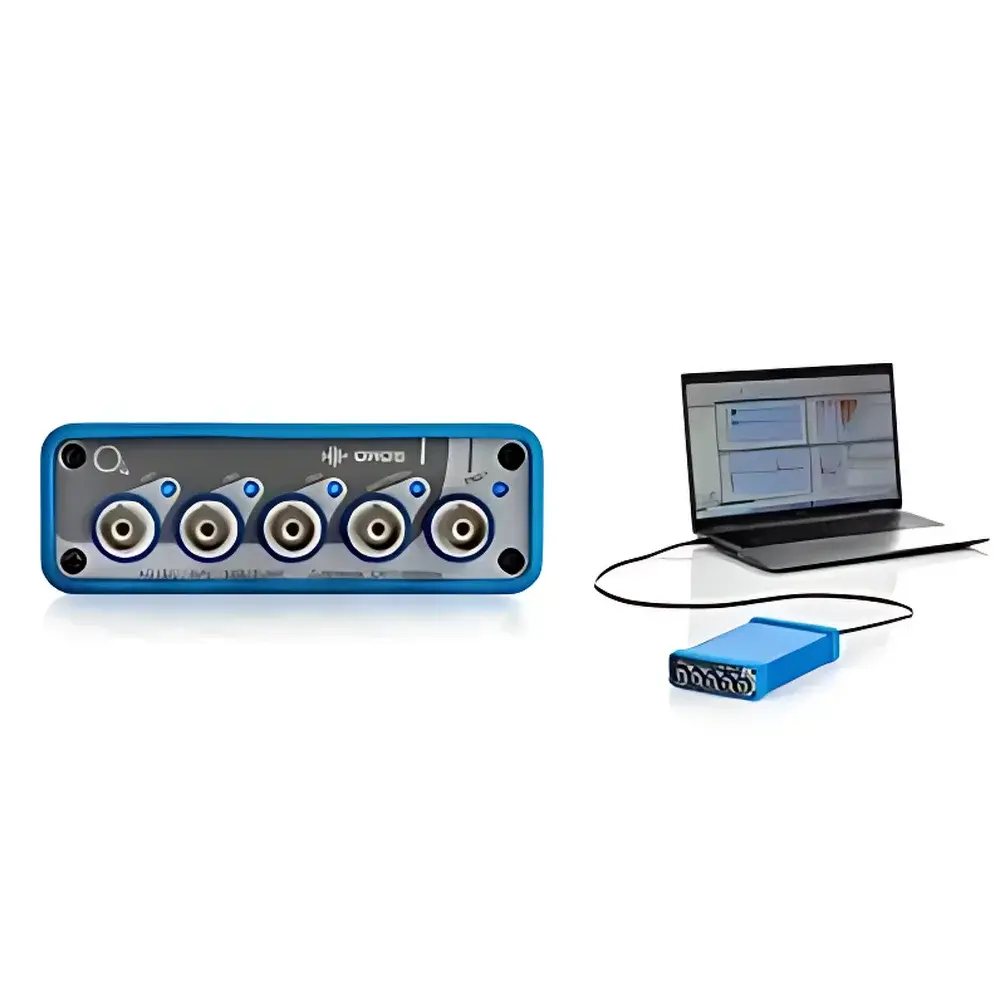
- Integrated electronics options: Transimpedance amplifiers (TIA), voltage amplifiers, and TEC controllers available as OEM modules
- Compliance-ready design: RoHS-compliant materials; CE marking for EU market deployment; traceable calibration certificates available upon request
Sample Compatibility & Compliance
These detectors are compatible with pulsed and continuous-wave (CW) IR sources including quantum cascade lasers (QCLs), interband cascade lasers (ICLs), optical parametric oscillators (OPOs), and blackbody emitters. They support direct free-space coupling or fiber-optic interfacing (e.g., ZnSe, Chalcogenide, or Hollow-Core fibers). For regulated environments, the modules meet essential requirements for GLP-compliant gas analysis systems and are routinely deployed in ASTM E1982-22 (Standard Guide for Infrared Spectroscopy) and ISO 12099:2017 (Animal feeding stuffs — Guidance on analytical methods) referenced instrumentation. While not intrinsically certified for hazardous locations, they may be integrated into Class I, Division 2 compliant enclosures per NEC Article 500 when used with appropriate barrier circuits.
Software & Data Management
VIGO provides open-source LabVIEW™ VI libraries, Python SDKs (via PyVIGO), and Windows/Linux-compatible control GUIs for real-time bias adjustment, temperature stabilization monitoring, and digitized waveform acquisition. All firmware supports IEEE 1451.4 TEDS (Transducer Electronic Data Sheet) embedding for automatic sensor identification and metrological traceability. Raw analog outputs comply with NIST-traceable voltage scaling standards, and digital interfaces (USB 2.0, RS-485, or LVDS) enable synchronization with oscilloscopes, DAQ systems (e.g., National Instruments PXI), or FPGA-based timing controllers. Audit trails, user-access logs, and data export in HDF5/CSV formats align with FDA 21 CFR Part 11 requirements when deployed in validated pharmaceutical or environmental monitoring platforms.
Applications
- Real-time trace gas spectroscopy (e.g., CO, CO₂, CH₄, NOₓ, SF₆) using tunable diode laser absorption spectroscopy (TDLAS) and photoacoustic detection
- Laser warning receivers (LWR) and directed energy weapon (DEW) countermeasure systems operating in 3–5 µm and 8–12 µm threat bands
- Industrial process control: In-line monitoring of polymer extrusion, semiconductor wafer annealing, and combustion efficiency via broadband IR emission analysis
- Free-space optical communications (FSOC) at 2–5 µm wavelengths offering higher atmospheric transmission than near-IR bands
- Time-of-flight (ToF) LIDAR for long-range atmospheric profiling and terrain mapping under adverse weather conditions
- Fundamental research in ultrafast IR physics, carrier dynamics in 2D materials, and synchrotron beamline diagnostics
FAQ
What cooling options are available for this detector?
Standard configurations include liquid nitrogen (77 K) immersion and thermoelectric (TEC) cooling down to –30 °C. Uncooled versions are offered for lower-sensitivity, cost-sensitive applications.
Can the detector be integrated into a custom vacuum chamber?
Yes — VIGO supplies flange-mounted variants (CF-35, KF-25) with hermetic feedthroughs and anti-reflective coated ZnSe or Ge windows.
Is spectral calibration included with purchase?
Each unit ships with a factory-measured responsivity curve (R(λ)) referenced to NIST-traceable blackbody standards; full spectral calibration reports are available as an optional service.
Do you support OEM volume integration?
VIGO offers turnkey module assembly, BOM-level component sourcing, and AS9100-compliant documentation packages for aerospace and medical device integrators.
How does this detector compare to InSb or microbolometer alternatives?
HgCdTe offers superior detectivity (D*), faster response, and lower drift than InSb above 5.5 µm and significantly higher speed and linearity than uncooled microbolometers — particularly critical for modulated or pulsed IR signals.
Related Products