
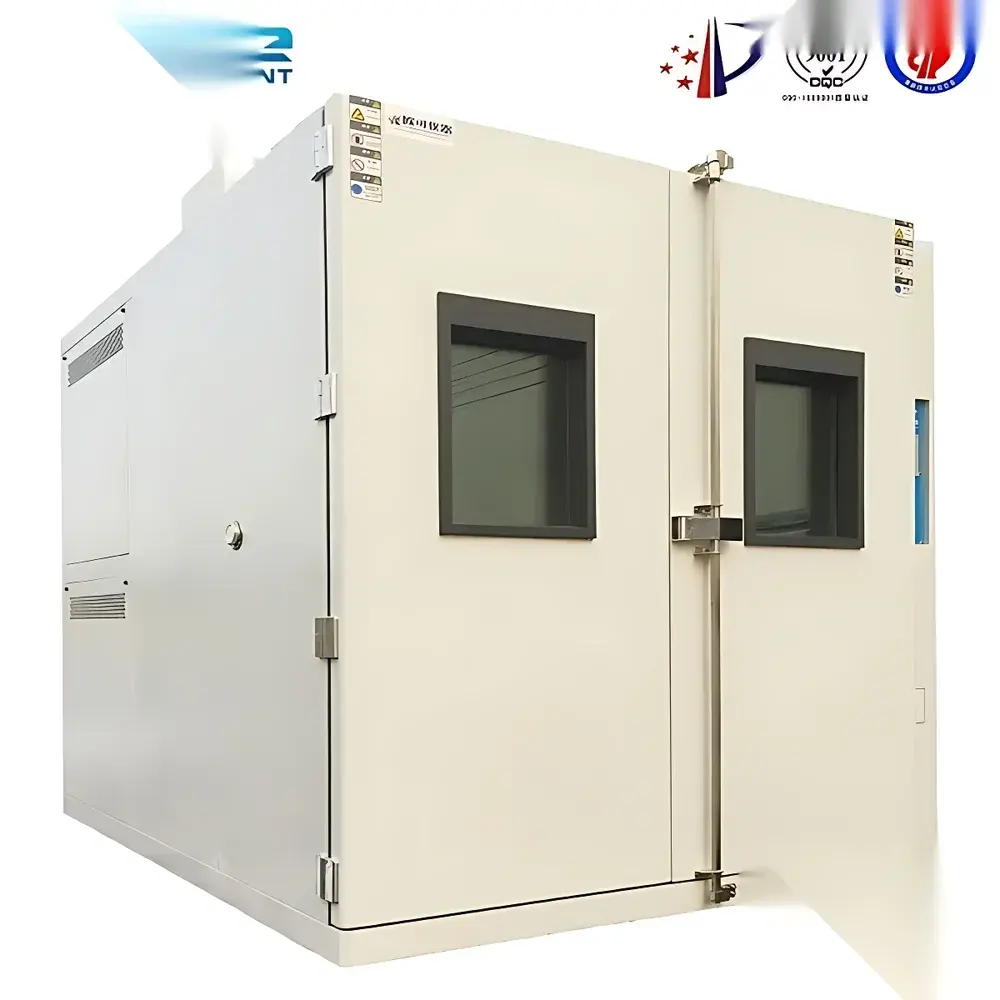
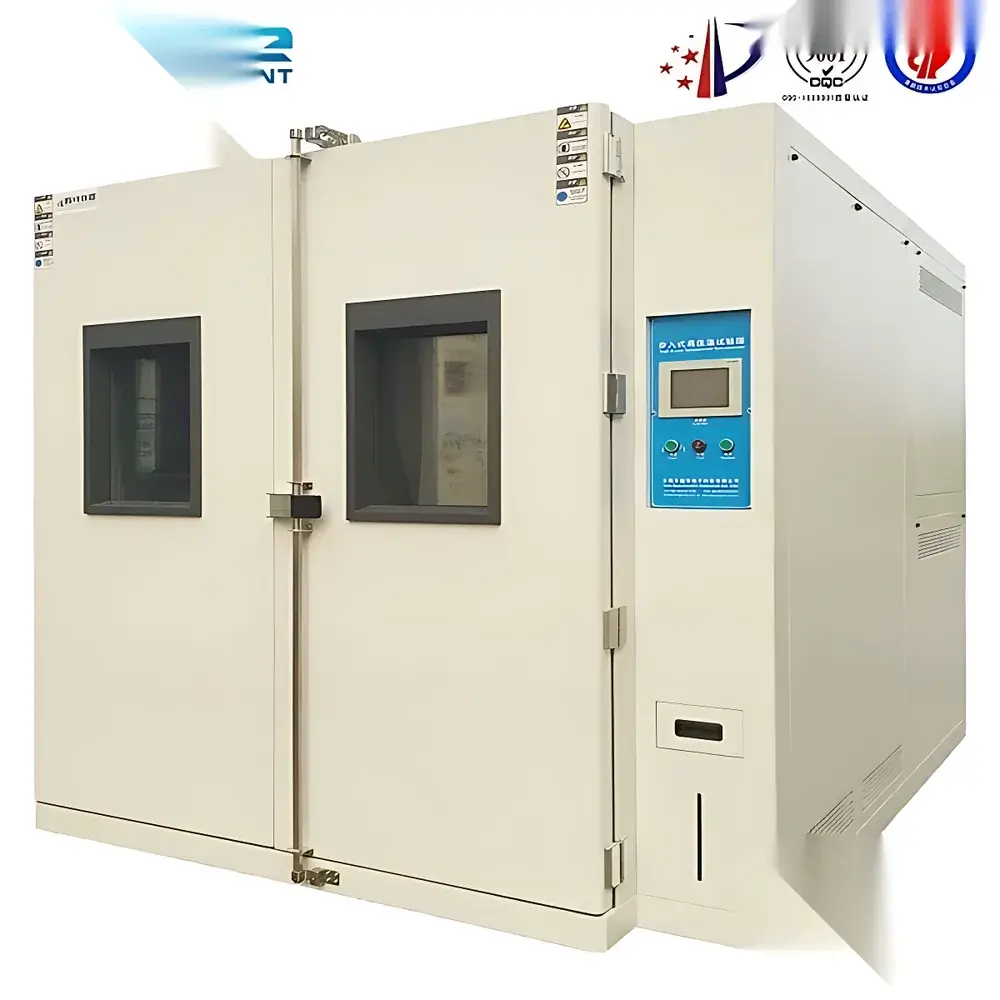
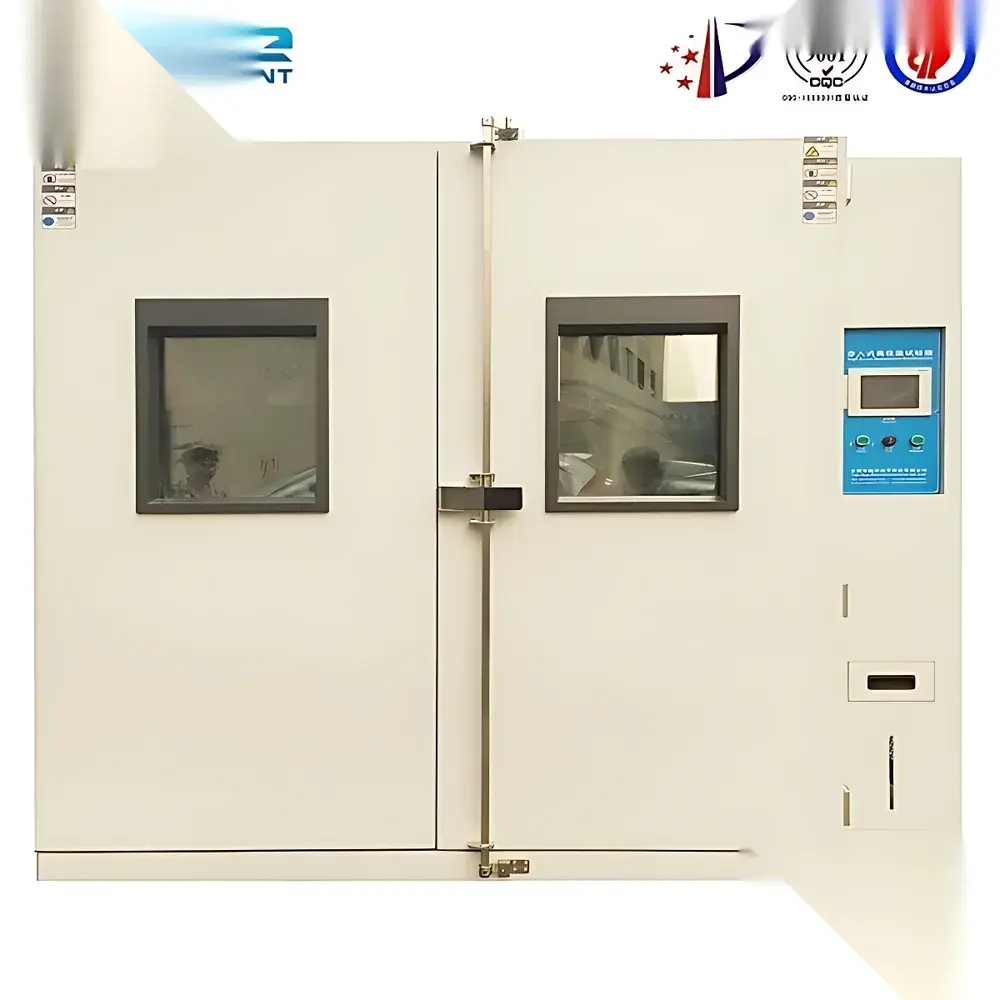
Walk-in Environmental Aging Chamber for High-Low Temperature Testing
| Key | Brand: Other Brands |
|---|---|
| Origin | Imported |
| Manufacturer Type | Authorized Distributor |
| Price | USD 11,200 (FOB) |
| Temperature Range | RT+5°C to +60°C |
| Temperature Uniformity | ≤ ±2°C (empty & loaded, within 300 mm from walls/floor) |
| Temperature Setting Resolution | 1°C |
| Ramp Rate | ≤30 min (from ambient to 60°C) |
| Power Supply | 380 V / 3-Phase / 50 Hz |
| Control Mode | Fully Automatic Fixed-Value Operation |
| Compliance | GB 10589, GB 11158, GB 10586 |
Overview
The Walk-in Environmental Aging Chamber for High-Low Temperature Testing is an engineered thermal stress validation system designed for large-scale, batch-level reliability assessment of industrial components, subassemblies, and finished goods. Unlike benchtop climate chambers, this walk-in configuration enables direct human access to the test volume during operation—supporting real-time visual inspection, manual intervention, sensor repositioning, and in-situ functional testing under controlled thermal conditions. The chamber operates on forced-air convection with a precision-engineered air distribution system, ensuring uniform thermal profiles across the entire working zone per ISO 16750-4 and IEC 60068-2-1/2 requirements. Its core function is to accelerate thermally induced degradation mechanisms—including polymer embrittlement, solder joint fatigue, sealant shrinkage, and electrolytic capacitor aging—by exposing samples to sustained or cyclic high-temperature environments (RT+5°C to +60°C). The system is not intended for cryogenic operation; its design envelope reflects industry-standard elevated-temperature aging protocols used in automotive electronics, power supply qualification, and industrial control hardware validation.
Key Features
- Full-access walk-in architecture with customizable interior dimensions, door opening, observation window, and internal load-bearing shelving—configured to customer specifications.
- High-uniformity air circulation system utilizing multi-directional, low-turbulence ducted airflow and PID-controlled axial fans to maintain ≤ ±2°C temperature deviation across the defined working zone (defined as the volume located ≥300 mm inward from all interior walls and floor).
- Robust heating subsystem with modular resistive elements and dynamic power modulation—capable of achieving ambient-to-60°C ramp in ≤30 minutes under no-load conditions.
- Microprocessor-based controller with intuitive touchscreen interface, real-time data logging, and programmable setpoint profiles—including hold, ramp, and step modes.
- Comprehensive safety architecture: over-temperature cut-off, door interlock switch, grounding continuity monitoring, and independent mechanical thermostat backup.
- Electrical infrastructure designed for integration with external DUT power supplies—featuring isolated, individually switched AC outlets (specifications per customer requirements), EMI-filtered feedthroughs, and dedicated grounding busbars.
Sample Compatibility & Compliance
This chamber accommodates heterogeneous sample loads up to 15 kW total thermal dissipation without compromising uniformity or stability—making it suitable for aging racks of PCBAs, motor controllers, LED luminaires, battery modules, and HVAC components. Internal clearances, shelf spacing, and lighting layout are fully configurable to accommodate oversized or irregularly shaped units. The system complies with Chinese national standards GB 10589 (Low-Temperature Test Chambers), GB 11158 (High-Temperature Test Chambers), and GB 10586 (Damp Heat Test Chambers), and its thermal performance metrics align with the test condition definitions in ISO 16750-4 (Road vehicles — Environmental conditions and testing for electrical and electronic equipment) and IEC 60068-2-2 (Environmental testing — Part 2-2: Tests — Test B: Dry heat). It supports GLP-compliant validation when paired with calibrated reference sensors and audit-trail-enabled data acquisition software.
Software & Data Management
The embedded controller records temperature readings at user-defined intervals (1 s to 60 min) and stores time-stamped datasets internally for ≥30 days. Optional Ethernet or RS-485 interfaces enable remote monitoring via Modbus TCP/RTU or custom SCADA integration. For regulated environments, optional compliant software packages provide 21 CFR Part 11–ready features—including electronic signatures, role-based access control, audit trail generation, and immutable data export in CSV or PDF format. All calibration records, maintenance logs, and operational history can be exported with full traceability to support ISO 9001, IATF 16949, or FDA QSR audits.
Applications
- Accelerated life testing (ALT) of electronic assemblies under sustained high-temperature stress.
- Thermal soak validation for automotive ECUs prior to EMC or vibration testing.
- Process qualification of conformal coating curing and adhesive bonding cycles.
- Pre-shipping burn-in for industrial power converters and inverters.
- Long-duration reliability screening of LED drivers and smart lighting systems.
- Material compatibility testing for gaskets, wire insulation, and encapsulants exposed to elevated ambient temperatures.
FAQ
Can this chamber operate below ambient temperature?
No. This model is engineered exclusively for high-temperature and high-humidity aging applications. It does not incorporate refrigeration circuitry and is not rated for sub-ambient operation.
What is the maximum allowable thermal load inside the chamber?
The chamber maintains specified uniformity and stability with a total internal heat dissipation of up to 15 kW. Load characterization must be provided during specification review to ensure adequate cooling capacity and airflow management.
Is third-party calibration certification available?
Yes. NIST-traceable calibration certificates (per ISO/IEC 17025) can be supplied upon request, covering temperature uniformity, stability, and controller accuracy verification using accredited reference probes.
How is electrical isolation handled for powered DUTs?
The chamber includes dedicated, fused, and independently switched AC feedthroughs with galvanic isolation and EMI suppression filters—designed to prevent ground loops and minimize noise coupling into sensitive measurements.
Does the system support automated test sequencing across multiple temperature setpoints?
Yes. The standard controller supports multi-step fixed-value programs. For complex cycling protocols (e.g., temperature ramps with dwell periods), optional PC-based software enables full script-driven execution with synchronized data capture and alarm escalation.



