
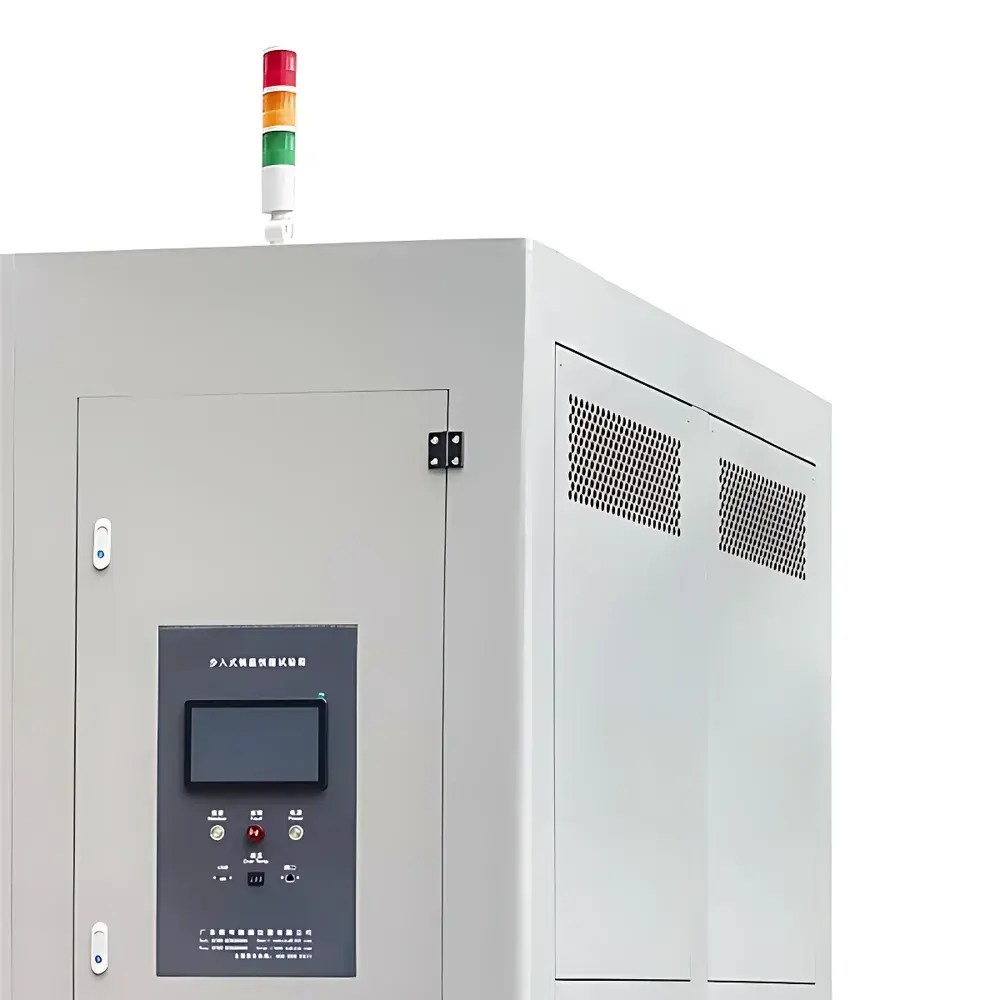
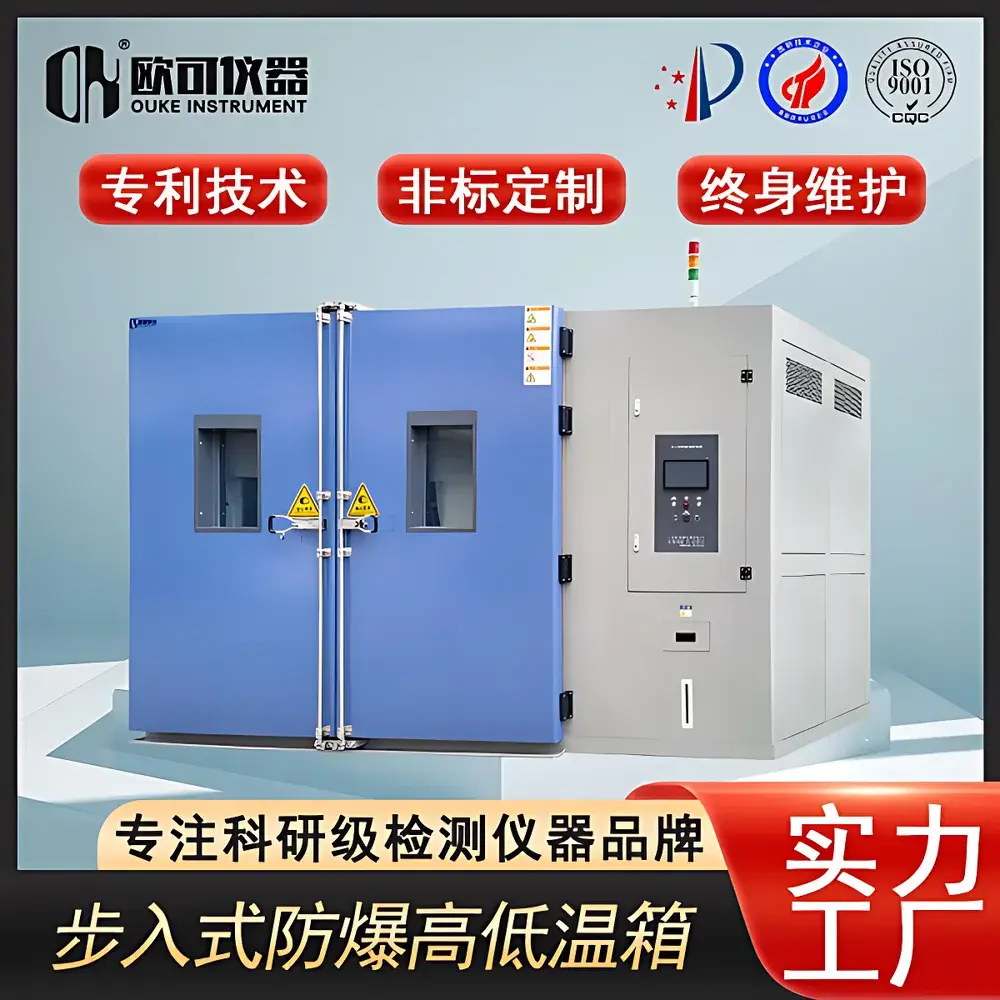
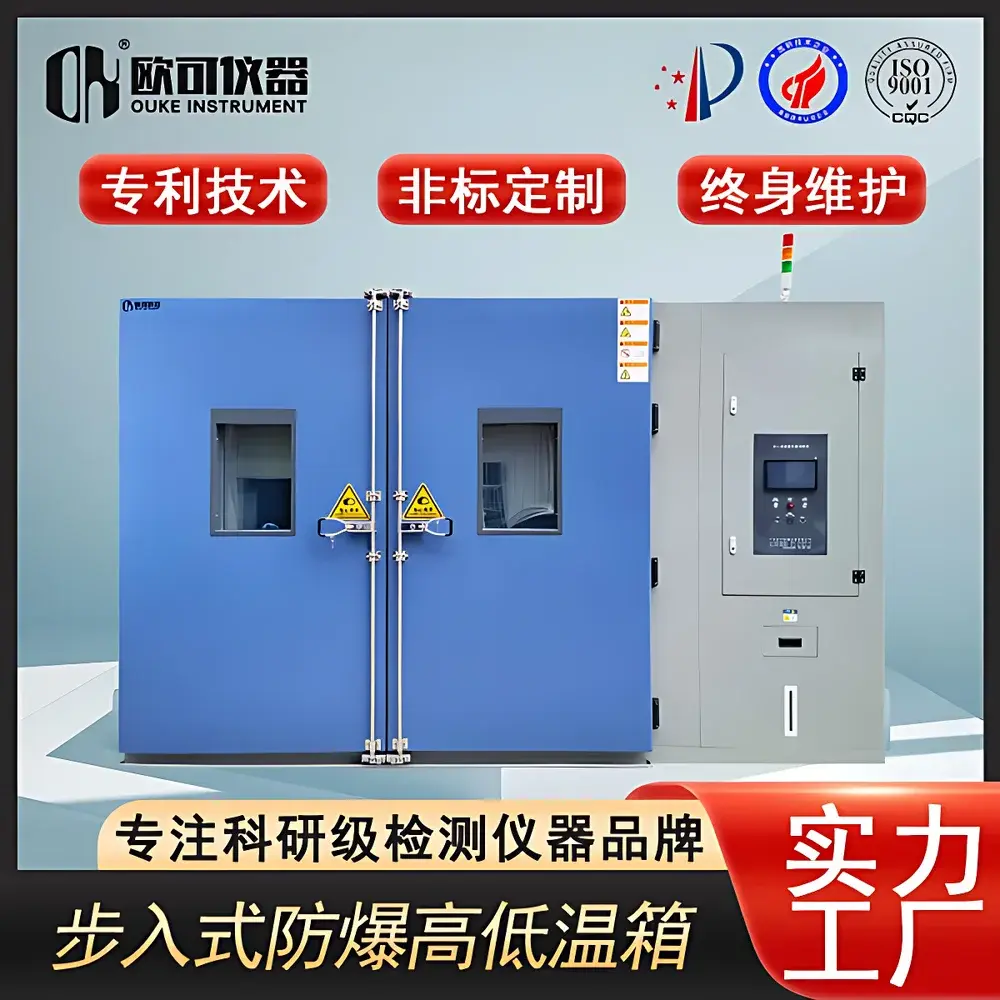
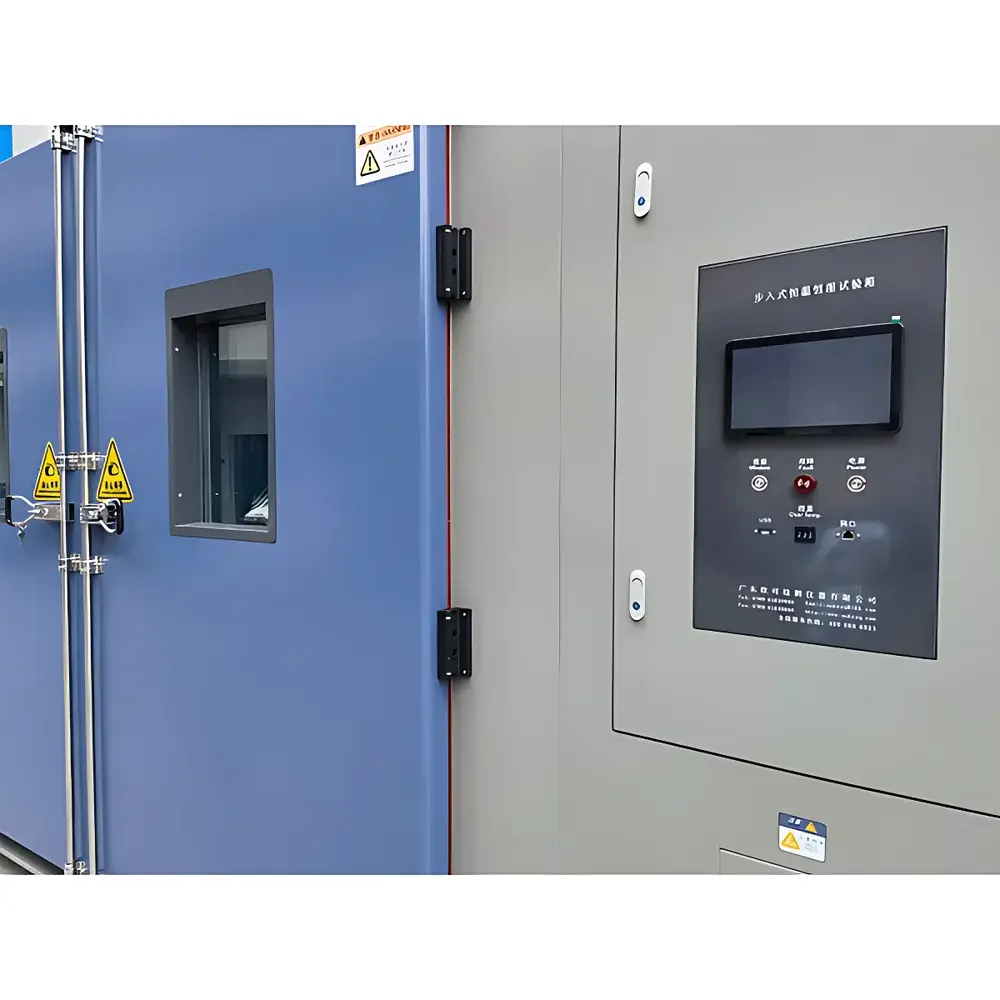
OK Walk-in Environmental Test Chamber OK-STH-1
| Brand | OK Instruments |
|---|---|
| Origin | Guangdong, China |
| Manufacturer Type | Direct Manufacturer |
| Product Origin | Domestic (China) |
| Model | OK-STH-1 |
| Temperature Range | Selectable Options — A: 0°C, B: −20°C, C: −40°C, D: −60°C, E: −70°C |
| Temperature Uniformity | ±3°C (at steady state, empty chamber) |
| Temperature Control Accuracy | ±1°C |
| Heating Rate | 1.0–4.0°C/min (average, under standard load conditions) |
| Internal Dimensions | Custom-engineered per client specification (D×W×H) |
| Construction | Modular polyurethane insulated panels (100–150 mm thickness), field-assembled |
| Cooling System | Water-cooled multi-compressor refrigeration (scroll or screw compressors) |
| Air Distribution | Multi-zone ducted airflow with CFD-optimized circulation |
| Control System | Programmable multi-segment PID controller with Ethernet-enabled remote monitoring and data logging |
Overview
The OK Walk-in Environmental Test Chamber OK-STH-1 is a large-volume, field-assembled environmental simulation system engineered for rigorous thermal qualification of oversized equipment, integrated subsystems, and bulk production batches. Designed to meet the engineering demands of aerospace, automotive, energy storage, and defense sectors, this chamber operates on the principle of forced-air convection combined with high-capacity refrigeration and electric heating to establish and maintain precise temperature profiles across volumetric workspaces exceeding 20 m³. While the term “constant-temperature” may imply static setpoint operation (e.g., +23°C ±1°C for calibration reference environments), the OK-STH-1’s architecture supports both steady-state thermal storage and programmable ramp-soak cycles—fully compliant with ASTM E1525, ISO 16750-4, and IEC 60068-2-1/2 test standards. Its structural integrity, thermal mass management, and distributed airflow design address the fundamental challenges of spatial uniformity, dynamic load response, and long-term stability inherent in walk-in-scale thermal systems.
Key Features
- Modular construction using high-density polyurethane insulated panels (100–150 mm thick), rated for continuous operation from −70°C to +150°C
- Water-cooled multi-compressor refrigeration system with parallel scroll or screw compressors, enabling scalable cooling capacity and improved energy efficiency versus air-cooled alternatives
- CFD-validated air distribution network featuring ducted, multi-inlet supply and low-velocity return pathways—optimized to achieve ≤±3°C temperature uniformity across full working volume at steady state
- Programmable multi-segment temperature controller with real-time deviation monitoring, alarm thresholds, and event-triggered data capture
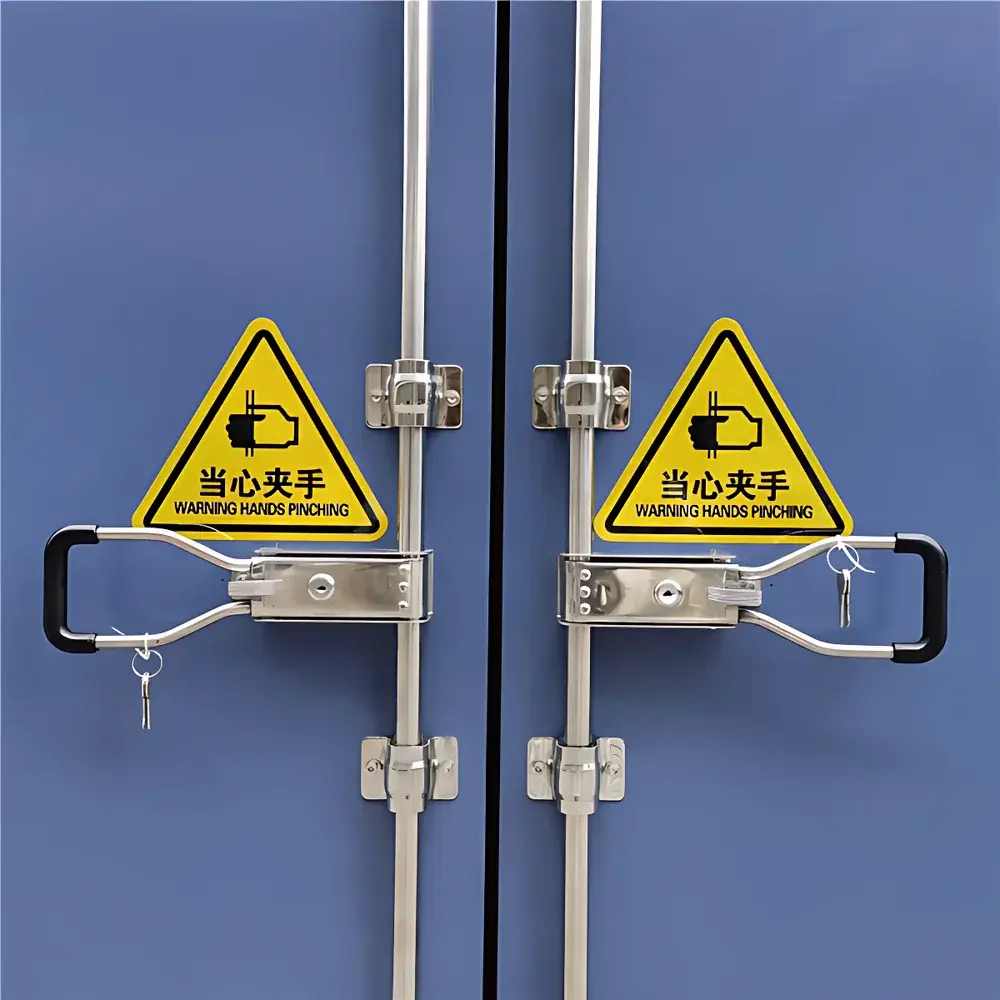
- Industrial-grade access portal: double-leaf or vertical lift door with magnetic gasket sealing, reinforced frame, and optional internal lighting and viewing window
- Structural floor reinforcement compatibility and integrated mounting interfaces for heavy-duty fixtures, vehicle jigs, and battery module racks
Sample Compatibility & Compliance
The OK-STH-1 accommodates physically large and thermally massive test articles—including electric vehicle battery packs (up to 2 MWh), aircraft avionics enclosures, utility-scale power converters, railcar control cabinets, and structural composite panels. It supports both no-load qualification and loaded testing scenarios, provided total internal heat dissipation and mass are declared during specification. The chamber conforms to essential regulatory frameworks for product validation: its control architecture supports audit-ready data integrity per FDA 21 CFR Part 11 when paired with OK’s optional validated software package; temperature mapping procedures align with ISO/IEC 17025 requirements for accredited laboratories; and thermal cycling profiles satisfy MIL-STD-810H Method 502.7 and GB/T 2423.1–2022 environmental stress screening protocols.
Software & Data Management
The embedded controller provides local HMI operation with touchscreen interface, trend visualization, and configurable alarm logic (e.g., over-temperature, sensor fault, door-open timeout). Optional Ethernet/IP or Modbus TCP connectivity enables integration into centralized facility SCADA systems. Data logging is performed at user-defined intervals (1 s to 60 min resolution) with timestamped CSV export. For GLP/GMP environments, OK offers a validated software add-on that delivers electronic signatures, change control logs, user role-based permissions, and immutable audit trails—fully traceable to NIST-traceable temperature references. All firmware updates undergo regression testing against IEC 62443-3-3 security guidelines.
Applications
- Automotive: Whole-vehicle thermal soak, EV battery pack thermal runaway propagation studies, e-motor cold-start validation
- Aerospace: Ground-based thermal vacuum pre-screening of satellite subsystems, avionics box qualification per DO-160 Section 4
- Energy Storage: UL 9540A-compliant thermal propagation testing of containerized BESS units
- Power Electronics: Thermal aging of grid-scale inverters under sustained high-temperature operation (e.g., 60°C ambient, 100% load)
- Defense & Rail: Environmental hardening verification of C4ISR shelters, onboard train control modules, and ruggedized communication nodes
- Building Materials: Long-duration hygrothermal simulation of façade assemblies and insulation systems (when paired with optional humidity extension)
FAQ
What is the minimum and maximum internal volume supported by the OK-STH-1 series?
Standard configurations begin at 20 m³; custom builds extend to 500+ m³. Volume directly influences refrigeration sizing, structural reinforcement, and control zoning strategy.
Can the chamber be configured for rapid thermal cycling (e.g., 10°C/min)?
Yes—though this requires upgraded compressor staging, enhanced airflow velocity, and auxiliary heating elements. Such configurations are quoted separately and impact both capital cost and operational energy demand.
Is on-site installation and commissioning included?
All OK-STH-1 deliveries include engineering site survey, panel assembly, refrigerant charging, functional verification, temperature mapping (9-point or 27-point per IEC 60068-3-5), and operator training as part of the turnkey scope.
How is temperature uniformity verified and documented?
Pre-delivery uniformity validation follows ISO 16750-4 Annex B methodology: sensors placed at geometric center and eight peripheral locations; measurements recorded over 30 minutes after stabilization; final report includes max deviation, standard deviation, and spatial contour plots.
What electrical and utility requirements must be prepared prior to delivery?
Clients must provide three-phase power (400V ±10%, 50/60 Hz), chilled water supply (7–12°C, ≥3 bar pressure), and structural floor loading capacity ≥10 kN/m². Detailed utility specifications are finalized during the engineering review phase.



