
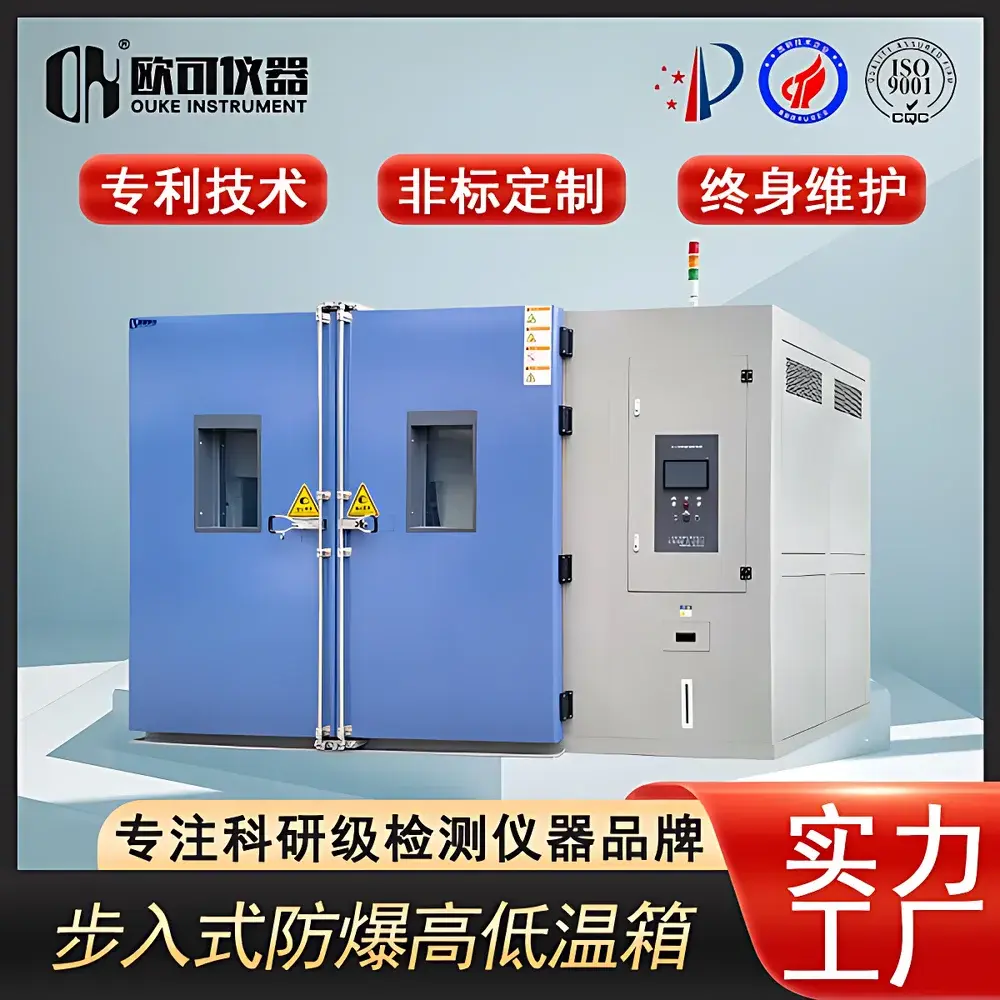
OK Walk-in Environmental Test Chamber OK-STH-Series
| Brand | OK Instruments |
|---|---|
| Origin | Guangdong, China |
| Manufacturer Type | Direct Manufacturer |
| Country of Origin | China |
| Model | OK-STH-Series (Custom Volume) |
| Price Range | USD 11,000–285,000 (FOB Guangdong) |
| Internal Dimensions | Custom-Designed per Customer Specification (D×W×H in meters) |
| Temperature Range Options | A: 0°C to +150°C |
| B | −20°C to +150°C |
| C | −40°C to +150°C |
| D | −60°C to +150°C |
| E | −70°C to +150°C |
| Temperature Uniformity | ±3°C (at steady state, per IEC 60068-3-5) |
| Temperature Control Stability | ±1°C |
| Heating/cooling Ramp Rate | 1.0–4.0°C/min (average, non-loaded, mid-chamber) |
Overview
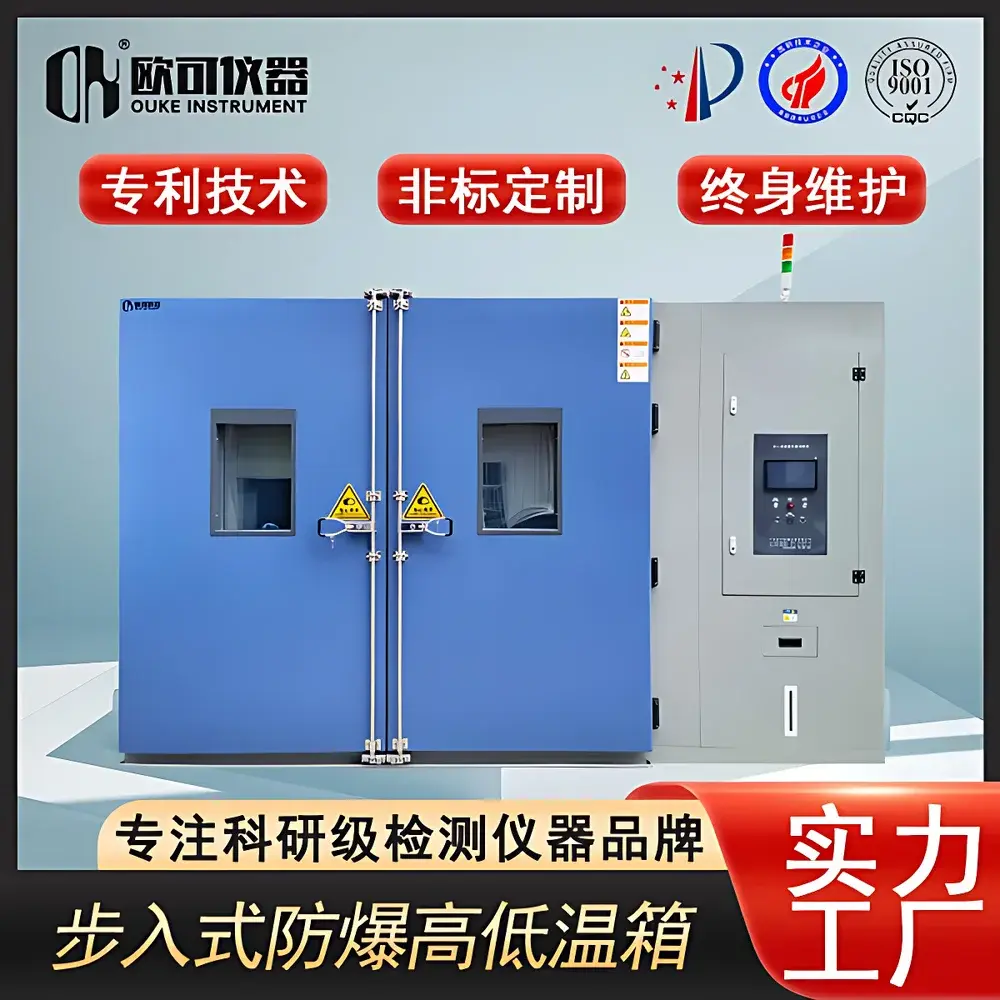
The OK ST-H Series Walk-in Environmental Test Chamber is an engineered solution for large-scale, long-duration reliability validation under controlled temperature and humidity conditions. Designed in accordance with the physical principles of forced-air convection, precision refrigeration thermodynamics, and saturated steam equilibrium, this chamber delivers repeatable environmental stress profiles required for accelerated life testing, qualification per MIL-STD-810, automotive AEC-Q200, and industrial IEC 60068-2 standards. Unlike benchtop units, the ST-H series integrates structural thermal insulation (150 mm polyurethane foam, 0.022 W/m·K), dual-stage or cascade refrigeration architecture (for models rated ≤ −40°C), and independent humidification/dehumidification subsystems—enabling stable operation across a full spectrum from sub-zero cryogenic exposure to high-humidity thermal soak. Its walk-in configuration supports testing of complete assemblies—including EV battery modules, avionics enclosures, medical imaging systems, and telecom base stations—without disassembly or spatial compromise.
Key Features
- Modular structural design with stainless steel interior (SUS304) and electrostatically coated galvanized steel exterior, supporting custom internal volumes from 2 m³ to over 50 m³
- Cascade refrigeration system (two independent compressor circuits) standard on −60°C and −70°C models; single-stage scroll compressors (Bitzer or Copeland) for −40°C and above
- PID-controlled steam humidification (0–98% RH, ±3% RH uniformity) with optional desiccant rotor dehumidification module (<5% RH capability)
- High-efficiency axial fan array with variable-frequency drive (VFD) ensures airflow uniformity ≤ ±1.5 m/s and minimizes thermal stratification
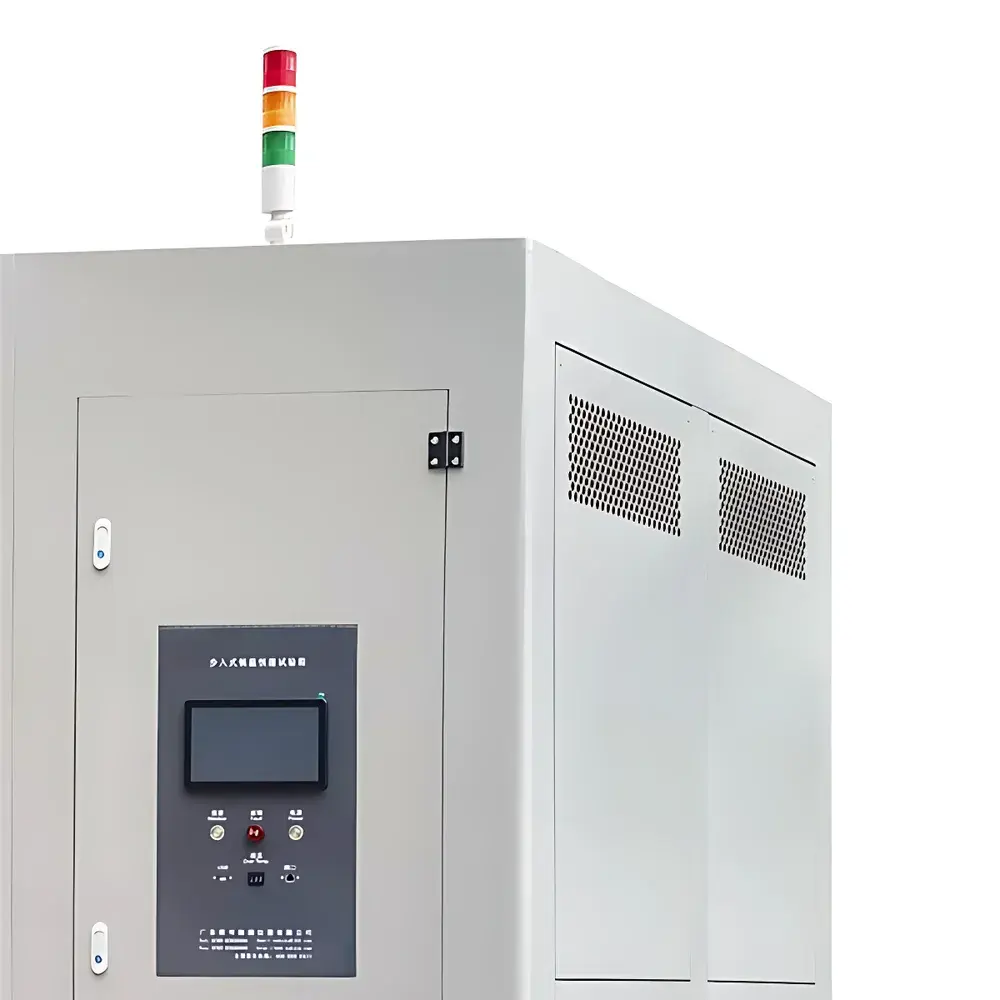
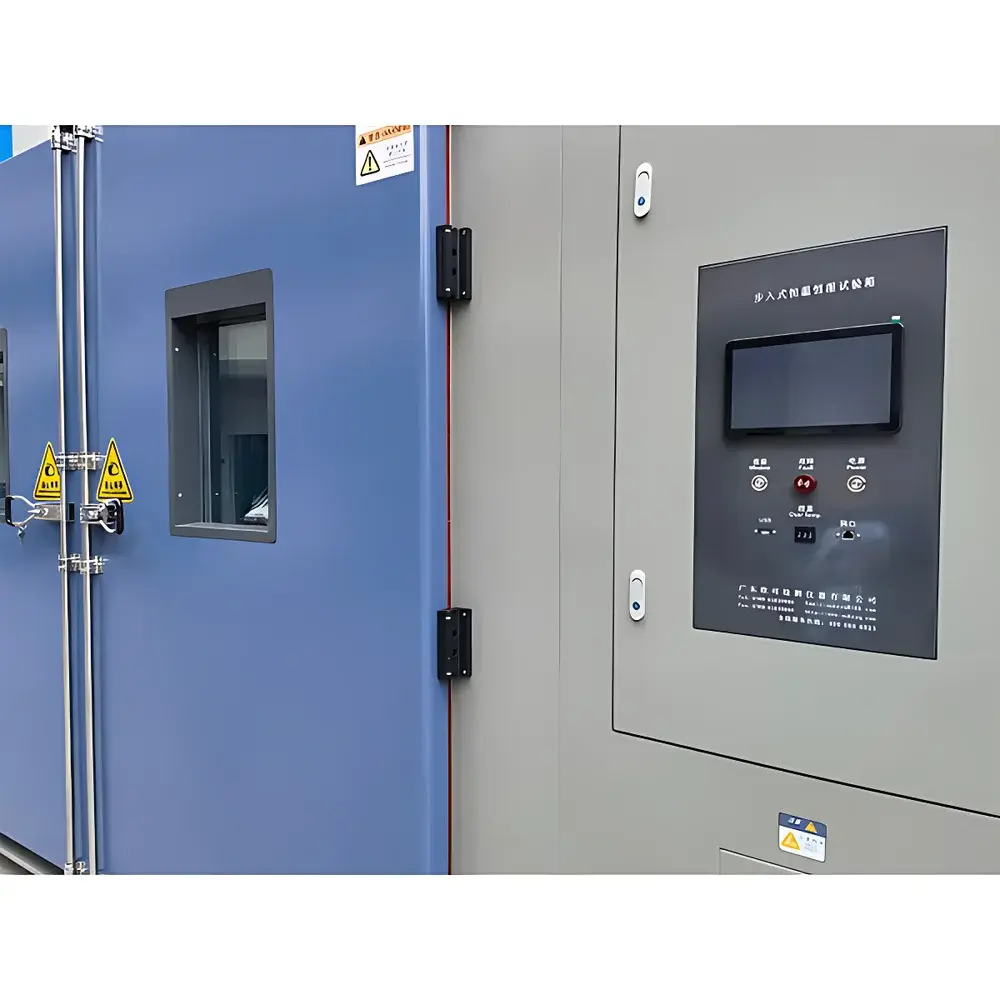
- Industrial-grade programmable controller (OYO 8226 or ESPEC P300 equivalent) with 10.4″ TFT touchscreen, USB data export, and Ethernet connectivity
- Compliance-ready architecture: Built-in audit trail logging, user-level access control, and optional 21 CFR Part 11 compliance package for regulated pharmaceutical and medical device labs
Sample Compatibility & Compliance
The ST-H chamber accommodates heterogeneous load configurations—including powered devices generating up to 15 kW of internal heat load—via calibrated power feedthroughs and dedicated ventilation ducts. Internal lighting, observation windows (tempered double-glazed, argon-filled), and cable ports are configurable per ISO 16750-4 and GB/T 2423.4 requirements. All models comply with IEC 60068-3-5 (temperature uniformity verification), ISO 17025 traceable calibration protocols, and CE marking (EMC Directive 2014/30/EU, Low Voltage Directive 2014/35/EU). Optional factory calibration certificates are available with NIST-traceable reference sensors (PT100 Class A, capacitive RH sensor ±1.5% RH accuracy).
Software & Data Management
The embedded controller supports up to 1,000-step test programs with conditional branching (e.g., “hold until RH reaches 95%”, “trigger ramp upon temperature stability”). Real-time data logging at 1-second intervals is stored internally (≥30 days) and exportable via CSV or XML. OK’s optional PC-based OK-EnviroLink software enables remote monitoring, multi-chamber synchronization, automated report generation (PDF/Excel), and integration with LIMS platforms via OPC UA. For GxP environments, the validated software package includes electronic signatures, change control logs, and deviation tracking aligned with FDA 21 CFR Part 11 Annex 11 and EU GMP Annex 11 expectations.
Applications
- Automotive: Climate endurance testing of ADAS ECUs, infotainment systems, and traction inverters per ISO 16750-4 and VW 80101
- Energy Storage: Thermal runaway propagation studies and cycle-life validation of Li-ion battery packs (UN 38.3, UL 1642)
- Aerospace: Environmental screening of flight-critical avionics per DO-160G Section 4 & 5
- Medical Devices: Accelerated aging per ISO 11607-1 and biocompatibility preconditioning (ISO 10993-12)
- Industrial Electronics: Burn-in and HALT pre-screening for 5G baseband units, industrial PLCs, and railway signaling hardware
FAQ
What determines the final price of a walk-in environmental chamber?
Final pricing is driven primarily by internal volume, low-temperature limit (−40°C vs. −70°C), ramp rate specification (1–4°C/min vs. ≥5°C/min), and humidity control enhancements (e.g., rotor dehumidification). Configuration options, power supply compatibility (380 VAC / 50 Hz vs. 480 VAC / 60 Hz), and regulatory software packages also impact cost.
Can the chamber meet IEC 60068-2-30 (damp heat, cyclic) requirements?
Yes—when equipped with the standard humidification system and programmed with IEC-defined 12-hour cycles (85°C/85% RH → 25°C/60% RH), the ST-H series achieves full compliance. Validation reports include chamber mapping per IEC 60068-3-5.
Is installation and commissioning included in the quoted price?
No—FOB Guangdong pricing excludes freight, site preparation, electrical infrastructure, and on-site IQ/OQ validation. OK offers optional turnkey services including foundation design review, utility interface coordination, and FAT/SAT documentation.
What is the typical lead time for a custom-configured chamber?
Standard configurations (≤20 m³, −40°C max) ship in 10–12 weeks. Chambers with cascade refrigeration, rotor dehumidification, or volumes >30 m³ require 16–20 weeks due to component sourcing and structural fabrication.
How is temperature uniformity verified and maintained over time?
Uniformity is confirmed during factory acceptance testing using 9-point sensor mapping (per IEC 60068-3-5). The chamber’s VFD-driven air distribution system, coupled with real-time PID feedback from six internal PT100 sensors, actively compensates for load-induced gradients during operation.



