
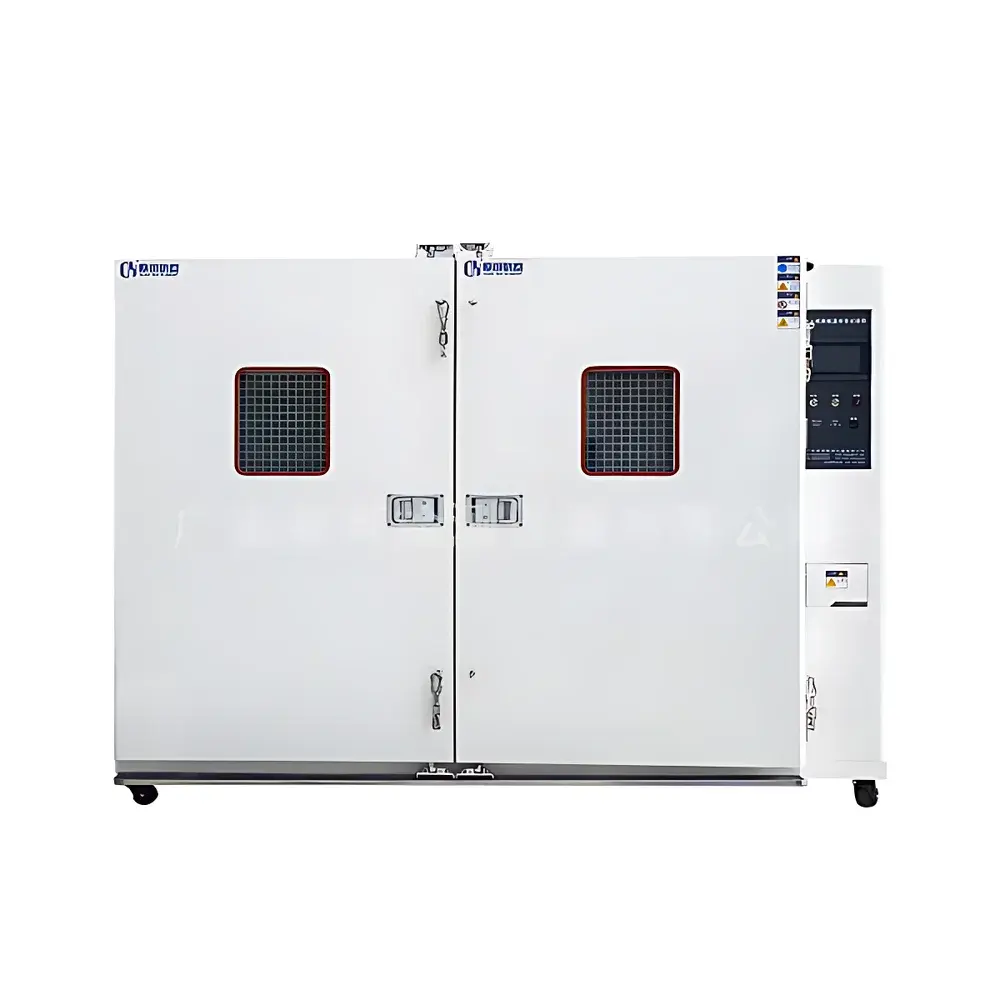
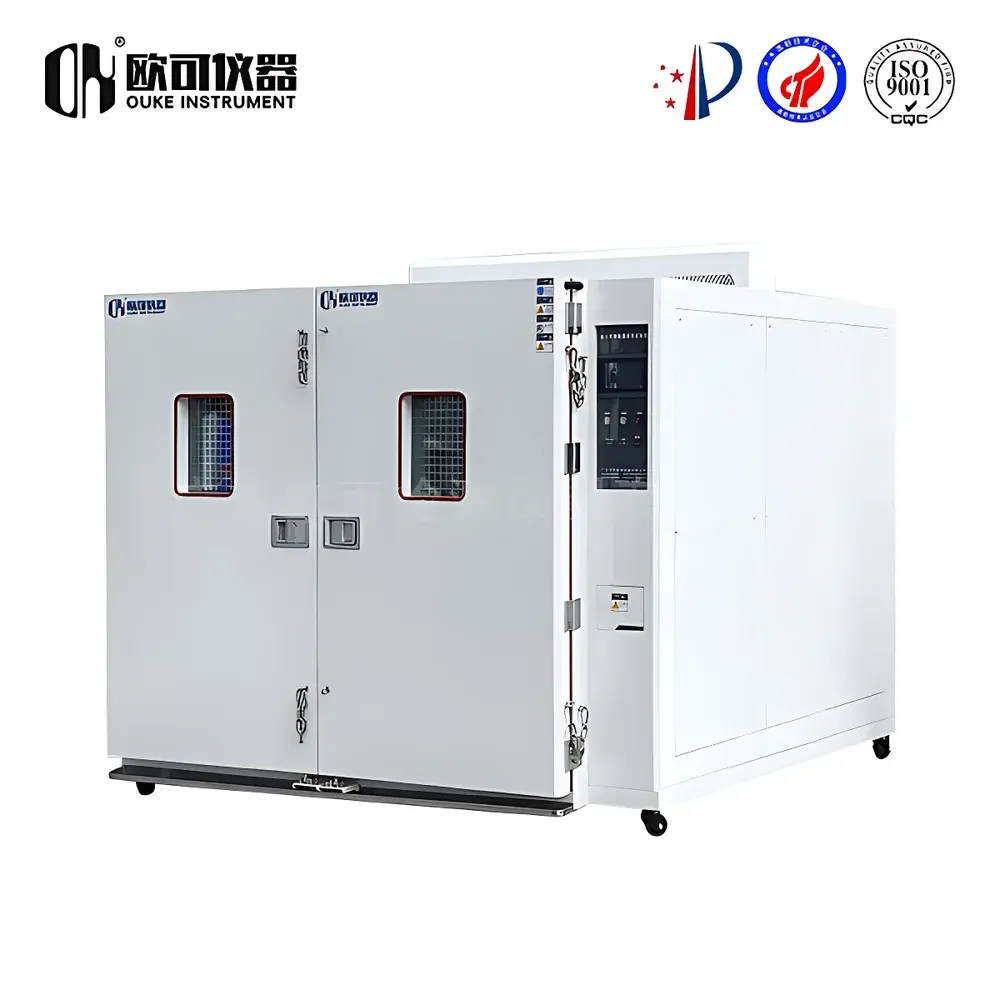
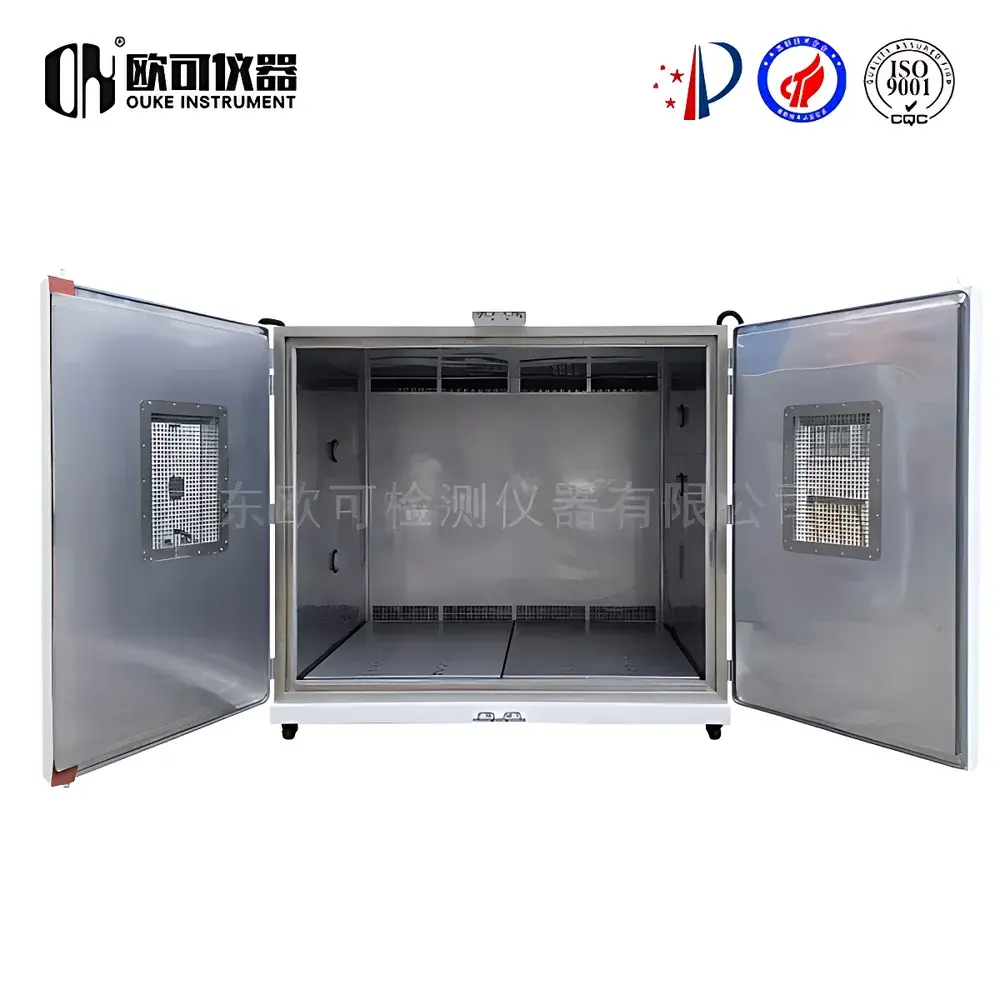
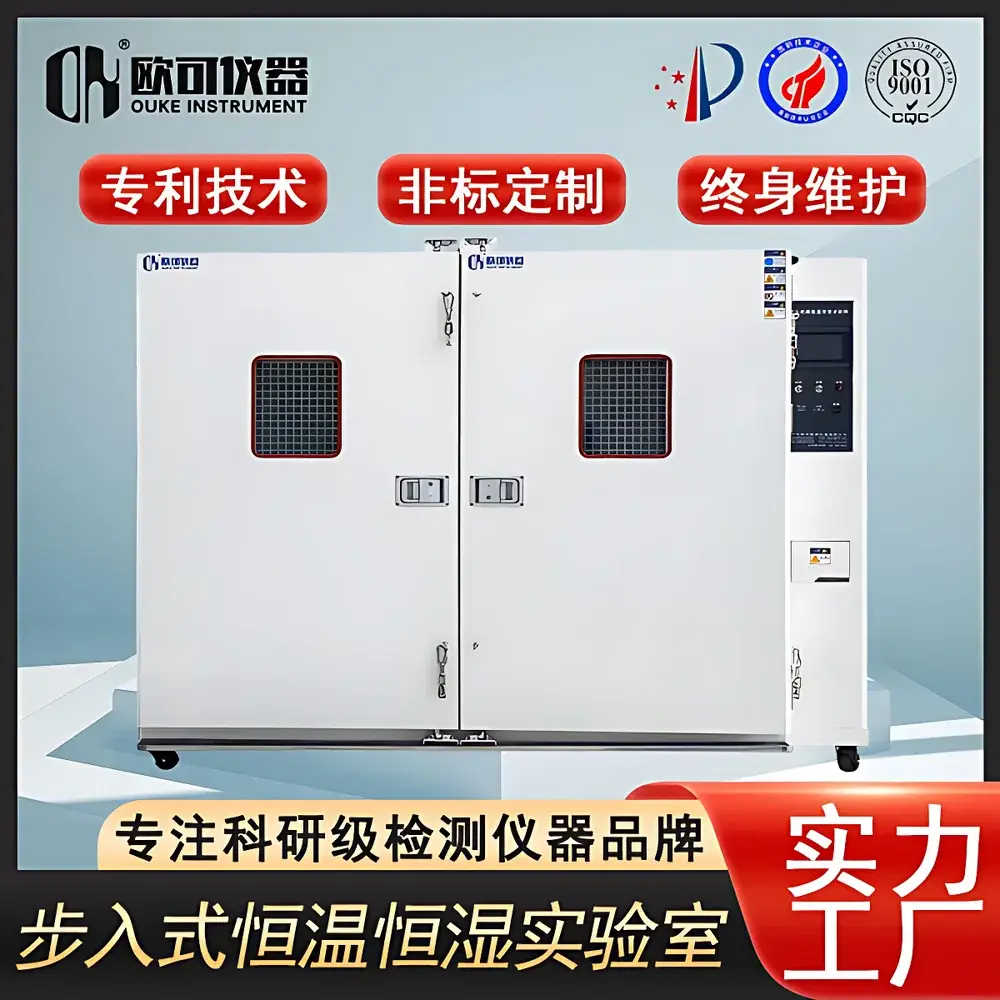
OK Walk-in Low-Temperature Environmental Test Chamber OK-STH-4
| Brand | OK Instruments |
|---|---|
| Origin | Guangdong, China |
| Manufacturer Type | Direct Manufacturer |
| Product Category | Domestic |
| Model | OK-STH-4 |
| Chamber Volume | Customizable (Standard nominal volume: 4 m³) |
| Temperature Range Options | A: 0°C |
| B | −20°C |
| C | −40°C |
| D | −60°C |
| E | −70°C |
| Temperature Uniformity | ±3.0°C (at stabilized low-temp setpoint) |
| Temperature Control Accuracy | ±1.0°C |
| Heating/Cooling Ramp Rate | 1.0–4.0°C/min (from +25°C to target low temperature, no-load condition) |
Overview
The OK Walk-in Low-Temperature Environmental Test Chamber OK-STH-4 is a purpose-engineered, large-volume controlled-environment facility designed for precise simulation and sustained maintenance of sub-ambient thermal conditions—down to −70°C—within an operator-accessible workspace. Unlike general-purpose walk-in chambers, this system is architecturally and thermodynamically optimized for low-temperature dominance: its mechanical design, insulation strategy, refrigeration topology, and control architecture are all calibrated to minimize thermal ingress, maximize cold-hold stability, and ensure reproducible thermal stress application across full-scale industrial specimens. It operates on the principle of forced-air convection within a hermetically sealed, ultra-insulated enclosure, utilizing cascade refrigeration for sub−40°C operation. The chamber serves as a static or dynamic thermal test platform compliant with core requirements of ASTM D1790 (cold crack resistance), ISO 22866 (low-temperature performance of automotive components), MIL-STD-810H Method 502.7 (freezing), and IEC 60068-2-1 (cold testing). Its primary engineering objective is not merely achieving low temperature, but sustaining it uniformly, safely, and energy-efficiently under real-world thermal loads—including powered equipment, battery packs, or instrumented assemblies.
Key Features
- Ultra-High-Performance Insulation: 150 mm thick high-density polyurethane rigid foam panels (core density ≥42 kg/m³) with seamless tongue-and-groove joints and vapor barrier lamination—achieving effective thermal resistance (R-value) > 5.2 m²·K/W at −70°C.
- Cascade Refrigeration System: Dual-stage refrigeration circuit (R404A/R23 or R508B secondary stage) with semi-hermetic piston compressors; enables stable operation at −70°C while maintaining <0.5°C/h drift during 72-hour hold tests.
- Low-Velocity, High-Volume Air Distribution: Axial-flow circulation fans with variable-frequency drives deliver ≥12 air changes per hour at ≤1.2 m/s face velocity—eliminating localized cold spots and minimizing convective thermal shock on sensitive samples.
- Thermally Isolated Structural Integration: Cold-bridge-free door frame, heated observation window with triple-pane low-emissivity glass, and electrically trace-heated cable ports prevent frost accumulation and maintain seal integrity below −40°C.
- Robust Safety Architecture: Redundant protection layers including compressor high/low-pressure cutouts, phase failure detection, motor overheat sensors, door-open interlock (compressor shutdown + heater activation), and independent overtemperature limiter (setpoint-independent).
Sample Compatibility & Compliance
The OK-STH-4 accommodates full-system validation of large-format devices: electric vehicle battery modules (up to 1.8 m × 1.2 m × 0.3 m), aerospace avionics racks, military-grade communication terminals, and bulk material batches (e.g., polymer reels, composite laminates, cryogenic pharmaceutical carriers). Its interior dimensions are fully customizable—standard nominal volume is 4 m³ (W×D×H ≈ 2.0×1.5×1.3 m), with structural floor reinforcement rated for ≥500 kg/m² static load and integrated anti-frost heating. The chamber meets essential regulatory prerequisites for GLP-compliant environmental testing, including audit-ready temperature mapping protocols (per ISO 14644-3), real-time deviation logging, and hardware-enforced setpoint limits. While not intrinsically certified for hazardous locations, optional ATEX-compliant electrical packages are available upon request.
Software & Data Management
Control is managed via a dedicated low-temperature PID controller with embedded 16-channel thermocouple input (Type T or PT100 configurable), supporting programmable ramp-soak profiles, multi-segment cycles, and event-triggered data capture. All operational parameters—including chamber setpoint, actual temperature (12-point spatial average), compressor status, fan speed, and alarm history—are logged at user-defined intervals (1 s to 60 min) to internal SD card and optionally streamed via Ethernet to external SCADA or LIMS platforms. Audit trails comply with FDA 21 CFR Part 11 requirements when paired with optional electronic signature module and role-based access control. Raw data export formats include CSV and XML; calibration certificates (NIST-traceable) are provided with each unit shipment.
Applications
- Automotive: Cold-start validation of EV powertrains, battery thermal management system (BTMS) response at −40°C, and low-temperature charge acceptance testing per UN/ECE R100.
- Aerospace: Functional verification of satellite attitude control systems and cryogenic sensor housings under simulated stratospheric conditions (−65°C @ 10 kPa).
- Defense: MIL-STD-810H freeze tolerance evaluation of handheld radios, night vision optics, and portable radar units deployed in Arctic operational zones.
- Materials Science: Brittle-to-ductile transition analysis of thermoplastics (ASTM D746), low-temperature impact resilience of carbon fiber composites (ISO 179-1), and elastomer compression set behavior (ASTM D395).
- Pharmaceuticals: Stability chamber qualification for long-term storage of biologics at −20°C or −70°C per ICH Q5C guidelines; cold chain logistics validation support.
FAQ
What is the lowest temperature achievable with the standard OK-STH-4 configuration?
The base model supports −40°C operation using single-stage refrigeration. For −60°C or −70°C, the cascade refrigeration option must be selected at time of order—this requires additional compressor staging, specialized lubricants, and extended factory commissioning.
Can the chamber accommodate powered equipment with internal heat dissipation?
Yes. Thermal load capacity is calculated during quotation based on user-provided wattage data. Standard configurations assume ≤1.5 kW internal heat generation; higher loads require upgraded evaporator surface area and airflow optimization.
Is temperature uniformity validated across the entire working volume?
Yes. Each chamber undergoes mandatory 9-point temperature mapping (per ISO 14644-3 Annex B) at three representative setpoints (e.g., −20°C, −40°C, −70°C) prior to shipment. Full mapping reports—including uncertainty budgets—are included in the delivery documentation.
How is condensation and frost prevented on observation windows and door seals?
All viewing windows incorporate resistive trace heating (maintained at +5°C above ambient dew point) and dual-desiccant air purge. Door gaskets use magnetic-flange compression with integrated silicone heating elements activated during door closure.
Does OK Instruments provide installation supervision and IQ/OQ documentation?
Yes. Factory-trained field engineers perform site commissioning, including refrigerant charging verification, safety interlock validation, and 72-hour stability testing. IQ/OQ templates aligned with GAMP5 are supplied; protocol execution support is available as a billable service.



