
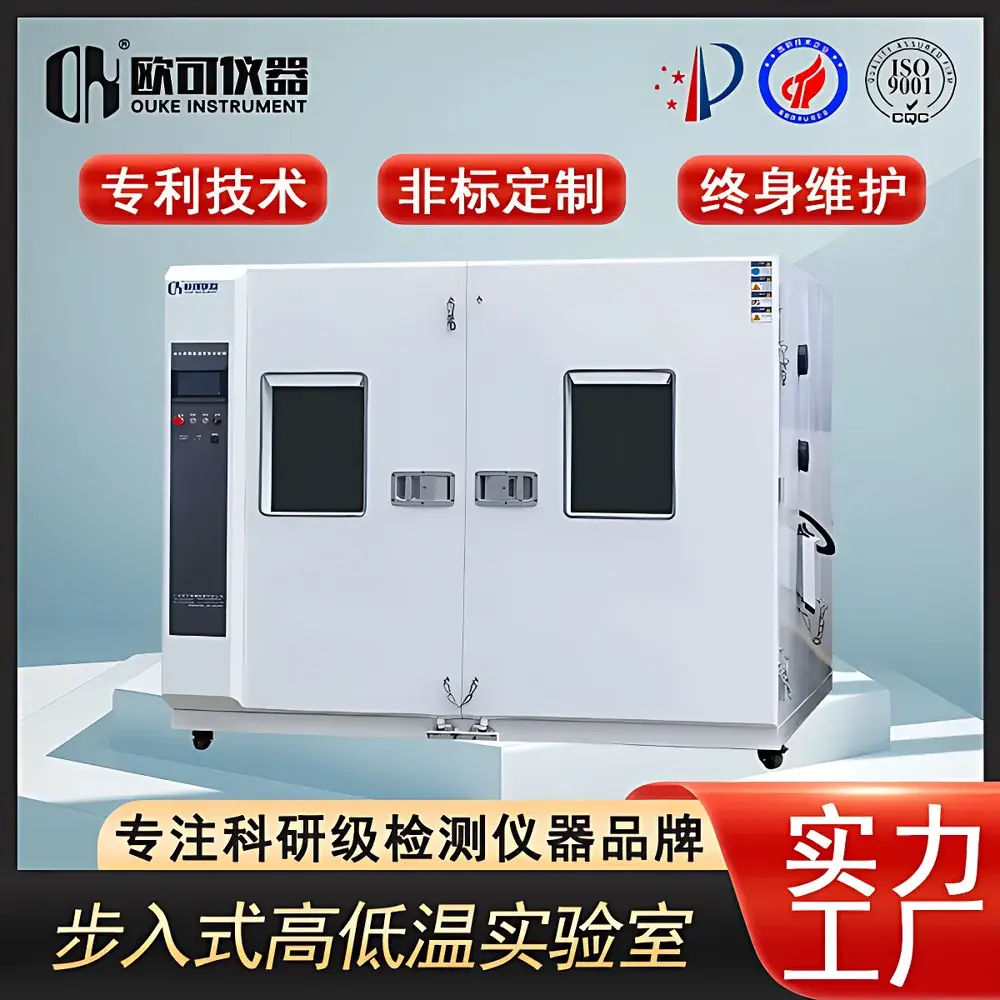
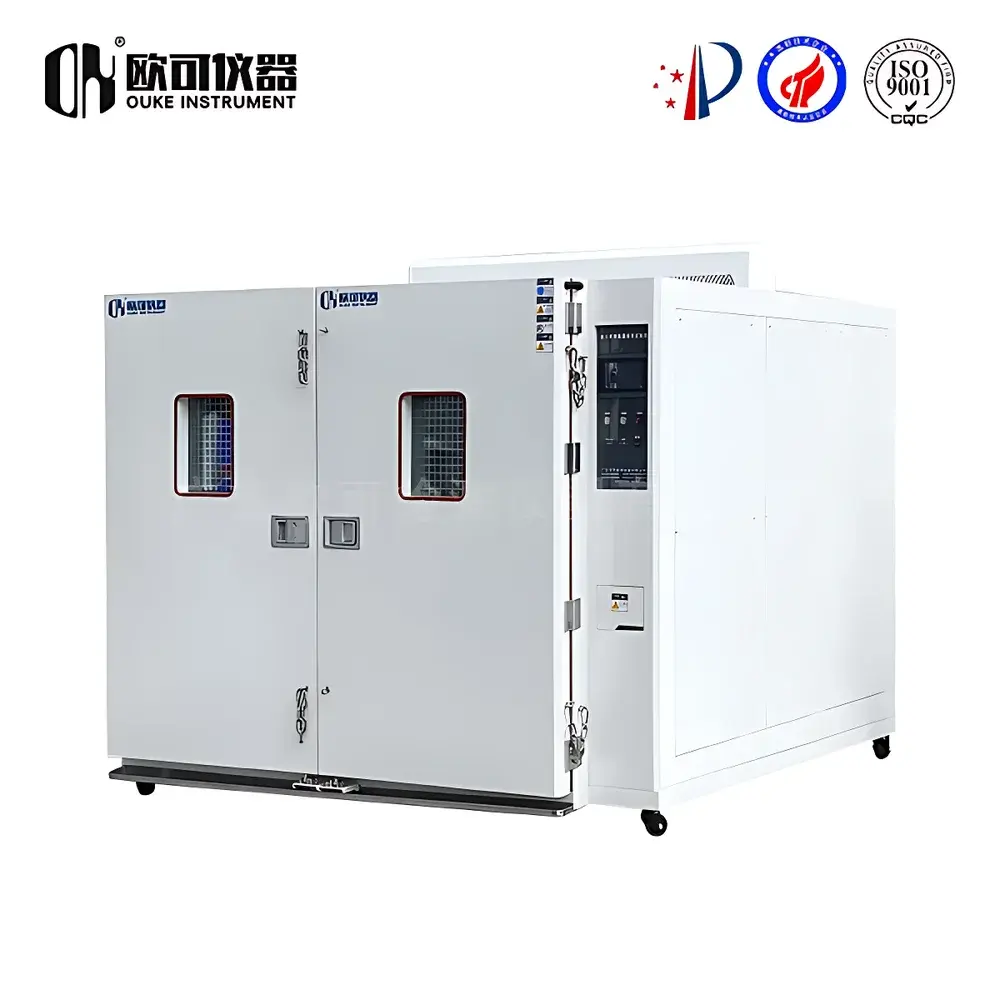
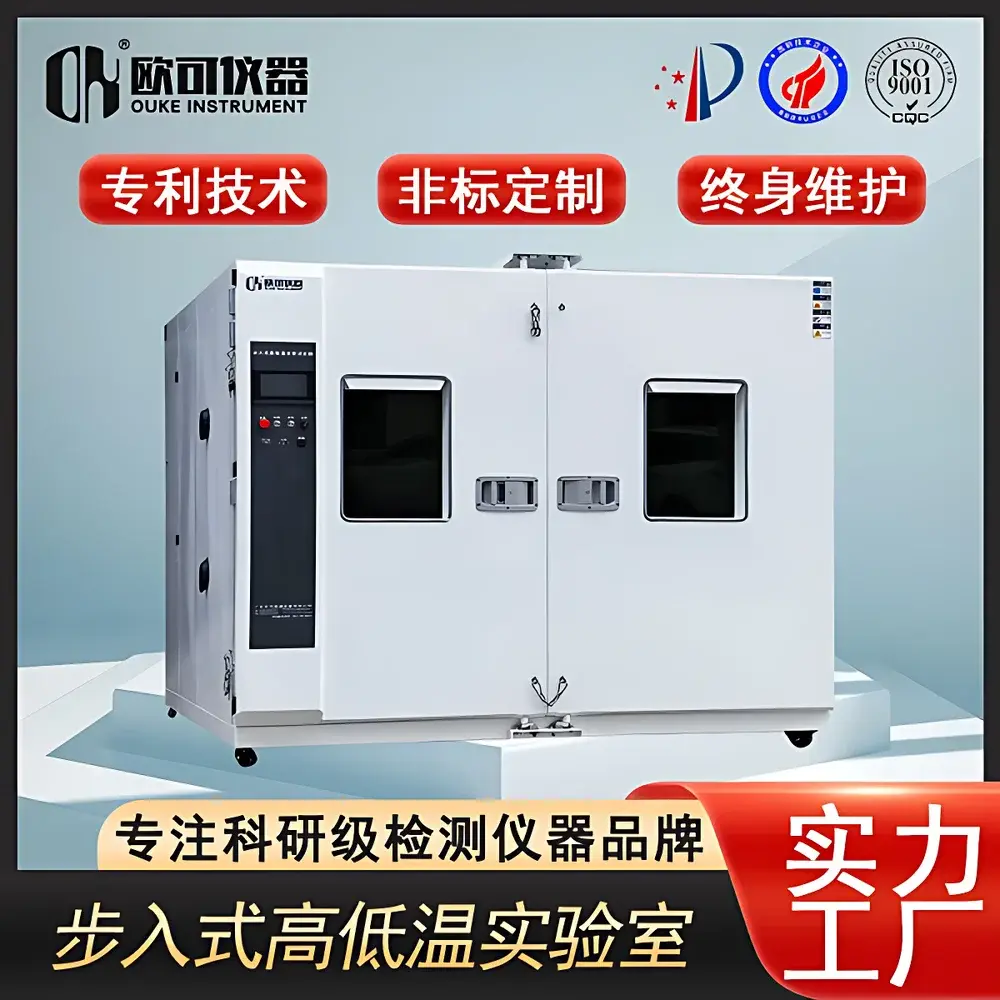
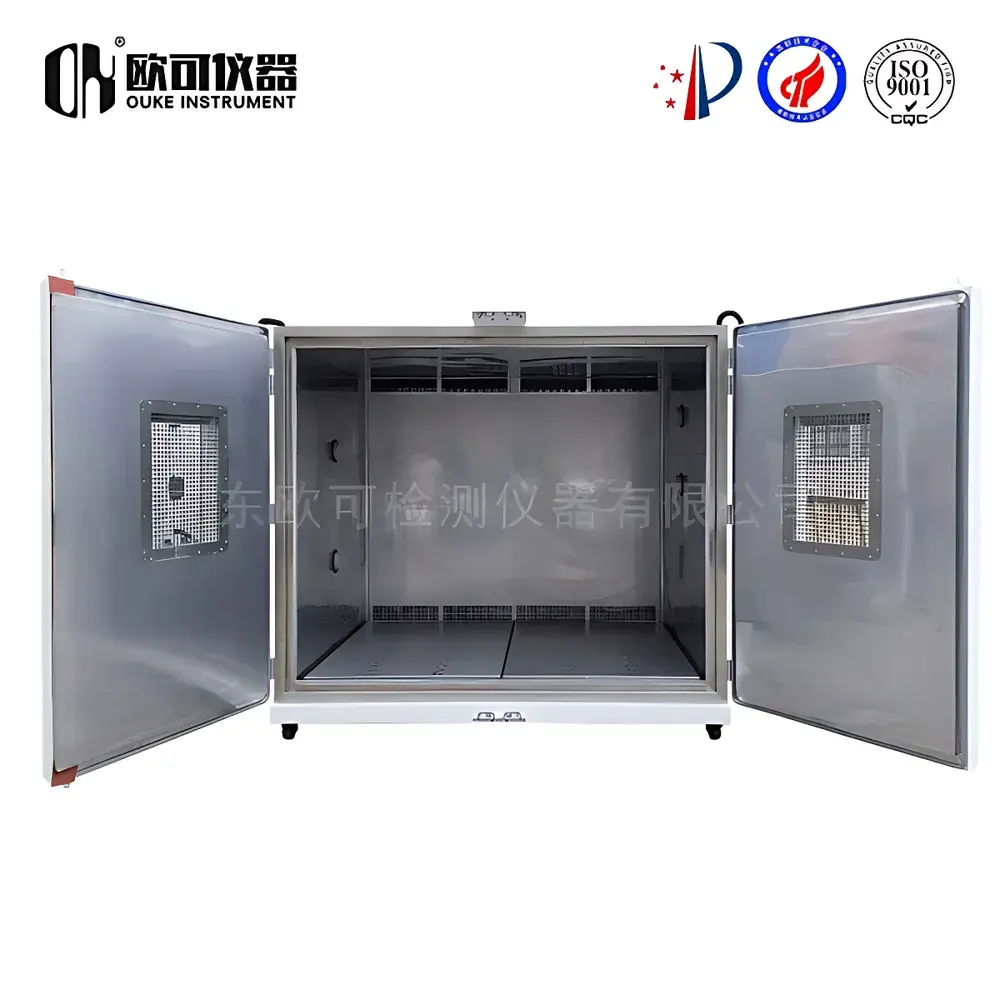
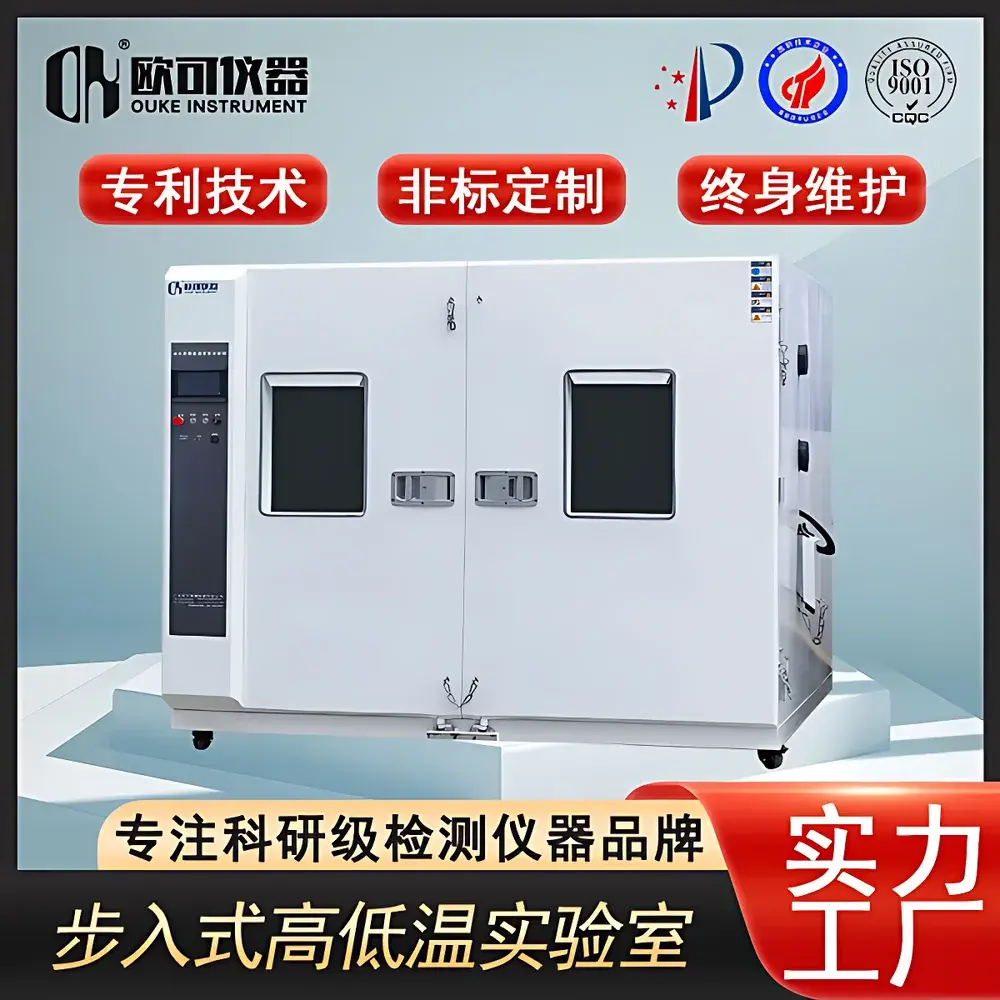
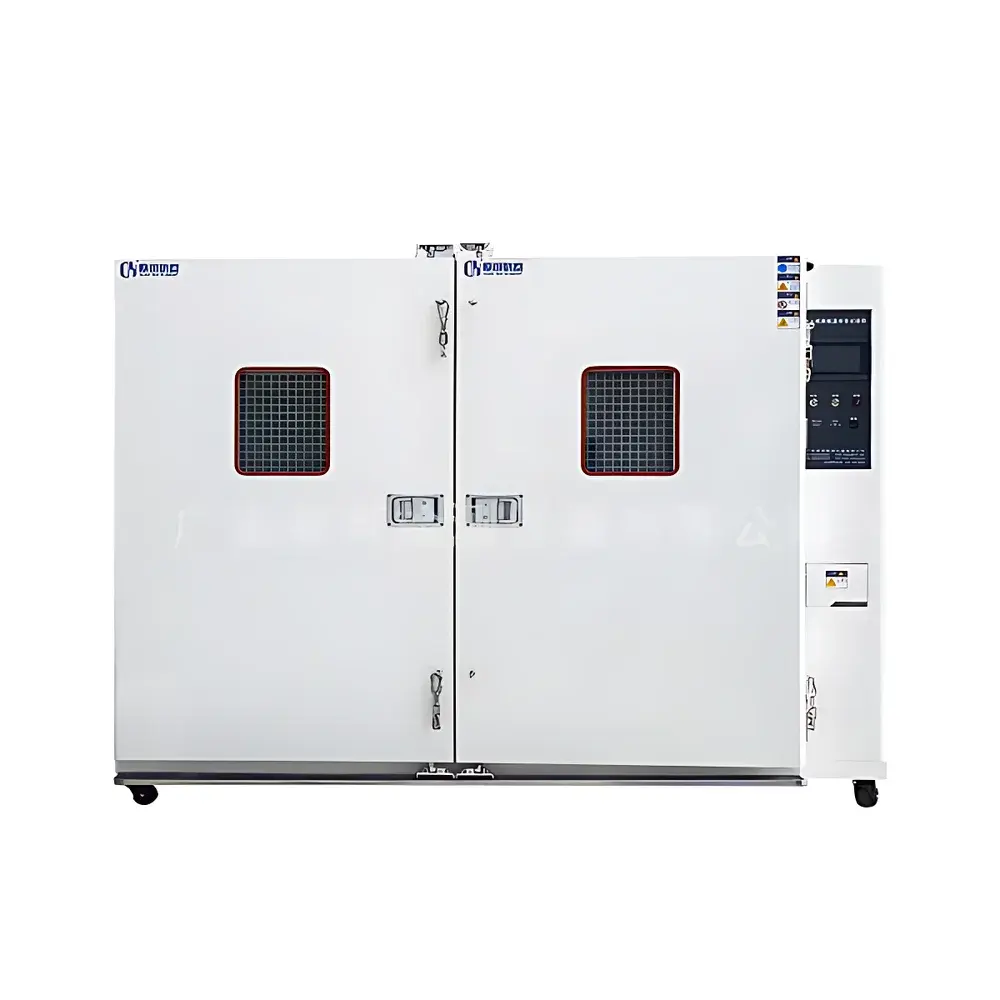
OK Walk-in Thermal Cycling Chamber OK-STH-8.00010m²
| Brand | OK Instruments |
|---|---|
| Origin | Guangdong, China |
| Manufacturer Type | Direct Manufacturer |
| Country of Origin | China |
| Model | OK-STH-8.00010m² |
| Internal Dimensions (D×W×H) | 2000 × 2000 × 2000 mm |
| Temperature Range Options | A: 0°C to +150°C |
| B | −20°C to +150°C |
| C | −40°C to +150°C |
| D | −60°C to +150°C |
| E | −70°C to +150°C |
| Temperature Uniformity | ±3°C |
| Temperature Control Accuracy | ±1°C |
| Heating Rate | 1.0–4.0°C/min |
Overview
The OK Walk-in Thermal Cycling Chamber OK-STH-8.00010m² is a large-volume, single-variable environmental test system engineered for precise, repeatable, and scalable thermal stress evaluation. Unlike combined temperature-humidity chambers, this walk-in chamber eliminates humidity control subsystems—removing complexity, maintenance overhead, and calibration dependencies—to focus exclusively on high-fidelity temperature simulation across wide operational ranges. Its core measurement principle relies on forced-air convection thermoregulation within a rigidly insulated enclosure, utilizing dual-stage (cascade) refrigeration architecture for sub-zero operation down to −70°C and high-power resistive heating for rapid ramping up to +150°C. Designed for laboratory, QC, and reliability engineering environments, it supports ASTM E1545, ISO 16750-4, IEC 60068-2-1 (cold), IEC 60068-2-2 (dry heat), and MIL-STD-810H Method 502.7 (temperature shock and storage) protocols. The chamber’s structural integrity, thermal stability, and programmable profile fidelity make it suitable for validation of automotive ECUs, aerospace avionics, battery modules, and industrial electronics under non-operational and functional thermal loads.
Key Features
- Walk-in configuration with 8.0 m³ internal volume (2000 × 2000 × 2000 mm), enabling operator entry for manual sample loading, in-situ monitoring, and integration of auxiliary instrumentation.
- Selectable temperature range options from 0°C to +150°C up to −70°C to +150°C, supported by cascade refrigeration for low-temperature models (C–E), ensuring stable operation at cryogenic setpoints without refrigerant freeze-out.
- High-efficiency air circulation system featuring long-life centrifugal blowers and optimized upper-supply/lower-return airflow path, achieving ≤ ±3°C temperature uniformity per IEC 60068-3-5 across the full working volume.
- Industrial-grade Pt100 Class A temperature sensors (IEC 60751) mounted at multiple spatial locations for real-time feedback and closed-loop PID control with ±1°C setpoint accuracy.
- Programmable touchscreen controller supporting up to 99 segments, 999 cycles, and multi-step profiles—including ramp-hold-cool sequences, step transitions, and dwell-based thermal cycling—with configurable rate limits (1.0–4.0°C/min average heating rate).
- Robust structural design: 150 mm thick polyurethane insulated sandwich panels (thermal conductivity ≤ 0.022 W/m·K), double-sealed stainless steel door with anti-frost heated viewing window, and reinforced load-bearing floor rated for ≥ 1,000 kg distributed static load.
Sample Compatibility & Compliance
This chamber accommodates full-scale assemblies—including EV battery packs, automotive ECUs, server racks, and aerospace structural components—without requiring disassembly or miniaturization. Its absence of humidity control renders it ideal for testing materials and devices insensitive to moisture (e.g., metal alloys, ceramic substrates, dry electronic enclosures). It complies with key regulatory frameworks for environmental qualification: IEC 60068-2 series (climatic tests), ISO 16750-4 (road vehicles), AEC-Q200 (passive components), and UL 1577 (optocoupler thermal endurance). While not certified for GLP/GMP production release, its data logging, password-protected parameter locking, and timestamped event records align with FDA 21 CFR Part 11 requirements when paired with OK’s optional audit trail module. All electrical systems meet CE/GB 4793.1 safety standards; refrigeration circuits conform to ASHRAE 15 and EN 378-1.
Software & Data Management
The embedded controller provides local profile programming, real-time trend visualization, and alarm-triggered email/SMS notifications via Ethernet or RS485. Data is logged at user-defined intervals (1 s to 60 min) to internal flash memory (≥ 1 year retention at 1-min intervals) and exportable via USB 2.0 to CSV or Excel-compatible formats. Optional OK-Link PC software enables remote supervision, multi-chamber fleet management, automated report generation (PDF/HTML), and integration with LIMS or MES platforms through Modbus TCP or OPC UA. Audit trail functionality—including operator ID, parameter changes, start/stop timestamps, and deviation alerts—is available as an upgrade compliant with 21 CFR Part 11 electronic signature and record retention requirements.
Applications
- Automotive: Cold-start validation of powertrain control units at −40°C; thermal cycling of ADAS sensors between −40°C and +85°C; battery pack storage conditioning prior to performance testing.
- Electronics: Burn-in screening of PCBAs under accelerated thermal stress; solder joint reliability assessment via 500-cycle −40°C ↔ +125°C profiles; thermal shock pre-conditioning per JEDEC JESD22-A106B.
- Aerospace: Pre-flight thermal soak of flight-critical avionics; material coefficient-of-thermal-expansion (CTE) characterization of composite airframe sections.
- Energy Storage: Capacity fade analysis of Li-ion cells after 1,000-hour storage at −20°C or +60°C; thermal runaway propagation studies using external thermal imaging integration.
- Academic & Certification Labs: Teaching labs for thermodynamics and materials science; third-party test houses performing IEC/UL compliance verification where humidity independence is specified.
FAQ
What distinguishes this chamber from a walk-in environmental test chamber with humidity control?
This model omits humidification and dehumidification subsystems—eliminating steam generators, water reservoirs, desiccant wheels, and associated calibration burdens—resulting in higher thermal stability, lower maintenance frequency, and improved long-term repeatability for temperature-only applications.
Can it perform thermal shock testing?
Yes—when configured with rapid ramp capability (up to 4.0°C/min average heating rate) and paired with external cold/hot source chambers, it supports two-zone thermal shock per MIL-STD-810H Method 503.4. Single-chamber shock is limited by achievable cooling rate and is not recommended for <5-minute transition specifications.
Is the temperature uniformity validated per ISO 16750-4 Annex B?
Yes—the standard 9-point uniformity mapping protocol (center + eight corners at mid-height) is performed at factory acceptance test (FAT) and documented in the IQ/OQ report supplied with each unit.
Does the controller support custom alarm logic and relay outputs?
Yes—up to 16 programmable digital alarms (high/low deviation, sensor fault, door open, compressor overload) can trigger isolated dry-contact relays for integration with building management systems or emergency shutdown circuits.
What electrical supply requirements apply for the −70°C configuration?
The E-range model requires three-phase 380 VAC ±10%, 50 Hz, with minimum 63 A circuit protection and dedicated grounding per IEC 60364-5-54; cooling water supply (for water-cooled condenser option) must deliver ≥ 15 L/min at 25°C inlet temperature.



