
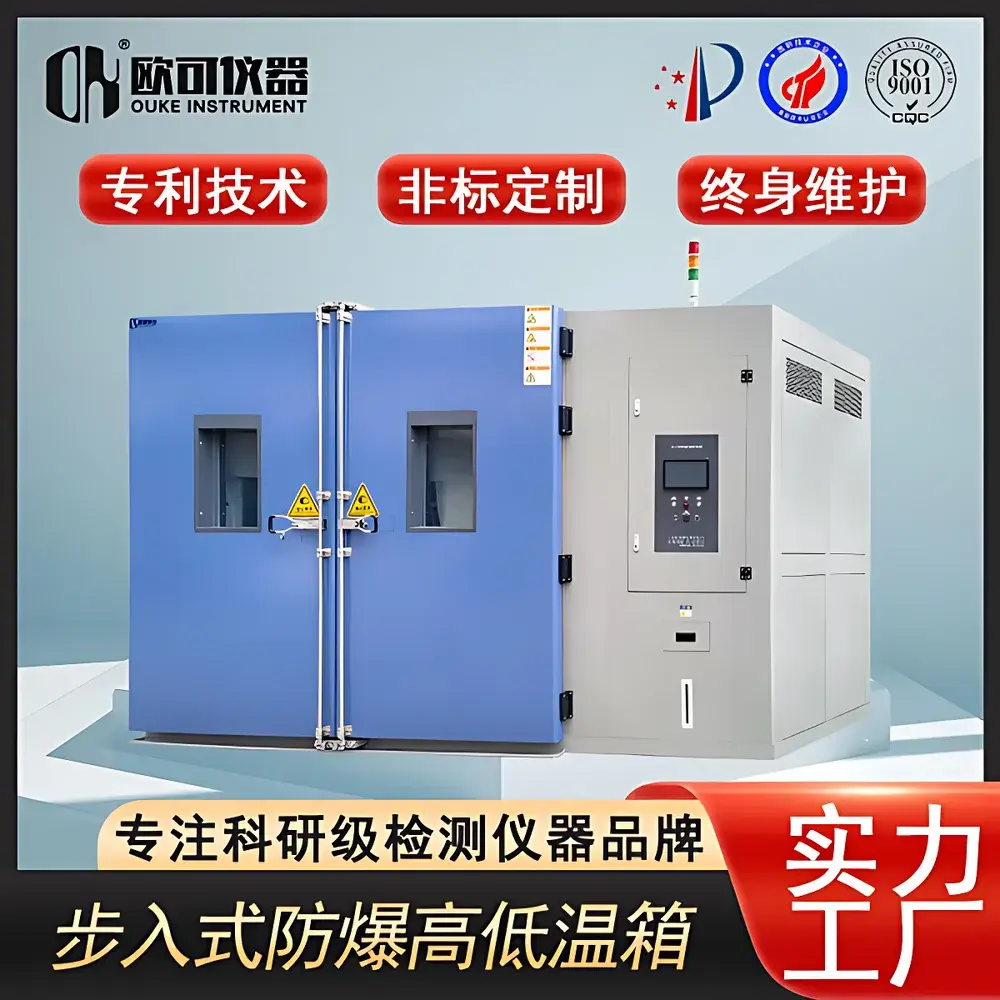
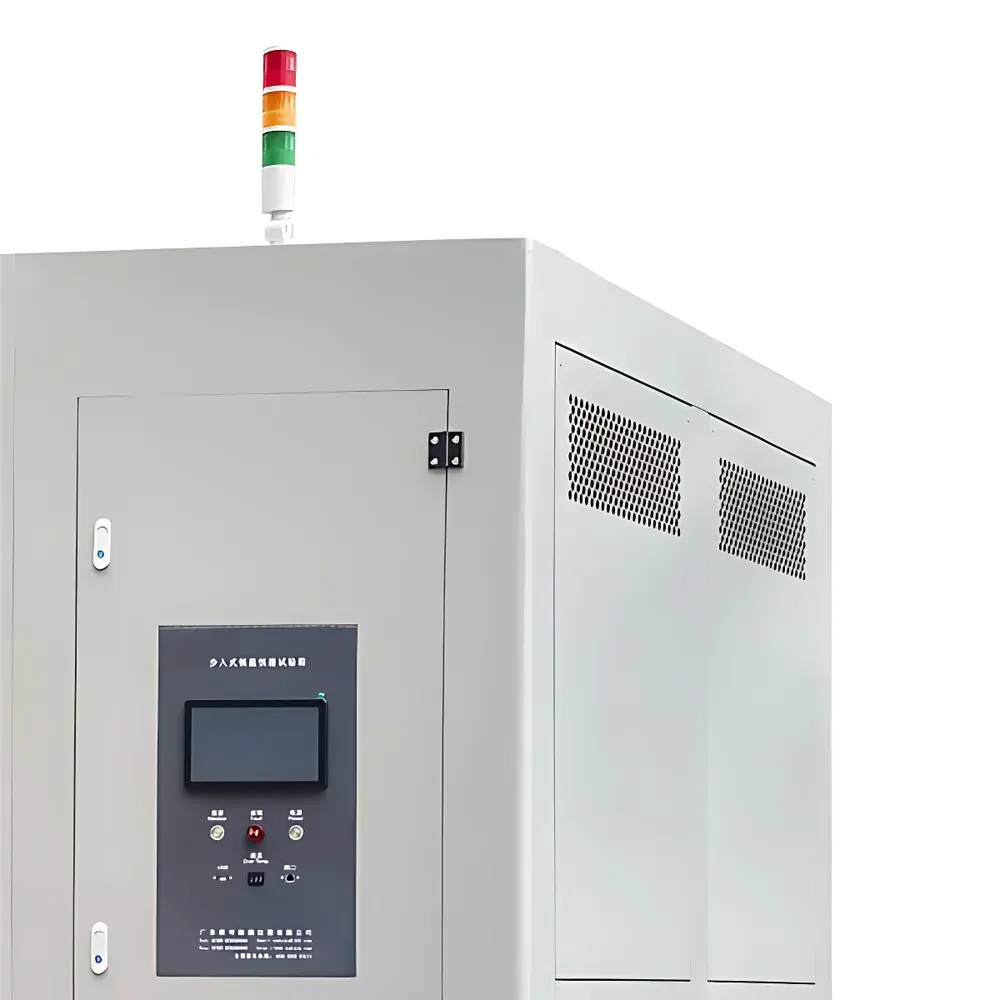
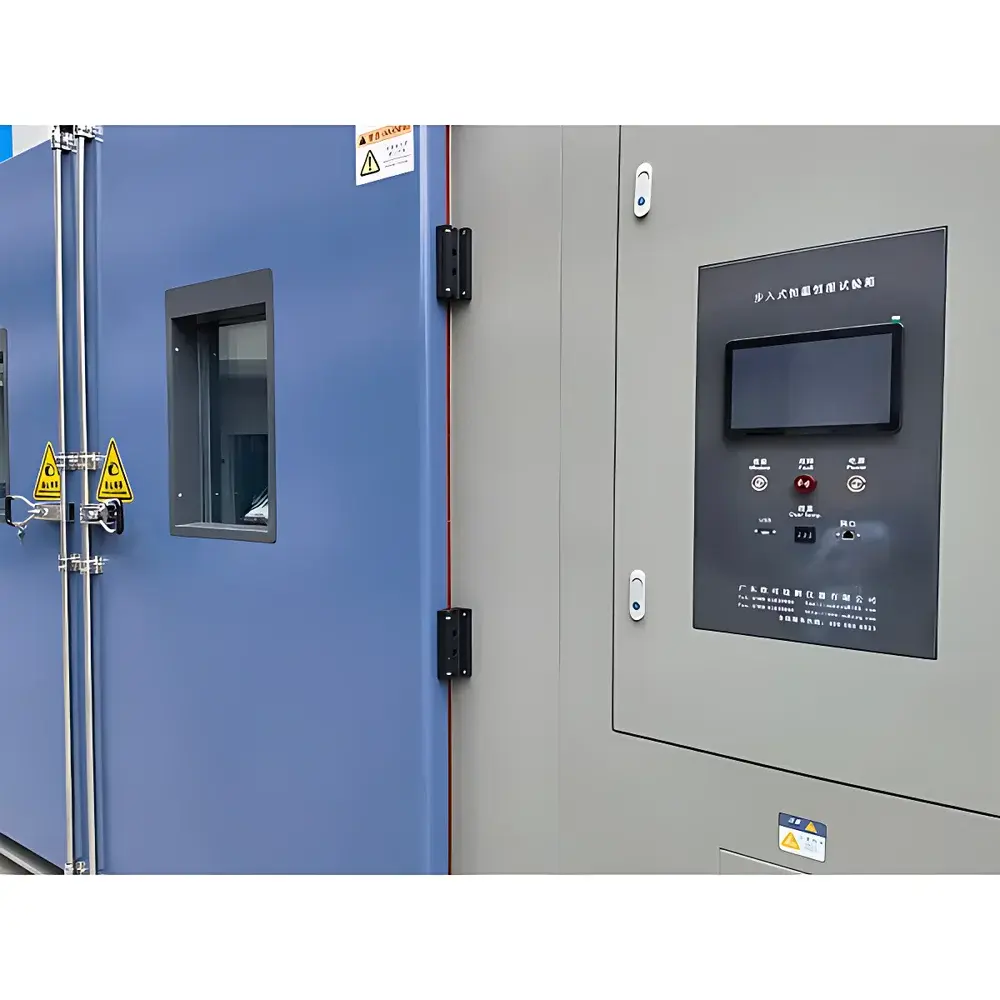
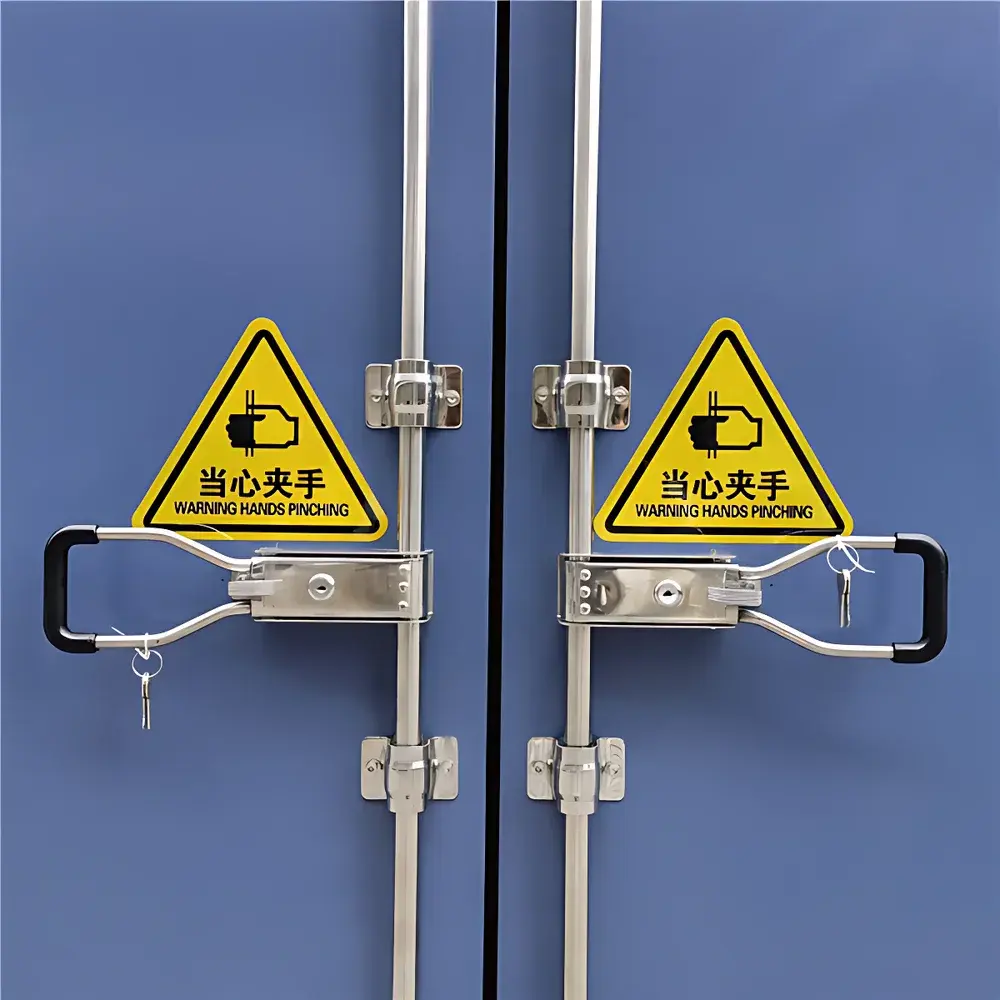
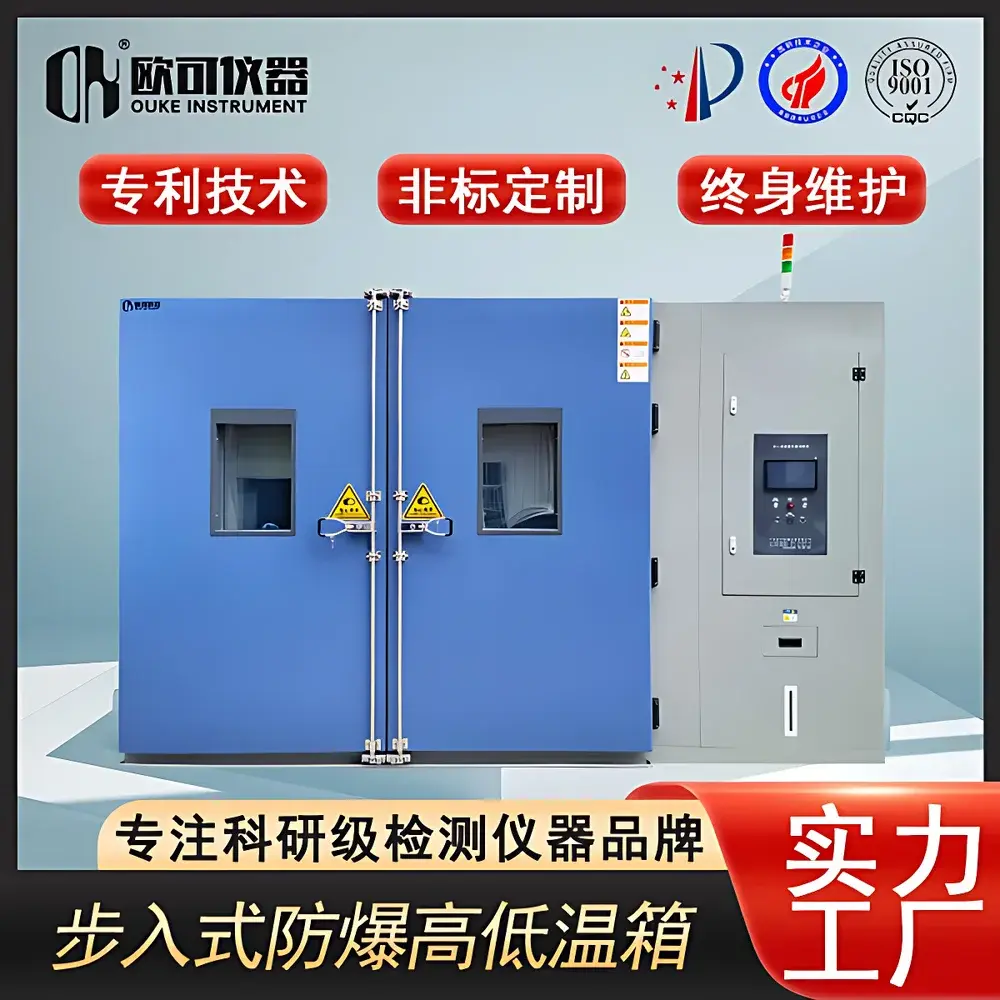
OK Walk-in Thermal Shock & Humidity Cycling Chamber OK-STH-12.00000m²
| Brand | OK Instruments |
|---|---|
| Origin | Guangdong, China |
| Manufacturer Type | Direct Manufacturer |
| Product Origin | Domestic (China) |
| Model | OK-STH-12.00000m² |
| Internal Dimensions (D×W×H) | 3000 × 2000 × 2000 mm |
| Temperature Range Options | A: 0°C / B: −20°C / C: −40°C / D: −60°C / E: −70°C to +150°C |
| Temperature Uniformity | ±3°C |
| Temperature Control Accuracy | ±2°C |
| Heating Rate | 1.0–4.0°C/min |
| Humidity Range | 10–98% RH (dependent on temperature) |
| Compliance | Designed per GB/T 2423.4, IEC 60068-2-30, GB/T 2423.34, IEC 60068-2-38, GJB 150.9A, ISO 16750-4 |
Overview
The OK Walk-in Thermal Shock & Humidity Cycling Chamber OK-STH-12.00000m² is a large-volume, operator-accessible environmental test system engineered for accelerated reliability assessment under dynamically varying thermal and hygrometric conditions. Unlike static temperature-humidity chambers, this chamber implements programmable, multi-segment thermal-hygroscopic cycling—precisely replicating real-world environmental stressors such as diurnal temperature swings, seasonal transitions, condensation-prone power-on/off cycles, and rapid ambient shifts between conditioned indoor and uncontrolled outdoor environments. Its operational principle is grounded in controlled thermodynamic transients: simultaneous or decoupled modulation of air temperature (via dual-stage refrigeration and high-power resistive heating) and relative humidity (via electrode-type fast-response humidification and deep-dewpoint dehumidification), all governed by a deterministic time-based profile. The chamber’s core purpose is not stabilization but *stress induction*: leveraging differential thermal expansion, moisture absorption/desorption hysteresis, interfacial condensation, and electrochemical migration to expose latent design flaws, material incompatibilities, seal integrity failures, and solder joint fatigue prior to field deployment.
Key Features
- Walk-in architecture with 12.0 m² internal floor area (3000 × 2000 × 2000 mm usable volume), enabling full-system testing of automotive ECUs, telecom base station cabinets, medical imaging subsystems, and aerospace avionics enclosures.
- Selectable low-temperature capability down to −70°C via cascade refrigeration system—comprising separate high- and low-stage compressors, optimized refrigerant charge, and cryogenically rated insulation (≥150 mm polyurethane foam, λ ≤ 0.022 W/m·K).
- Programmable temperature ramp rates from 1.0 to 4.0°C/min across the full operating range, achieved through redundant heating capacity (≥60 kW) and variable-speed compressor modulation.
- High-fidelity humidity control (10–98% RH) with dynamic dew point tracking; shallow-tank electrode humidifier ensures <5 s response time, while integrated desiccant wheel supports sub-zero dew point operation during cold soak phases.
- Advanced 10.4″ color touchscreen controller with ≥500-step program memory, nested loop capability, and real-time deviation alarm logging—fully compliant with IEC 61508 SIL2 functional safety requirements for test sequence integrity.
- Vertical airflow architecture with twin centrifugal fans (≥12,000 m³/h total volume flow) and perforated ceiling plenum ensures ±2.5°C temperature uniformity and ±3% RH stability at sensor grid points per ISO 16750-4 Annex B verification protocol.
Sample Compatibility & Compliance
The OK-STH-12.00000m² accommodates heterogeneous sample configurations—including stacked palletized loads, vertically mounted rack systems, and instrumented vehicle modules—without compromising profile fidelity. All internal surfaces are electropolished stainless steel (AISI 316L) with non-outgassing gasketing to prevent contamination of sensitive optical or MEMS components. The chamber is designed and verified against internationally recognized environmental test standards: GB/T 2423.4 (IEC 60068-2-30) for standard alternating damp heat, GB/T 2423.34 (IEC 60068-2-38) for composite temperature-humidity cycling, GJB 150.9A for military-grade wet heat exposure, and ISO 16750-4 for road vehicle climatic stress validation. It supports GLP-compliant operation with optional audit-trail-enabled controller firmware (21 CFR Part 11 ready upon configuration), including electronic signature, user access levels, and immutable event logging.
Software & Data Management
The embedded controller runs OK-EnviroSuite™ firmware, supporting native import of .csv-defined test profiles and automatic synchronization with external LIMS platforms via OPC UA or Modbus TCP. Real-time data acquisition includes ≥16 independent thermocouple/hygrometer inputs, refrigerant pressure/temperature monitoring, and power consumption telemetry. All datasets are timestamped, CRC-verified, and archived in IEEE 1588v2-synchronized .tdms format—ensuring traceability for regulatory submissions. Optional cloud gateway enables remote monitoring, predictive maintenance alerts (e.g., evaporator frost accumulation trend analysis), and automated PDF report generation with pass/fail annotations aligned to test specification limits.
Applications
This chamber serves as a primary tool in HALT/HASS screening, qualification testing per MIL-STD-810H Method 507.6, automotive APQP Phase 3 validation, and IEC 61215 photovoltaic module certification. Typical use cases include: evaluating PCB warpage and underfill delamination under repeated thermal-hygric strain; validating IP67 enclosure integrity during condensing cold-to-hot transitions; assessing battery management system (BMS) calibration drift across −40°C ↔ +85°C/85% RH cycles; and verifying display module contrast retention under sustained high-humidity soak followed by rapid dry-down. Its capacity and profile fidelity make it indispensable for Tier 1 suppliers conducting system-level climate resilience verification prior to OEM submission.
FAQ
What is the difference between “alternating damp heat” and “steady-state humidity testing”?
Alternating damp heat (per IEC 60068-2-30) imposes sequential thermal and hygric transients to induce mechanical stress and condensation; steady-state testing maintains fixed setpoints to assess long-term equilibrium behavior.
Can the chamber achieve 98% RH at −40°C?
No—saturation limits constrain practical RH control below 0°C; at −40°C, maximum achievable RH is ~15% due to reduced water vapor pressure; the chamber automatically enforces physically valid RH bounds.
Is the temperature ramp rate linear or average?
The specified 1.0–4.0°C/min is the average rate over the full transition; instantaneous ramp rates may vary ±15% due to thermal mass effects, but controller algorithms minimize overshoot to <±0.8°C.
Does the system support remote calibration verification?
Yes—integrated reference-grade PT100 sensors and NIST-traceable hygrometers enable on-site verification without chamber downtime; calibration certificates include uncertainty budgets per ISO/IEC 17025.
What electrical infrastructure is required for full-power operation?
Three-phase 400 VAC ±10%, 50/60 Hz, with dedicated 125 A circuit breaker and isolated grounding (<5 Ω earth resistance); liquid-cooled chiller option reduces peak current demand by ~35%.



