
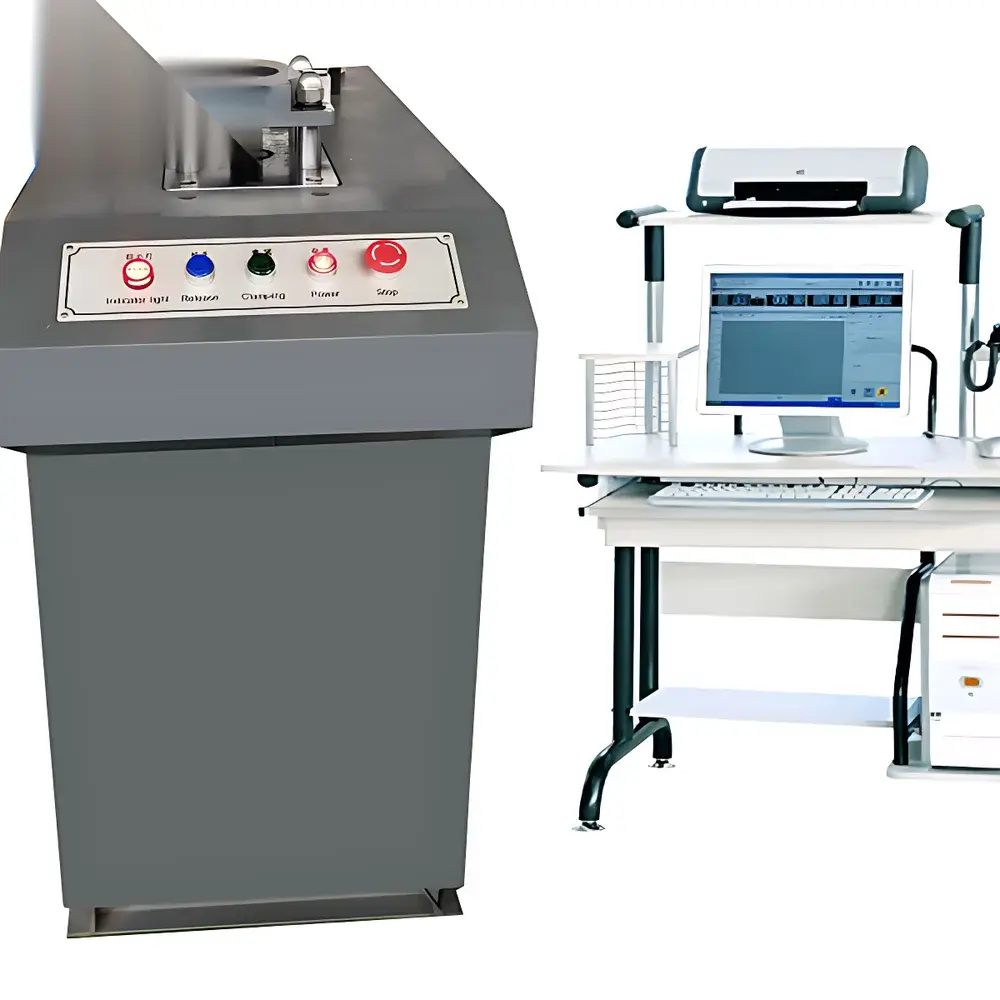
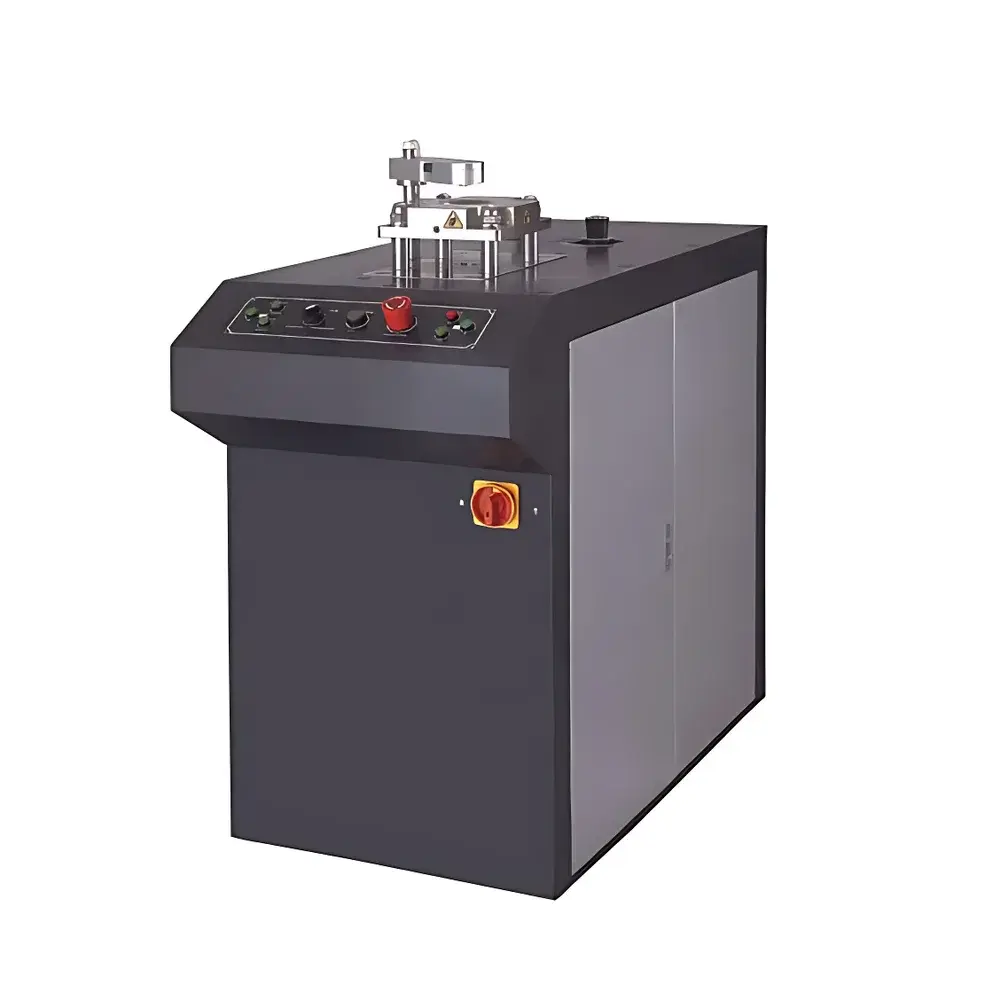
WANCHEN ETM2604 Microcomputer-Controlled Erichsen Cupping Testing Machine
| Brand | WANCHEN |
|---|---|
| Origin | China |
| Manufacturer Type | Manufacturer |
| Model | ETM2604 |
| Max Punching Load | 50 kN |
| Max Clamping Force | 10 kN |
| Sheet Thickness Range | 0.1–2 mm |
| Sheet Width | 90–100 mm |
| Punch Stroke | 60 mm |
| Clamping Piston Stroke | 60 mm |
| Cupping Depth Resolution | 0.01 mm |
| Force Accuracy | ±1% |
| Deformation Accuracy | ±0.5% |
| Test Speed | 0.02–200 mm/min (infinitely variable) |
| Standard Punch Ball Diameter | φ20 ± 0.05 mm |
| Die Aperture Diameter | φ33 ± 0.1 mm |
| Blank Holder Aperture Diameter | φ27 ± 0.05 mm |
| Power Supply | AC 220 V, 1.5 kW |
| Dimensions (W×D×H) | 780 × 780 × 1100 mm |
| Weight | 260 kg |
Overview
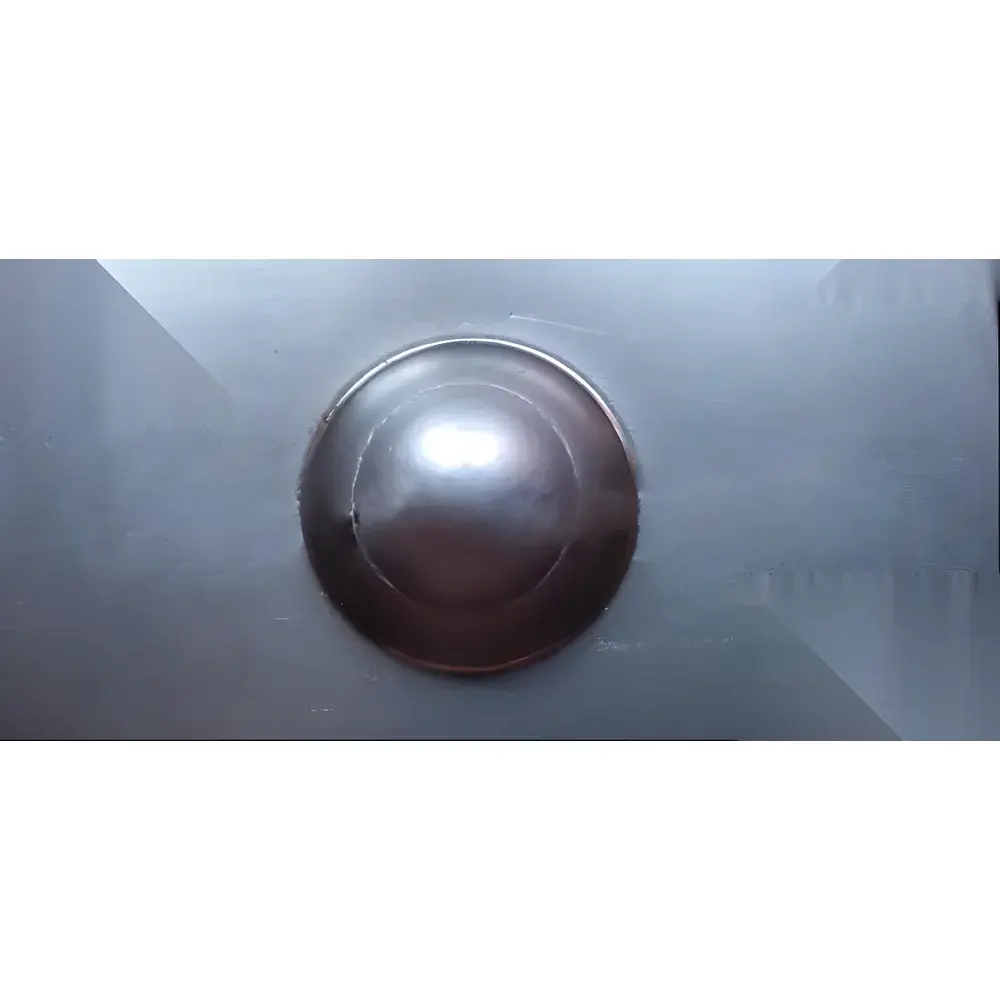
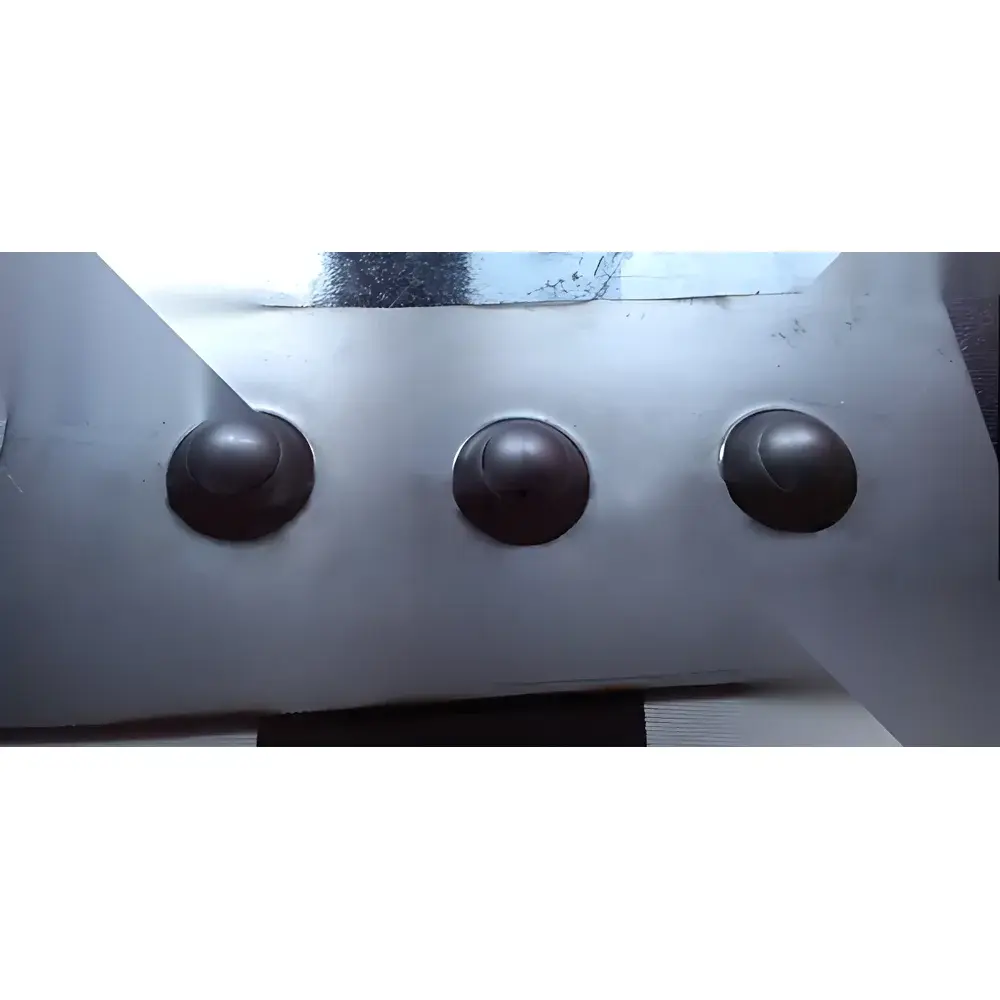
The WANCHEN ETM2604 Microcomputer-Controlled Erichsen Cupping Testing Machine is a precision electromechanical-hydraulic system engineered for quantitative evaluation of the deep-drawing and stretch-forming behavior of metallic thin sheets and strips. It implements the standardized Erichsen cupping test principle—where a hemispherical punch deforms a clamped circular specimen under controlled axial displacement until through-thickness cracking occurs—yielding the Erichsen Index (IE value), defined as the maximum depth of indentation (in millimeters) prior to crack initiation. This metric directly correlates with material ductility, strain hardening capacity, and forming limit behavior under biaxial tension. The ETM2604 complies with ISO 20482, ASTM E643-2008, GB/T 4156-2020, JJG 583-2010, and JB/T 7408-94, making it suitable for quality assurance in regulated manufacturing environments requiring traceable mechanical property verification.
Key Features
- Servo-motor-driven punch actuation enabling true constant-rate displacement control (0.02–200 mm/min), eliminating hydraulic flow variability inherent in conventional oil-pressure systems
- Independent hydraulic clamping system with adjustable force up to 10 kN, monitored in real time via high-accuracy S-type load cell (±1% full-scale accuracy)
- Direct-force measurement using calibrated spoke-type load cells—replacing legacy hydraulic pressure transducers—to ensure linearity and long-term stability
- High-resolution encoder-based cupping depth measurement (0.01 mm resolution) synchronized with force and displacement acquisition
- Low-friction linear guidance mechanism for punch movement, minimizing parasitic friction errors and enabling reliable testing of ultra-thin specimens (down to 0.1 mm thickness)
- Automatic crack detection logic: real-time monitoring of load drop rate triggers immediate test termination upon onset of fracture, improving repeatability and operator safety
- Integrated microcomputer control with closed-loop feedback architecture; all test parameters—including speed, clamping force, and stop criteria—are programmable and stored per test sequence
Sample Compatibility & Compliance
The ETM2604 accommodates flat metallic sheet specimens 90–100 mm wide and 0.1–2.0 mm thick, including cold-rolled steel, aluminum alloys (e.g., AA5182, AA6016), copper, and titanium sheet grades used in automotive body-in-white, appliance enclosures, and aerospace structural panels. Its standard tooling set conforms to ISO 20482 specifications: 20.0 ± 0.05 mm spherical punch, 33.0 ± 0.1 mm die aperture, and 27.0 ± 0.05 mm blank holder aperture. The system supports GLP-compliant operation through audit-trail-enabled software logging, user-access controls, and timestamped data export. Calibration procedures align with national metrological verification regulation JJG 583-2010, ensuring traceability to CNAS-accredited reference standards.
Software & Data Management
The embedded Windows-based control interface acquires, processes, and visualizes force-displacement curves in real time. All raw data—including peak punch load, final cupping depth (IE), deformation rate, and clamping force history—are stored in an embedded Microsoft Access database. Export options include CSV, Excel (.xlsx), and PDF report templates compliant with internal QA documentation requirements. Batch management functions allow grouping of specimens by lot number, heat treatment condition, or supplier ID. Curve overlay analysis supports comparative evaluation across material batches or process conditions. Software architecture adheres to FDA 21 CFR Part 11 principles where enabled, supporting electronic signatures, version-controlled method files, and immutable audit logs.
Applications
- Automotive OEMs and Tier-1 suppliers for incoming inspection of cold-rolled steel and aluminum body panels (e.g., door inner, hood, fender)
- Appliance manufacturers validating formability of painted or coated steel substrates used in washing machine drums and refrigerator cabinets
- Aerospace component fabricators assessing strain localization resistance in age-hardened Al-Li or Ti-6Al-4V sheet forms
- Metallurgical R&D laboratories conducting inter-laboratory round-robin studies on forming limit diagrams (FLDs)
- Third-party certification bodies performing accredited testing per ISO/IEC 17025 requirements
- University materials science departments teaching plasticity theory and metal forming mechanics
FAQ
What standards does the ETM2604 support?
It fully implements ISO 20482, ASTM E643-2008, GB/T 4156-2020, JJG 583-2010, and JB/T 7408-94 for cupping testing and metrological verification.
Can the system test ultra-thin foils below 0.2 mm?
Yes—the low-friction punch carriage and direct-load measurement architecture enable stable, repeatable testing down to 0.1 mm thickness without slippage or edge wrinkling artifacts.
How is crack detection automated?
The system continuously computes the first derivative of the punch load signal; a predefined negative slope threshold triggers immediate test halt and records the corresponding cupping depth as the IE value.
Is calibration traceable to national standards?
All force and displacement transducers are calibrated using NIST-traceable reference standards, with certificates provided per JJG 583-2010 requirements.
What maintenance is required for the hydraulic clamping system?
Use only ISO VG 46 anti-wear hydraulic oil; replace every 12 months or after 2,000 operating hours; inspect seals annually per manufacturer’s service manual.



