
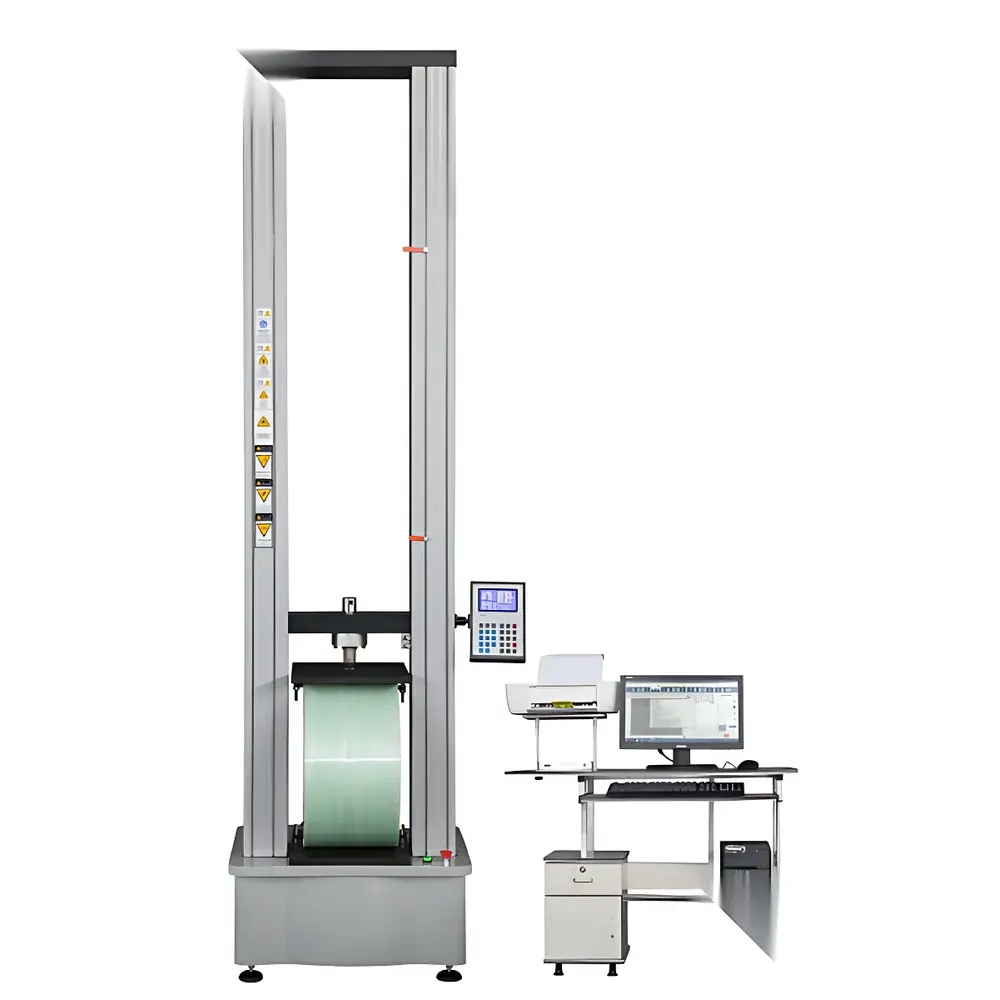
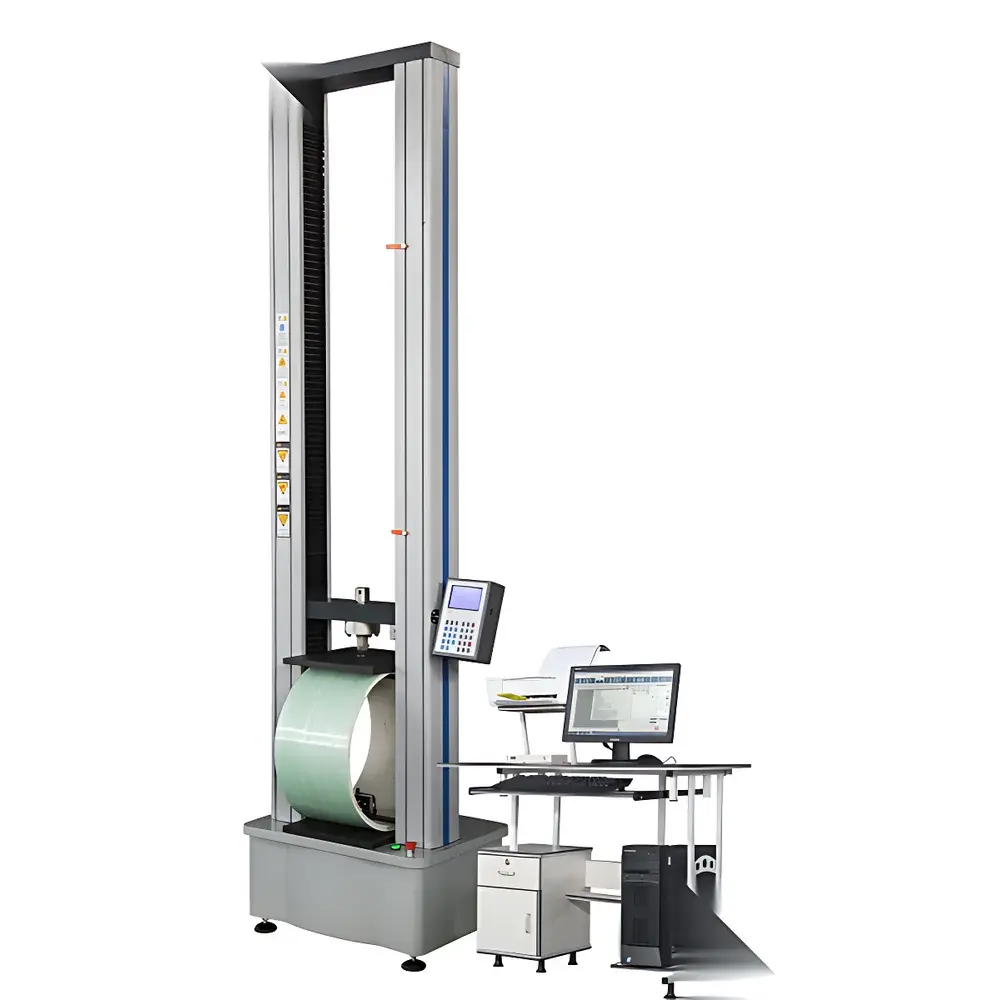
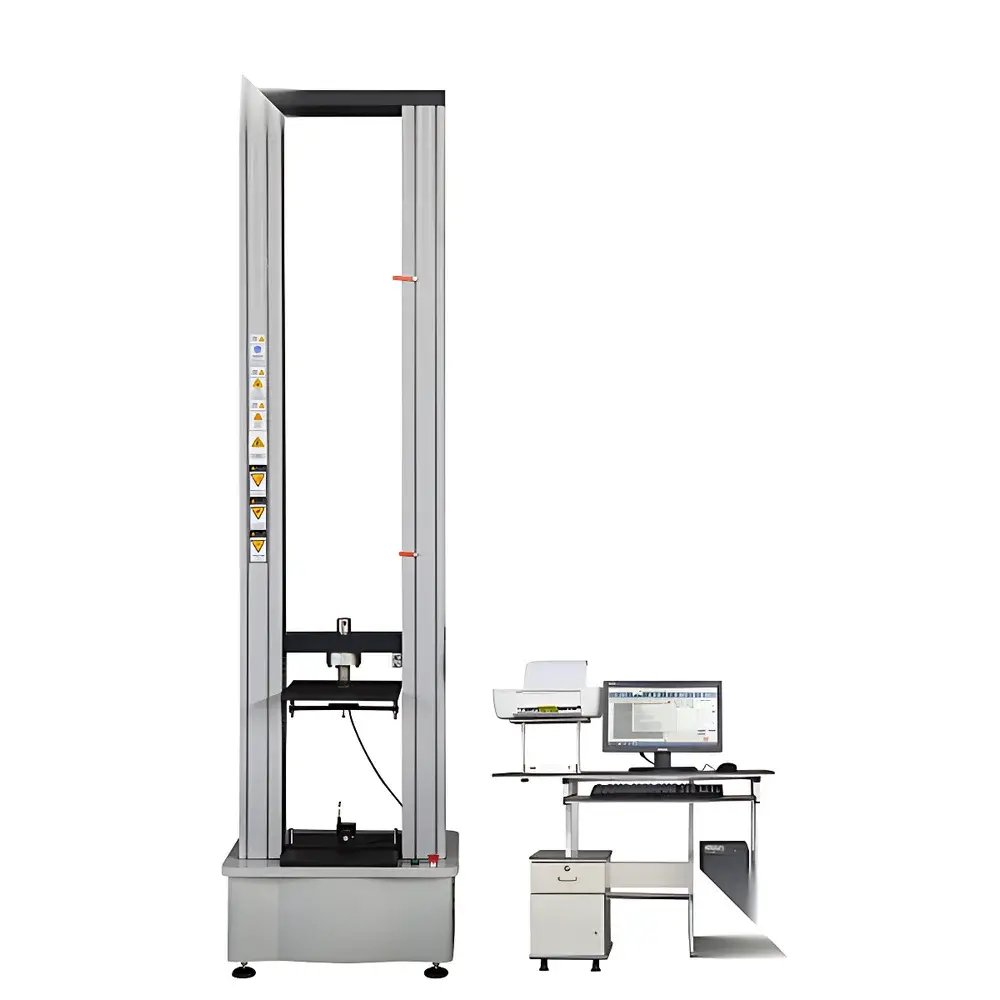
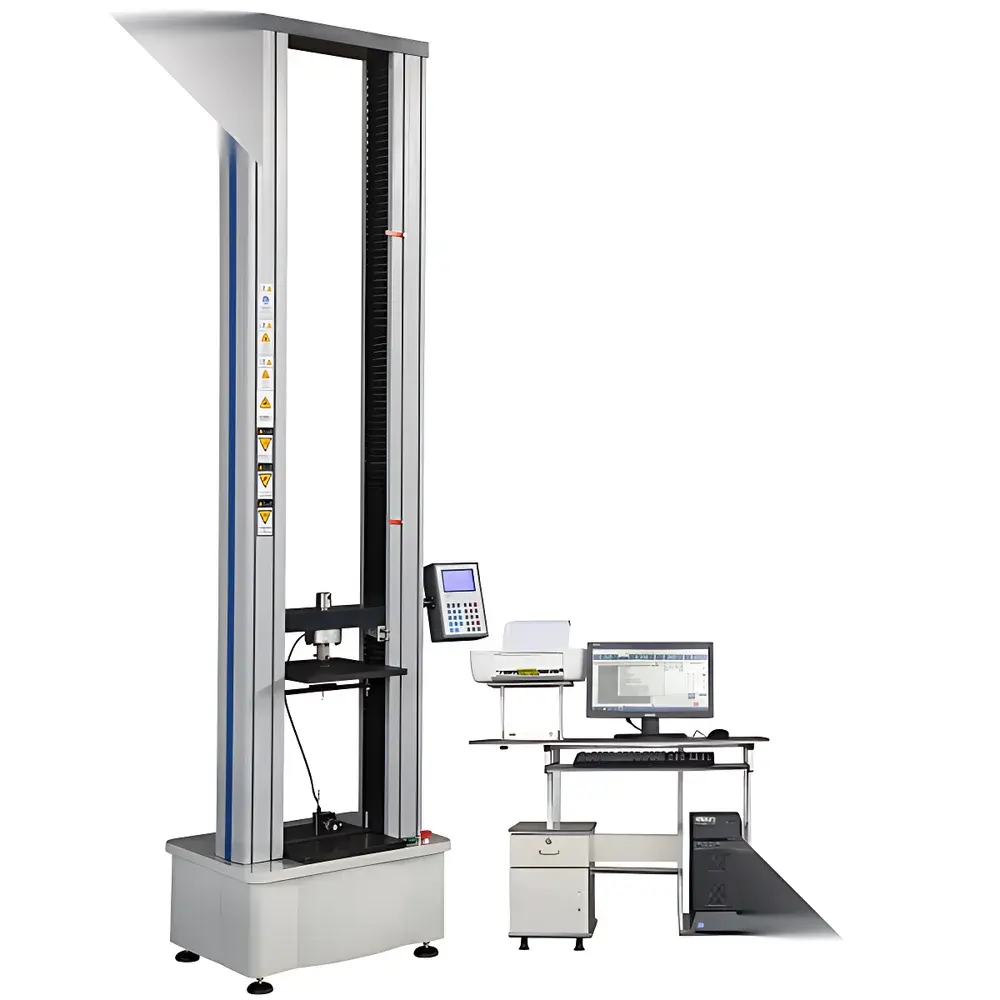
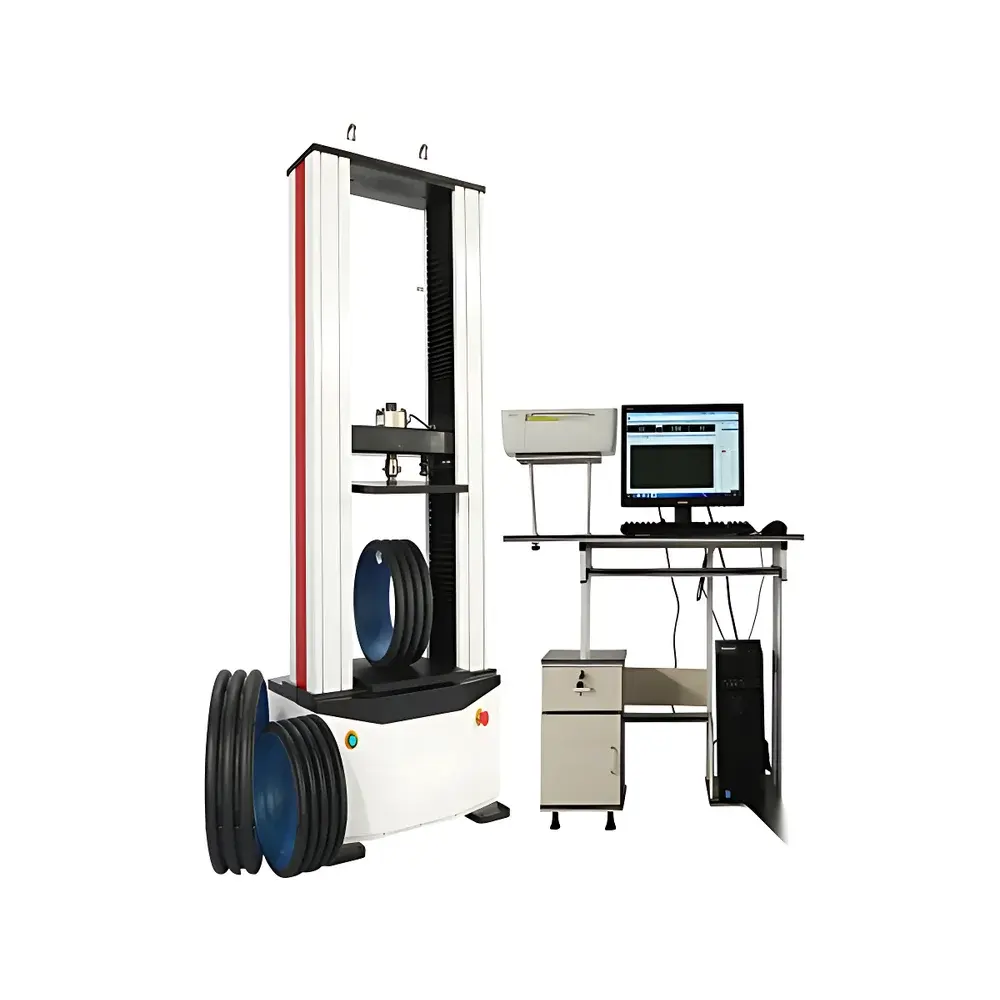
WANCHEN UTM4304 Microcomputer-Controlled Ring Stiffness and Ring Flexibility Testing Machine
| Brand | WANCHEN |
|---|---|
| Origin | Shandong, China |
| Manufacturer Type | Direct Manufacturer |
| Model | UTM4304 |
| Instrument Type | Electromechanical Universal Testing Machine |
| Load Capacity | 120 N – 30 kN |
| Load Accuracy | ±0.5% |
Overview
The WANCHEN UTM4304 is a dedicated electromechanical universal testing machine engineered for precise determination of ring stiffness and ring flexibility in thermoplastic, fiberglass-reinforced plastic (FRP), and composite tubular materials. It operates on the principle of controlled axial compression applied to a pipe specimen supported on two parallel rollers, while simultaneously measuring both applied load and radial deformation (i.e., reduction in internal diameter) under standardized boundary conditions. This methodology conforms strictly to ISO 9969 and GB/T 9647–2003, which define ring stiffness (kN/m²) as the ratio of compressive load per unit length to the relative deflection of the pipe’s inner diameter. The UTM4304 integrates dual-load-sensor architecture to eliminate eccentric loading and lateral force interference—common sources of measurement drift in conventional single-sensor systems—thereby ensuring high reproducibility across repeated tests on large-diameter pipes (DN10–DN1200 mm). Its rigid portal frame, precision-ground ball screw actuation system, and closed-loop servo control deliver stable displacement rates from 0.001 to 600 mm/min, supporting both static and quasi-static mechanical characterization protocols.
Key Features
- Double-load-sensor configuration for real-time force balance monitoring and elimination of off-axis loading errors during ring compression
- Dedicated internal diameter deformation measurement system (DBX1200) with calibrated contact arms, enabling direct, traceable measurement of pipe ovalization within ±0.01 mm resolution
- High-rigidity dual-space portal frame (940 × 520 × 2450 mm) accommodating specimens up to 1300 mm in test height and 400 mm effective span
- Full-range load measurement from 0.4% to 100% of full scale (FS) with ±0.5% accuracy per ISO 7500-1 Class 0.5 requirements
- Integrated digital closed-loop control system supporting simultaneous force, displacement, and deformation channel acquisition at 10 kHz sampling rate
- Overload, overcurrent, overvoltage, and thermal protection circuits compliant with IEC 61000-4 electromagnetic compatibility standards
- Modular auxiliary fixture interface allowing rapid reconfiguration for tensile testing of plastic strips, flat compression, flattening resistance, and creep ratio evaluation
Sample Compatibility & Compliance
The UTM4304 is validated for structural testing of circular-section tubular products including HDPE, PVC-U, PPR, GRP/FRP, corrugated polyethylene (e.g., double-wall structured pipes), glass-fiber reinforced sand pipes, and metallic flexible conduits. It supports nominal diameters from DN10 to DN1200 mm and wall thicknesses up to 80 mm. All mechanical measurements adhere to international regulatory frameworks: ring stiffness testing follows GB/T 9647–2003 (equivalent to ISO 9969), flattening tests comply with ASTM D2412, and tensile properties are evaluated per ISO 527-2 and ASTM D638. The system architecture meets GLP audit requirements through time-stamped, user-logged test records, electronic signature support, and non-modifiable raw data storage—fully compatible with FDA 21 CFR Part 11 readiness when deployed with optional validation packages.
Software & Data Management
The included PC-based testing software (Windows-compatible, English-language version available) provides ISO/IEC 17025-aligned test method templates, automated calculation of ring stiffness (SN), ring flexibility (%), flattening ratio, and creep compliance. Real-time graphs display load–deformation hysteresis loops, with export options for CSV, XML, and PDF reports containing metadata such as operator ID, calibration certificate numbers, environmental conditions, and instrument serial traceability. Audit trails record all parameter modifications, test starts/stops, and data exports with immutable timestamps. Raw channel data (force, displacement, inner diameter change) are stored in binary format with checksum verification to prevent corruption. Optional API integration enables connection to LIMS platforms via TCP/IP or OPC UA protocols.
Applications
- Quality assurance of drainage, sewage, and conduit pipes in municipal infrastructure projects
- R&D validation of novel polymer blends and fiber-reinforced composites for pressure-rated piping systems
- Third-party certification testing for CE marking (EN 13476-2), WRAS approval, and NSF/ANSI 61 compliance
- Long-term creep behavior analysis under sustained loads using programmable hold segments and time-dependent modulus derivation
- Mechanical benchmarking of recycled-content pipes against virgin-material baselines per ISO 1133 and ASTM D1238
- Evaluation of temperature-dependent ring stiffness degradation using optional environmental chamber integration (−20°C to +80°C)
FAQ
What standards does the UTM4304 support for ring stiffness testing?
It fully complies with GB/T 9647–2003, ISO 9969, and EN 13476-2 for ring stiffness; ASTM D2412 for flattening resistance; and ISO 527-2 for tensile properties of plastics.
Can the system measure internal diameter deformation automatically?
Yes—the integrated DBX1200 internal deformation system uses calibrated linear variable differential transformers (LVDTs) mounted on adjustable arms to directly track inner diameter reduction during compression, eliminating manual caliper-based estimation.
Is the software compliant with FDA 21 CFR Part 11?
Out-of-the-box, it supports electronic signatures, audit trails, and data integrity controls; formal Part 11 compliance requires IQ/OQ documentation and optional 21 CFR Part 11 module activation.
What is the maximum pipe diameter the UTM4304 can accommodate?
The standard configuration accepts pipes up to DN1200 mm (1200 mm nominal diameter); custom-height load frames and extended-span rollers are available upon request.
Does the machine require external calibration equipment?
No—built-in self-calibration routines verify sensor linearity and cross-talk compensation prior to each test series; however, annual third-party traceable calibration per ISO/IEC 17025 is recommended for accredited labs.



