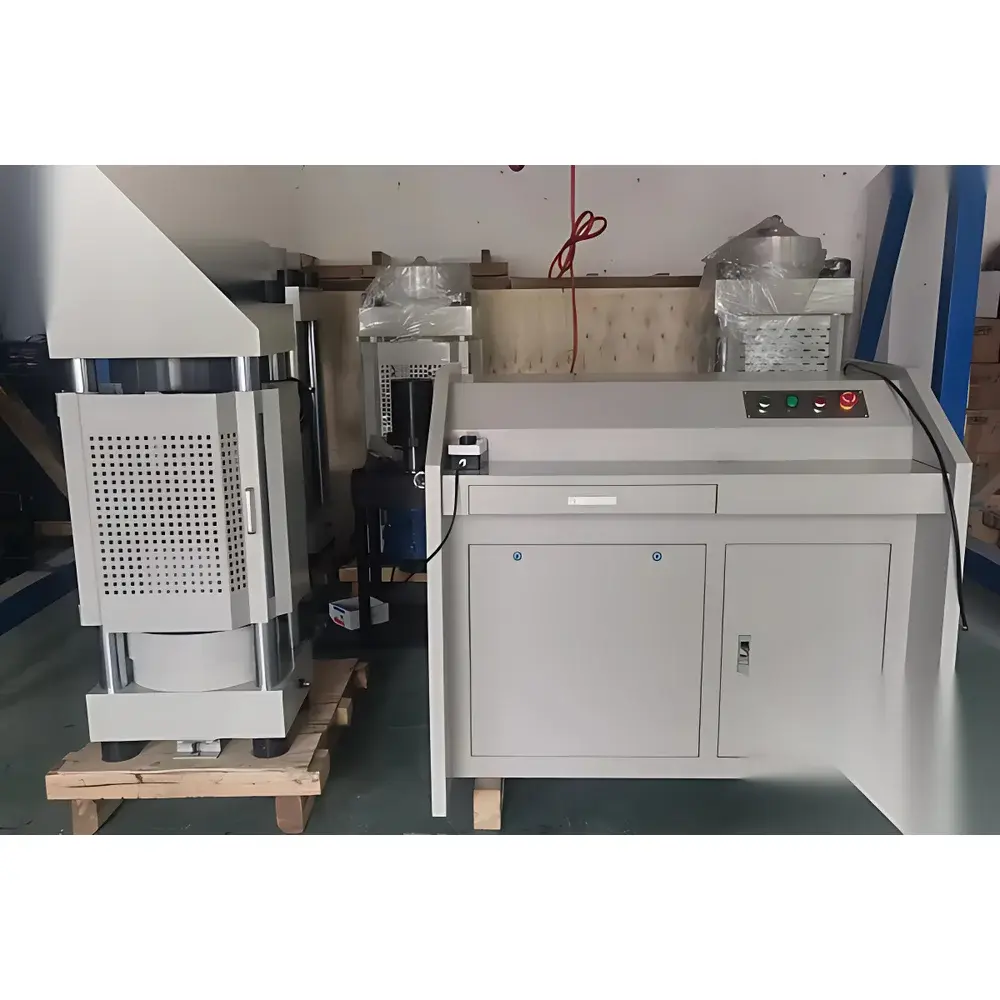
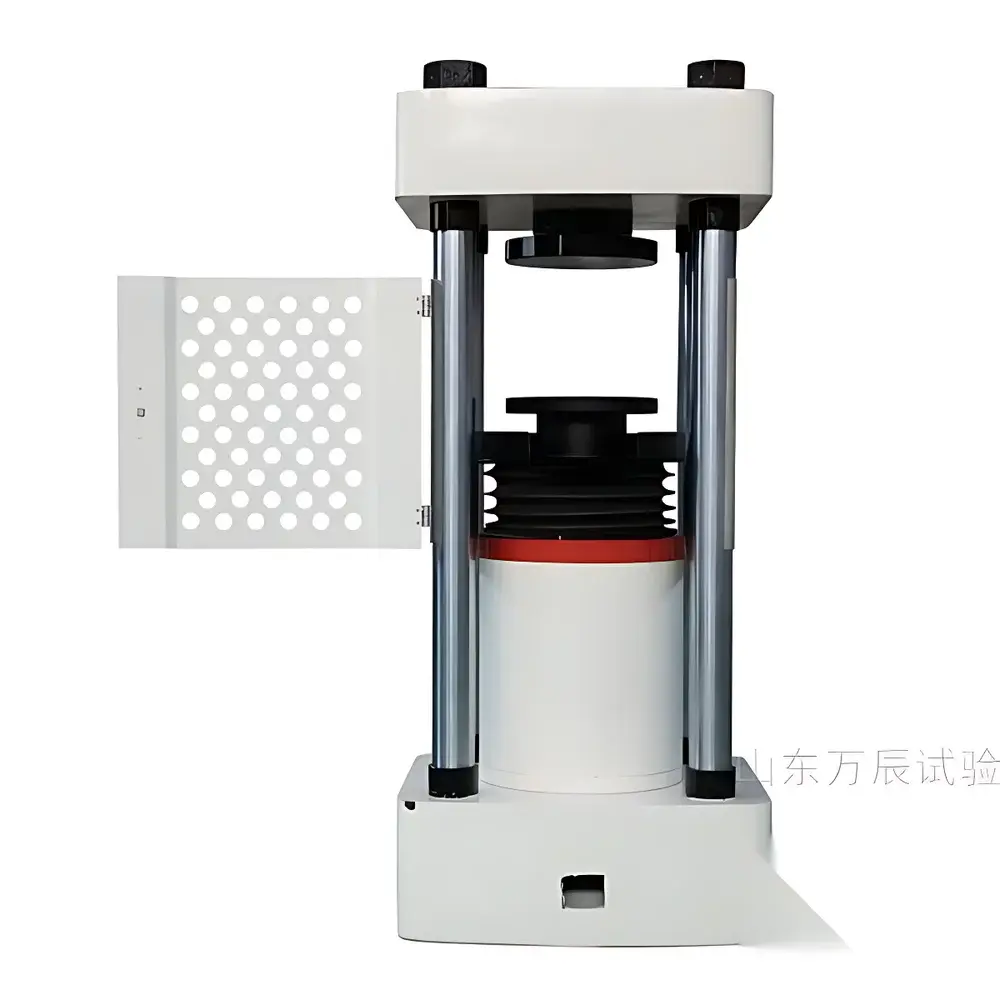
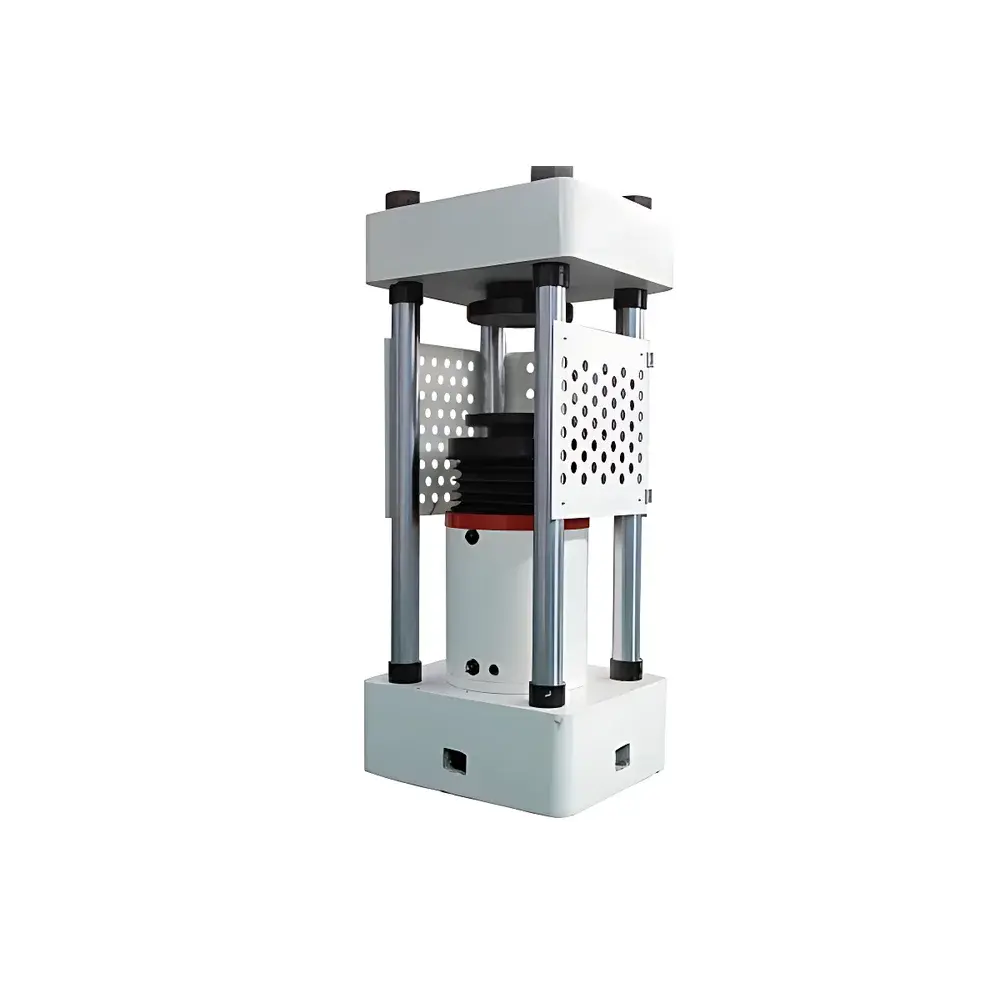
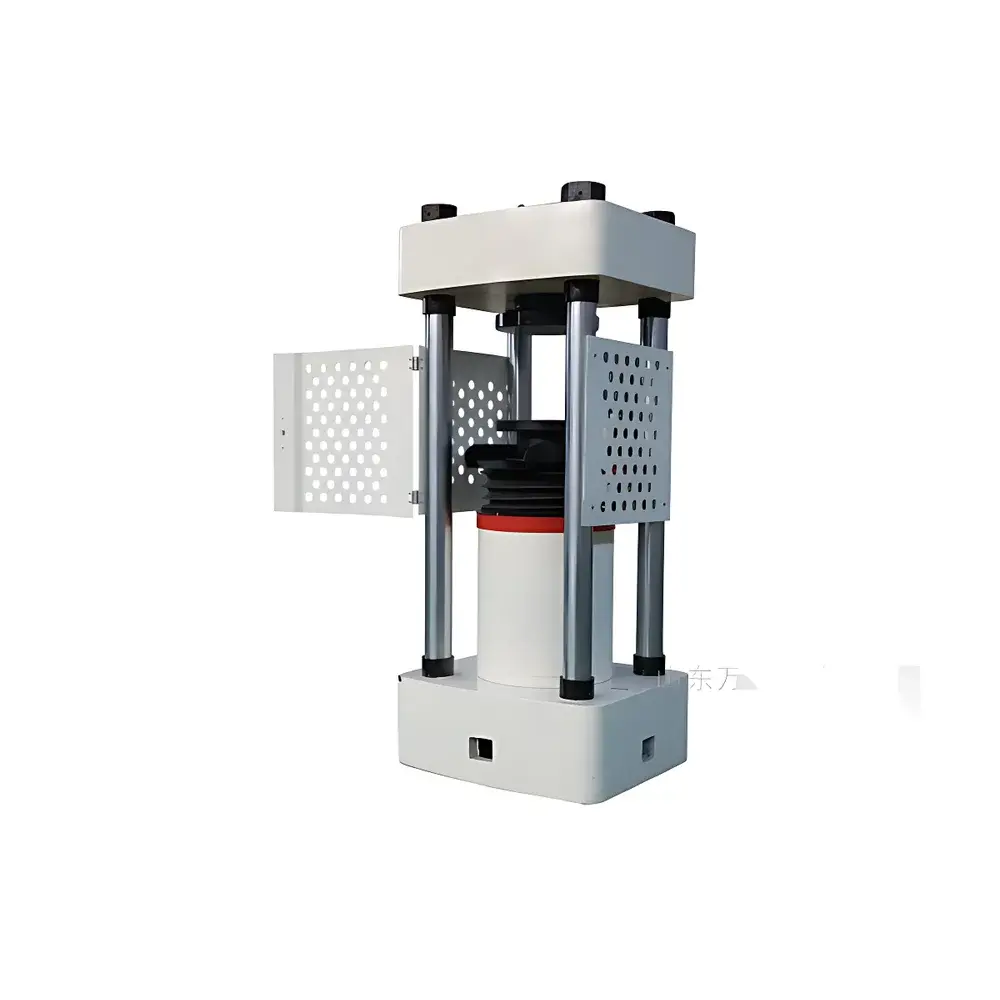
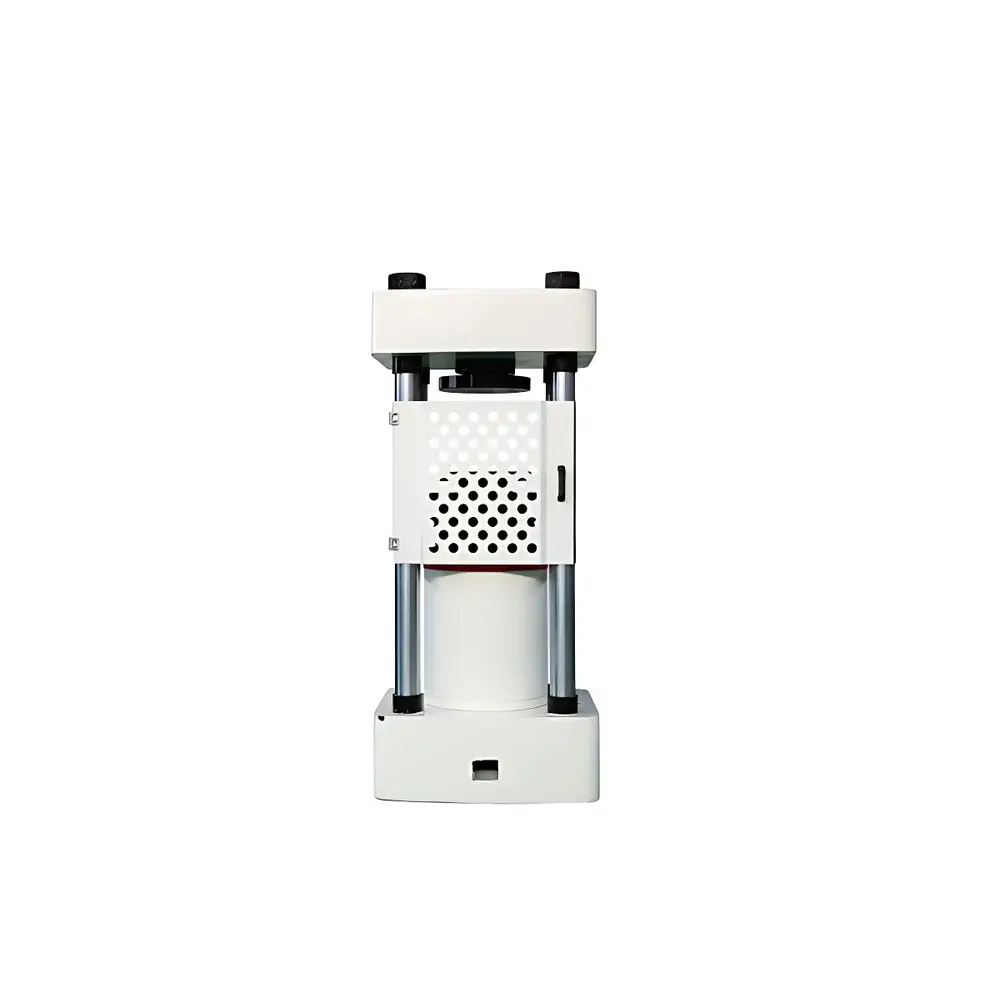
WANCHEN YAW-2000D 2000 kN Fully Automatic Electro-Hydraulic Servo Compression Testing Machine
| Brand | WANCHEN |
|---|---|
| Origin | China |
| Manufacturer Type | Direct Manufacturer |
| Model | YAW-2000D |
| Max Test Load | 2000 kN |
| Accuracy Class | Better than Class 1 (per GB/T 50081 & ISO 7500-1) |
| Load Measurement Range | 1–100% of full scale |
| Load Indication Error | ±1% of reading |
| Platen Spacing (adjustable) | 320 mm |
| Piston Stroke | 80 mm |
| Column Spacing | 310 mm |
| Platen Dimensions | 220 × 250 mm |
| Overall Dimensions (W×D×H) | 880 × 600 × 1380 mm |
| Motor Power | 2.2 kW |
| Weight | 860 kg |
| Compliance | GB/T 2611, GB/T 17671, GB/T 16826, GB/T 50081 |
| Structural Configuration | Four-column, split-frame (host + hydraulic power unit) |
Overview
The WANCHEN YAW-2000D is a high-capacity, fully automatic electro-hydraulic servo compression testing machine engineered for precision mechanical characterization of construction materials under uniaxial compressive loading. It operates on the principle of closed-loop servo-controlled hydraulic actuation, where real-time load feedback from a calibrated high-stability load cell drives proportional valve modulation to maintain programmed loading rates per ASTM C39, ASTM C78, ISO 4586, and GB/T 50081. Designed as a split-frame system—comprising a rigid four-column test frame, independent hydraulic power unit (oil source), digital servo controller, and data acquisition subsystem—the YAW-2000D delivers stable force application up to 2000 kN with Class 1 accuracy (per GB/T 50081 and ISO 7500-1). Its structural architecture integrates a hardened chrome-plated guide rod system, worm-gear-driven motorized crosshead adjustment, and reinforced base and upper beam assembly to minimize deflection and ensure load path integrity during high-force testing.
Key Features
- Rigid four-column frame with 860 kg total mass and optimized stiffness-to-weight ratio for minimal frame compliance under peak 2000 kN loads
- Electro-hydraulic servo control system enabling programmable loading rates (e.g., 0.05–0.5 MPa/s for concrete per GB/T 50081), constant-rate, constant-load, and hold-to-failure protocols
- Motorized screw-driven crosshead adjustment (320 mm vertical travel range) with position repeatability ≤ ±0.1 mm
- Integrated safety enclosure featuring high-tensile protective mesh between test zone and operator interface, compliant with EN ISO 13857 anthropometric clearance requirements
- High-resolution load measurement via hermetically sealed, temperature-compensated S-type load cell (1–100% FS range, ±1% indication error)
- Chrome-polished guide rods and hardened bearing surfaces for long-term dimensional stability and corrosion resistance
- Real-time dynamic display of load–time and load–displacement curves with auto-scaling, event tagging, and on-the-fly parameter modification
Sample Compatibility & Compliance
The YAW-2000D is validated for standardized mechanical testing of cementitious composites including molded concrete cylinders (Ø150 × 300 mm), mortar prisms (40 × 40 × 160 mm), and cement paste specimens. With appropriate fixtures, it supports compressive strength (GB/T 50081), flexural strength (three-point bending per GB/T 17671), splitting tensile strength (Brazilian test), and static elastic modulus (load-unload cycling per GB/T 50081 Annex B). All mechanical and metrological performance parameters conform to national and international standards: GB/T 2611 (general requirements for testing machines), GB/T 16826 (electro-hydraulic servo universal testing machines), GB/T 17671 (cement mortar strength testing), and GB/T 50081 (concrete mechanical properties). The system architecture supports GLP-aligned operation through traceable calibration records and audit-ready configuration logs.
Software & Data Management
The embedded control software provides ISO/IEC 17025-compatible test sequence definition, including multi-step ramp-hold cycles, rate switching, and conditional termination logic (e.g., unload at 90% peak load). Raw load and displacement data are acquired at ≥100 Hz and stored in CSV and proprietary binary formats with embedded metadata (operator ID, sample ID, environmental timestamp, calibration certificate ID). Exported datasets include full curve traces, statistical summaries (mean, SD, CV%), and compliance flags against target loading rate tolerances. Software supports user-level access control, electronic signature logging, and optional 21 CFR Part 11 add-on modules for regulated laboratory environments requiring audit trails and data integrity assurance.
Applications
- Quality control of ready-mix concrete and precast elements in batching plants and construction sites
- Research-grade compressive behavior analysis of high-strength concretes (up to C100), fiber-reinforced cement composites, and alkali-activated binders
- Calibration verification of field rebound hammers and ultrasonic pulse velocity devices
- Static modulus of elasticity determination for structural design validation per ACI 318 and Eurocode 2
- Long-term creep and relaxation studies when integrated with environmental chambers (optional)
FAQ
What standards does the YAW-2000D comply with for concrete compression testing?
It meets GB/T 50081, ASTM C39, EN 12390-3, and ISO 4586 for compressive strength determination, with full traceability to national metrology institutes.
Can the machine perform flexural tests without hardware modification?
Yes—when equipped with a three-point bending fixture (standard accessory), it executes GB/T 17671-compliant flexural strength tests on cement mortars.
Is remote diagnostics or firmware update capability supported?
The system includes Ethernet-based communication; remote maintenance and version-controlled firmware updates are available via authenticated secure channel.
What is the recommended calibration interval for ISO/IEC 17025 compliance?
Annual verification against certified reference load cells is advised, with interim checks using traceable deadweight standards every 90 days.
Does the test frame accommodate non-standard specimen geometries?
With custom platens and alignment jigs (available upon request), specimens up to 250 mm wide and 320 mm tall can be accommodated within the adjustable platen spacing envelope.