
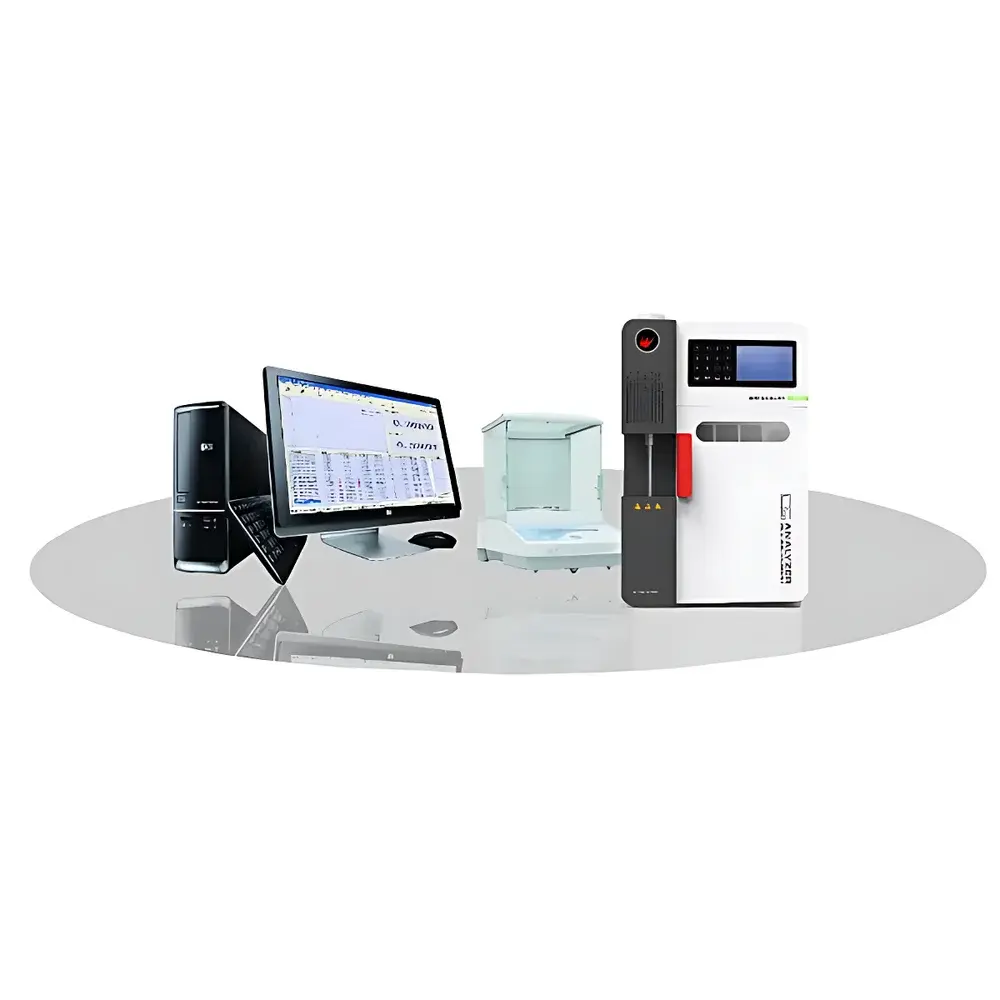
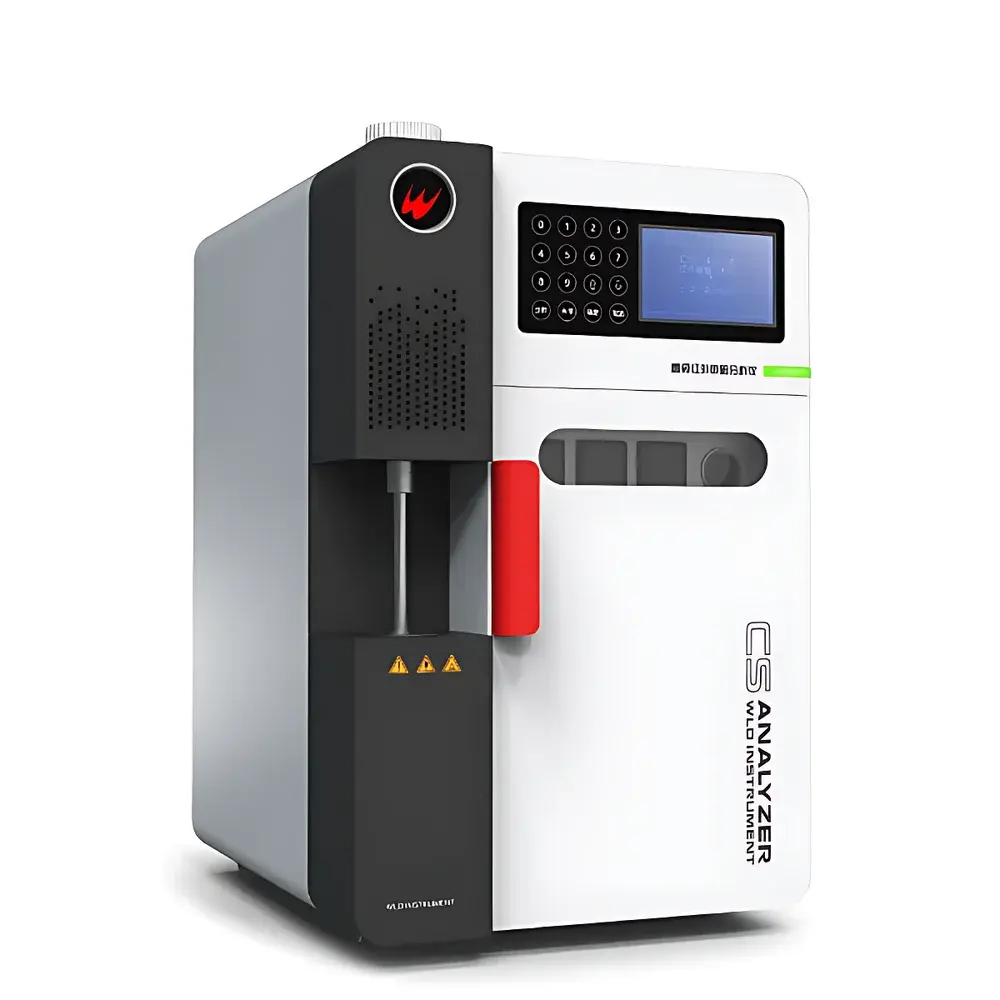
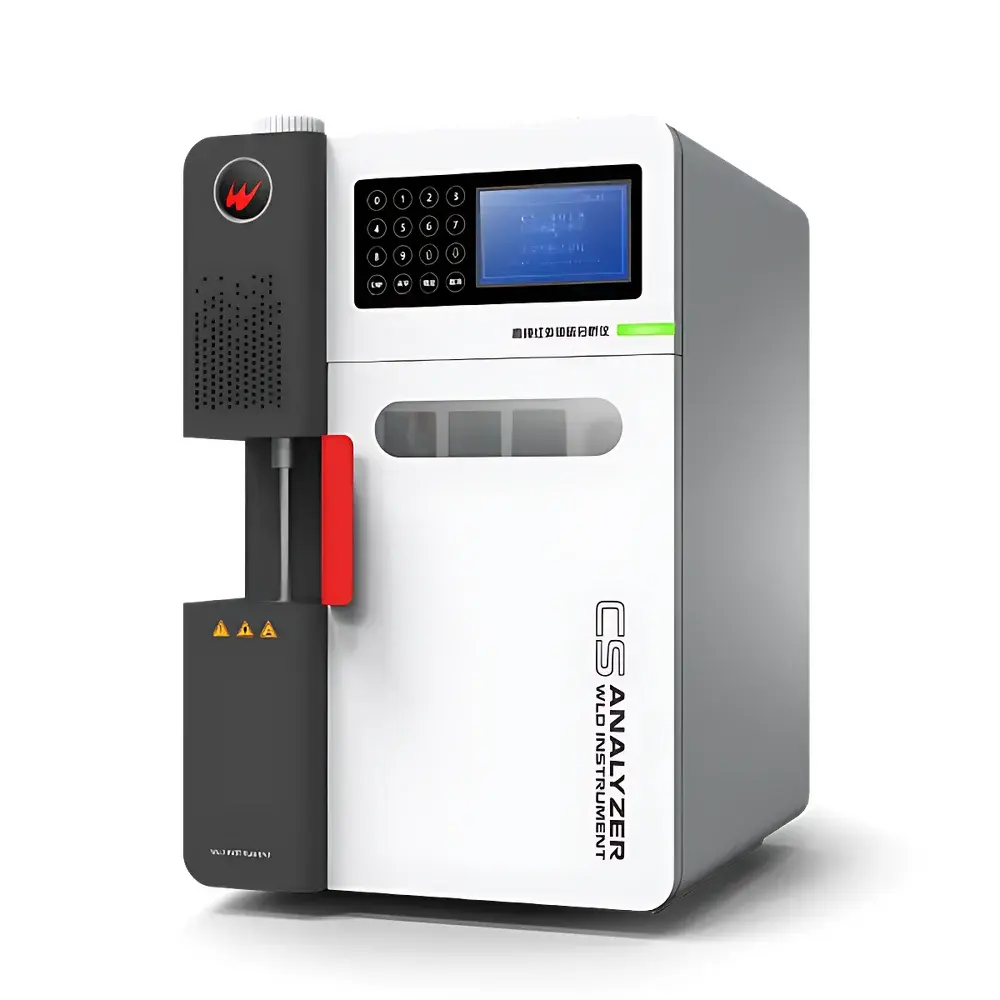
Wanlianda CS-901B High-Frequency Infrared Carbon-Sulfur Analyzer
| Brand | Wanlianda |
|---|---|
| Origin | Beijing, China |
| Model | CS-901B |
| Measurement Principle | Infrared Absorption Spectroscopy |
| Heating System | High-Frequency Induction Furnace (2.5 kW Output Power) |
| Carbon Range | C₁: 0.00002–0.5%, C₂: 0.05–99.9% |
| Sulfur Range | 0.00002–5% |
| Sensitivity | 0.1 ppm |
| Precision | Carbon RSD ≤ 0.4%, Sulfur RSD ≤ 1.0% |
| Analysis Time | 40 s |
| Detection Systems | Four independent IR channels for high-carbon, low-carbon, sulfur, and carbon monoxide quantification |
| Sample Compatibility | Ferrous & non-ferrous metals, iron alloys, ores, coke, raw materials, slags, rare earth materials |
Overview
The Wanlianda CS-901B High-Frequency Infrared Carbon-Sulfur Analyzer is an integrated combustion-infrared instrumentation platform engineered for precise, rapid elemental quantification of total carbon (C) and total sulfur (S) in solid inorganic and metallurgical samples. It operates on the principle of high-frequency induction combustion followed by non-dispersive infrared (NDIR) absorption spectroscopy — a method standardized under ISO 9556 (carbon in steels) and ISO 4935 (sulfur in steels). During analysis, a precisely weighed sample is combusted in a pure oxygen atmosphere within a high-frequency induction furnace (2.5 kW nominal output), converting all carbon and sulfur species into CO₂ and SO₂ gases. These gaseous products are swept through dust and moisture removal stages before entering four dedicated NDIR detection cells — each optimized for specific concentration regimes (low-carbon, high-carbon, sulfur, and CO co-detection). The system’s dual-range carbon measurement architecture enables trace-level detection down to 0.00002% (200 ppb) while maintaining linearity up to 99.9% C, eliminating manual range switching and minimizing operator intervention.
Key Features
- Integrated high-frequency induction furnace and infrared detection module — compact monolithic design reduces gas path dead volume and improves response time and reproducibility.
- Four-channel NDIR optical system with thermoelectrically cooled detectors and narrow-band interference filters — ensures spectral specificity and long-term baseline stability.
- Automated calibration sequence with certified reference materials (CRMs) traceable to NIST or equivalent national standards — supports daily verification and drift correction.
- Dust-resistant ceramic combustion tube and self-cleaning oxygen injection nozzle — extends maintenance intervals and sustains combustion efficiency across heterogeneous sample matrices.
- Real-time pressure and flow monitoring with closed-loop mass flow control — maintains stoichiometric oxygen delivery regardless of ambient fluctuations or sample mass variation.
- Robust hardware architecture compliant with IEC 61326-1 (EMC for laboratory equipment) and CE marking requirements for safe operation in regulated industrial laboratories.
Sample Compatibility & Compliance
The CS-901B accommodates a broad spectrum of conductive and semi-conductive solid samples without requiring pre-oxidation or flux addition in most cases. Validated applications include low-alloy and stainless steels, cast irons, ferromanganese and ferrosilicon alloys, aluminum and copper-based non-ferrous metals, iron ores, limestone and dolomite fluxes, metallurgical coke, blast furnace slags, and rare-earth-containing compounds (e.g., mischmetal, cerium oxide precursors). All measurements adhere to the metrological framework defined in ISO/IEC 17025:2017 for testing laboratories. Data integrity features align with FDA 21 CFR Part 11 expectations — including electronic signature capability, audit trail logging of calibration events and result modifications, and user-access level management (administrator/operator/auditor roles).
Software & Data Management
The embedded Windows-based analytical software provides full instrument control, real-time spectral visualization, multi-point calibration curve generation (linear and quadratic), and statistical reporting per ASTM E1019 and ISO 11582. Raw absorbance data, peak integration parameters, and combustion profiles are stored in vendor-neutral CSV and XML formats. The system supports LIMS integration via ASTM E1384-compliant HL7 messaging or ODBC database export. Audit trails record timestamps, user IDs, method versions, and environmental conditions (furnace temperature, carrier gas pressure) for each analysis — essential for GLP/GMP environments undergoing regulatory inspection.
Applications
- Quality control of incoming raw materials (scrap, ore, alloying additives) in steelmaking and foundry operations.
- Final product certification for ASTM A743/A744 (cast stainless steels), ASTM A370 (mechanical testing), and EN 10027 (steel designation) compliance.
- Process optimization in electric arc furnace (EAF) and basic oxygen furnace (BOF) operations through rapid turnaround of slag and metal bath carbon/sulfur balance data.
- Research-grade characterization of novel ferroalloys and refractory ceramics where ultra-trace sulfur (<1 ppm) impacts hot workability and intergranular corrosion resistance.
- Environmental monitoring of sulfur content in coal-derived cokes and desulfurized flue gas residues per ISO 19579.
FAQ
What sample mass is recommended for optimal precision across both carbon ranges?
Typical sample weights range from 0.2 g to 1.0 g depending on expected C/S concentration; automated mass normalization is applied during calculation to correct for weighing variance.
Does the system require external cooling water or compressed air?
No — the furnace and detector modules use air-cooling only; no external utilities beyond standard 220 V / 50 Hz power and laboratory-grade oxygen (≥99.995% purity, dew point < −60°C) are required.
How frequently must the IR cells be recalibrated?
Calibration verification using CRMs is recommended before each analytical batch; full multi-point calibration is performed weekly or after major maintenance, per ISO/IEC 17025 internal procedure requirements.
Can the CS-901B quantify combined carbon or carbide-bound carbon separately?
No — it reports total carbon only; differentiation of free vs. combined carbon requires complementary techniques such as thermal conductivity or evolved gas analysis (EGA).
Is remote diagnostics and firmware update supported?
Yes — secure HTTPS-based remote access enables authorized service engineers to perform health checks, log analysis, and controlled firmware upgrades without on-site visits.
Related Products




