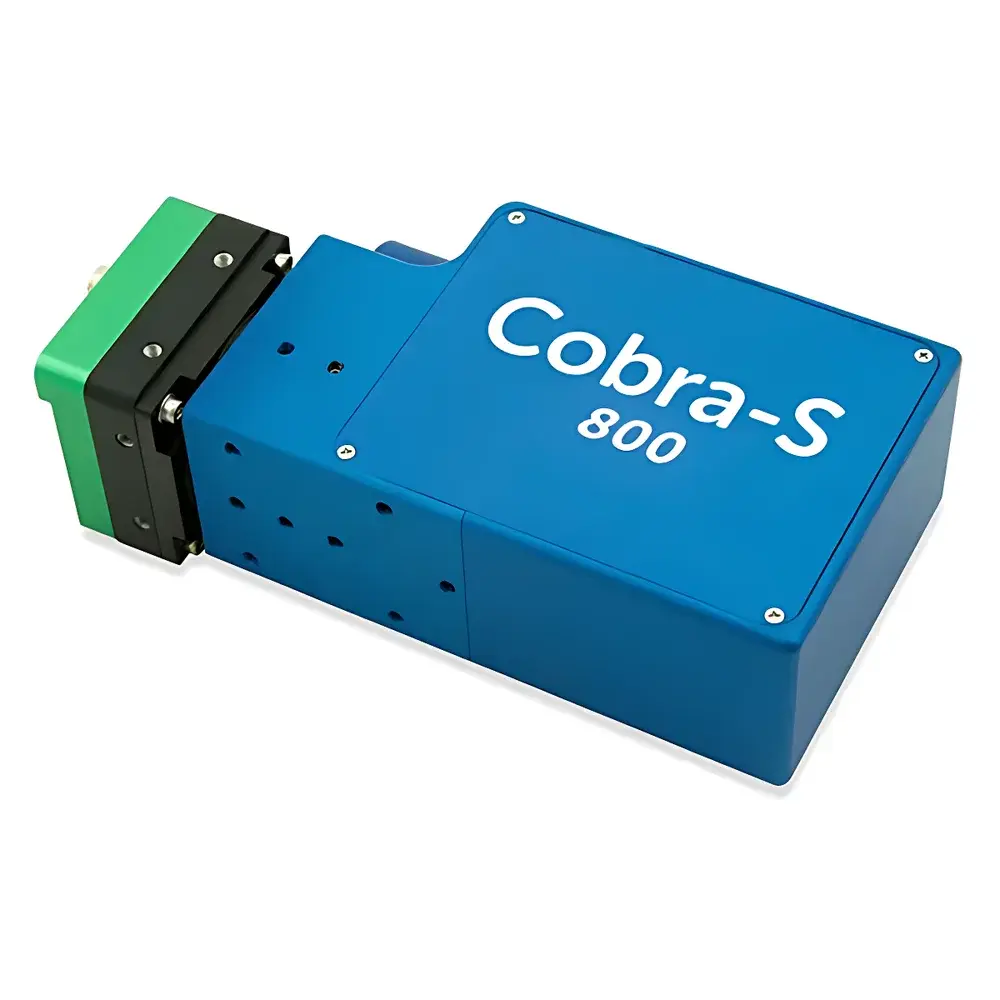
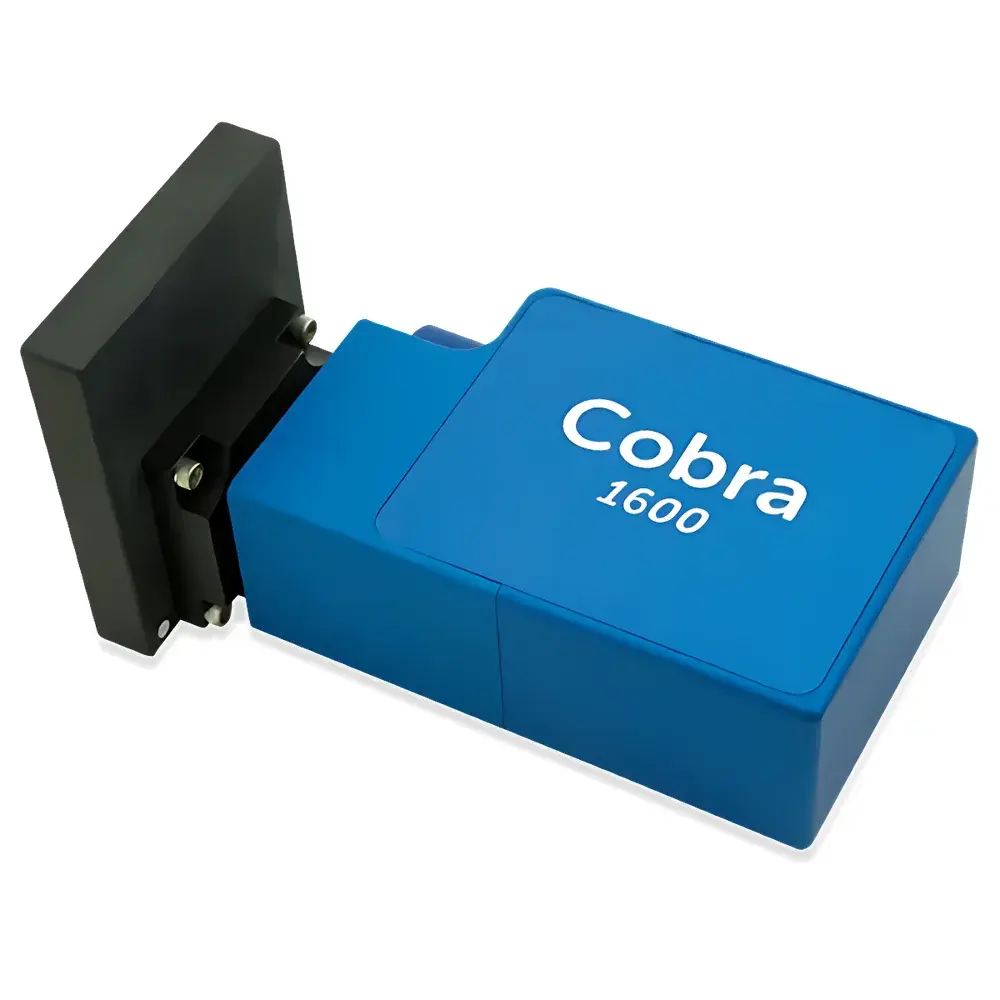
Wasatch Photonics Cobra OCT Spectrometer
| Brand | Wasatch Photonics |
|---|---|
| Origin | USA |
| Manufacturer Type | Authorized Distributor |
| Product Origin | Imported |
| Model | Cobra OCT Spectrometer |
| Pricing | Available Upon Request |
Overview
The Wasatch Photonics Cobra OCT Spectrometer is a high-performance, modular spectral detection engine engineered for spectral-domain optical coherence tomography (SD-OCT) systems. It operates on the principle of low-coherence interferometry, where broadband light is split into sample and reference arms; interference fringes generated upon recombination are dispersed spectrally and captured by a line-scan camera. The resulting spectral interferogram is Fourier-transformed to reconstruct axial depth profiles (A-scans) with micron-scale resolution. Designed for integration into clinical, research, and industrial OCT platforms, the Cobra series delivers exceptional sensitivity, stability, and flexibility across visible, near-infrared (NIR), and short-wave infrared (SWIR) wavelength bands — from 400 nm to 1690 nm. Its robust optomechanical architecture minimizes thermal drift and mechanical misalignment, ensuring long-term measurement repeatability required in regulated environments such as ophthalmic diagnostics and GLP-compliant preclinical imaging.
Key Features
- Transmission-based Volume Phase Holographic (VPH) grating optics delivering >90% diffraction efficiency and minimal polarization-dependent loss
- Deep imaging capability up to 12.9 mm in air (e.g., Cobra DCD800-841/28), optimized for extended-depth OCT applications including intravascular and dermatological imaging
- High axial resolution down to <2 µm in tissue (equivalent to ~1.5 µm in air), enabled by broad spectral bandwidths exceeding 500 nm in select configurations
- Spectral resolution as fine as 0.015 nm (Cobra DCD800-841/28), supporting high-fidelity dispersion compensation and precise group-velocity dispersion (GVD) characterization
- Modular camera interface compatible with industry-standard CMOS and InGaAs line-scan sensors including e2v Octoplus, Teledyne DALSA Piranha, and Sensors Unlimited SU-series detectors
- Low roll-off spectral response (<3 dB over full bandwidth), preserving signal fidelity across the entire detection range without post-acquisition correction artifacts
- Passively stabilized aluminum housing with kinematic mounting options for OEM integration into compact or vibration-sensitive instruments
Sample Compatibility & Compliance
The Cobra OCT Spectrometer supports non-contact, label-free, real-time cross-sectional imaging of biological tissues (e.g., retinal layers, corneal epithelium, arterial walls), polymer films, composite materials, and semiconductor wafers. Its wavelength-flexible platform enables compliance with application-specific safety standards: visible-band models (400–700 nm) adhere to IEC 60825-1:2014 Class 1 laser product requirements when integrated with appropriate source modules; NIR/SWIR variants (780–1690 nm) meet ANSI Z136.1-2022 Class 1M limits under typical OCT illumination conditions. While the spectrometer itself is not an FDA-cleared medical device, it is widely deployed in Class IIa/IIb SD-OCT systems certified to ISO 13485 and compliant with IEC 62304 for software lifecycle management. System-level validation for clinical use must be performed by the end-device manufacturer per FDA 21 CFR Part 820 and EU MDR Annex II requirements.
Software & Data Management
Cobra spectrometers interface via Camera Link or CoaXPress to host acquisition systems running LabVIEW, MATLAB, or Python-based frameworks. Wasatch Photonics provides SDKs supporting Windows/Linux and includes calibration files (wavelength mapping, pixel-to-wavenumber conversion, flat-field correction) traceable to NIST-traceable sources. Raw spectral data is output in 16-bit or 32-bit integer format, enabling full control over spectral resampling, apodization, and dispersion compensation algorithms. For regulated environments, integration with third-party data acquisition software compliant with FDA 21 CFR Part 11 (e.g., National Instruments DIAdem with audit trail and electronic signature modules) ensures secure, attributable, and reproducible data handling. Firmware updates are delivered via signed binaries with SHA-256 verification to maintain system integrity during maintenance cycles.
Applications
- Ophthalmology: High-resolution retinal layer segmentation, glaucoma progression tracking, and anterior segment imaging using 840 nm and 1050 nm Cobra variants
- Cardiology: Intravascular OCT (IVOCT) catheter-based imaging at 1300 nm for plaque characterization and stent apposition assessment
- Dermatology & Oncology: Non-invasive skin lesion margin delineation and microvasculature mapping with 1300 nm and 1600 nm configurations
- Industrial Metrology: Thickness measurement of multi-layer polymer coatings, defect detection in photovoltaic cells, and fiber-optic component inspection
- Academic Research: Development of swept-source OCT hybrids, computational OCT reconstruction methods, and multimodal OCT-photoacoustic platforms
- Process Monitoring: Real-time inline quality control of pharmaceutical tablet film coatings and battery electrode uniformity
FAQ
Is the Cobra OCT Spectrometer supplied as a complete OCT system?
No — it is a core spectral detection module intended for integration into custom or OEM-built SD-OCT systems. Light source, interferometer, scanning optics, and reconstruction software must be provided separately.
Can I change the camera after purchase?
Yes — the Cobra platform uses standardized mechanical and electrical interfaces (e.g., M42 lens mount, Camera Link HS pinout). Camera swaps require recalibration and updated SDK configuration but do not necessitate optical realignment.
What spectral calibration documentation is included?
Each unit ships with a certificate of conformance listing measured center wavelength, FWHM, spectral roll-off, and pixel-wavelength mapping coefficients. NIST-traceable calibration reports are available as an optional service.
Do you support custom wavelength ranges outside the published models?
Yes — Wasatch Photonics offers engineering services for tailored VPH grating designs, detector selection, and optical layout optimization for specialized applications, subject to minimum order quantities and lead time agreements.
Is firmware update support included post-purchase?
Yes — registered customers receive access to the Wasatch Photonics Support Portal, including firmware releases, release notes, and version-controlled SDK archives for the lifetime of the product family.