
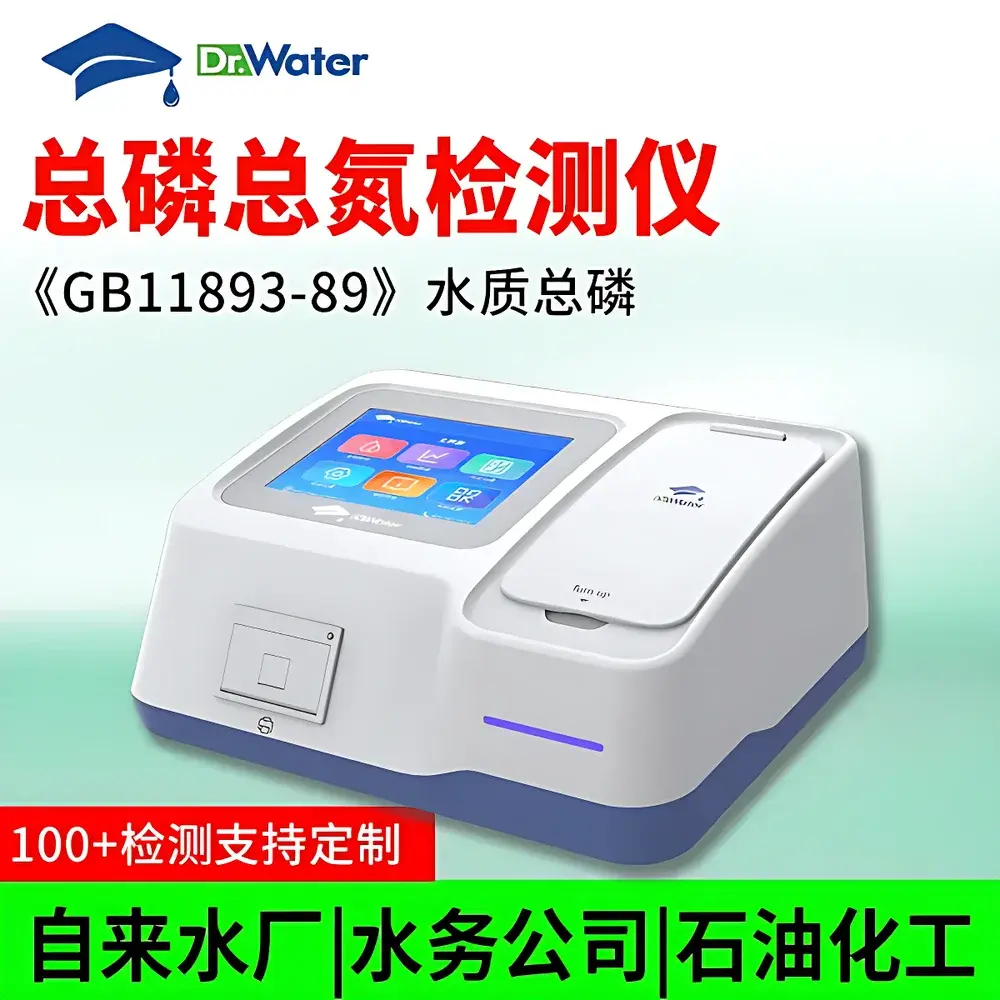
Water Doctor Dr-T9003 Total Phosphorus and Total Nitrogen Analyzer
| Brand | Water Doctor |
|---|---|
| Origin | Hunan, China |
| Model | Dr-T9003 |
| Measurement Principle | Spectrophotometry (UV-Vis) |
| Detection Range | 0–100 mg/L (for both TP and TN) |
| Accuracy | ≤ ±5% |
| Detection Limit | Not specified (instrument-level LOD determined by method, not instrument spec) |
| Wavelength Range | 340–900 nm |
| Wavelength Accuracy | ±1 nm |
| Wavelength Repeatability | < 0.2 nm |
| Spectral Bandwidth | 4 nm |
| Transmittance Error | ±0.5% |
| Transmittance Repeatability | ≤ 0.2% T |
| Absorbance Resolution | 0.001 Abs |
| Optical Stability | ≤ ±0.005 Abs / 20 min |
| Light Source | Imported cold-light LED (rated lifetime > 100,000 h) |
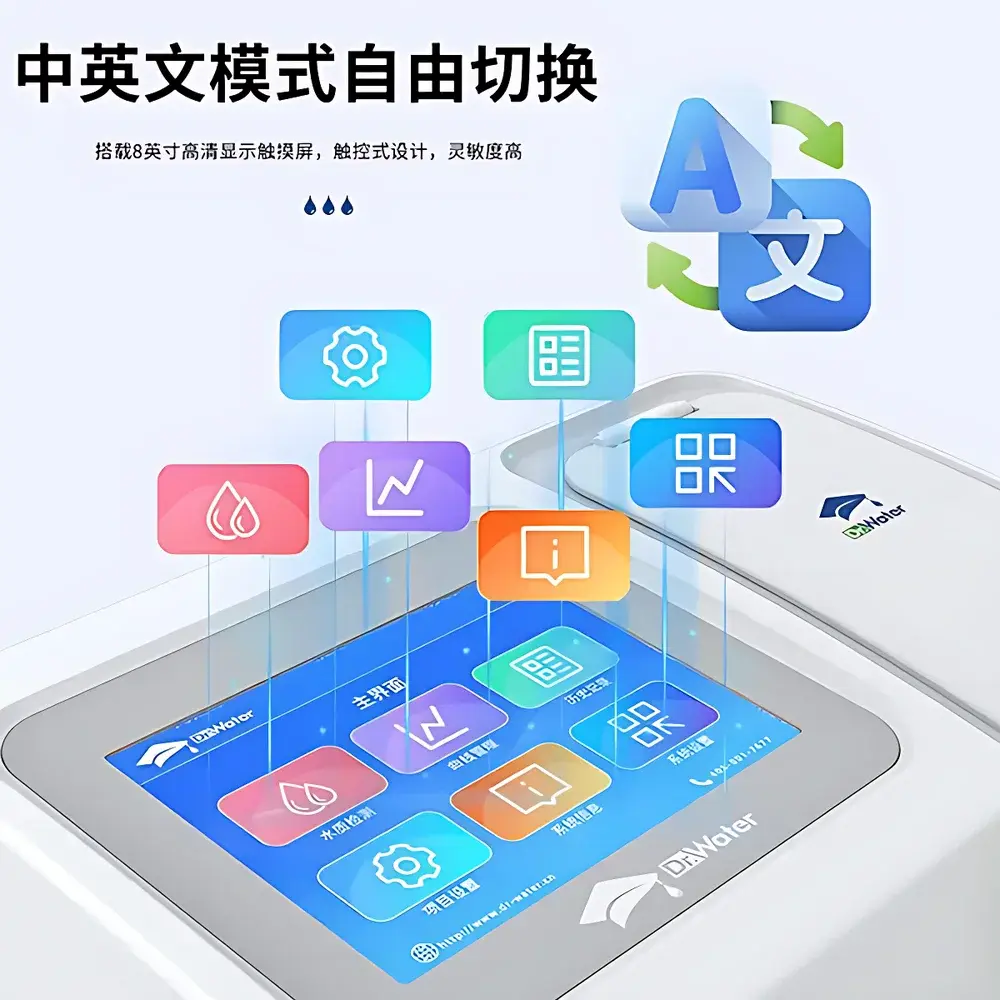
| Display | 8-inch HD capacitive touchscreen |
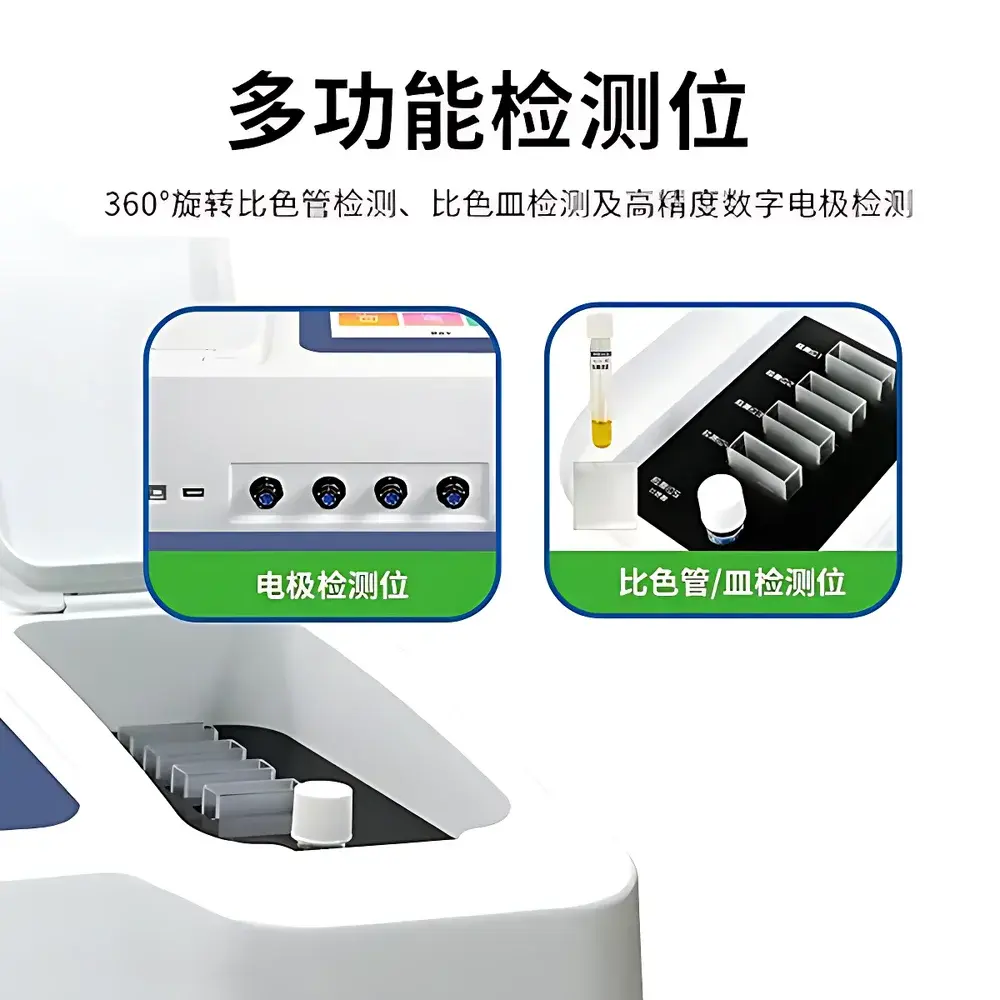
| Sample Holders | Rotatable tube holder (360°), dual cuvette positions (10 mm & 30 mm pathlength), four independent digital electrode ports |
| Calibration | Single- or multi-point calibration with up to 1000 pre-stored method curves |
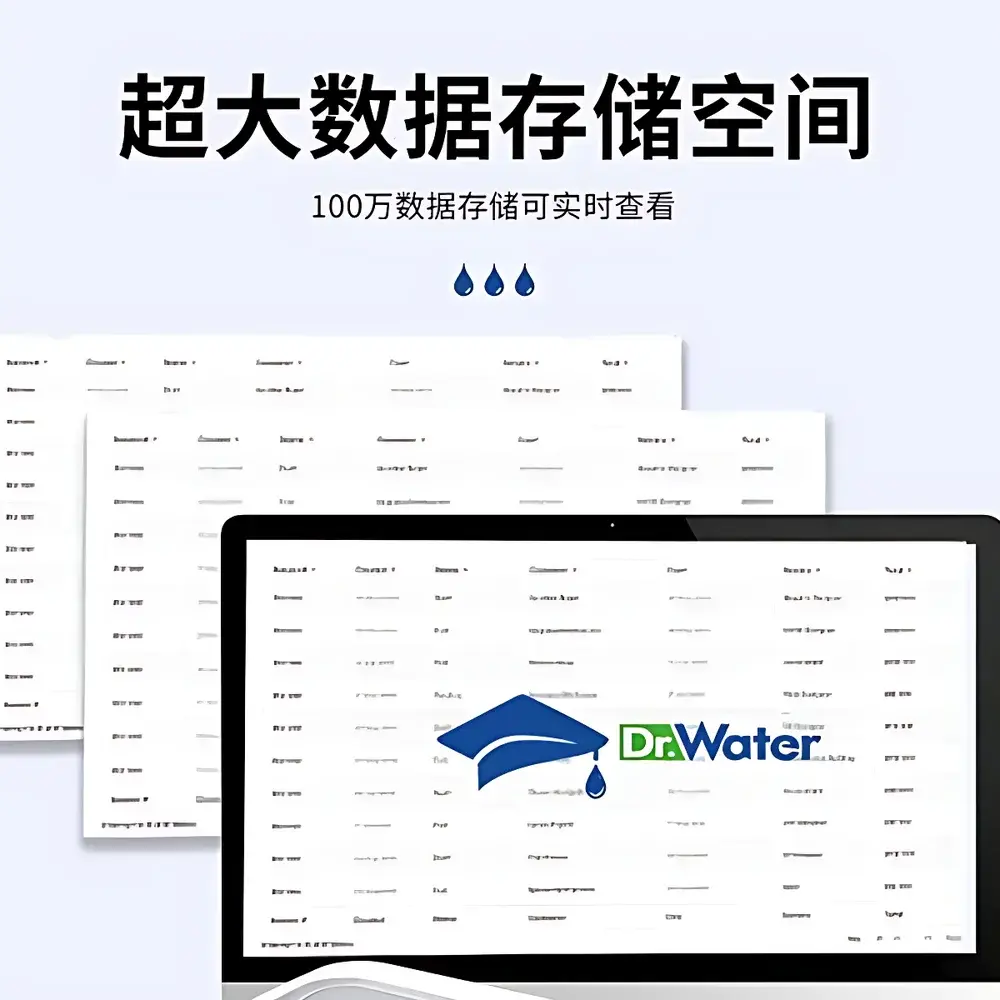
| Data Storage | 1,000,000 measurement records |
| Interface | USB port for data export (U-disk compatible), built-in thermal printer |
| Housing Material | Corrosion- and heat-resistant ABS |
| Dimensions | 392 × 315 × 170 mm |
| Weight | 4.4 kg |
Overview
The Water Doctor Dr-T9003 Total Phosphorus and Total Nitrogen Analyzer is a benchtop spectrophotometric analyzer engineered for precise, trace-level quantification of total phosphorus (TP) and total nitrogen (TN) in aqueous environmental samples. It operates on standardized colorimetric principles—specifically, the molybdenum blue method for TP and the alkaline potassium persulfate digestion–UV spectrophotometric method for TN—fully compliant with ISO 6878:2004, EPA Method 365.4, and HJ 670–2013 (China). The instrument integrates dual optical detection modalities: high-stability fiber-optic spectrophotometry (340–900 nm) and optional electrochemical sensing via dedicated digital electrode interfaces. Its modular optical architecture minimizes stray light and drift, delivering absorbance stability of ≤ ±0.005 Abs over 20 minutes—critical for low-concentration environmental monitoring where reproducibility across repeated digestions and calibrations is non-negotiable.
Key Features
- Triple-mode sample introduction: 360° rotatable tube holder eliminates path-length variability from tube wall imperfections; dual fixed-path cuvette positions (10 mm and 30 mm) support both standard and extended-range measurements; four isolated digital electrode ports enable simultaneous conductivity, pH, ORP, or DO validation during TP/TN workflows.
- High-fidelity optical system: Imported long-life cold-light LED source (≥100,000 h lifetime) paired with 4 nm spectral bandwidth and ±1 nm wavelength accuracy ensures strict adherence to regulatory method requirements for peak absorbance positioning (e.g., 880 nm for phosphomolybdate, 220/275 nm for TN correction).
- Intelligent operational interface: 8-inch HD capacitive touchscreen with adjustable brightness, real-time graphical curve display, and guided step-by-step protocols reduce operator dependency and mitigate procedural error—particularly critical under GLP-compliant laboratory conditions.
- Robust data integrity framework: Onboard thermal printer, USB mass storage export (FAT32-formatted U-disk), and internal memory for 1 million timestamped records—including absorbance, concentration, transmittance, and user-defined metadata—support full audit trails per ISO/IEC 17025:2017 Clause 7.9.
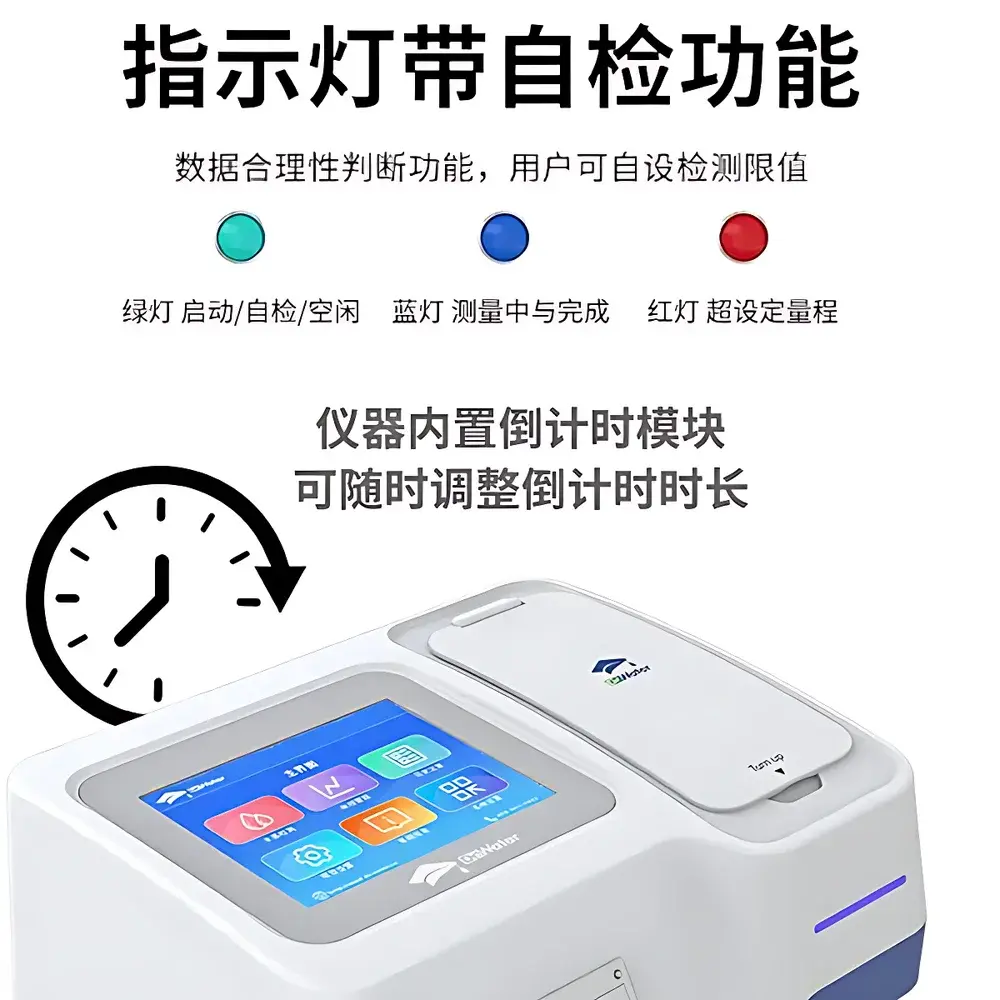
- Self-diagnostic status indicators: Multi-color LED feedback (green = ready/idle, blue = measurement active or complete, red = out-of-range or fault) provides immediate visual verification of instrument readiness and measurement validity without menu navigation.
Sample Compatibility & Compliance
The Dr-T9003 is validated for use with raw and treated water matrices including municipal wastewater, industrial effluents (e.g., electroplating, pulp & paper, pharmaceutical manufacturing), groundwater, surface water, and aquaculture systems. All onboard TP and TN methods conform to international standardization requirements: digestion protocols align with ISO 11908 (TN) and ISO 15681-1 (TP); photometric quantification meets the precision criteria of ISO 8466-1 for calibration model linearity (R² ≥ 0.999) and repeatability (≤ ±2% RSD for n = 6 at mid-range). The system supports method validation documentation per EPA Contract Lab Program (CLP) and EU Water Framework Directive (WFD) Annex V reporting formats. While not FDA 21 CFR Part 11-certified out-of-the-box, its audit-ready data structure (user login timestamps, parameter change logs, calibration history) facilitates qualification for regulated GMP/GLP environments when deployed with documented SOPs.
Software & Data Management
The embedded firmware implements a hierarchical data management architecture: each measurement is tagged with operator ID, sample ID, method ID, digestion time, calibration curve used, and raw absorbance values at primary and reference wavelengths. Data filtering, trend analysis, and calibration curve regeneration are performed directly on-device. Exported CSV files include column headers compliant with LIMS ingestion standards (e.g., “Sample_ID”, “Method_Name”, “Conc_mg_L”, “Abs_880nm”, “Date_UTC”, “Operator”). Pre-loaded method curves (n = 1000) cover EPA, ISO, ASTM, and Chinese HJ-series protocols—including COD, ammonia-N, turbidity, heavy metals (via colorimetric kits), and dissolved oxygen—enabling cross-parameter correlation studies without external software. Firmware updates are delivered via USB; no cloud connectivity or remote telemetry is implemented—ensuring air-gapped operation where required.
Applications
The Dr-T9003 serves as a primary analytical platform in accredited environmental testing laboratories performing routine compliance monitoring under national discharge permits (e.g., China’s GB 8978–1996, US NPDES). It is routinely deployed in municipal wastewater treatment plants for process control of biological nutrient removal (BNR) stages; in industrial pretreatment labs verifying compliance with local sewer authority limits; and in provincial environmental monitoring stations conducting ambient surface water quality assessments per China’s Surface Water Environmental Quality Standards (GB 3838–2002). Academic users leverage its open calibration architecture for method development—e.g., optimizing persulfate digestion kinetics for saline or humic-rich matrices—or integrating electrode-derived parameters (pH, ORP) into multivariate nutrient speciation models. Its compact footprint (392 × 315 × 170 mm) and low power draw (<25 W) make it suitable for mobile field labs and satellite monitoring stations.
FAQ
What digestion methods are required for TP and TN analysis on the Dr-T9003?
The instrument itself does not perform digestion; it measures post-digestion colorimetric endpoints. Users must apply standardized wet-chemical digestion—e.g., acid persulfate for TP, alkaline persulfate + UV irradiation or high-temperature autoclaving for TN—prior to spectrophotometric reading.
Can the Dr-T9003 validate calibration curves per ISO 8466-1?
Yes. Its multi-point calibration function supports linear and quadratic regression with automatic R² calculation, residual plot generation, and limit-of-quantitation (LOQ) estimation based on signal-to-noise ratio—fully traceable to ISO 8466-1 Annex A.
Is the 0.001 Abs resolution sufficient for sub-0.1 mg/L TP detection?
Resolution alone does not determine detection capability. Achievable MDL depends on method chemistry, blank variability, and optical pathlength. With 30 mm cuvettes and optimized reagent blanks, typical MDLs of 0.02 mg/L TP and 0.05 mg/L TN are attainable—consistent with EPA 365.4 performance criteria.
Does the instrument support ASTM D5179 or ISO 11908 for TN?
Yes. Pre-stored curve sets include ASTM D5179 (persulfate digestion + UV detection) and ISO 11908 (high-temperature catalytic oxidation), with wavelength selection and correction algorithms configured per standard specifications.
How is data integrity maintained during power interruption?
All measurements are written to non-volatile flash memory immediately upon completion. The system retains calibration coefficients, method parameters, and recent measurement history even after unexpected shutdown—no data loss occurs.







