
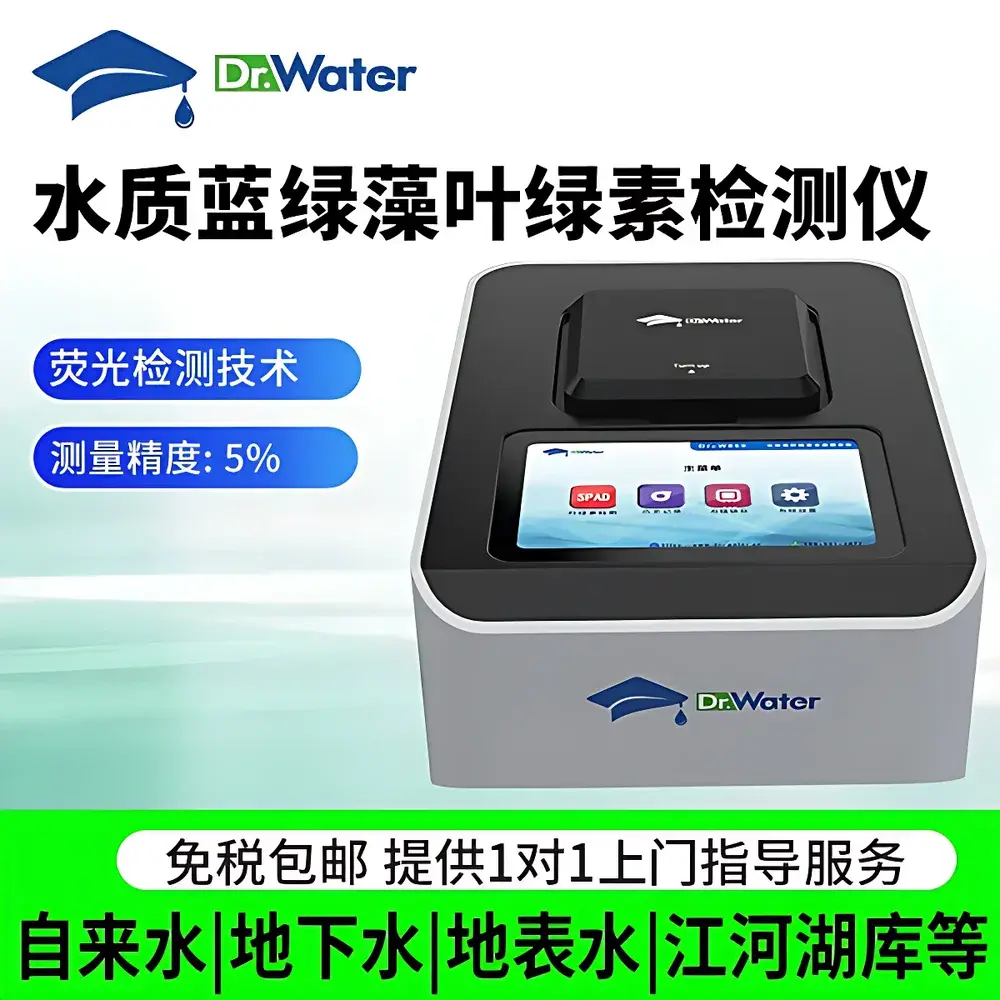
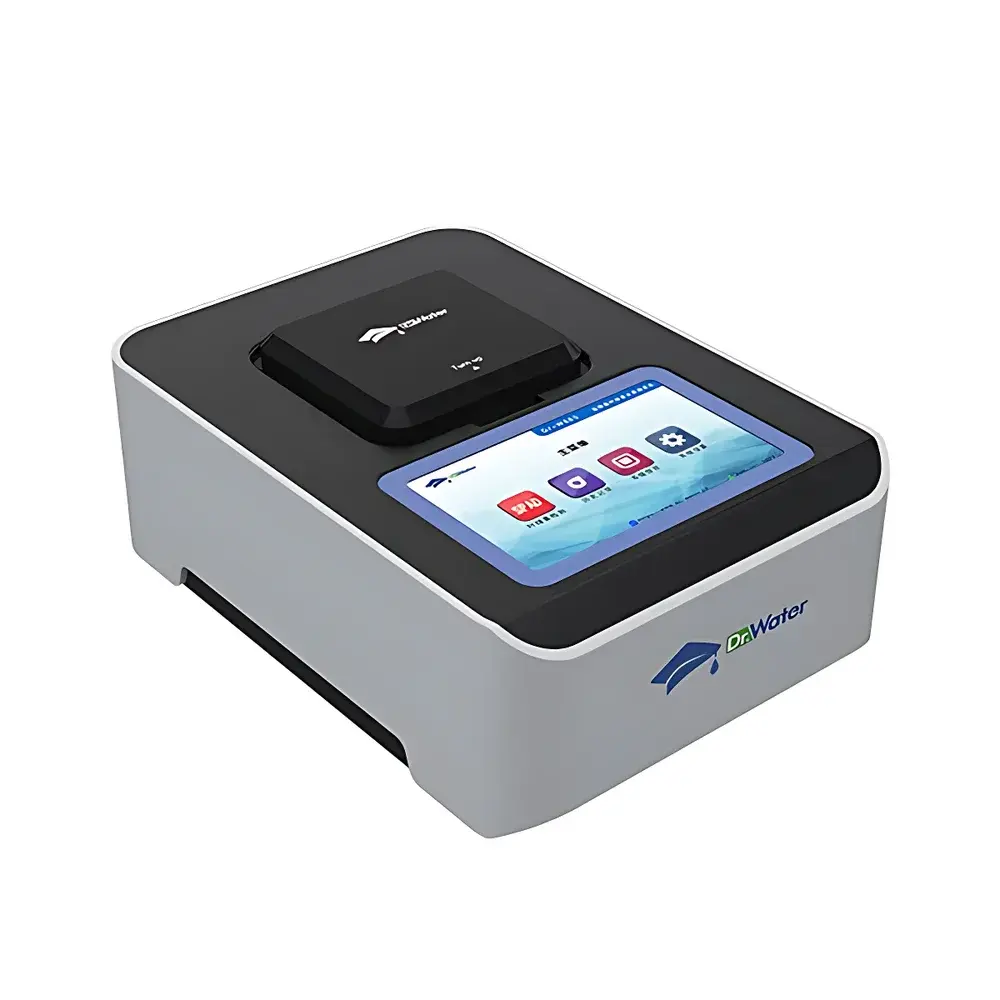
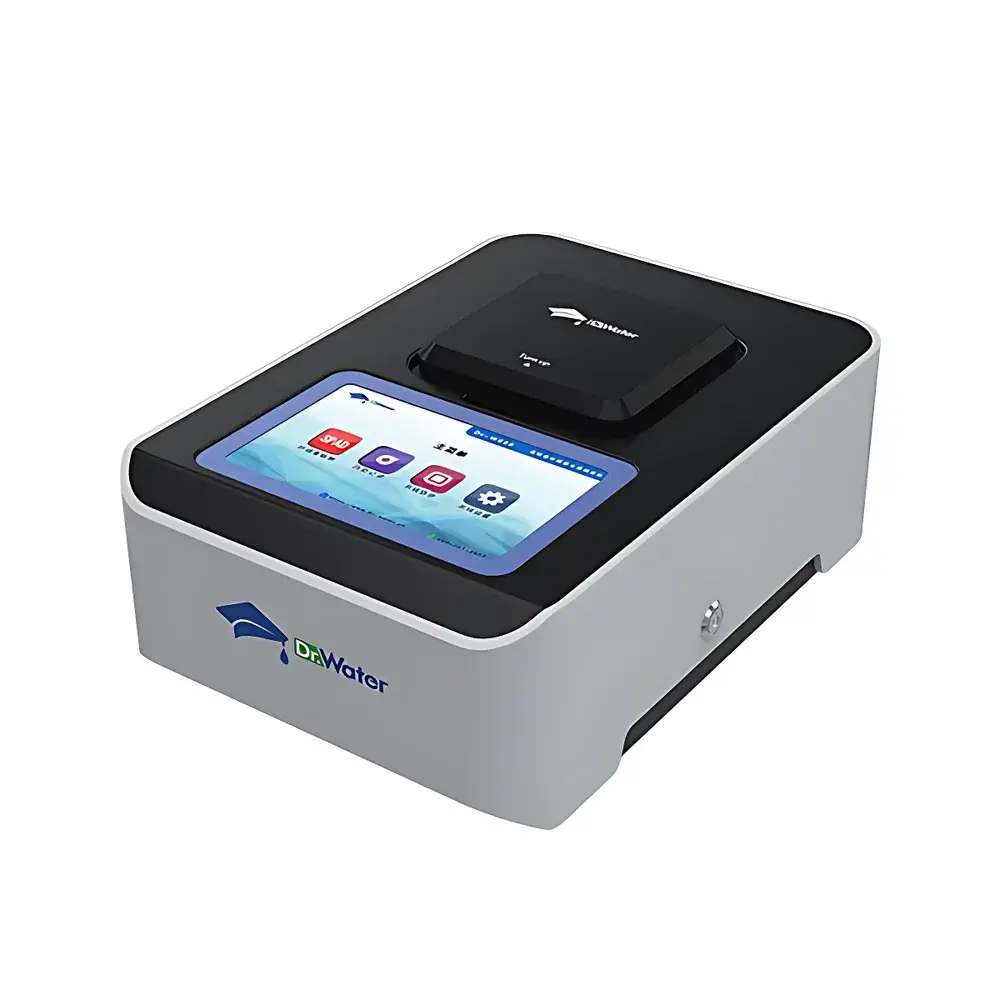
Water Doctor Dr-W660 Portable Phycocyanin & Chlorophyll-a Fluorometer
| Brand | Water Doctor |
|---|---|
| Origin | Hunan, China |
| Model | Dr-W660 |
| Measurement Principle | In-situ Fluorescence Detection |
| Chlorophyll-a Range | 0.01–500 µg/L |
| Phycocyanin (Cyanobacteria) Range | 0–40 × 10⁶ cells/L |
| Detection Limit | 0.01 µg/L (Chl-a), 1 × 10⁴ cells/L (Cyanobacteria) |
| Resolution | 0.01 µg/L (Chl-a), 10⁴ cells/L (Cyanobacteria) |
| Accuracy | ±5% FS |
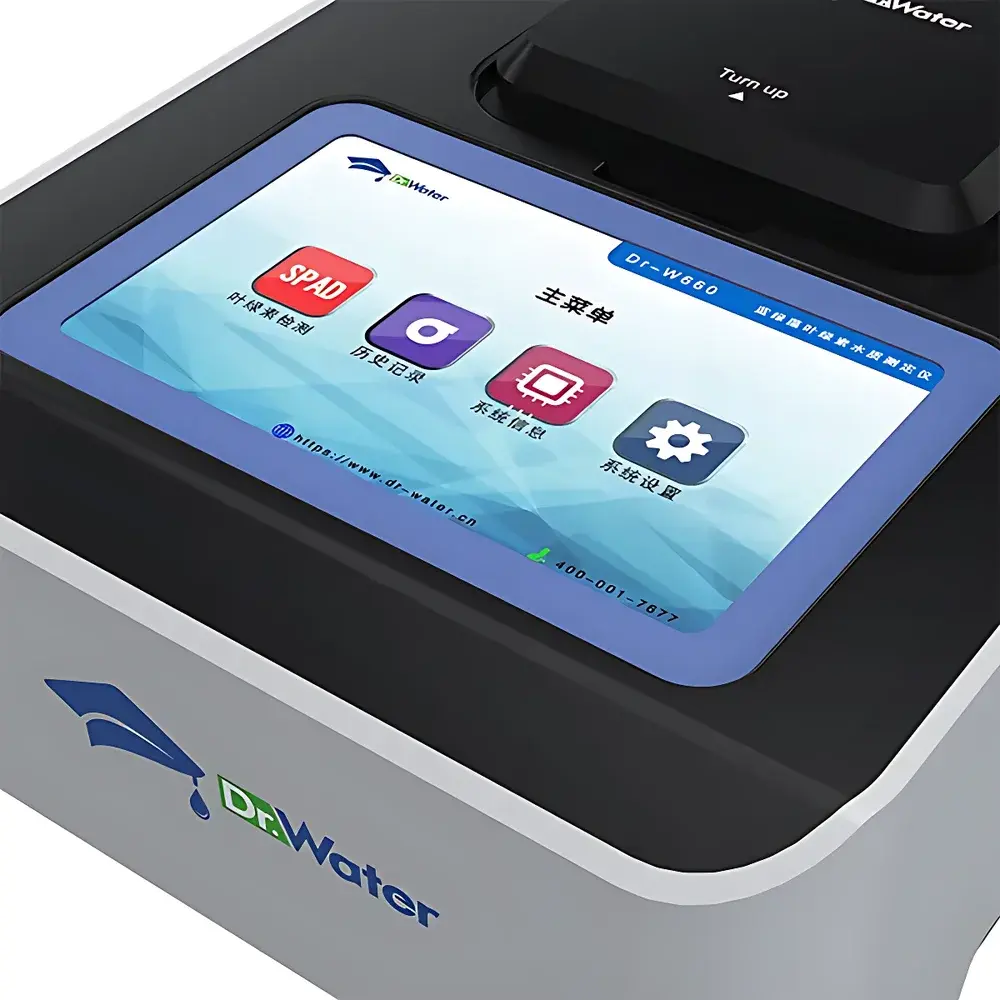
| Display | 5-inch HD color capacitive touchscreen |
| Power | Rechargeable Li-ion battery (≥30-day standby), AC adapter support |
| Data Storage | 1,000,000 records |
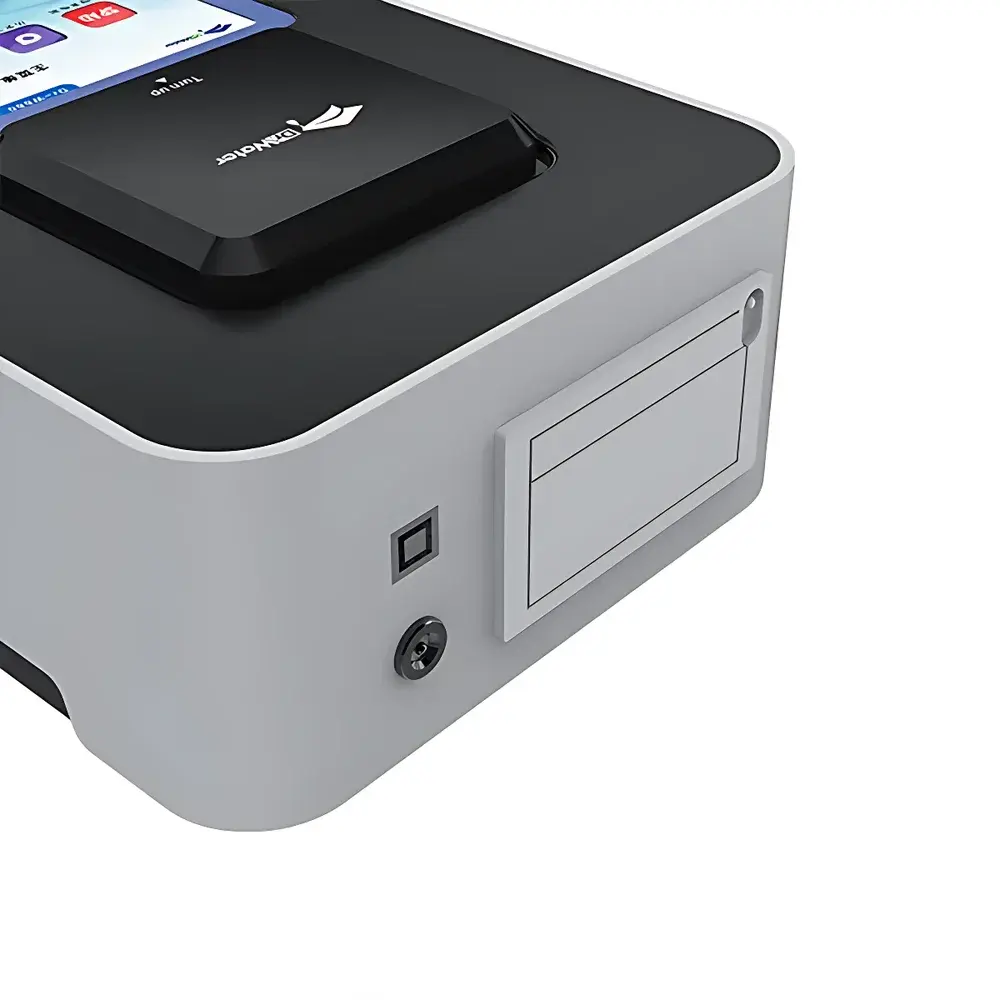
| Interface | USB 2.0 |
| Printer | Integrated thermal printer |
| Sample Cell | 10 mm square quartz cuvette |
| Housing Material | Corrosion-resistant ABS |
| Operating Temp | 5–40 °C |
| Relative Humidity | <85% RH (non-condensing) |
| Compliance | Designed for field-deployable compliance with ISO 10260 (water quality — determination of chlorophyll-a by fluorescence), ASTM D7212-19 (standard test method for chlorophyll-a in water by fluorometric measurement) |
Overview
The Water Doctor Dr-W660 is a field-deployable, dual-parameter fluorometer engineered for rapid, on-site quantification of phycocyanin (as a proxy for cyanobacterial biomass) and chlorophyll-a in natural and treated waters. It operates on the principle of excitation-emission fluorescence spectroscopy: a narrow-band blue LED (λex ≈ 470 nm) selectively excites phycocyanin and chlorophyll-a molecules in the sample; emitted fluorescence at characteristic wavelengths (λem ≈ 650 nm for Chl-a; ≈ 655 nm for phycocyanin) is captured by a high-quantum-efficiency photodiode detector with optical bandpass filtering. This ratiometric, single-point calibration architecture eliminates interferences from turbidity, colored dissolved organic matter (CDOM), and non-algal particulates—critical for reliable monitoring in eutrophic lakes, reservoirs, and drinking water intake zones. The instrument’s optical path is optimized for 10 mm square cuvettes to ensure reproducible light-path geometry and minimal inner-filter effects. Its design prioritizes operational robustness in variable environmental conditions without compromising analytical fidelity.
Key Features
- Integrated dual-channel fluorescence detection for simultaneous, independent quantification of chlorophyll-a and phycocyanin-derived cyanobacterial cell density.
- 5-inch capacitive touchscreen interface with intuitive icon-driven workflow—supports both English and customizable multilingual firmware (including full English UI localization).
- Onboard calibration module enabling user-performed 2-point (zero/span) calibration using certified reference standards—no return-to-factory servicing required for routine performance verification.
- Dedicated 10 mm square optical cuvette system designed to match excitation/emission beam geometry, minimizing stray light and path-length variability across measurements.
- Long-life lithium-ion battery providing ≥72 hours of continuous operation or >30 days of standby—validated under real-world field conditions including repeated start-stop cycles and ambient temperature fluctuations.
- Built-in thermal printer for immediate hard-copy reporting with timestamp, sample ID, operator tag, and measurement metadata—compliant with chain-of-custody documentation requirements.
- USB 2.0 interface for direct data export to laboratory information management systems (LIMS) or spreadsheet analysis; supports CSV and XML export formats with embedded audit trail metadata.
Sample Compatibility & Compliance
The Dr-W660 accepts unfiltered or pre-filtered (e.g., 0.45 µm membrane) water samples directly into its standardized 10 mm cuvette—compatible with raw surface water, finished drinking water, groundwater, wastewater effluent, and aquaculture pond water. It meets the instrumental performance criteria outlined in ISO 10260:2021 for chlorophyll-a determination and aligns with the methodological framework of ASTM D7212-19. While not a GLP-certified instrument per se, its onboard calibration logging, timestamped measurement history, and immutable data storage (with no editable fields post-acquisition) support traceability in regulatory monitoring programs governed by national water quality standards (e.g., US EPA Method 445.0 principles, EU WFD Annex V guidelines). The ABS housing conforms to IP65-rated ingress protection for dust and low-pressure water jets—suitable for use in humid, outdoor, or mobile lab environments.
Software & Data Management
The embedded firmware implements a deterministic real-time operating system (RTOS) with write-once data architecture: each measurement record is stamped with GPS coordinates (if external GNSS module is connected), date/time (RTC-backed), operator ID, calibration status flag, and raw fluorescence intensity values. Internal storage retains up to one million records with automatic rollover and time-stamped backup partitioning. USB export generates files containing full measurement context—including spectral background correction coefficients and auto-zero compensation logs. No cloud connectivity is included by default, preserving data sovereignty; optional secure FTP or encrypted USB transfer protocols can be enabled via firmware update for enterprise deployment. Audit trail functionality satisfies baseline requirements for 21 CFR Part 11–aligned workflows when paired with institutional procedural controls.
Applications
- Early-warning monitoring of cyanobacterial blooms in lakes, reservoirs, and slow-moving rivers—enabling rapid response before microcystin thresholds are exceeded.
- Drinking water utility intake assessment—tracking phytoplankton dynamics upstream of treatment plants to optimize coagulant dosing and UV disinfection parameters.
- Wastewater lagoon and constructed wetland performance evaluation—correlating algal biomass with nutrient removal efficiency (N/P ratios) and dissolved oxygen cycling.
- Regulatory compliance sampling under national water quality monitoring programs (e.g., China’s “Blue Sky and Clear Water” initiative, USGS NWIS protocols, EU WISE reporting frameworks).
- Educational and research fieldwork—supporting undergraduate limnology labs, graduate thesis projects, and citizen science water stewardship networks requiring metrologically defensible handheld instrumentation.
FAQ
What sample preparation is required prior to measurement?
Minimal preparation is needed: samples should be homogenized by gentle inversion and loaded directly into the clean 10 mm cuvette. Filtration is optional but recommended for highly turbid or sediment-laden waters to reduce scattering artifacts.
Can the Dr-W660 distinguish between different algal taxa beyond cyanobacteria?
No—it is specifically optimized for phycocyanin (cyanobacteria-specific) and chlorophyll-a (total phytoplankton proxy). It does not resolve accessory pigments (e.g., fucoxanthin, peridinin) or perform taxonomic identification.
Is factory recalibration required annually?
Not mandatory. The built-in calibration verification protocol—using NIST-traceable chlorophyll-a and phycocyanin standards—allows users to validate instrument performance quarterly or per project requirement. Full recalibration is only advised after physical impact or exposure to extreme thermal shock.
Does the device support external GPS or Bluetooth connectivity?
GPS integration is supported via optional TTL-level serial GNSS modules (e.g., u-blox NEO-M8N); Bluetooth is not implemented to maintain electromagnetic compatibility in sensitive field environments.
How is data integrity ensured during power loss?
All measurements are written to non-volatile flash memory immediately upon acquisition completion. The RTOS guarantees atomic write operations—no partial or corrupted records are generated, even during unexpected shutdown.







