
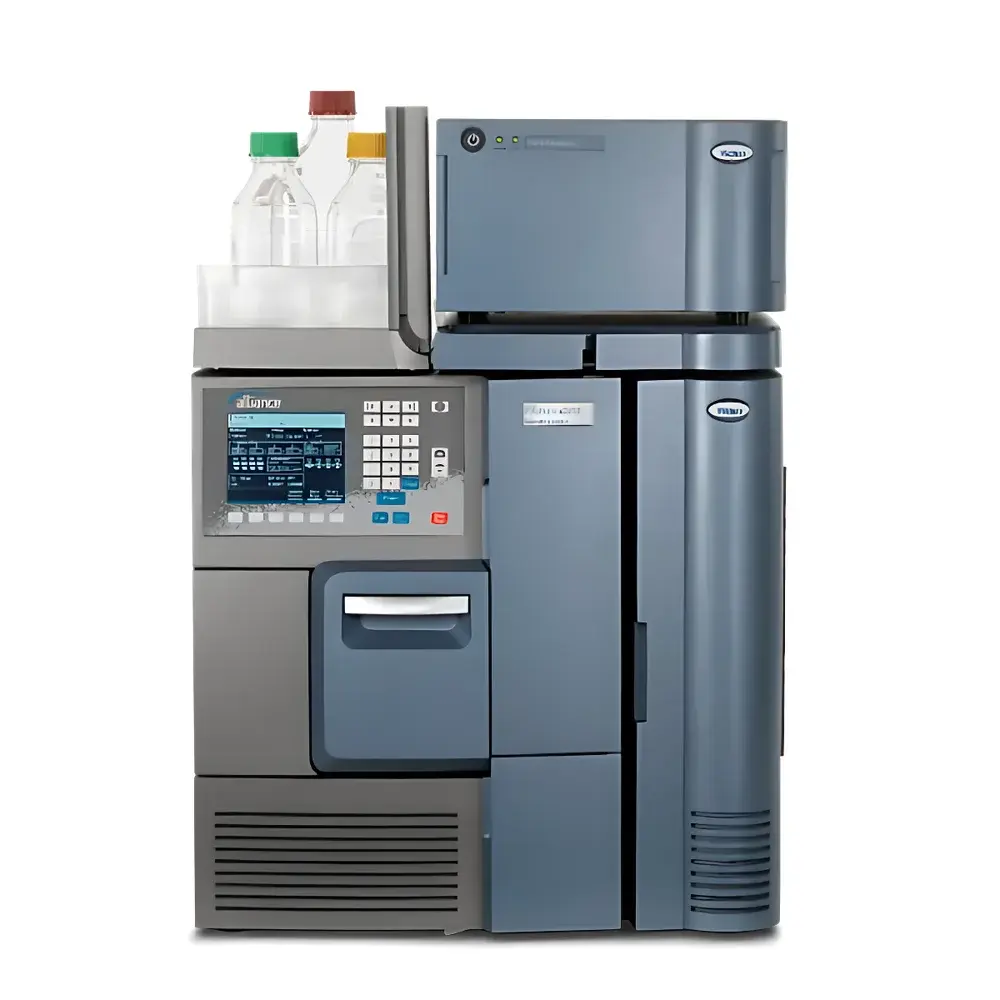
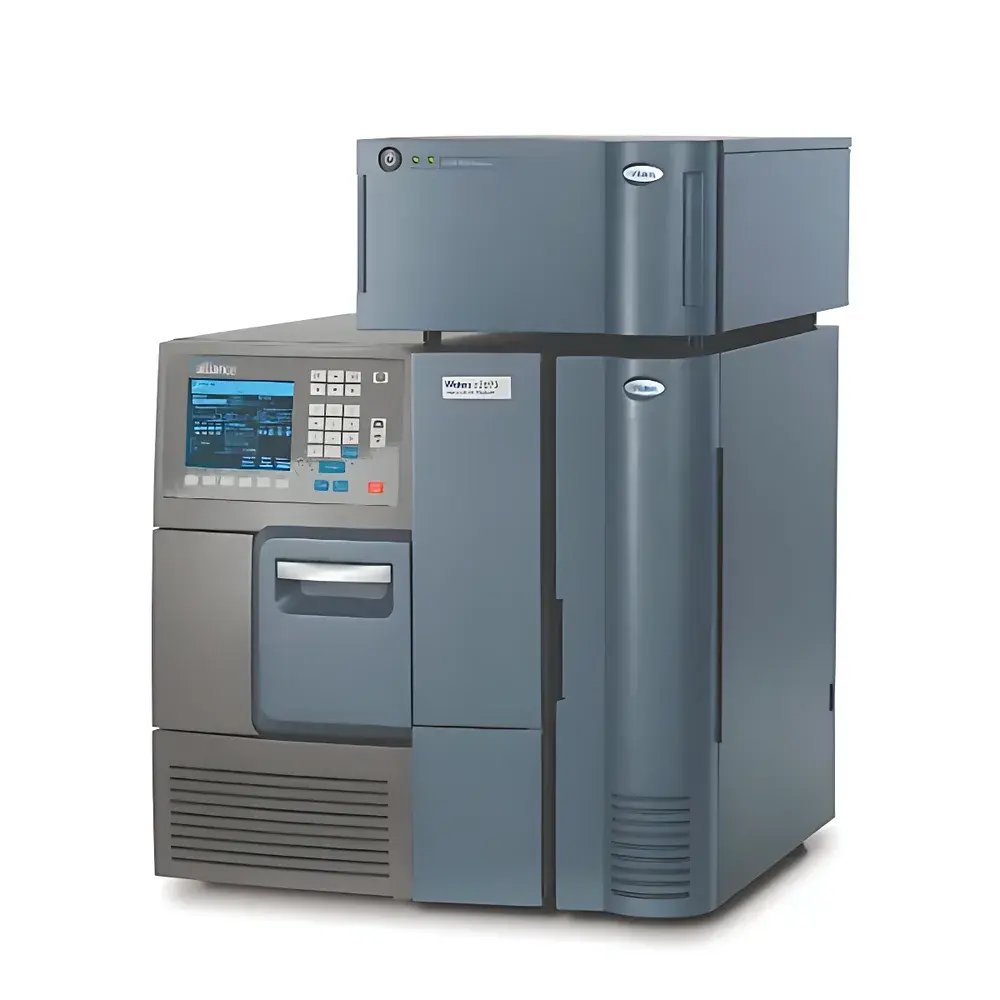
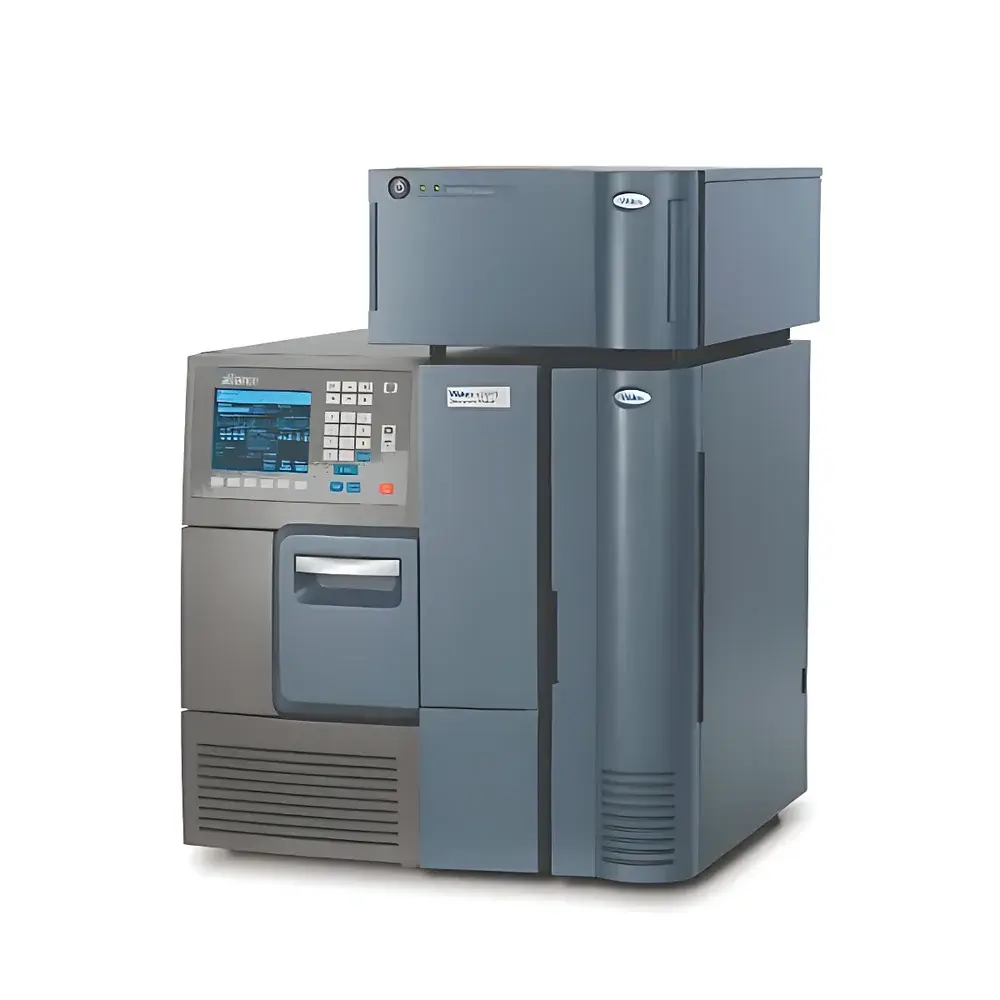
Waters Alliance e2695 HPLC System
| Brand | Waters |
|---|---|
| Origin | USA |
| Model | e2695 |
| Instrument Type | Conventional High-Performance Liquid Chromatograph |
| Sample Capacity | Up to 120 vials (standard 12 × 75 mm or 18 × 150 mm) |
| Flow Rate Range | 0.05–50 mL/min |
| Maximum Pressure | 20 MPa (2900 psi) |
| Injection Volume | 0.1–100 µL (programmable, no loop change required) |
| Column Oven Temperature Range | Ambient +5 °C to 60 °C |
| UV-Vis Detection Wavelength Range | 190–700 nm (when paired with 2489/2487/2998 detectors) |
| Data Acquisition Rate | Up to 80 Hz (detector-dependent) |
| Compliance | Designed for GLP/GMP environments |
Overview
The Waters Alliance e2695 HPLC System is a fully integrated, modular high-performance liquid chromatography platform engineered for precision, reproducibility, and operational continuity in regulated and non-regulated laboratories. Built upon over two decades of field-proven architecture, the e2695 separation module implements low-pressure quaternary solvent blending, active piston seal flushing, and intelligent sample management — all within a single, compact chassis. Its core measurement principle relies on isocratic or gradient elution under controlled flow and pressure conditions, enabling robust separation of small molecules, peptides, and polar analytes across pharmaceutical QC, environmental monitoring, food safety, and chemical R&D applications. Unlike ultra-high-pressure systems, the e2695 operates at pressures up to 20 MPa (2900 psi), making it compatible with both traditional 5 µm and advanced 2.7 µm CORTECS® columns — effectively bridging the performance gap between conventional HPLC and UPLC without requiring infrastructure upgrades.
Key Features
- Integrated solvent manager with vacuum degassing via second-generation polymer membrane technology, delivering pulse-free flow across the full 0.05–50 mL/min range
- Fixed dwell volume (< 700 µL) independent of system backpressure, ensuring consistent gradient delivery and method transferability
- Five-position sample carousel accommodating up to 120 standard vials; programmable needle height and aspiration rate for variable viscosity samples
- Tool-free maintenance design: piston seals, wash ports, and syringes are accessible without disassembly or calibration loss
- Automated needle wash with customizable rinse cycles and solvent selection — eliminating need for dedicated wash vials
- Independent sample trays allow concurrent sequence preparation and execution, minimizing instrument idle time
- Front-panel LCD interface with SystemPREP wizard for rapid daily startup and status diagnostics
Sample Compatibility & Compliance
The e2695 supports standard 12 × 75 mm and 18 × 150 mm vials, as well as microtiter plate formats (96-well) via optional accessories. It accommodates column dimensions from 2.1 mm × 30 mm to 4.6 mm × 250 mm and is validated for use with CORTECS 2.7 µm, XBridge, Symmetry, and SunFire stationary phases. From a regulatory standpoint, the system is designed for compliance with Good Laboratory Practice (GLP) and Good Manufacturing Practice (GMP) frameworks. When operated with Waters Empower 3 Software, it provides full 21 CFR Part 11 compliance including electronic signatures, audit trail generation, and user access controls. All hardware components meet IEC 61000-4 electromagnetic compatibility standards and UL/CSA safety certifications.
Software & Data Management
Instrument control, sequence definition, data acquisition, and reporting are managed through Waters Empower 3 Software — a validated, enterprise-grade chromatography data system (CDS) supporting multi-instrument networks and centralized database archiving. Empower 3 enables method validation per ICH Q2(R2), peak integration per USP , and automated system suitability testing. For mass spectrometry coupling, MassLynx software provides seamless integration with ACQUITY QDa, SQD2, and Xevo TQ-S platforms. Raw data files (.raw) and processed results (.res) are stored in vendor-neutral formats compliant with ASTM E2524 and ISO/IEC 17025 metadata requirements. Audit trails are immutable, time-stamped, and exportable in PDF/A format for regulatory submissions.
Applications
The e2695 serves as a foundational analytical tool across multiple sectors: in pharmaceutical quality control, it performs assay, related substances, and dissolution testing per USP monographs; in environmental labs, it quantifies PAHs, pesticides, and endocrine disruptors in water and soil extracts; in food safety, it validates vitamin content, preservatives, and mycotoxin levels according to AOAC and EN standards; and in academic research, it supports method development for natural product isolation and polymer characterization. Its compatibility with both UV-Vis and mass-selective detection extends its utility to stability-indicating assays and forced degradation studies where orthogonal detection is required.
FAQ
Is the e2695 compatible with CORTECS 2.7 µm columns?
Yes — the e2695’s pressure rating (20 MPa) and low dwell volume make it ideal for CORTECS columns, enabling higher resolution and faster separations than traditional 5 µm HPLC methods.
Can I upgrade my existing Alliance system to e2695 specifications?
Hardware upgrades are not supported; however, legacy Alliance 2695 modules may be retrofitted with e2695 solvent/sample managers and firmware updates where mechanically feasible.
Does the e2695 support temperature-controlled autosampling?
No — ambient-temperature sampling is standard; column oven temperature control (up to 60 °C) is available, but sample tray cooling/heating requires third-party accessories.
What detector options integrate natively with the e2695?
Waters 2487 Dual λ Absorbance Detector, 2489 UV/Vis Detector, 2998 Photodiode Array Detector, and ACQUITY QDa Mass Detector are fully supported out-of-the-box.
Is method transfer between e2695 and ACQUITY UPLC systems possible?
Yes — using CORTECS columns and Empower’s Method Transfer Utility, retention times and selectivity can be preserved with minor gradient re-scaling based on system dwell volume differences.




