
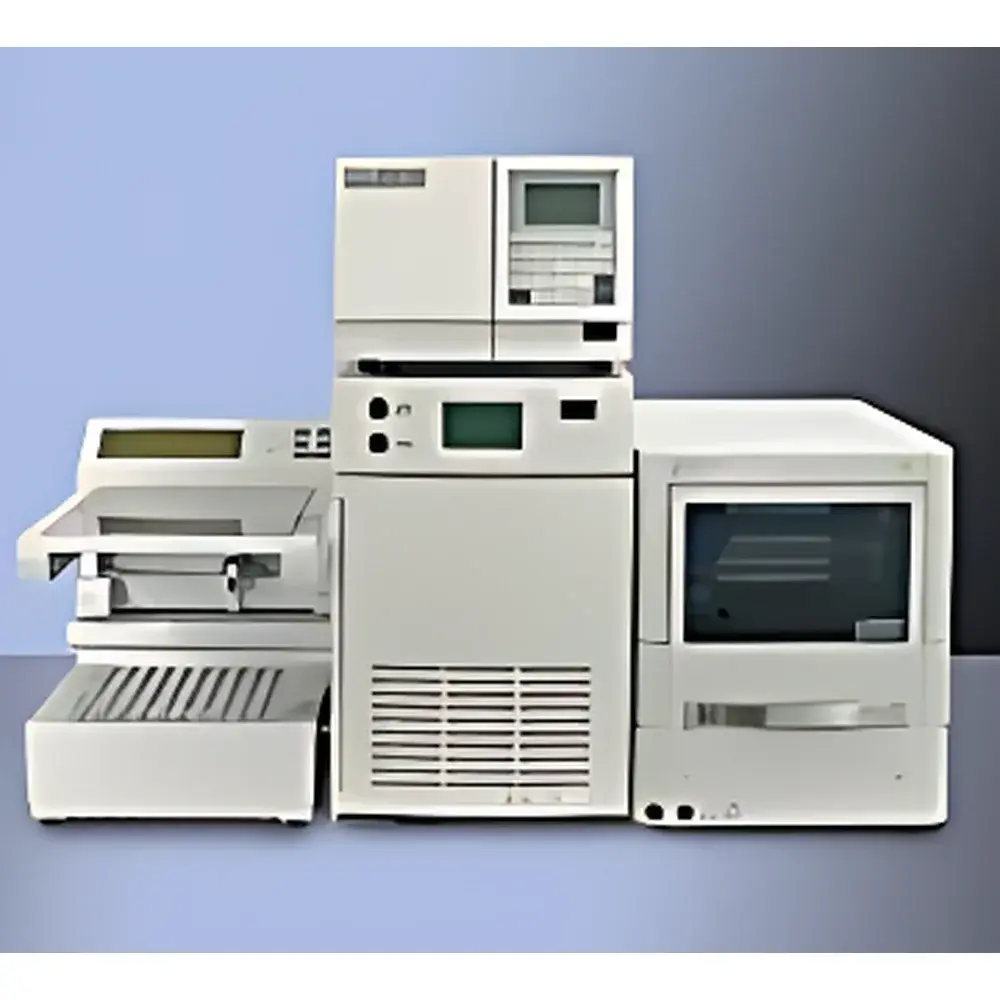
Waters Analytical to Semi-Preparative HPLC Purification System
| Brand | Waters |
|---|---|
| Origin | USA |
| Manufacturer Type | Authorized Distributor |
| Product Category | Imported Instrument |
| Model | Analytical to Semi-Preparative HPLC Purification |
| Application Level | Laboratory Grade |
| Instrument Type | Medium-to-Low Pressure Preparative Liquid Chromatography |
| Flow Rate Capability | Up to 300 mL/min |
| Detection Options | UV-Vis PDA, ELSD, or Analog-Signal-Compatible Detectors |
| Fraction Collection | Waters Fraction Collector III |
| Column Technology | Optimized Bed Density (OBD) Columns |
| Software Platform | Empower Chromatography Data System (CDS) |
| Compliance Support | 21 CFR Part 11 Ready, GLP/GMP-Aware Workflow Design |
| Sample Load Range | Microgram-to-Milligram Scale |
Overview
The Waters Analytical to Semi-Preparative HPLC Purification System is an engineered chromatographic platform designed for laboratories requiring scalable, reproducible compound isolation without the complexity and footprint of full-scale preparative systems. Built upon Waters’ legacy in high-performance liquid chromatography, this system bridges analytical method development and early-stage purification workflows using a unified hardware-software architecture. It operates on standard reversed-phase, normal-phase, or HILIC separation principles—leveraging laminar flow dynamics, precise gradient elution control, and column-specific retention modeling—to deliver consistent fraction purity and recovery across microgram to milligram sample loads. Unlike high-pressure preparative systems, this configuration maintains operation within medium-to-low pressure regimes (typically ≤ 200 bar), reducing mechanical stress on columns and enabling extended column lifetime—particularly critical when using proprietary Optimized Bed Density (OBD) stationary phases.
Key Features
- Modular solvent delivery architecture supporting flow rates up to 300 mL/min with programmable gradient profiles and dual-pump capability for binary or ternary mobile phase control
- Flexible injection options: manual loop injection or automated sample introduction via compatible autosamplers (e.g., Waters ACQUITY UPLC Sample Manager)
- Optimized Bed Density (OBD) column technology—designed to maximize loading capacity while preserving peak shape integrity and minimizing band broadening during scale-up
- Waters Fraction Collector III integration with customizable collection logic: time-based, peak-triggered, or UV-threshold–driven fractionation; supports 12-, 24-, 48-, or 96-well plate formats as well as vial racks
- Multi-detector compatibility: native support for UV-Vis photodiode array (PDA), evaporative light scattering (ELSD), and mass spectrometry–compatible analog signal interfaces
- Empower CDS v3 or later with integrated preparative workflow templates, OBD column calculator, and real-time fraction tracking dashboard
Sample Compatibility & Compliance
This system accommodates a broad range of organic and polar small molecules—including pharmaceutical intermediates, natural product isolates, synthetic peptides, and chiral compounds—across C18, phenyl-hexyl, cyano, and silica-based stationary phases. Column dimensions span 10 × 250 mm to 30 × 250 mm ID, with particle sizes from 5 µm to 10 µm optimized for semi-preparative throughput. All hardware components comply with IEC 61010-1 safety standards. Empower software supports audit trail generation, electronic signatures, and user-role–based access control—enabling alignment with FDA 21 CFR Part 11, ISO/IEC 17025, and GLP/GMP documentation requirements. System qualification packages (DQ/IQ/OQ/PQ) are available upon request for regulated environments.
Software & Data Management
Empower Chromatography Data System serves as the central interface for method development, execution, and post-run analysis. Its preparative module includes automated calculation of loading capacity, theoretical plate count, resolution metrics, and fraction purity estimation based on peak area integration and baseline correction algorithms. All acquisition parameters, fraction triggers, and detector settings are stored as metadata within each run file. Data integrity is enforced through immutable audit trails, timestamped user actions, and encrypted database storage. Raw data export supports .cdf, .csv, and .xml formats for third-party chemometric analysis or LIMS integration. Remote monitoring via secure HTTPS connection allows supervisory review without local workstation access.
Applications
- Purification of synthetic reaction mixtures prior to NMR or MS characterization
- Isolation of active pharmaceutical ingredients (APIs) and impurities for reference standard preparation
- Downstream processing of biocatalytic or fermentation-derived metabolites
- Chiral separation of enantiomers using polysaccharide-based OBD columns
- Method translation from analytical UPLC to semi-preparative scale under USP and ICH Q5A guidelines
- Supporting medicinal chemistry campaigns requiring rapid turnaround of purified analogs (10–50 mg/day per system)
FAQ
What is the maximum recommended sample load per injection on OBD columns?
Typical loading ranges from 0.1 mg to 50 mg depending on compound solubility, column dimensions, and selectivity—validated via overload testing in Empower’s preparative simulation tools.
Can this system be upgraded to full preparative pressure ratings?
No—it is mechanically and firmware-locked to medium-to-low pressure operation; however, method parameters developed here are directly transferable to Waters Prep 150 or Prep 400 systems using column scaling equations.
Is Empower licensing included with the system?
A perpetual node-locked license for Empower CDS with preparative modules is supplied; annual maintenance covers updates, compliance patches, and technical support.
How does the system handle solvent switching during gradient runs?
Dual-pump configuration enables seamless solvent transition with <1% compositional error at 1 mL/min; dwell volume is calibrated and compensated in method setup.
Are OBD columns compatible with aqueous mobile phases containing >95% water?
Yes—silica-based OBD columns feature endcapped, sterically protected ligands suitable for high-aqueous conditions; polymer-based alternatives are available for extreme pH stability.




