
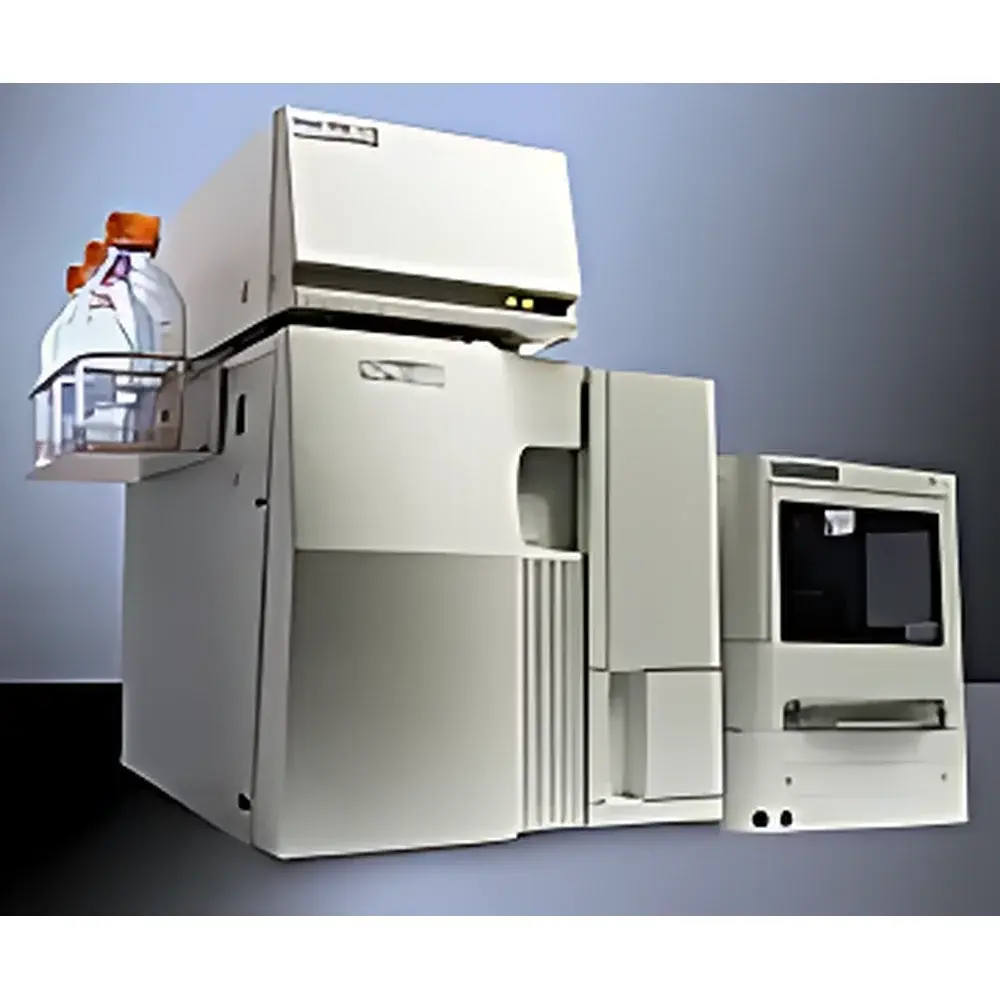
Waters Breeze HPLC System
| Brand | Waters |
|---|---|
| Origin | USA |
| Model | Breeze HPLC |
| Instrument Type | Conventional High-Performance Liquid Chromatograph |
| Configuration | Modular Benchtop HPLC Platform |
| Target Users | Academic Teaching Labs, Regulatory QC Laboratories, Early-Stage R&D Facilities |
| Software | Breeze™ Chromatography Data System (CDS) |
| Compliance Framework | Designed for GLP/GMP-aligned workflows |
Overview
The Waters Breeze HPLC System is a modular, benchtop high-performance liquid chromatography platform engineered for precision, operational simplicity, and long-term reliability in resource-constrained or entry-level analytical environments. Built on proven Waters fluidic architecture and detection technologies, the system operates on the principle of reversed-phase, normal-phase, ion-exchange, or size-exclusion chromatography—depending on column chemistry and mobile phase selection—to separate, identify, and quantify analytes in complex liquid matrices. Its design emphasizes deterministic flow delivery, low dwell volume, and baseline-stable detection—critical for reproducible retention time alignment and peak integration across repeated injections. Unlike enterprise-grade UHPLC systems, the Breeze prioritizes accessibility without compromising fundamental chromatographic integrity: it delivers sub-microliter injection precision, < ±0.5% RSD flow accuracy over 0.05–5.0 mL/min, and UV/VIS detection sensitivity down to 0.001 AUFS (absorbance units full scale) with 1 nm wavelength resolution.
Key Features
- Modular hardware architecture supporting user-defined configurations: selectable binary or quaternary solvent manager, manual or autosampler (up to 120-position tray), and interchangeable detectors including UV/Vis (190–700 nm), fluorescence (excitation/emission scanning), refractive index (RI), conductivity, and electrochemical (ECD) modules.
- Breeze Chromatography Data System (CDS) software with intuitive, task-oriented interface—designed for rapid method development, sequence definition, real-time chromatogram monitoring, and automated report generation.
- Integrated instrument control and data acquisition within a single Windows-based application; supports method transfer from legacy Waters systems (e.g., Alliance, 2695) via compatible file import protocols.
- Compact footprint (54 × 45 × 48 cm) optimized for shared lab spaces, teaching laboratories, and satellite QC rooms where space and budget are constrained.
- Robust pump design with pulse-dampened dual-piston reciprocating mechanism, delivering stable gradient formation with < 0.2% compositional error across 5–95% B solvent transitions.
Sample Compatibility & Compliance
The Breeze HPLC accommodates standard 3.9 mm × 150 mm, 4.6 mm × 150 mm, and 4.6 mm × 250 mm analytical columns—including C18, phenyl-hexyl, HILIC, and ion-exchange chemistries—as well as guard columns and precolumn filters. It supports aqueous, organic, and mixed mobile phases (e.g., water/acetonitrile, water/methanol, phosphate buffers, TFA additives) with pH compatibility from 2.0 to 8.0. While not certified for GMP production release testing out-of-the-box, the system is routinely deployed in GLP-compliant environmental testing labs, pharmaceutical stability studies, and academic method validation projects. When configured with networked storage, electronic signatures, and audit-trail-enabled CDS settings, it meets foundational requirements for FDA 21 CFR Part 11 compliance in regulated environments—subject to site-specific validation documentation and procedural controls.
Software & Data Management
Breeze CDS provides native support for ASTM E1788-22 (Standard Practice for Chromatographic Data Systems), ISO/IEC 17025:2017 clause 7.7 (data integrity), and USP Analytical Instrument Qualification guidelines. All raw chromatograms, method files, and processing parameters are stored in a proprietary but exportable .arw format; ASCII (.csv) and PDF report exports are fully configurable. The software includes built-in tools for system suitability assessment (e.g., tailing factor, theoretical plates, resolution calculation), peak purity evaluation via spectral overlay, and customizable pass/fail criteria for routine QC acceptance. Data security is enforced through role-based access control, encrypted local database storage, and optional integration with enterprise LDAP or Active Directory authentication.
Applications
- Undergraduate and graduate teaching: method development exercises, retention time prediction, calibration curve construction, and detector response linearity verification.
- Pharmaceutical QC: assay of active pharmaceutical ingredients (APIs), related substances analysis per ICH Q2(R2), and excipient purity screening.
- Food and beverage safety: detection of preservatives (e.g., benzoic acid, sorbic acid), artificial colors, caffeine, and mycotoxins using AOAC-approved methods.
- Environmental monitoring: quantification of polycyclic aromatic hydrocarbons (PAHs), pesticides (e.g., organophosphates), and endocrine-disrupting compounds in water extracts.
- Chemical synthesis support: reaction monitoring, crude mixture profiling, and purification fraction tracking during preparative-scale workflows.
FAQ
Is the Breeze HPLC suitable for regulatory submissions under FDA or EMA guidelines?
It can be used in regulated environments when fully validated per ICH Q2(R2) and supported by documented SOPs, change control records, and periodic performance verification—though it is not marketed as a 21 CFR Part 11–certified turnkey solution.
Can I upgrade my existing Breeze system with a newer detector or autosampler?
Yes—hardware modules are field-upgradable via Waters-certified service engineers; firmware and software updates are distributed through the Waters Support Portal.
Does Breeze CDS support electronic signatures and audit trails?
Audit trail functionality is enabled by default in multi-user network deployments; electronic signature capability requires configuration of user roles, password policies, and digital certificate integration per organizational IT policy.
What column dimensions and particle sizes are recommended for optimal performance?
Standard 4.6 mm ID × 150 mm length columns packed with 3–5 µm particles provide the best balance of resolution, backpressure, and method robustness for routine Breeze applications.
Is method transfer possible from an Alliance or Acquity UPLC system to Breeze?
Yes—gradient delay volume compensation, flow rate scaling, and dwell time adjustment tools are embedded in Breeze CDS to facilitate approximate method portability; final optimization requires empirical revalidation.





