
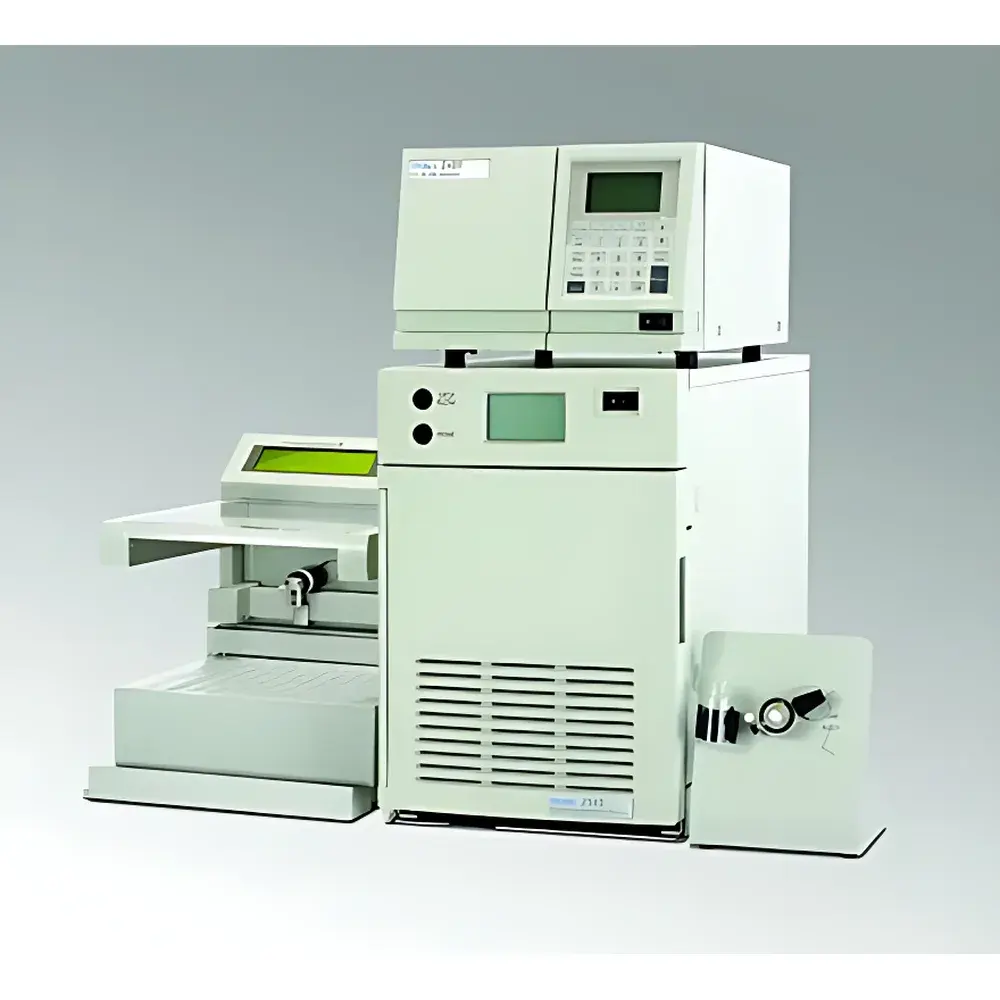
Waters Prep 150 Preparative Liquid Chromatography System
| Brand | Waters |
|---|---|
| Origin | USA |
| Model | Prep 150 |
| Application Level | Laboratory-grade |
| Instrument Type | High-pressure preparative LC |
| Pump Configuration | Binary or Quaternary (low-pressure solvent selection or high-pressure gradient mixing up to 150 mL/min) |
| Detector Options | 2489 UV/Vis or 2998 Photodiode Array (PDA) |
| Column Compatibility | Up to 50 mm internal diameter |
| Sample Load Range | Milligram- to gram-scale purification |
| Software | ChromScope™ for method development, fraction simulation, and GLP-compliant data handling |
| Compliance | Designed to support 21 CFR Part 11–ready workflows with audit trail and electronic signature capability (when configured with appropriate IT infrastructure) |
Overview
The Waters Prep 150 Preparative Liquid Chromatography System is an engineered solution for laboratory-scale purification of complex organic, pharmaceutical, and natural product mixtures. Built upon robust high-pressure liquid chromatography (HPLC) architecture, the system employs gradient elution principles—either via low-pressure solvent selection (quaternary configuration) or high-pressure mixing (binary configuration)—to deliver precise, reproducible separations across a wide dynamic range. Its core design targets applications requiring milligram-to-gram scale isolation under controlled, traceable conditions—particularly in synthetic chemistry support, lead compound purification, metabolite isolation, and reference standard preparation. The system operates within a validated framework compatible with Good Laboratory Practice (GLP) and current Good Manufacturing Practice (cGMP) environments when integrated with compliant network infrastructure and software configuration.
Key Features
- Configurable pump architecture: Select between binary high-pressure gradient mixing (up to 150 mL/min) or quaternary low-pressure solvent selection—enabling flexibility in method transfer from analytical to preparative scale.
- Dual detector compatibility: Integration of the Waters 2489 UV/Vis Detector (broad spectral range, enhanced linear dynamic response) or the 2998 Photodiode Array Detector (full-spectrum acquisition, peak purity assessment, and multi-wavelength triggering for fraction collection).
- Column versatility: Supports preparative columns with internal diameters up to 50 mm—accommodating both narrow-bore and wide-bore formats for scalable method development and direct translation from analytical scouting runs.
- Intuitive operational interface: Manual injection valve and optional automated sample loop injector provide seamless transition between exploratory and routine workflows.
- ChromScope™ software platform: Delivers guided method setup, overlay-based fraction trigger definition, real-time chromatogram visualization, and simulated fraction collection—reducing reliance on precious sample material during optimization.
- Robust hardware design: Stainless steel fluidic pathways, pressure-rated components up to 300 bar (4350 psi), and thermally stabilized detector flow cells ensure long-term stability and baseline integrity under extended operation.
Sample Compatibility & Compliance
The Prep 150 accommodates diverse sample matrices—including small-molecule APIs, peptides, oligonucleotides, plant extracts, and polymer fractions—provided they are soluble in common HPLC-grade solvents (e.g., acetonitrile, methanol, water, THF, ethyl acetate). It supports reversed-phase, normal-phase, and ion-exchange chromatographic modes through compatible column chemistries (C18, silica, amino, cyano, etc.). Regulatory alignment includes support for 21 CFR Part 11 compliance when deployed with validated ChromScope software, secure user authentication, electronic signatures, and immutable audit trails. System qualification documentation (DQ/IQ/OQ/PQ protocols) is available to support installation in regulated laboratories adhering to ISO/IEC 17025, USP , or internal quality management systems.
Software & Data Management
ChromScope software serves as the central control and data management environment for the Prep 150. It features a modular workflow engine that guides users through method creation, instrument calibration, run scheduling, and post-run analysis. Critical functions include layer-injection sequencing (for iterative sample loading without interruption), customizable fraction collection logic (threshold-based, time-windowed, or peak-area-triggered), and automated report generation with configurable templates (PDF/CSV export). All raw data—including chromatograms, detector spectra, pressure logs, and fraction metadata—are stored in a structured, timestamped format. Data integrity safeguards include automatic backup, version-controlled method files, and tamper-evident logging of all operator actions.
Applications
- Purification of synthetic intermediates and final active pharmaceutical ingredients (APIs) prior to structural characterization (NMR, MS).
- Isolation of bioactive natural products from crude extracts for biological screening and structure–activity relationship (SAR) studies.
- Removal of residual catalysts or reagents from reaction mixtures in process chemistry development.
- Preparative separation of diastereomers or enantiomers using chiral stationary phases (with appropriate detector sensitivity and fraction resolution).
- Generation of high-purity reference standards for quantitative LC-MS assay validation and calibration curve construction.
- Scale-up support from analytical (e.g., ACQUITY UPLC) to preparative conditions using retention time and selectivity correlation tools embedded in ChromScope.
FAQ
What is the maximum operating pressure of the Prep 150 system?
The system is rated for continuous operation up to 300 bar (4350 psi), supporting high-efficiency separations on sub-10 µm particle-packed preparative columns.
Can the Prep 150 be integrated into a networked laboratory environment?
Yes—it supports Ethernet connectivity and can be managed remotely via ChromScope Client/Server deployment, with role-based access control and centralized data archiving.
Does the system support fraction collection based on UV peak area rather than height?
Yes—ChromScope enables area-triggered collection with adjustable integration parameters, including baseline correction, peak width thresholds, and exclusion of shoulder events.
Is method transfer from Waters analytical systems (e.g., ACQUITY UPLC) supported?
Method translation tools are embedded in ChromScope, allowing scaling of gradient profiles, flow rates, and injection volumes while preserving selectivity and resolution.
What documentation is provided for regulatory submissions?
Waters supplies comprehensive system qualification packages, software validation guides, and IQ/OQ protocols aligned with ASTM E2500 and GAMP5 principles—available upon request for qualified customers.




