
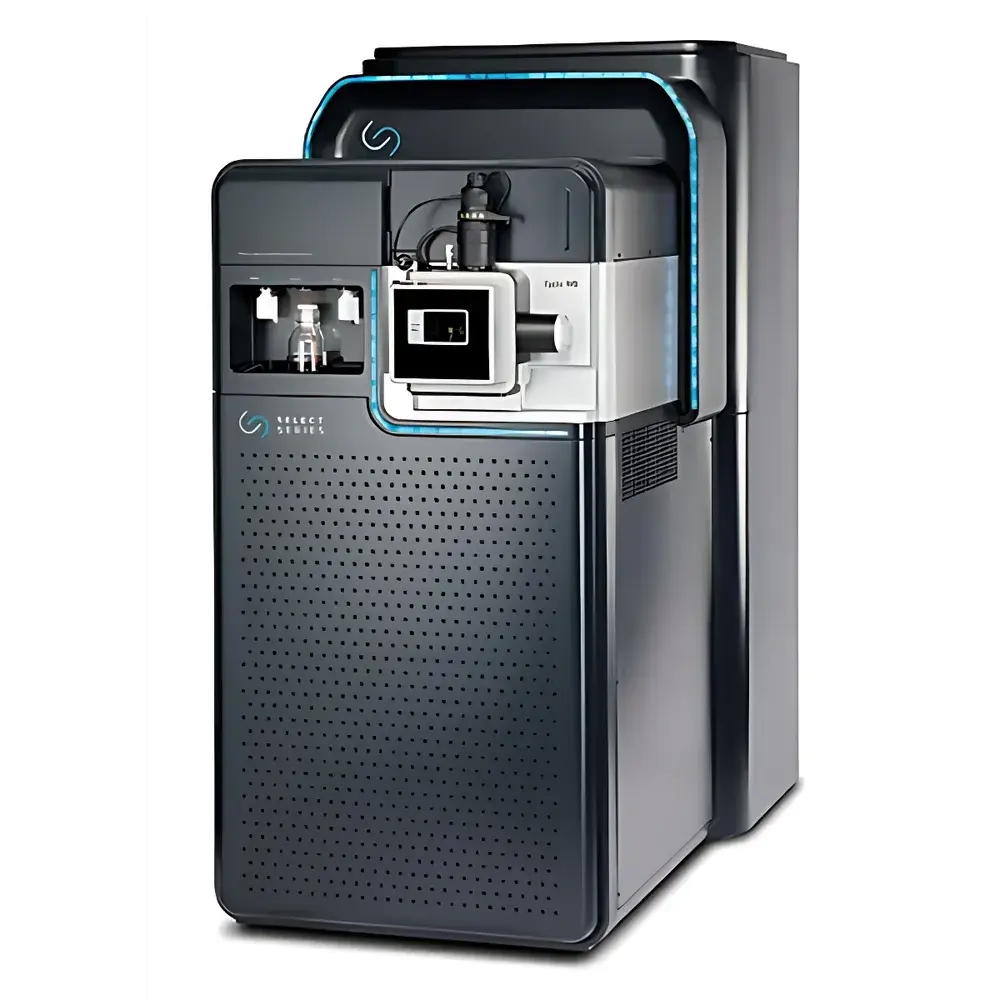
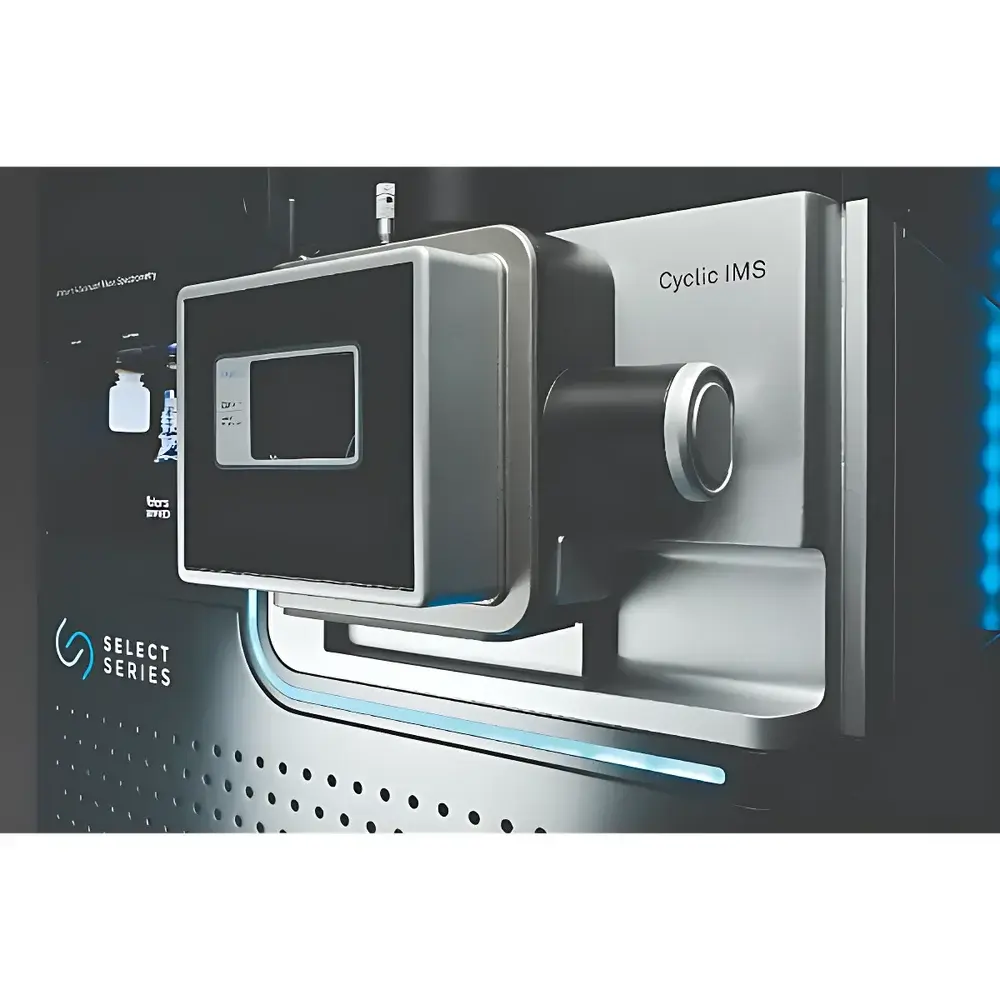
Waters SELECT SERIES Cyclic IMS
| Brand | Waters |
|---|---|
| Origin | United Kingdom |
| Manufacturer Type | Authorized Distributor |
| Origin Category | Imported |
| Model | SELECT SERIES Cyclic IMS |
| Pricing | Upon Request |
Overview
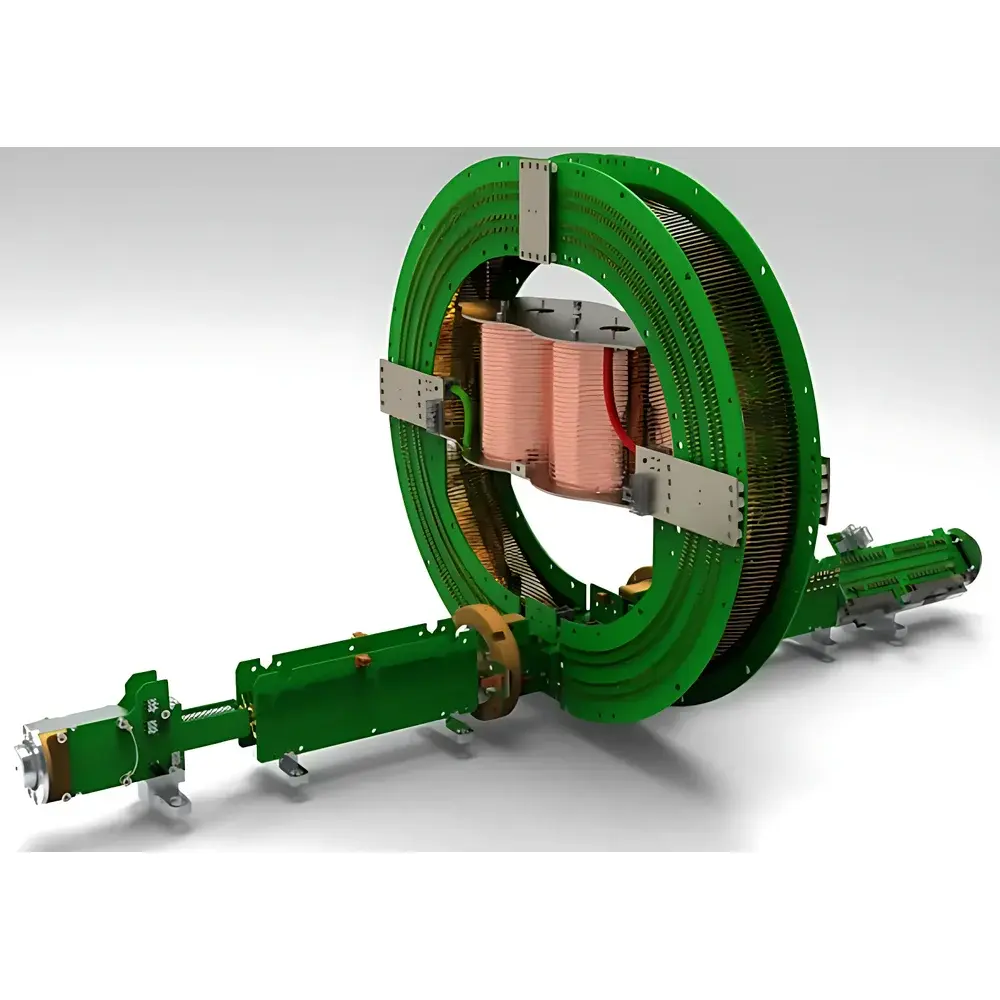
The Waters SELECT SERIES Cyclic IMS is a next-generation high-resolution ion mobility spectrometry–time-of-flight mass spectrometer (IMS-TOF MS) engineered for structural biology, glycomics, lipidomics, and complex mixture analysis. At its core, the system integrates a patented cyclic ion mobility (cIM) separation device with a high-performance orthogonal acceleration time-of-flight (oa-TOF) mass analyzer. Unlike linear or traveling wave IMS platforms, the cIM architecture employs a closed-loop, multi-pass ion trajectory—enabling variable resolution tuning through controlled ion circulation cycles. This design fundamentally extends the effective drift path length without proportionally increasing instrument footprint, delivering collision cross-section (CCS) measurements with <0.5% relative standard deviation (RSD) and ion mobility resolving power exceeding 400 (Rp = Ω/ΔΩ). The system operates on the principle of differential mobility separation in helium or nitrogen buffer gas under controlled electric fields, where ions are separated not only by m/z but also by their three-dimensional shape, charge state, and conformational stability—making it uniquely suited for isomeric and isobaric species differentiation.
Key Features
- Cyclic ion mobility (cIM) platform enabling programmable, multi-cycle IMS separation with real-time resolution adjustment
- Integrated high-fidelity oa-TOF mass analyzer featuring dual-gain detection, >100,000 resolving power (FWHM), sub-ppm mass accuracy, and extended dynamic range
- XS ion transmission optics preserving IMS separation integrity while optimizing ion transmission efficiency into the TOF region
- IMSn capability: selective ion isolation within defined mobility windows, followed by storage, activation (e.g., CID), and re-injection into the cIM device for secondary or tertiary mobility separation
- “Trim-and-continue” mobility gating: dynamic ejection of out-of-window ions to prevent wraparound artifacts during high-cycle experiments
- Full compatibility with UPLC and nanoLC front-ends, supporting both electrospray ionization (ESI) and matrix-assisted laser desorption/ionization (MALDI) sources
Sample Compatibility & Compliance
The SELECT SERIES Cyclic IMS supports a broad range of analytes—from intact proteins and protein complexes (>1 MDa) to small-molecule metabolites, glycans, lipids, and synthetic polymers. Its robust ion optics and low-energy transmission pathway minimize in-source fragmentation and preserve native-like conformations. The system meets essential regulatory requirements for analytical traceability and data integrity: MassLynx software supports audit trail logging, electronic signatures, and user-access controls aligned with FDA 21 CFR Part 11. Data acquisition and processing workflows are compatible with GLP/GMP environments, and CCS values are traceable to NIST-traceable calibration standards. Instrument performance verification follows internal protocols compliant with ISO/IEC 17025 principles and ASTM E3208 (Standard Guide for Ion Mobility Spectrometry–Mass Spectrometry).
Software & Data Management
Instrument control and method development are performed via MassLynx v4.2 or later—a validated, Windows-based platform offering intuitive graphical workflow builders for IMS-TOF and IMSn experiment design. Mobility Miner software provides specialized visualization tools including 3D mobility–retention–mass heatmaps, CCS distribution histograms, drift time alignment algorithms, and batch-processing pipelines for large-scale CCS database generation. All raw data are stored in .raw format with embedded metadata (instrument parameters, calibration files, mobility scan settings), ensuring full reproducibility. Export options include mzML, CCS tables (CSV/TXT), and annotated peak lists compatible with third-party bioinformatics suites (e.g., Skyline, Byonic, GlycoWorkbench). Continuous software updates are delivered through Waters’ Secure Software Distribution Portal, maintaining alignment with evolving community data standards (e.g., HUPO-PSI IMS extensions).
Applications
- Conformational analysis of therapeutic monoclonal antibodies and antibody–drug conjugates (ADCs)
- Isomeric separation of phosphorylated peptides, glycopeptides, and regioisomeric lipids
- Native mass spectrometry of membrane protein complexes and virus capsid assemblies
- High-confidence CCS library construction for small-molecule identification in untargeted metabolomics
- Gas-phase structural validation of synthetic macrocycles and foldamers
- Multi-dimensional characterization of polymer dispersity and branching architecture
FAQ
What distinguishes cyclic IMS from traditional linear or TWIMS platforms?
Cyclic IMS achieves higher resolving power per unit instrument length by recirculating ions through the same mobility cell multiple times—eliminating the need for physically longer drift tubes while maintaining exceptional CCS reproducibility.
Can the system perform CCS calibration without external standards?
Yes—the platform supports internal calibration using polyalanine or tune mix ions with literature-reported CCS values, and also accepts external calibrants (e.g., Agilent Tune Mix, Waters CCS Calibration Kit) for absolute CCS determination.
Is IMSn limited to two stages, or does it support deeper sequencing?
The cIM architecture supports n-stage mobility selection (IMSn), with practical implementation demonstrated up to IM³ in published studies; cycle count is constrained only by signal-to-noise requirements and total analysis time.
How is data file size managed during high-cycle cIM acquisitions?
Raw data compression is applied at acquisition via lossless predictive encoding; typical 10-cycle IMS-TOF datasets remain under 2 GB per run, with scalable archiving supported via Waters’ UNIFI Enterprise Data Management System.
Does the system comply with pharmaceutical industry data integrity standards?
Yes—MassLynx is qualified for regulated environments, with full 21 CFR Part 11 compliance including role-based access control, electronic signatures, and immutable audit trails for all acquisition and processing events.




