
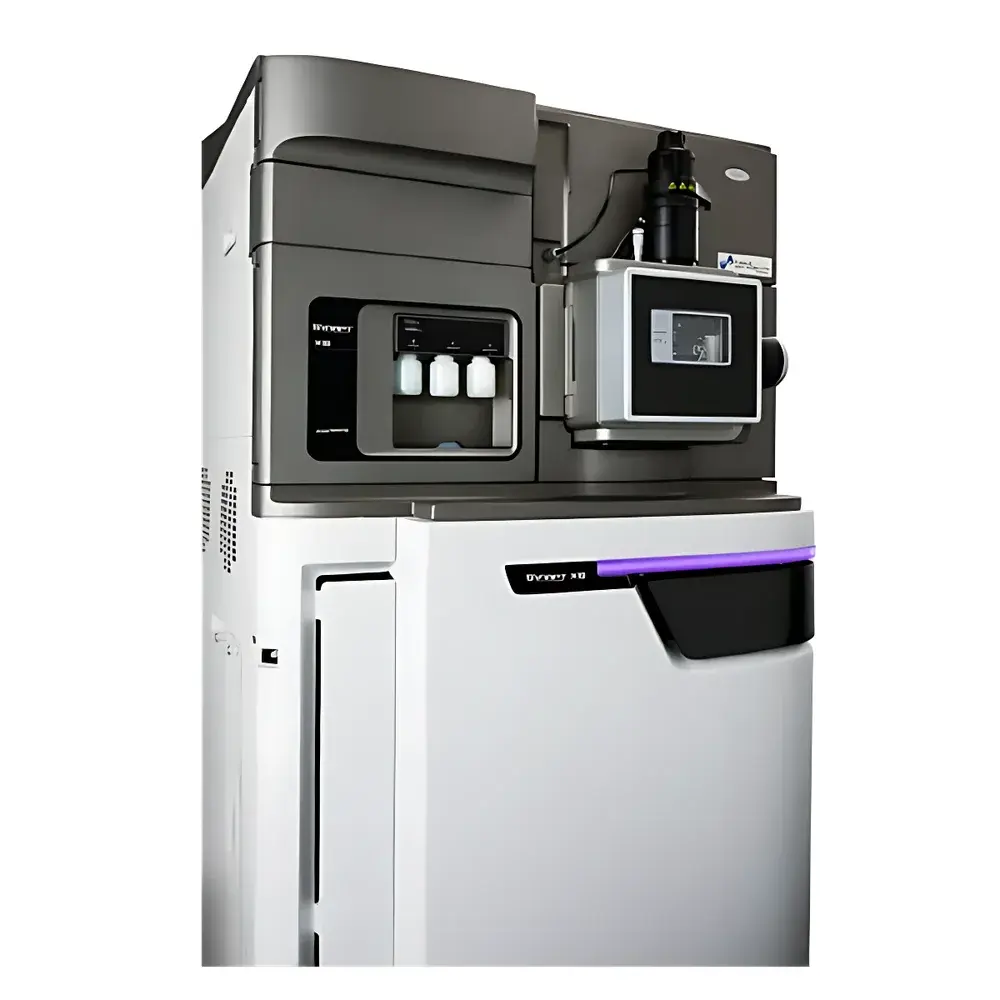
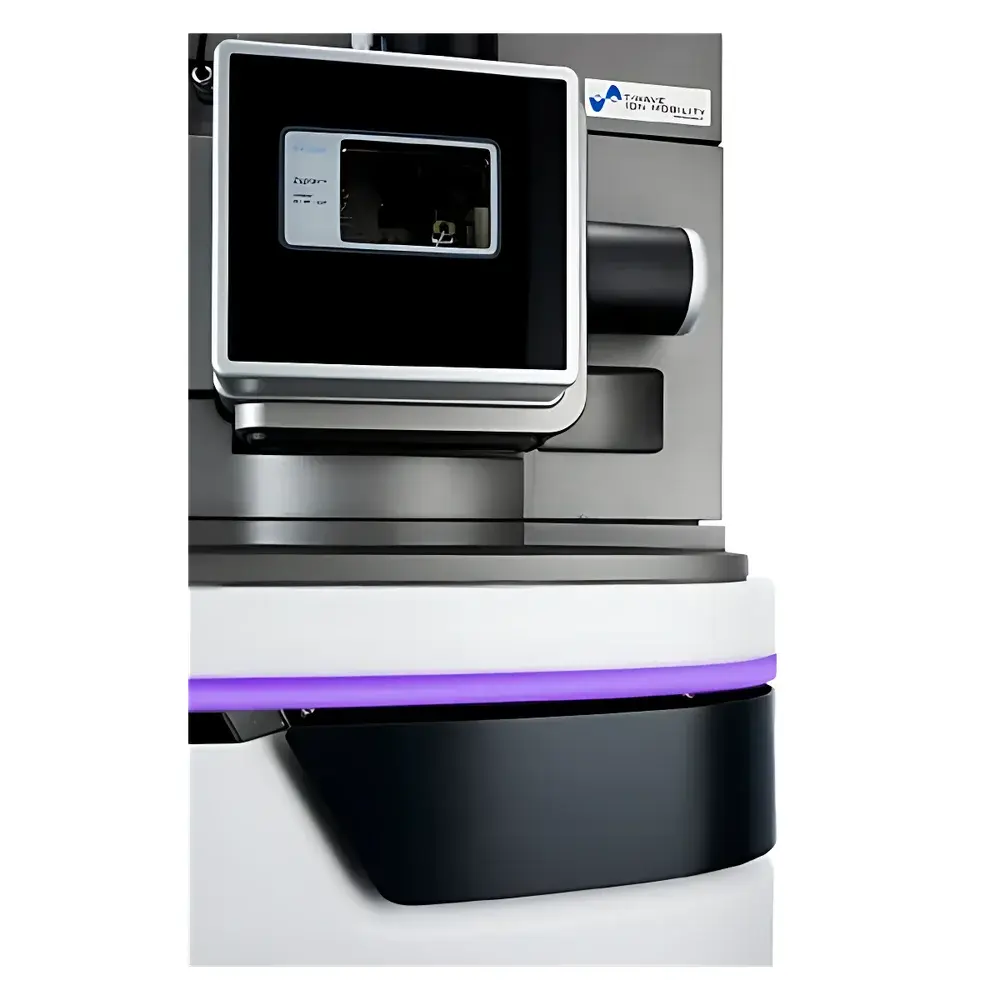
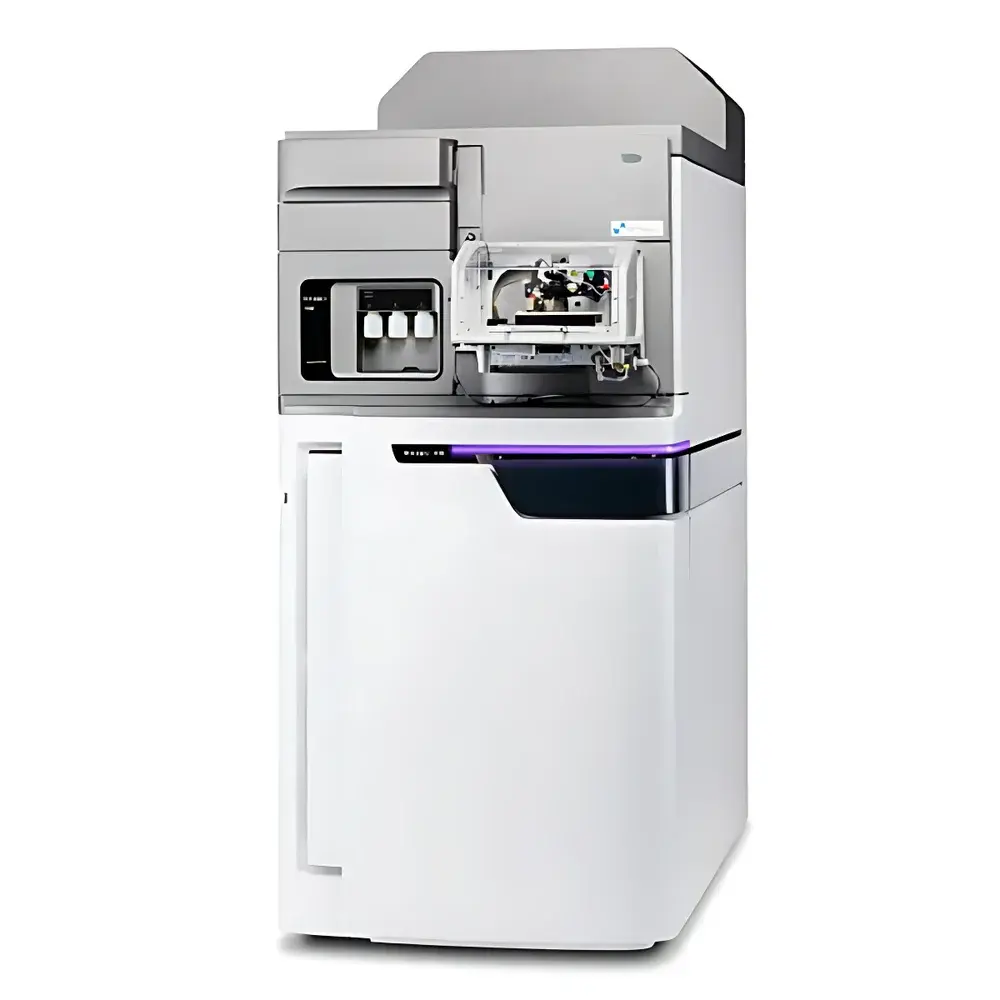
Waters SYNAPT XS High-Resolution Ion Mobility Mass Spectrometer
| Brand | Waters |
|---|---|
| Origin | United Kingdom |
| Manufacturer Type | Authorized Distributor |
| Origin Category | Imported |
| Model | SYNAPT XS |
| Instrument Type | Ion Mobility Mass Spectrometer |
| Application Scope | Universal |
Overview
The Waters SYNAPT XS High-Resolution Ion Mobility Mass Spectrometer represents a paradigm shift in high-performance LC-MS analysis by integrating traveling wave ion mobility spectrometry (IMS) with time-of-flight (ToF) mass analysis. Engineered for precision and reproducibility, the platform operates on the fundamental principle of orthogonal separation: first by m/z in the quadrupole and ToF analyzer, and second—orthogonally—by collision cross section (CCS) in the TriWave IMS cell. This dual-dimensionality significantly expands peak capacity, resolves isobaric and isomeric species indistinguishable by conventional MS alone, and delivers structurally informative CCS values as intrinsic molecular descriptors. Designed for universal applicability across small molecules, peptides, glycans, lipids, and intact proteins, the SYNAPT XS builds upon the proven SELECT SERIES architecture while introducing critical hardware and software innovations—including StepWave XS ion optics, Extended ToF detection, and TAP (Time-Aligned Parallel) fragmentation—to support rigorous, hypothesis-driven research under GLP/GMP-aligned workflows.
Key Features
- StepWave XS Ion Optics: Redesigned segmented quadrupole transmission system that enhances sensitivity for labile and low-abundance analytes while improving signal stability across wide dynamic ranges.
- Extended ToF Analyzer: Delivers consistent high mass resolution (>40,000 FWHM at m/z 556) and sub-ppm mass accuracy without compromising acquisition speed—fully compatible with UPLC separations at >1 kHz transient rates.
- TriWave IMS Architecture: Dual T-wave ion mobility cell enabling both drift-time-based separation and CCS measurement; supports HDMSE (High Definition MSE) and SONAR acquisition modes for comprehensive, non-targeted analysis.
- TAP Fragmentation: Unique Time-Aligned Parallel fragmentation mode leveraging two independent T-wave collision regions (pre- and post-IMS) to generate sequential CID spectra—enabling multi-stage structural elucidation with enhanced fragment ion coverage and confidence.
- Dual Dissociation Capability: Integrated CID and ETD fragmentation pathways within the same TriWave structure, supporting both peptide backbone cleavage (ETD) and side-chain fragmentation (CID), with high mass accuracy and resolution across 4–32 kDa mass ranges.
Sample Compatibility & Compliance
The SYNAPT XS accommodates diverse sample types—from volatile organics and polar metabolites to membrane proteins and antibody-drug conjugates—without requiring method reconfiguration. Its robust vacuum architecture and thermally stable ion source interface ensure compatibility with reversed-phase, HILIC, SEC, and 2D-LC workflows. From a regulatory perspective, the instrument complies with key analytical validation frameworks: data integrity is enforced via Waters UNIFI Software’s audit-trail-enabled acquisition, compliant with FDA 21 CFR Part 11 requirements; raw data formats adhere to mzML standards; and CCS calibration protocols follow ISO/IEC 17025-aligned traceability principles. Routine operation supports ICH Q2(R2)-recommended specificity assessments through orthogonal IMS-MS dimensionality, and CCS databases are increasingly referenced in USP monographs for identity confirmation of biologics.
Software & Data Management
Data acquisition, processing, and reporting are unified within Waters UNIFI Scientific Information System—a secure, role-based platform designed for regulated environments. UNIFI natively supports IMS-aware peak detection, CCS-calibrated alignment, and batch-wise statistical comparison of mobility-resolved features. It enables automated generation of CCS reference libraries using calibrants such as Tuning Mix or custom synthetic standards, with uncertainty propagation reported per IUPAC guidelines. All raw files retain full IMS metadata (drift time, wave velocity, gas composition), ensuring full traceability and reprocessing capability. For enterprise integration, UNIFI provides RESTful APIs and supports direct interfacing with LIMS and ELN systems under TLS 1.2 encryption and SAML 2.0 authentication protocols.
Applications
- Structural characterization of post-translational modifications (PTMs) and higher-order protein structure via CCS-guided conformational analysis
- Deep profiling of lipidomes and glycomics where isomeric discrimination is essential for biological interpretation
- Impurity identification and degradation product mapping in pharmaceutical development per ICH Q5A/Q5C
- Non-targeted metabolomics with improved false discovery rate control through IMS-enhanced feature deconvolution
- Multi-attribute monitoring (MAM) of biopharmaceuticals including charge variant resolution and aggregation state assessment
FAQ
Does the SYNAPT XS support quantitative analysis with ion mobility separation?
Yes—HDMSE and SONAR acquisition modes preserve linear dynamic range and enable label-free quantitation across mobility-resolved features, validated per ICH Q2(R2) linearity and precision criteria.
Can CCS values be used for regulatory submissions?
CCS measurements are increasingly accepted as orthogonal identifiers in regulatory filings; Waters provides documented CCS calibration protocols aligned with ASTM E3209-21 and supports inclusion in CMC sections of IND/BLA dossiers.
Is method transfer possible from legacy SYNAPT platforms?
UNIFI ensures backward compatibility with G2-S and G2-Si methods; IMS parameters (wave velocity, gas flow) are preserved, though optimized StepWave XS settings may require minor tuning for maximum sensitivity.
What level of IT infrastructure is required for UNIFI deployment?
UNIFI supports both on-premise Windows Server deployments and AWS/Azure-hosted virtual instances, with minimum specifications published in the official System Requirements Guide v2.12+.
How is instrument qualification performed for GxP environments?
Waters offers IQ/OQ/PQ documentation packages compliant with ASTM E2500-13, including IMS-specific performance tests (CCS reproducibility ≤ 0.5% RSD, mobility resolution ≥ 50) and electronic record validation reports.
Related Products





