
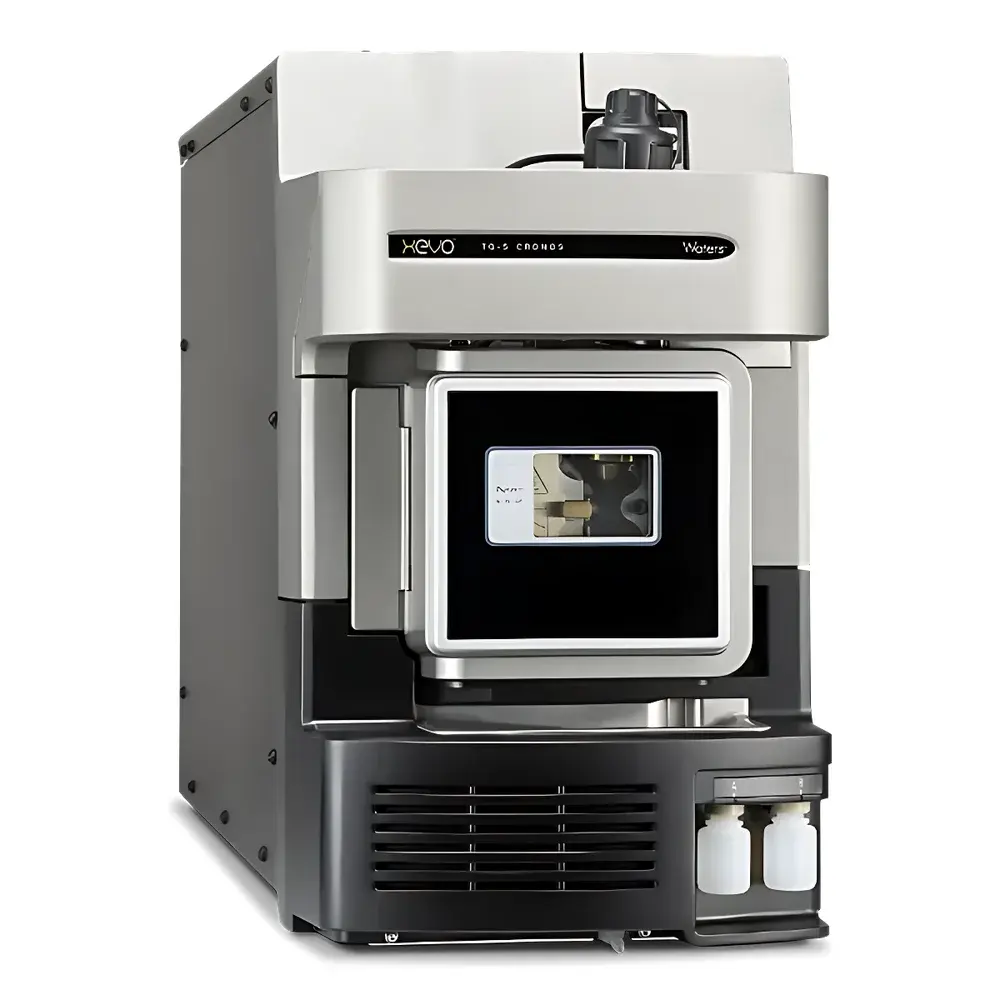
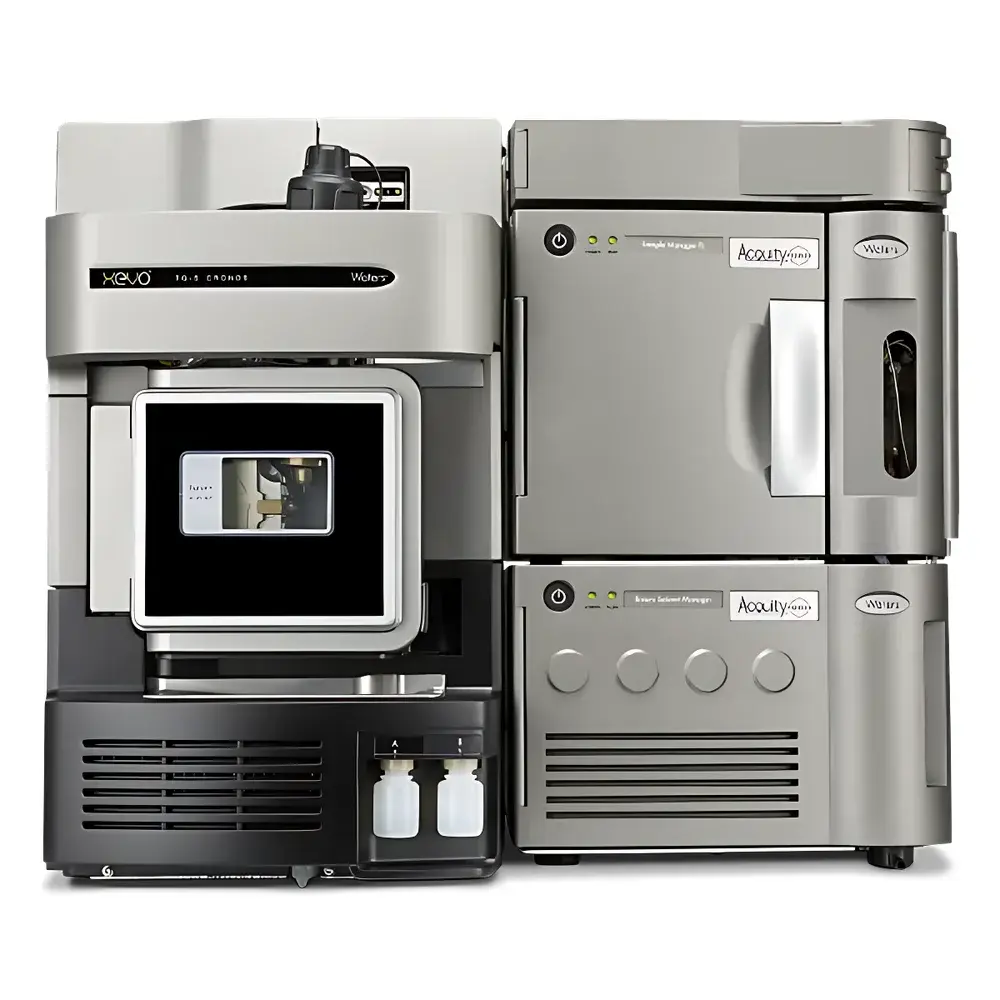
Waters Xevo TQ-S cronos Triple Quadrupole Mass Spectrometer
| Brand | Waters |
|---|---|
| Origin | United Kingdom |
| Instrument Type | Tandem Quadrupole (Triple Quad) |
| Model | Xevo TQ-S cronos |
| Configuration | LC-MS/MS System |
| Detection Principle | Electrospray Ionization (ESI) / Atmospheric Pressure Chemical Ionization (APCI) coupled with tandem mass spectrometry in Multiple Reaction Monitoring (MRM) mode |
| MRM Transition Rate | Up to 555 transitions per second |
| Linear Dynamic Range | >5 orders of magnitude |
| Typical Precision | <4% RSD for challenging analytes with 5 ms dwell time |
| Regulatory Compliance Support | 21 CFR Part 11, GLP/GMP audit trails, ISO/IEC 17025-aligned workflows |
Overview
The Waters Xevo TQ-S cronos is a high-performance triple quadrupole liquid chromatography–mass spectrometry (LC-MS/MS) system engineered for robust, high-throughput quantitative analysis in regulated and research environments. Built upon Waters’ proven ion optics architecture and refined through iterative development from the QDa mass detector platform, the Xevo TQ-S cronos employs a redesigned inverted cone sampling interface that enhances ion transmission efficiency and significantly extends operational uptime between maintenance cycles. Its core measurement principle relies on electrospray ionization (ESI) or atmospheric pressure chemical ionization (APCI), followed by mass selection in Q1, collision-induced dissociation (CID) in the RF-only hexapole collision cell (Q2), and product-ion detection in Q3—enabling highly selective and sensitive Multiple Reaction Monitoring (MRM) acquisition. The system is purpose-built for laboratories requiring regulatory-compliant quantitation across diverse sample matrices—including biological fluids, food extracts, environmental samples, and pharmaceutical formulations—without compromising data integrity, reproducibility, or method transferability.
Key Features
- Optimized ion source geometry with inverted cone design for improved signal stability and reduced maintenance frequency
- MRM acquisition rate of up to 555 transitions per second, enabling comprehensive multi-analyte quantitation within a single chromatographic run
- Linear dynamic range exceeding five orders of magnitude, supporting accurate quantitation from low-pg/mL to high-ng/mL concentrations without manual dilution or re-injection
- Integrated Quanpedia software for structured compound database management, automated method migration, and retention time synchronization across instruments
- TargetLynx AX software with enhanced “Tagging” functionality in the Summary View for rapid identification of out-of-specification results during data review
- Automatic MRM parameter population based on linked acquisition and processing methods, reducing configuration errors and improving workflow consistency
- Proven performance in multiresidue pesticide analysis—demonstrated detection of 204 LC-amenable pesticides in cucumber, tomato, and pepper matrices using QuEChERS (PSA dSPE) extraction and 10-fold DisQuE (CEN) dilution
Sample Compatibility & Compliance
The Xevo TQ-S cronos delivers consistent analytical performance across complex, high-background matrices. Validation studies confirm stable response for sulfadimethoxine in plasma over 1700 consecutive injections (>80 hours) following simple protein precipitation cleanup—achieving <4% RSD even at 5 ms dwell times. This level of ruggedness supports long-term monitoring programs under GLP or GMP conditions. The system’s hardware and software architecture are designed to support compliance with international regulatory frameworks including FDA 21 CFR Part 11 (electronic records and signatures), ISO/IEC 17025 (competence of testing and calibration laboratories), and relevant sections of USP and ICH M10 guidelines for bioanalytical method validation. Audit trail functionality, user access controls, and electronic signature capability are natively embedded in the instrument control and data processing environment.
Software & Data Management
Data acquisition and processing are managed through Waters’ UNIFI Scientific Information System and TargetLynx AX software suite. UNIFI provides centralized method storage, version-controlled workflow templates, and secure role-based access—essential for multi-user laboratories operating under quality management systems. TargetLynx AX introduces intelligent data review features such as auto-updating MRM lists synchronized with processed files, dynamic retention time alignment via Quanpedia, and visual flagging of flagged results directly in summary tables. All raw and processed data files adhere to Waters’ proprietary .raw format, which preserves full metadata, instrument configuration logs, and audit trail entries required for regulatory submissions. Export options include CSV, PDF, and XML formats compatible with LIMS integration and third-party statistical platforms.
Applications
The Xevo TQ-S cronos is routinely deployed in applications demanding high specificity, sensitivity, and throughput. These include: clinical toxicology and therapeutic drug monitoring; residue analysis of pesticides, veterinary drugs, and mycotoxins in food and agricultural commodities; impurity profiling and stability-indicating assays in pharmaceutical development; environmental monitoring of persistent organic pollutants (POPs) and endocrine-disrupting compounds; and biomarker verification in translational proteomics and metabolomics studies. Its ability to maintain precision across wide concentration ranges and challenging matrices makes it particularly suitable for laboratories performing routine QC testing where method robustness and operator independence are critical success factors.
FAQ
Is the Xevo TQ-S cronos compliant with FDA 21 CFR Part 11 requirements?
Yes—the system includes full electronic signature support, immutable audit trails, and configurable user roles aligned with Part 11 Annex A expectations.
Can methods developed on other Waters triple quad systems be transferred to the Xevo TQ-S cronos?
Yes—Quanpedia enables seamless method migration by storing compound-specific parameters, MRM transitions, and retention time references, facilitating cross-platform deployment.
What sample preparation techniques are validated for use with this instrument?
Standardized workflows include QuEChERS (PSA dSPE), DisQuE (CEN), protein precipitation, and solid-phase extraction (SPE), all demonstrated in published application notes for food safety and clinical labs.
Does the system support both ESI and APCI ionization sources?
Yes—dual-source configurations are available and can be switched automatically during a single sequence without venting the vacuum system.
How is data integrity ensured during long-duration batch runs?
Instrument firmware logs all acquisition events, calibration checks, and user actions in real time; raw data files embed timestamps, instrument state snapshots, and checksum-verified metadata to prevent tampering.
Related Products



