
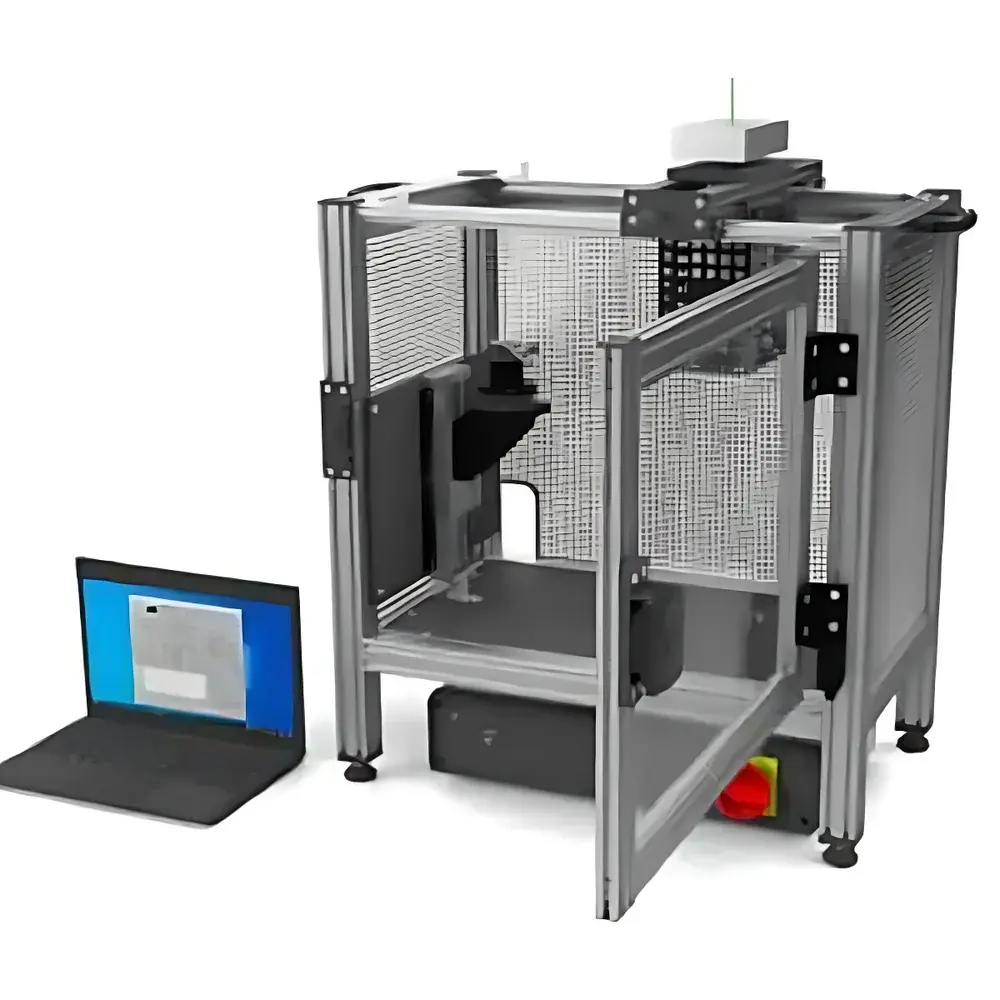
WAZAU CHD DIN EN ISO 12127-1 Contact Heat Resistance Tester
| Brand | WAZAU |
|---|---|
| Origin | Germany |
| Model | CHD DIN EN ISO 12127-1 |
| Heating Block Temperature Range | 20–500 °C |
| Contact Force | 49 N (5 kgf) |
| Heating Block Diameter | 25.2 mm |
| Sensor Probe Diameter | 25 mm, Thickness: 5 mm |
| Temperature Measurement Accuracy | ±0.1 °C |
| Time Resolution | ±0.1 s |
| Probe Approach Speed | 5 mm/s |
| Dimensions | 800 × 50 × 550 mm |
| Power Supply | 230 V, 50 Hz |
Overview
The WAZAU CHD DIN EN ISO 12127-1 Contact Heat Resistance Tester is a precision-engineered instrument designed to quantify the thermal protective performance of personal protective equipment (PPE) materials against transient conductive heat exposure. It operates on the principle of controlled contact thermometry: a calibrated heated metal block—maintained at a user-defined temperature between 20 °C and 500 °C—is brought into defined mechanical contact with a test specimen under a standardized normal force of 49 N (equivalent to 5 kgf). A high-resolution thermocouple-integrated sensor probe (25 mm diameter, 5 mm thickness), mounted on the specimen holder, records the time required for the specimen’s backside surface temperature to rise by exactly 10 °C above ambient. This critical time—referred to as the “contact heat resistance time” or “t10”—serves as the primary quantitative metric for evaluating material-level thermal barrier efficacy under short-duration, high-intensity conductive heating conditions typical of firefighting operations.
Key Features
- Compliance-built architecture: Fully aligned with DIN EN ISO 12127-1, BS EN 407, BS EN 469, EN ISO 11612, BS EN ISO 20349-1, GB/T 38306, GB 38453, AQ 6103, and BS ISO 11999-4—enabling direct traceability for certification testing in regulatory and accreditation environments.
- Thermally stabilized heating block: Precision-machined stainless steel cylinder (Ø25.2 mm) with integrated PID-controlled heating element and high-stability Pt100 sensor; temperature stability ≤ ±1 °C over 5-minute dwell at setpoint.
- Passively insulated thermal enclosure: Multi-layer ceramic fiber insulation surrounding the heating block minimizes parasitic heat loss, ensuring consistent thermal gradient development across the specimen interface and eliminating measurement drift due to ambient cooling effects.
- Motorized vertical actuation system: Electromechanical linear drive delivers repeatable, vibration-damped probe approach at precisely 5 mm/s—critical for maintaining uniform contact pressure onset and eliminating operator-induced variability.
- Dedicated real-time display interface: LED-based control panel shows ambient start temperature, live backside temperature curve, elapsed time, and final t10 value with ±0.1 s resolution—no external software required for basic operation.
- Robust mechanical design: Anodized aluminum sensor probe (Ø25 mm) and hardened steel loading mass ensure long-term dimensional stability and resistance to thermal oxidation during repeated high-temperature cycles.
Sample Compatibility & Compliance
The CHD tester accommodates flat, flexible textile specimens up to 300 mm × 300 mm—including multilayer laminates used in firefighter turnout gear, structural gloves, hoods, and proximity suits. Specimen mounting fixtures conform to ISO 12127-1 Annex A requirements, ensuring full surface contact without edge lift or air gaps. All operational parameters—including contact force calibration, heating block homogeneity verification, and sensor response time validation—are documented per ISO/IEC 17025 internal verification protocols. The system supports audit-ready record generation for GLP and GMP-regulated laboratories, with optional integration into LIMS via RS-232 or USB-C serial output (firmware v2.3+).
Software & Data Management
While the CHD operates autonomously via its embedded controller, optional WAZAU TestSuite™ software (v4.1+) enables advanced data acquisition, multi-cycle statistical analysis (mean, SD, CV%), automated report generation in PDF/CSV format, and full compliance with FDA 21 CFR Part 11 requirements—including electronic signatures, audit trails, and user-access role management. Raw temperature vs. time datasets are timestamped and stored with metadata (operator ID, calibration certificate ID, environmental conditions), supporting full traceability from test initiation to final certification submission.
Applications
- Qualification testing of flame-resistant fabrics per NFPA 1971, EN 469, and ISO 11612 Category 3 performance levels.
- R&D evaluation of novel insulative layers (e.g., aerogel composites, phase-change material interlinings) for improved t10 response.
- Batch-to-batch quality control of thermal barrier components in certified PPE manufacturing.
- Root-cause analysis of thermal degradation mechanisms when combined with post-test FTIR or SEM microstructural examination.
- Validation of cleaning and decontamination procedures’ impact on thermal integrity (per ISO 20349-1 Clause 6.4).
FAQ
What standards does the CHD system directly support?
The instrument is factory-configured and verified to meet all procedural and metrological requirements of DIN EN ISO 12127-1, BS EN 407:2020 Annex A, EN ISO 11612:2015 Clause 6.3, and GB/T 38306–2019.
Is periodic recalibration required?
Yes—WAZAU recommends annual traceable calibration of the heating block temperature sensor (Pt100), load cell (49 N), and thermocouple probe using NIST-traceable reference standards, with documentation aligned to ISO/IEC 17025 Clause 6.5.
Can the CHD be used for non-textile materials?
It is validated for flexible, compressible planar materials only; rigid ceramics, metals, or foams with low compressibility may yield non-representative t10 values due to insufficient interfacial contact area.
What maintenance is necessary for long-term accuracy?
Monthly inspection of heating block surface finish, quarterly replacement of thermal insulation gaskets, and biannual verification of motorized actuator repeatability (±0.2 mm positional tolerance) are specified in the Maintenance Logbook (WAZAU Doc. CHD-MNT-REV4).



