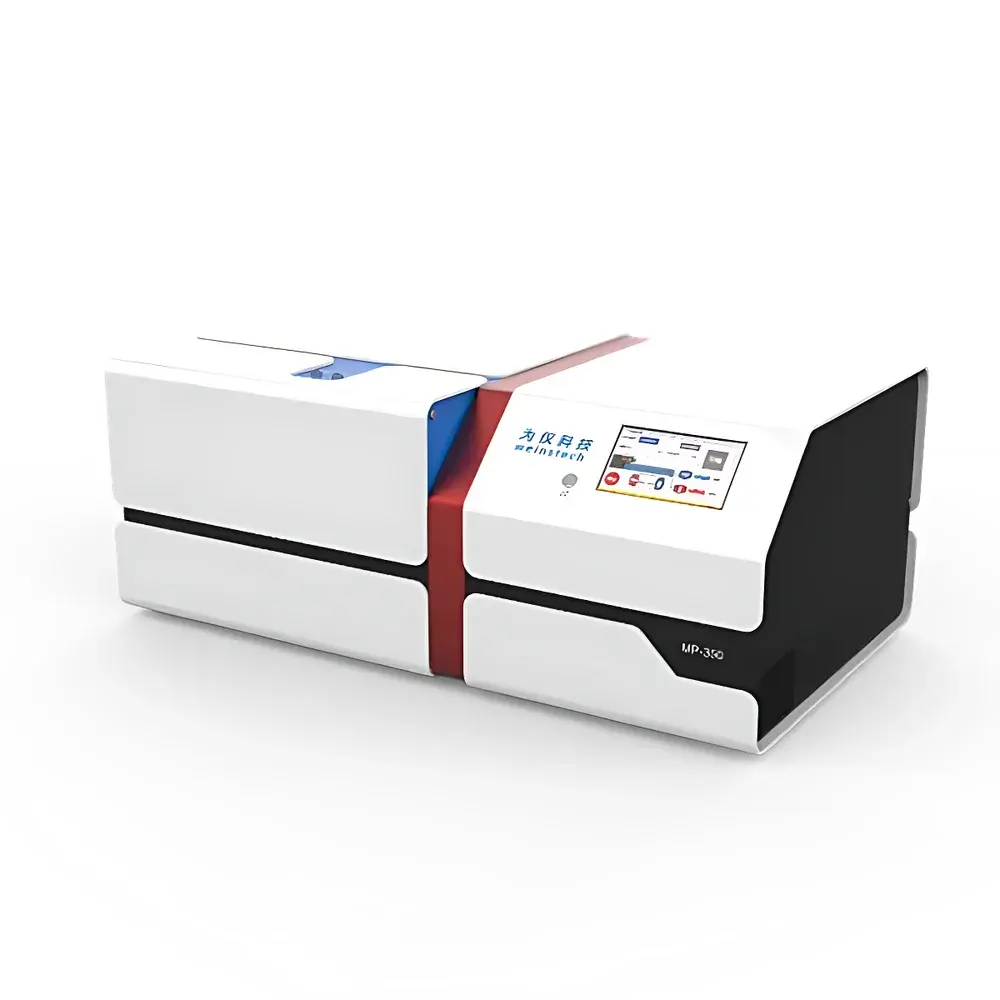
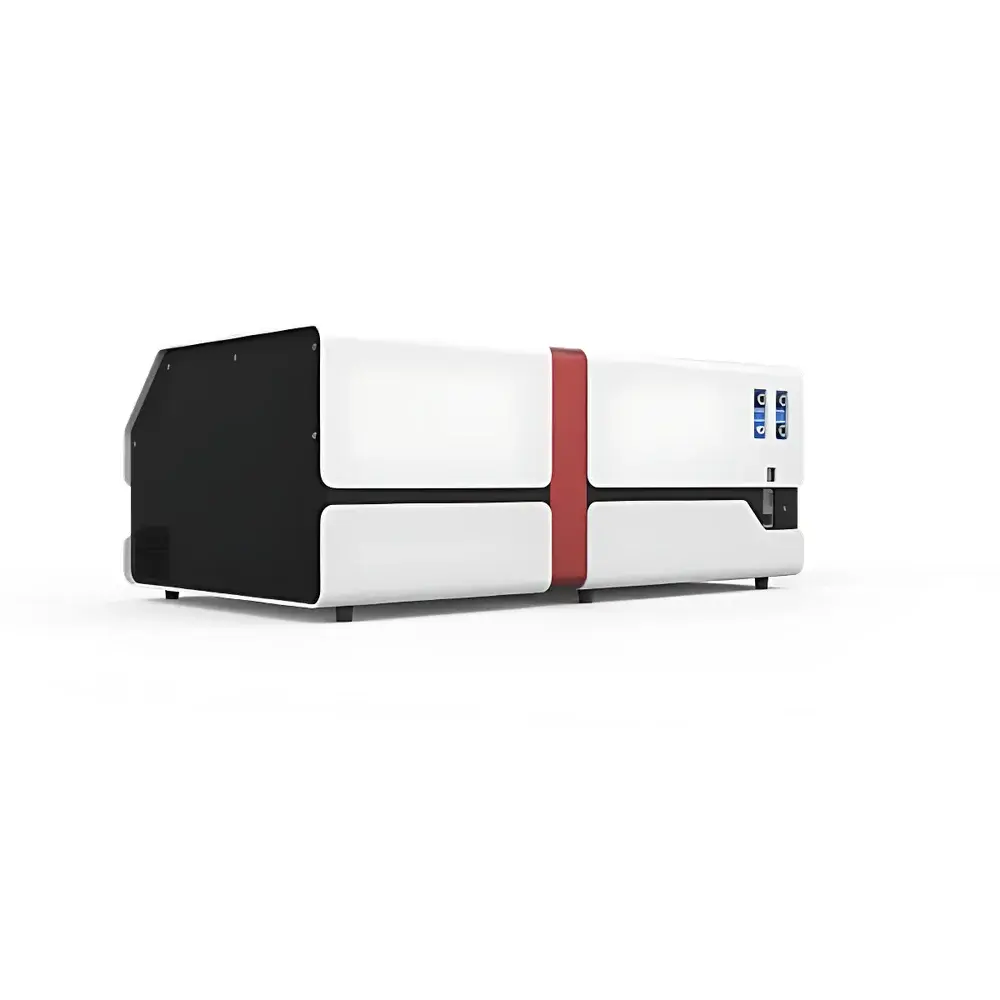
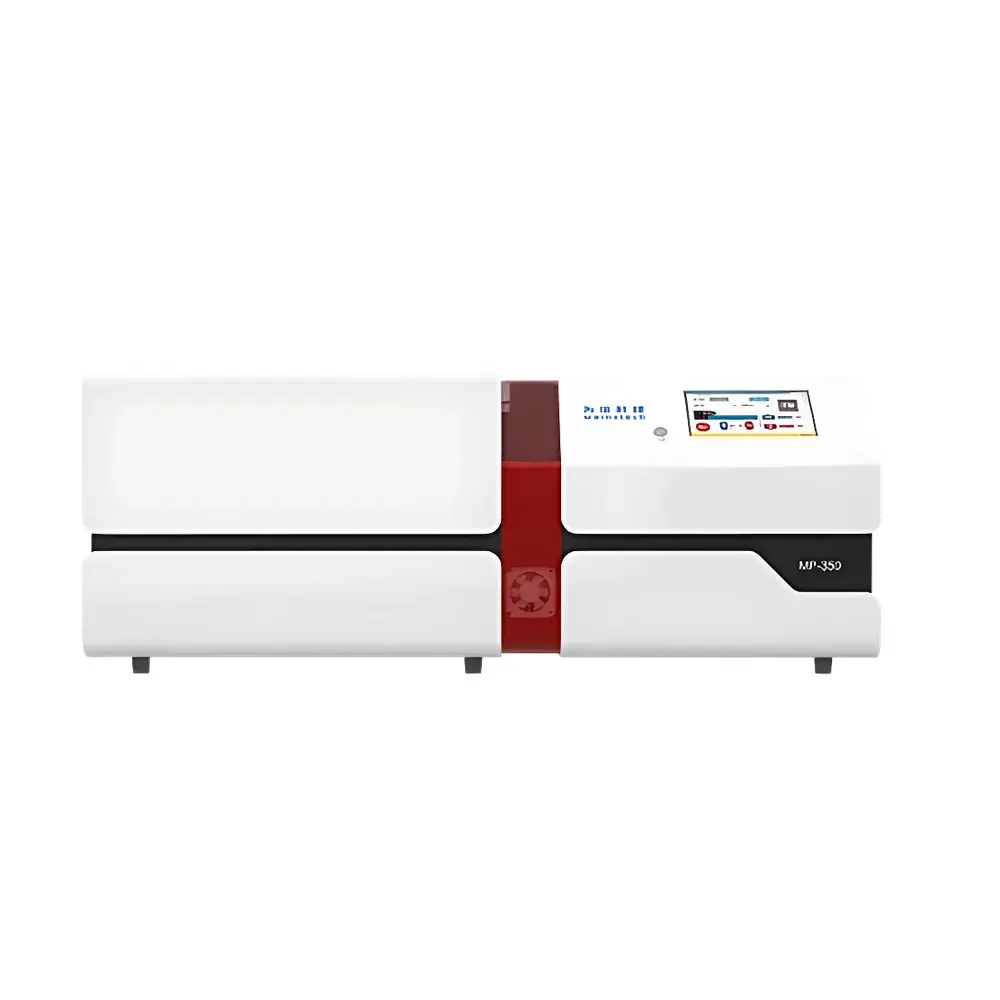
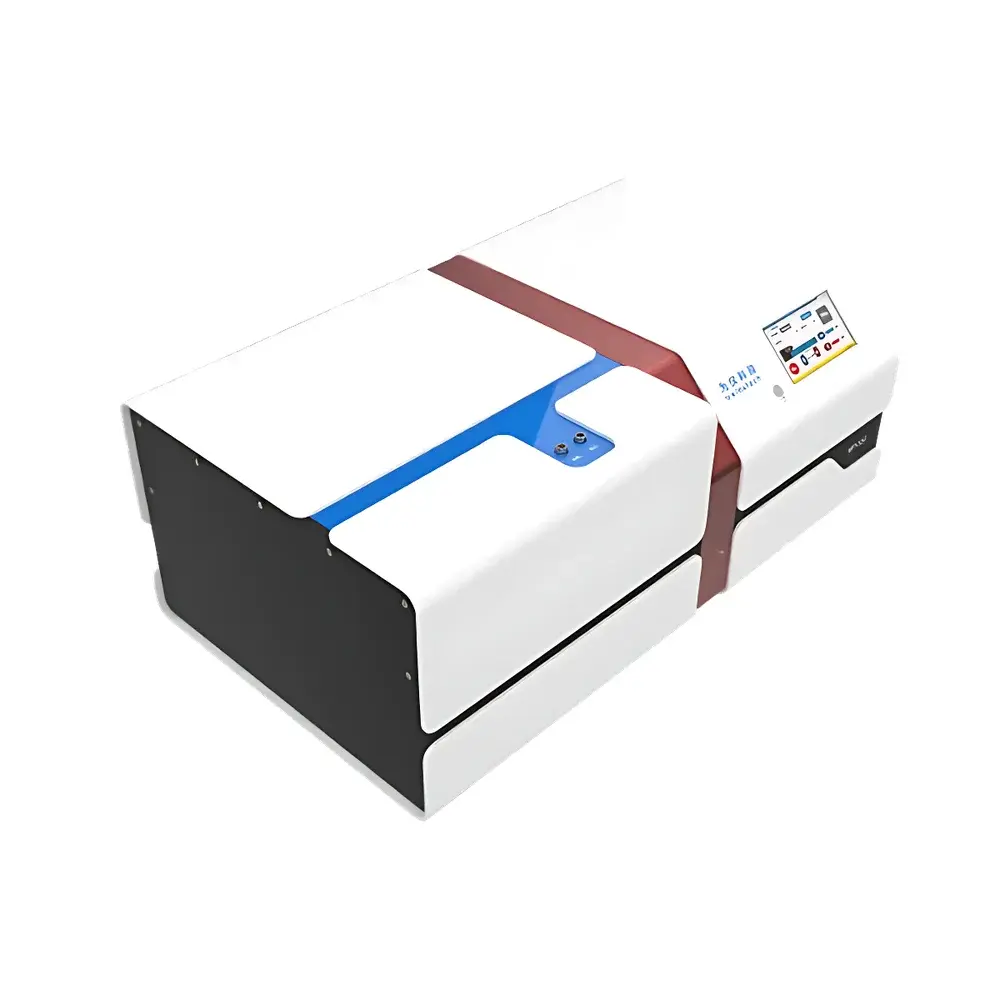
Weinstech MP-350 High-Pressure Constant-Pressure Booster Controller
| Brand | Weinstech |
|---|---|
| Origin | Sichuan, China |
| Manufacturer Type | Authorized Distributor |
| Country of Origin | China |
| Model | MP-350 |
| Pressure Range | Up to 350 bar (35 MPa, 5143 psi) |
| Working Medium | Non-corrosive gases (e.g., N₂, Ar, H₂, CH₄, CO₂) |
| Control Mode | Dynamic pressure regulation & static high-pressure hold |
| Pressure Resolution | ±0.01 bar |
| Pressure Accuracy | ±0.025% FS |
| Piston Volume | 50 mL |
| Dimensions (L×W×H) | 950 × 555 × 360 mm |
| Weight | 60 kg |
| Power Supply | 200–240 VAC, 50/60 Hz |
| Safety Features | Dual-stage overpressure protection, integrated rupture disc, real-time pressure fault monitoring |
| Interface | RS485, Ethernet, USB |
Overview
The Weinstech MP-350 High-Pressure Constant-Pressure Booster Controller is an engineered solution for precision gas pressurization and dynamic pressure stabilization in research-grade high-pressure environments. Designed around a dual-piston, oil-free pneumatic intensifier architecture, the MP-350 operates on the principle of force multiplication—using low-pressure drive gas (typically 5–10 bar) to generate and maintain stable output pressures up to 350 bar (35 MPa). Unlike static pressure sources, the MP-350 actively monitors system pressure via a high-stability piezoresistive transducer and continuously adjusts booster actuation in real time to compensate for volumetric changes induced by sample behavior—such as gas adsorption, desorption, catalytic consumption, or phase transitions in clathrate hydrates or energetic materials. This closed-loop control ensures thermodynamic consistency during calorimetric, kinetic, or equilibrium studies where pressure drift would otherwise introduce systematic error in enthalpy, reaction rate, or phase boundary determination.
Key Features
- Dynamic pressure regulation with ±0.01 bar resolution and ±0.025% full-scale accuracy, enabling reproducible isobaric conditions across extended experimental durations (hours to days)
- Modular intensifier design supporting field-upgradable pressure capability—configurable for future operation at 600 bar or 1000 bar with certified component replacement
- Integrated 7-inch industrial touchscreen HMI with intuitive graphical interface for standalone operation, including real-time pressure trend plotting, alarm history, and manual override modes
- Bi-directional digital communication via RS485 and Ethernet protocols—fully interoperable with Weinstech DMC-300 and DMC-196 isothermal titration and reaction calorimeters, enabling synchronized pressure setpoint triggering and data logging
- Comprehensive safety architecture: redundant pressure sensors, hardware-limited solenoid cutoff valves, temperature-monitored booster head, and ASME-compliant rupture disc assembly rated for 420 bar burst pressure
- Standardized 1/4″ VCR and 3/8″ NPT ports compliant with ISO 8573-1 Class 2 compressed air/gas purity requirements; compatible with stainless-steel tubing, Swagelok fittings, and high-pressure view cells from third-party vendors
Sample Compatibility & Compliance
The MP-350 is validated for use with non-corrosive, dry, particle-free gases—including nitrogen, argon, hydrogen, methane, carbon dioxide, and synthetic air—within ambient temperature ranges of 15–35°C. It is not rated for use with halogenated compounds, ammonia, hydrogen sulfide, or any condensable vapors. The system meets CE marking requirements under the EU Machinery Directive 2006/42/EC and Pressure Equipment Directive 2014/68/EU (PED Category IV for 350 bar service). All pressure-bearing components are traceably manufactured from ASTM A269 TP316L stainless steel, with welds inspected per ASME BPVC Section IX. For regulated laboratory environments, the MP-350 supports audit-ready electronic logs (time-stamped pressure events, operator ID, configuration changes) aligned with GLP and FDA 21 CFR Part 11 data integrity expectations when paired with compliant host software.
Software & Data Management
The MP-350 communicates natively with Weinstech’s CaloSoft™ v4.x platform, allowing remote configuration of ramp rates, hold durations, PID tuning parameters, and safety interlock thresholds directly from a Windows-based workstation. Exported pressure logs are timestamped in UTC, formatted as CSV with millisecond resolution, and include metadata fields (experiment ID, operator, ambient T/P, firmware version). Optional OPC UA server integration enables seamless data ingestion into LabArchives ELN, DeltaV DCS, or MATLAB-based analysis pipelines. Firmware updates are delivered via signed .bin files with SHA-256 verification to ensure runtime integrity and prevent unauthorized modification.
Applications
- Gas Hydrate Thermodynamics: Precise isobaric formation/dissociation studies of methane, CO₂, or mixed-gas hydrates in sapphire high-pressure cells coupled to microcalorimeters
- Catalytic Reaction Calorimetry: Maintaining constant partial pressure of H₂ or CO during Fischer–Tropsch or methanation kinetics experiments while measuring heat flow in real time
- Energetic Materials Stability Testing: Monitoring pressure evolution during thermal decomposition of propellants or explosives under controlled 100–350 bar inert atmospheres
- Adsorption Isotherm Mapping: Automated multi-point pressure stepping for BET and Langmuir modeling of MOFs, activated carbons, or zeolites using gravimetric or volumetric manometry interfaces
- Hydrogen Storage Characterization: Cyclic charge/discharge testing of metal hydrides or porous scaffolds under realistic refueling pressure profiles (0 → 350 bar in <60 s)
FAQ
What drive gas pressure is required to achieve 350 bar output?
A regulated supply of clean, dry instrument air or nitrogen at 7–10 bar (100–145 psi) is required at the MP-350’s drive inlet.
Can the MP-350 be used with corrosive gases like HCl or Cl₂?
No. The standard wetted materials (316L SS, FKM seals, alumina ceramic transducers) are incompatible with oxidizing or acidic gases. Custom configurations with Hastelloy C-276 and Kalrez® seals require prior engineering review.
Does the system support automated pressure ramps (e.g., linear or exponential profiles)?
Yes—ramp rates from 0.01 to 10 bar/min are programmable via CaloSoft™ or Modbus TCP commands, with configurable acceleration/deceleration limits to minimize hydraulic shock.
Is calibration traceable to national standards?
Factory calibration uses Fluke 754 Documenting Process Calibrators traceable to NIST, with optional annual recalibration certificates available (ISO/IEC 17025 accredited labs).
What maintenance intervals are recommended for continuous operation?
Piston seal inspection every 500 operating hours; drive gas filter replacement every 2000 hours; full system leak check and transducer zero/bias verification every 6 months.