
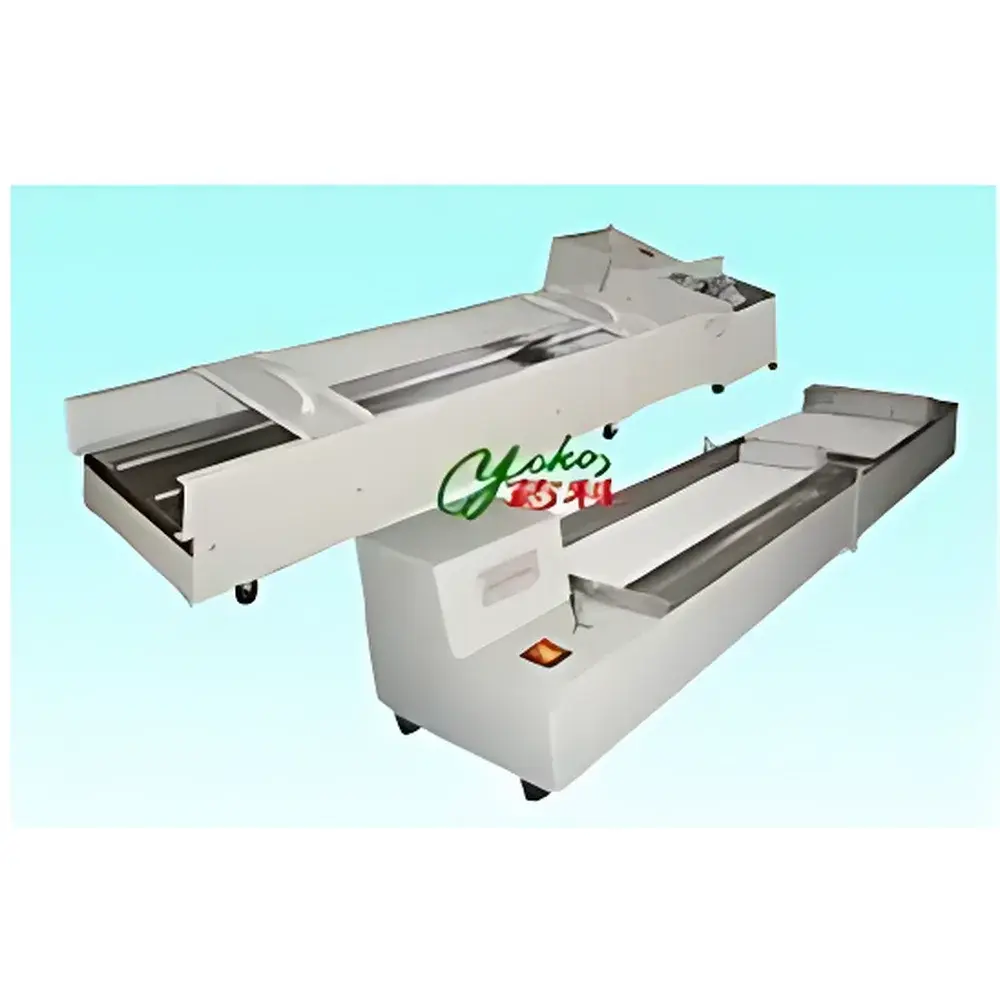
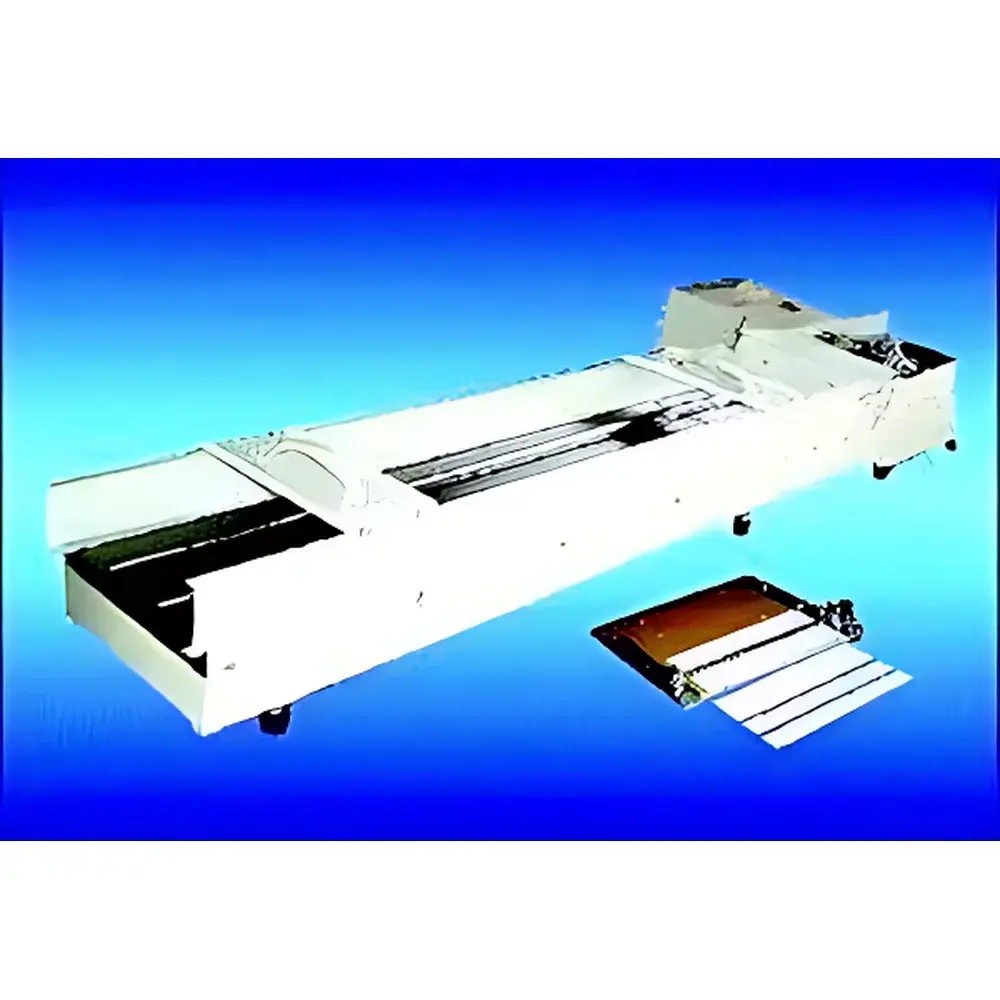
whYOKO BF-111 Automated Thin-Layer Chromatography (TLC) Coater
| Brand | whYOKO |
|---|---|
| Origin | Hubei, China |
| Manufacturer Type | Authorized Distributor |
| Instrument Type | Preparative TLC Coater |
| Operation Mode | Fully Automatic |
| Wavelength Range | 200–700 nm |
| Wavelength Accuracy | ±1 nm |
| Coating Thickness Adjustment | 0.05–2.0 mm |
| Non-Parallelism Tolerance | ≤0.04 mm |
| Throughput | 210 plates (200 × 200 mm) per 10 minutes |
| Traverse Speed | 4.2 m/min |
| Power Consumption | 90 W (BF-111) |
| Dimensions (L×W×H) | 340 × 130 × 190 mm |
| Plate Compatibility | 100 × 100 mm to 200 × 200 mm |
| Coating Frame Material | Anodized Aluminum with Powder Coating |
| Compliance | Designed for GLP-compliant laboratory environments |
Overview
The whYOKO BF-111 Automated Thin-Layer Chromatography (TLC) Coater is a precision-engineered instrument designed for the reproducible, uniform deposition of stationary-phase slurries onto glass, aluminum, or plastic-backed chromatographic plates. Unlike manual spreading techniques or semi-automated systems prone to edge voids, thickness variation, and slurry leakage, the BF-111 employs a motor-driven, linear-motion coating frame with micrometer-adjustable gap control to deliver consistent layer thickness across the full plate surface. Its operational principle relies on controlled volumetric displacement via calibrated gap geometry and constant traverse velocity—ensuring adherence to fundamental thin-layer preparation requirements defined in ASTM D6299 and ISO 17025-accredited analytical workflows. The device supports both analytical-scale (e.g., 10 × 10 cm, 10 × 20 cm) and preparative-scale (e.g., 20 × 20 cm) plate formats, making it suitable for routine quality control, method development, and small-batch purification in regulated and research settings.
Key Features
- Fully automatic, continuous-coating operation with programmable traverse speed (4.2 m/min) and real-time gap calibration for thickness control from 0.05 mm to 2.0 mm
- High-precision anodized aluminum coating frame with powder-coated finish—corrosion-resistant, lightweight, and thermally stable during extended use
- Micrometer-based gap adjustment mechanism enabling sub-0.01 mm resolution; validated non-parallelism ≤0.04 mm across 200 mm width
- Dual-mode compatibility: optimized for both analytical TLC (0.2–0.5 mm layers) and preparative TLC (0.6–0.9 mm layers), minimizing cracking during solvent evaporation
- Integrated spirit level and adjustable leveling feet ensure horizontal alignment prior to each coating cycle—critical for uniform solvent front migration
- Robust architecture rated for uninterrupted 24-hour operation; low-maintenance synchronous motor drive (40 W for BF-III configuration; 90 W for BF-111)
Sample Compatibility & Compliance
The BF-111 accommodates standard commercial TLC substrates—including silica gel 60 F254, alumina, cellulose, and reversed-phase C18 plates—on rigid glass (1–3 mm thickness), flexible aluminum foil, or polyester backing. It accepts slurry viscosities typical of aqueous, ethanol-, chloroform-, or toluene-based suspensions without clogging or uneven shear. All mechanical adjustments comply with ISO 8573-1 (compressed air purity class, where applicable) and are documented for auditability under GLP and GMP frameworks. While not an analytical detector itself, its wavelength range (200–700 nm) aligns with post-development UV visualization protocols per USP and EP 2.2.27, supporting integration into fully traceable chromatographic workflows.
Software & Data Management
The BF-111 operates as a standalone electromechanical system with no embedded firmware or proprietary software—eliminating cybersecurity risks and ensuring long-term serviceability without vendor lock-in. All operational parameters (gap setting, speed, plate count, date/time stamp) are manually recorded in laboratory notebooks or integrated into LIMS via standardized SOP documentation. Optional calibration logs—including daily horizontal verification using included spirit level and quarterly gap validation with certified gauge blocks—meet FDA 21 CFR Part 11 requirements when paired with electronic signature-enabled documentation systems. No cloud connectivity or remote diagnostics are implemented, preserving data sovereignty in high-security laboratories.
Applications
- Routine QC testing of pharmaceutical raw materials and finished products per ICH Q5A and Ph. Eur. 2.2.27
- Method development for forced degradation studies, stability-indicating assays, and impurity profiling
- Preparative isolation of natural product fractions prior to NMR or LC-MS analysis
- Forensic toxicology screening for drugs of abuse and metabolites in biological matrices
- Agricultural residue analysis in food commodities under SANTE/2023/1283 guidelines
- Teaching laboratories requiring robust, repeatable hands-on instruction in planar chromatography fundamentals
FAQ
Does the BF-111 require external vacuum or compressed air?
No. It operates solely on AC power and mechanical motion—no ancillary utilities are needed.
Can it coat plates with pre-applied binder layers (e.g., gypsum or calcium sulfate)?
Yes. The low-shear coating mechanism preserves binder integrity and prevents delamination during slurry application.
Is calibration traceable to national standards?
Gap calibration uses ISO 3650 gauge blocks; horizontal alignment is verified with a Class I spirit level conforming to ISO 7500-1.
What maintenance intervals are recommended?
Monthly visual inspection of guide rails and periodic cleaning of slurry contact surfaces with isopropanol; no lubrication required.
How does it compare to CAMAG’s ADC 2 system?
Both support continuous coating, but the BF-111 offers broader plate-size flexibility (100–200 mm width) and higher throughput (210 × 200 mm plates/10 min) at lower acquisition and lifecycle cost.





