
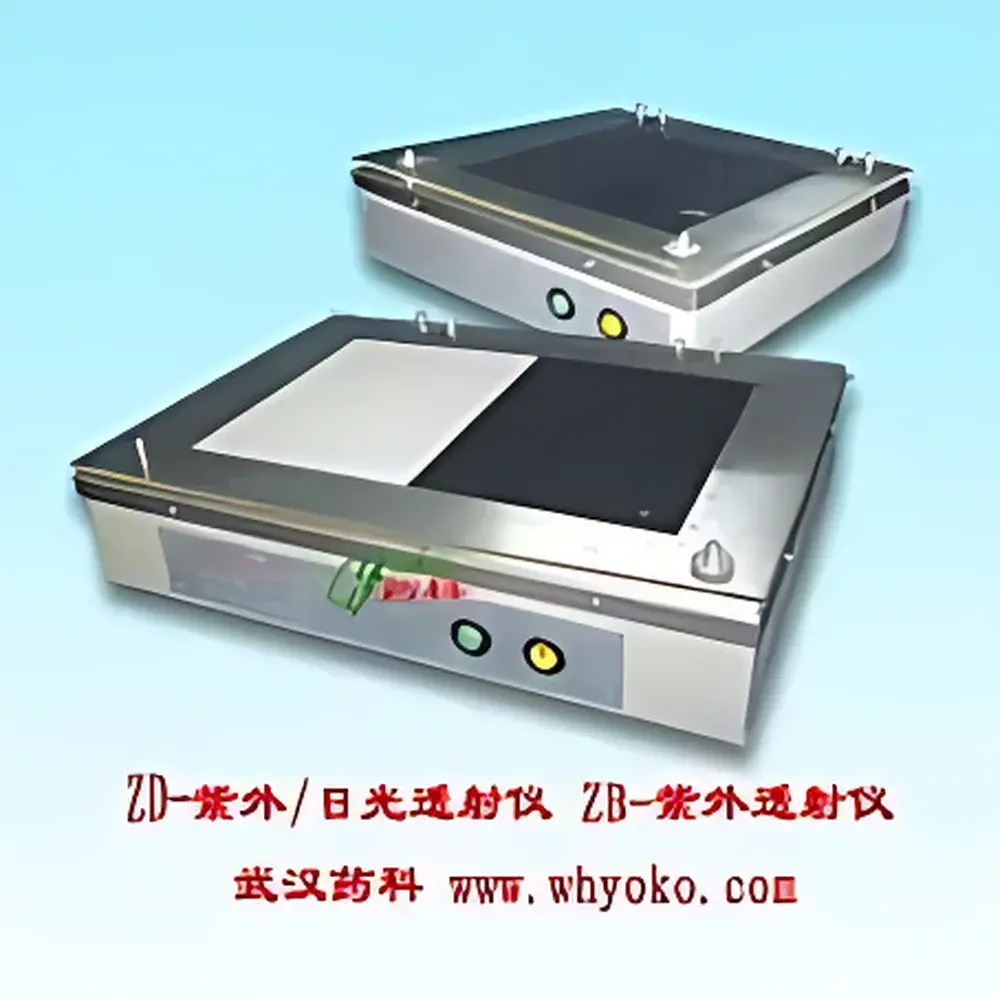
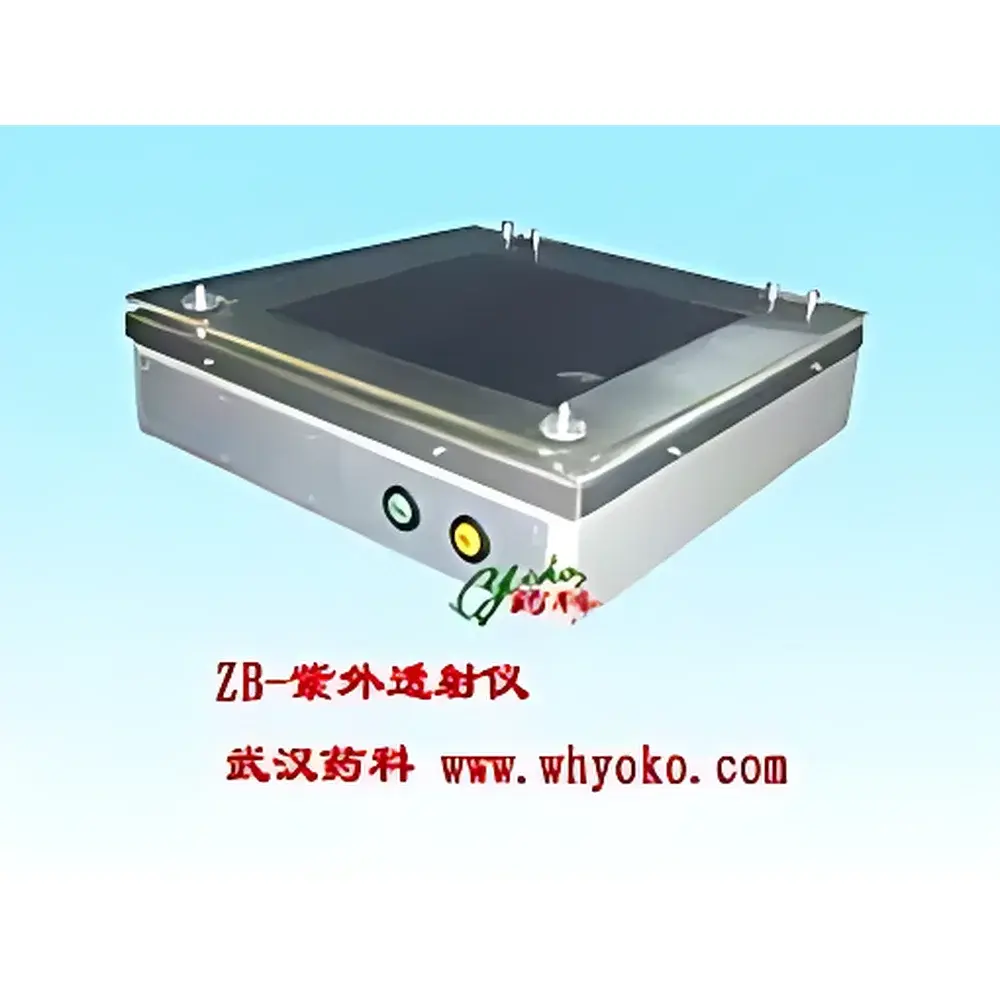
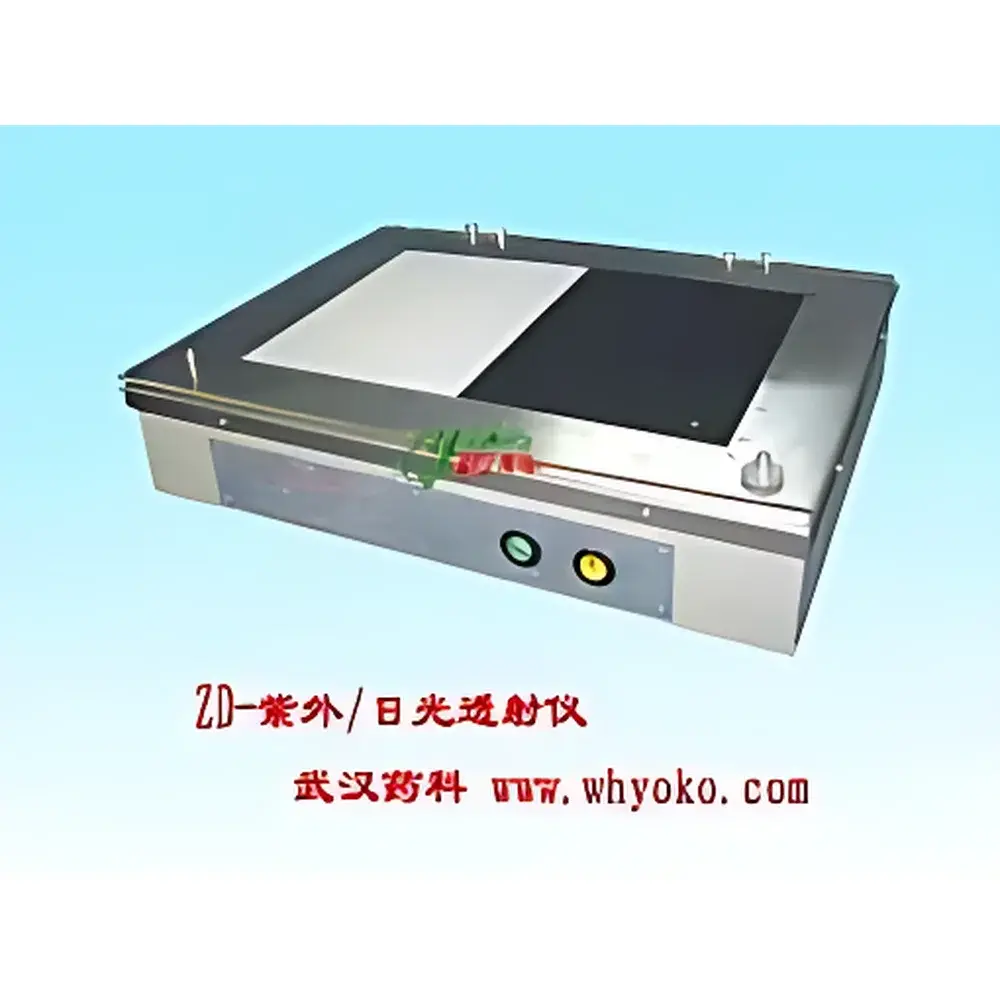
whYOKO ZB+ZD Dual-Mode UV/Visible Transilluminator for Thin-Layer Chromatography and Nucleic Acid Gel Visualization
| Brand | whYOKO |
|---|---|
| Origin | Hubei, China |
| Manufacturer Type | Authorized Distributor |
| Product Origin | Domestic (China) |
| Model | ZB + ZD |
| UV Lamps | 4 × 12 W U-shaped lamps (312 nm standard |
| UV Filter Dimensions | 200 mm × 200 mm (ZB), 200 mm × 150 mm (ZD) |
| UV Filter Transmission | ≥68% at 254 nm, ≥86% at 365 nm |
| Visible Lamp | 3 × 12 W U-shaped daylight lamp (380–700 nm) |
| White Diffuser Plate | 200 mm × 150 mm (ZD only) |
| Dimensions (ZB) | 300 × 300 × 90 mm |
| Dimensions (ZD) | 400 × 300 × 90 mm |
Overview
The whYOKO ZB+ZD Dual-Mode UV/Visible Transilluminator is a purpose-engineered optical visualization system designed for high-fidelity detection and documentation of analytes separated via thin-layer chromatography (TLC), polyacrylamide gel electrophoresis (PAGE), agarose gel electrophoresis, and native or denaturing nucleic acid/protein blotting. Unlike conventional single-wavelength transilluminators, this dual-unit configuration integrates two functionally distinct modules: the ZB unit—a dedicated ultraviolet transilluminator optimized for fluorescence excitation of ethidium bromide, SYBR® Safe, GelRed®, and analogous DNA/RNA intercalating dyes under 312 nm irradiation—and the ZD unit—a hybrid UV/visible transilluminator supporting both UV-induced fluorescence (254 nm, 312 nm, or 365 nm) and broadband visible-light transmission (380–700 nm) for Coomassie-stained proteins, Ponceau S membranes, or unstained carbohydrate zones on silica gel TLC plates. The instrument operates on the principle of controlled transmissive illumination: UV photons excite fluorophores embedded in gels or chromatographic layers, while visible light enables label-free contrast enhancement of chromophoric analytes without photobleaching or UV-induced DNA damage during prolonged observation.
Key Features
- Dual-module architecture: Independent ZB (UV-only) and ZD (UV + visible) units allow concurrent or sequential operation—eliminating cross-contamination risk between UV-sensitive and visible-light workflows.
- High-efficiency U-shaped UV lamps: Four 12 W lamps (ZB) and three 12 W lamps (ZD) deliver uniform irradiance across active areas; spectral output certified per IEC 62471 for UV hazard classification.
- Optimized optical filtration: Precision-cut quartz-based UV filters with ≥68% transmission at 254 nm and ≥86% at 365 nm ensure maximum photon flux while blocking harmful short-wave UV-C and infrared leakage.
- Calibrated visible-light channel: Integrated 380–700 nm daylight lamps paired with matte-white diffuser glass (200 × 150 mm) provide consistent, glare-free illumination for non-fluorescent detection methods compliant with ASTM D3924-21 (standard practice for visual evaluation of chromatograms).
- Compact, benchtop form factor: Low-profile design (90 mm height) minimizes laboratory footprint; reinforced aluminum chassis ensures mechanical stability during camera-coupled imaging.
- Ergonomic safety interface: Removable UV-blocking acrylic shield (OD 4+ at 254 nm) with integrated handle meets EN 60825-1 laser product safety equivalency requirements for Class 1 enclosed UV systems.
Sample Compatibility & Compliance
The ZB+ZD system supports standard analytical formats including 10 × 10 cm, 10 × 20 cm, and 20 × 20 cm TLC plates (silica gel 60 F254, alumina, cellulose), minigels (up to 15 × 15 cm), and Western/Northern blot membranes. Its optical geometry conforms to ISO 10993-5 cytotoxicity assay validation requirements when used with ethidium bromide–stained gels. For regulated environments, the instrument’s stable output and reproducible intensity profile support GLP-compliant documentation per OECD Guidelines 117 and 406, particularly in pharmaceutical impurity profiling and biologics purity assessment. While not FDA 21 CFR Part 11–certified as standalone hardware, audit trails generated via connected imaging software (e.g., ImageLab™, AlphaView SA) may be validated within a qualified laboratory information management system (LIMS).
Software & Data Management
The ZB+ZD transilluminator functions as an illumination source—not a digital imager—and therefore requires integration with third-party CCD or CMOS-based gel documentation systems. It is fully compatible with industry-standard acquisition platforms including Bio-Rad ChemiDoc™, Syngene G:BOX, and UVP VisionWorks LS. When paired with validated software, the system supports metadata tagging (wavelength, exposure time, filter ID), image calibration using NIST-traceable grayscale standards, and export of TIFF/PNG files with embedded EXIF metadata for long-term archival per ISO 16067-1. No proprietary firmware or cloud connectivity is included; all operational parameters are manually adjusted via front-panel switches—ensuring full traceability and eliminating cybersecurity vulnerabilities associated with networked instrumentation.
Applications
- Routine QC of oligonucleotide synthesis products via TLC under 254 nm UV.
- Verification of PCR amplicon size and integrity in molecular diagnostics labs.
- Monitoring enzymatic digestion efficiency in restriction mapping workflows.
- Quantitative densitometry of glycoprotein bands on PAS-stained SDS-PAGE gels using visible-light mode.
- Documentation of pesticide residue separation on reversed-phase C18 TLC plates under 365 nm UV.
- Teaching laboratories requiring safe, low-heat UV exposure for undergraduate biochemistry courses (312 nm reduces thymine dimer formation vs. 254 nm).
FAQ
Can the ZB and ZD units operate simultaneously?
Yes—the ZB and ZD modules are electrically isolated and feature independent power switches and lamp controls, enabling parallel use without spectral interference.
Is the 312 nm wavelength suitable for SYBR® Gold staining?
Yes—312 nm provides optimal excitation efficiency for SYBR® Gold, SYBR® Green I, and GelGreen® with lower photodamage than 254 nm, preserving sample integrity for downstream cloning or sequencing.
Does the instrument include a camera or imaging software?
No—the ZB+ZD is a dedicated illumination platform only. A separate digital imaging system must be procured and calibrated for quantitative analysis.
What safety certifications apply to this device?
It complies with IEC 61010-1 (electrical safety), IEC 62471 (photobiological safety for UV lamps), and EN 60598-1 (luminaire construction). Full CE marking documentation is available upon request.
Can the UV filters be replaced with custom bandpass options?
Yes—whYOKO offers OEM-compatible replacement filters for 220 nm, 280 nm, and 470 nm excitation; contact technical support for spectral transmission reports and mounting specifications.





