
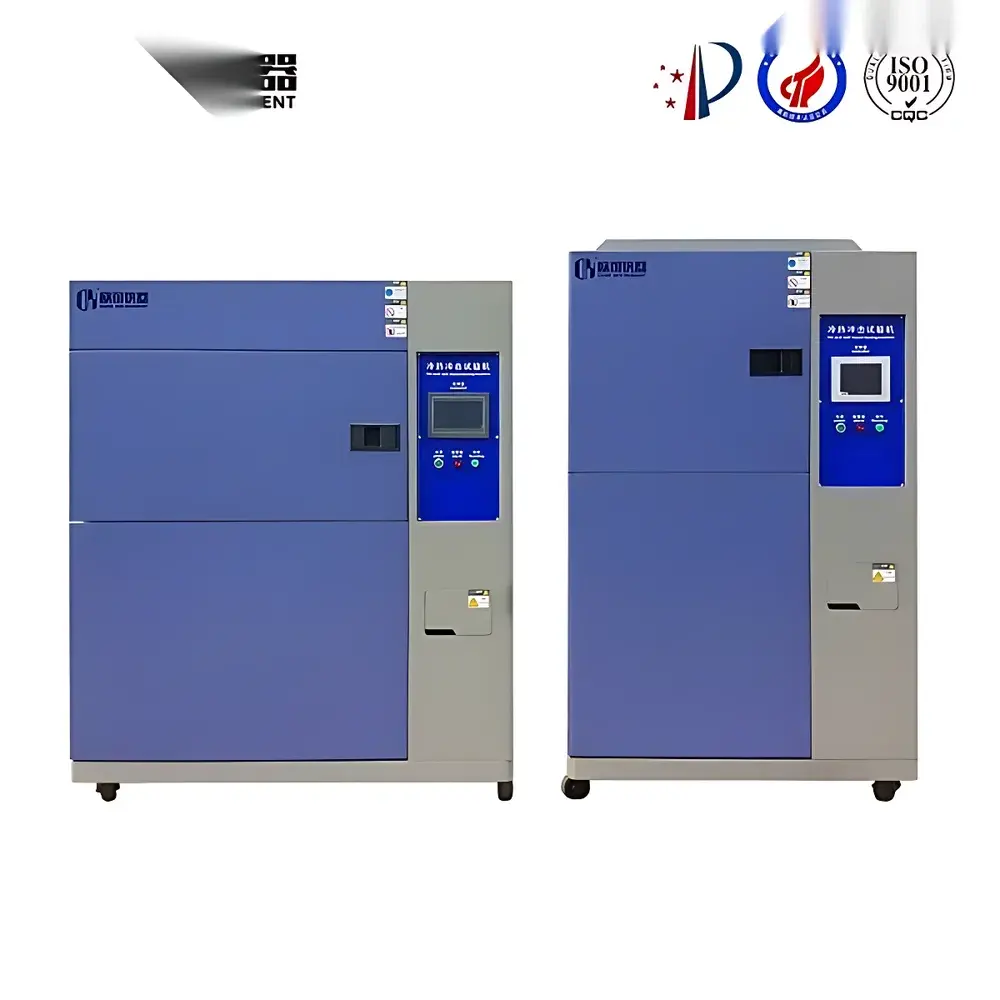
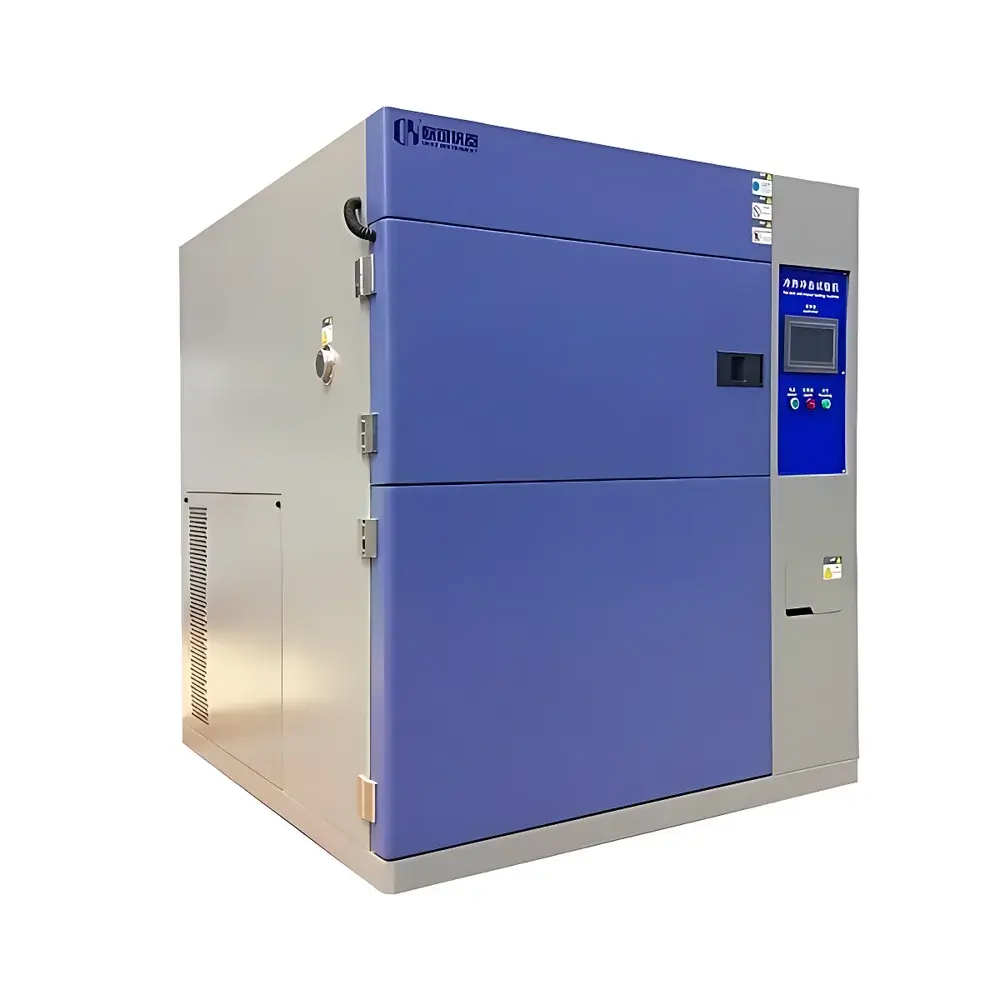
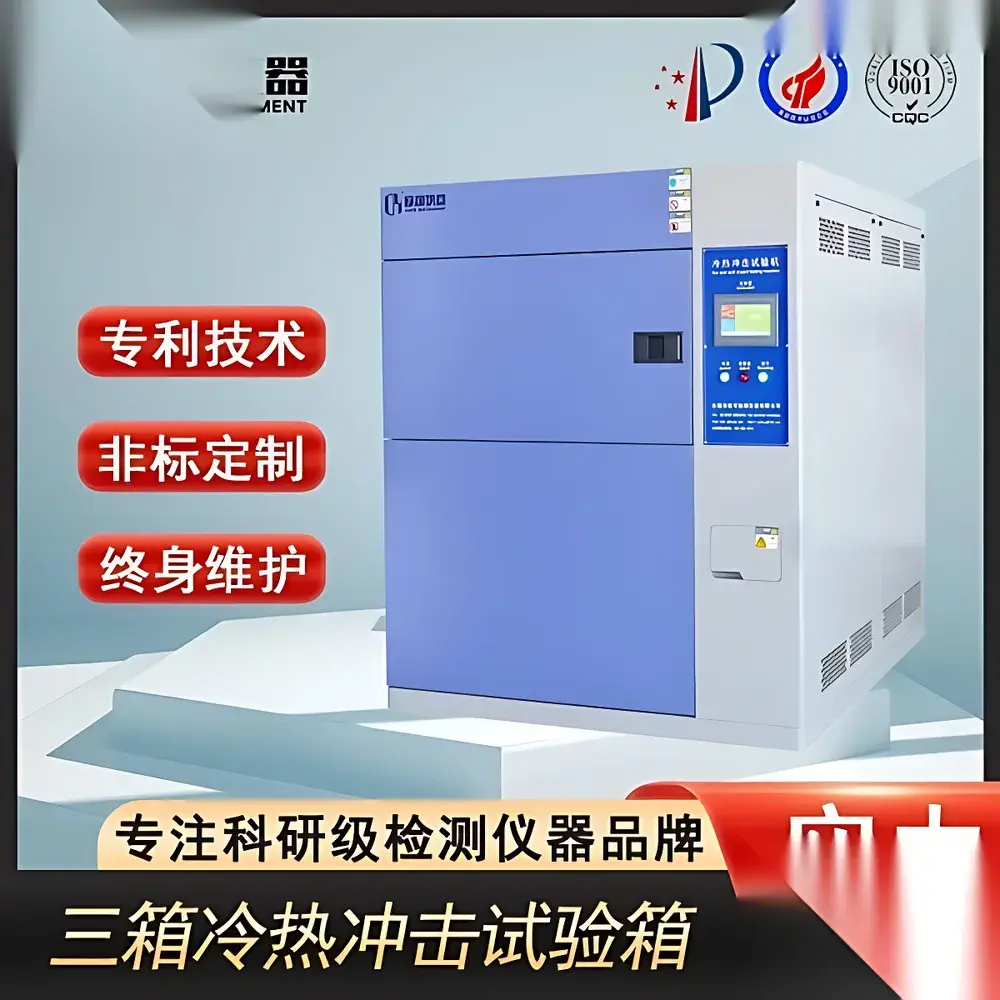
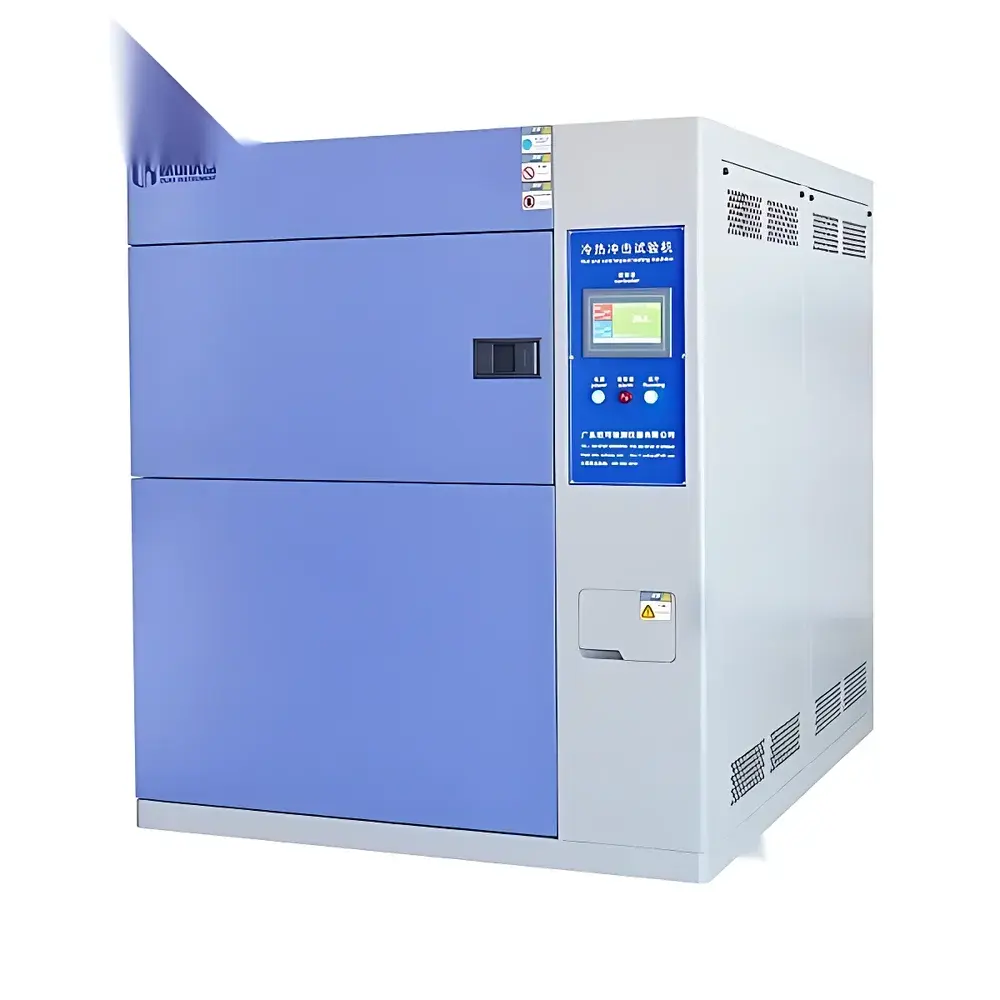
Wind-Cooled Thermal Shock Test Chamber
| Brand | Other Brands |
|---|---|
| Origin | Imported |
| Manufacturer Type | General Distributor |
| Temperature Range | Low Temp Options: +25°C / 0°C / −20°C / −40°C / −60°C / −70°C |
| High Temp Options | 100°C / 150°C |
| Humidity Range | 5–98% RH (optional) |
| Temperature Resolution & Uniformity | 0.1°C / ±2.0°C |
| Humidity Resolution & Uniformity | 0.1% RH / ±3.0% RH |
| Temperature Control Accuracy | ±0.5°C / ±2.5% RH |
| Heating Rate | ~4.0°C/min |
| Cooling Rate | ~1.0°C/min |
| Interior/Exterior Material | SUS304 Stainless Steel |
| Refrigeration System | French Tecumseh Compressor with R404A Eco-Friendly Refrigerant |
| Viewing Window | Double-layered, anti-fog heated tempered glass with LED lighting |
| Controller | Imported LCD touchscreen interface supporting multi-segment programmable ramp/slope and step profiles |
| Structural Features | Rounded ergonomic housing, flat non-reactive door handle, double-gasketed airtight door seal, adjustable stainless steel shelves, external test port for signal/power feedthrough, integrated casters with locking mechanism |
| Optional Functions | External water supply system with automatic condensate recovery, humidity control capability |
Overview
The Wind-Cooled Thermal Shock Test Chamber is an engineered environmental simulation system designed to evaluate material integrity and functional reliability under rapid, repeated transitions between extreme high- and low-temperature conditions. Operating on the principle of forced-air thermal transfer—without reliance on liquid coolant circuits—the chamber delivers precise, repeatable thermal shock profiles essential for validating product robustness in aerospace, defense, automotive electronics, semiconductor packaging (e.g., BGA, IC substrates), and advanced polymer applications. Unlike immersion-based or liquid nitrogen-assisted systems, this wind-cooled architecture eliminates cryogenic handling risks and simplifies facility integration while maintaining compliance with critical industry test standards including MIL-STD-810H Method 503.7 (Temperature Shock), IEC 60068-2-14 (Change of Temperature), and JEDEC JESD22-A104F. Its dual-zone configuration enables independent conditioning of hot and cold reservoirs, facilitating abrupt transfers via pneumatic or mechanical lift mechanisms—ensuring thermal transition times consistent with real-world operational stressors.
Key Features
- Robust SUS304 stainless steel construction for interior and exterior chambers, ensuring corrosion resistance, long-term dimensional stability, and compatibility with aggressive chemical environments during accelerated aging tests.
- Imported Tecumseh hermetic compressors paired with R404A refrigerant—a globally accepted, ozone-safe alternative meeting current EPA SNAP and EU F-Gas Regulation requirements—optimized for stable low-temperature performance down to −70°C.
- Multi-segment programmable controller with intuitive LCD touchscreen interface supports both Quick (step) and Slope (ramp) temperature/humidity profiles, enabling custom test sequences compliant with internal QA protocols or external audit frameworks such as ISO/IEC 17025.
- Double-glazed, electrically heated observation window with integrated LED illumination ensures continuous visual monitoring without condensation interference—critical for detecting physical anomalies (e.g., delamination, solder joint fracture, seal failure) during active cycling.
- Modular design includes standardized test ports (with silicone grommets), vertically adjustable stainless steel shelves, and lockable heavy-duty casters—facilitating seamless integration into production-line validation workflows or laboratory-scale qualification studies.
- Airtight dual-gasket door sealing system minimizes thermal leakage and maintains chamber uniformity per ASTM E145 Class I specifications, while the ergonomic flat-handle design complies with EN 61000-6-4 mechanical safety guidelines.
Sample Compatibility & Compliance
This chamber accommodates a broad spectrum of physical specimens—from miniature IC packages and PCB assemblies to structural metal components and elastomeric seals—within customizable internal dimensions. Its temperature range (−70°C to +150°C) and optional humidity control (5–98% RH) support testing per IPC-9701A (Performance Classes for Printed Board Interconnects), AEC-Q200 (Stress Test Qualification for Passive Components), and USP environmental monitoring validation protocols. All control logic incorporates timestamped audit trails, password-protected parameter modification, and non-volatile memory retention—aligning with FDA 21 CFR Part 11 requirements for electronic records and signatures in regulated GMP/GLP environments.
Software & Data Management
The embedded controller logs real-time temperature and humidity data at user-defined intervals (minimum 1-second resolution), exporting CSV-formatted files compatible with MATLAB, JMP, or LIMS platforms. Optional Ethernet or RS485 interfaces enable remote supervision via SCADA systems or centralized test farm management software. Calibration certificates traceable to NIST or PTB standards are available upon request, and firmware updates maintain alignment with evolving IEC 61000-4-30 power quality and thermal stability benchmarks.
Applications
- Qualification of solder interconnects and die-attach adhesives in high-reliability microelectronics
- Evaluation of coefficient of thermal expansion (CTE) mismatch effects in multilayer ceramic capacitors and MEMS devices
- Validation of protective coatings and encapsulants used in automotive ECUs exposed to desert-to-arctic duty cycles
- Accelerated life testing of lithium-ion battery modules under thermal cycling stress
- Material screening for cryogenic instrumentation housings in space-grade optical systems
- Process window definition for reflow soldering and vacuum brazing operations
FAQ
What is the typical thermal transition time between extreme temperatures?
Transition times depend on specimen mass and placement but typically achieve ≤15 seconds for air-to-air transfer between −40°C and +125°C zones under no-load conditions per IEC 60068-2-14 Annex B.
Can the chamber operate continuously in humidity mode during thermal shock cycles?
Yes—when equipped with the optional humidification system, it supports combined temperature-humidity shock testing per MIL-STD-810H Method 507.6, though dwell times at extreme humidity extremes may require extended stabilization periods.
Is third-party calibration and IQ/OQ/PQ documentation available?
Yes—factory-certified calibration reports and full validation packages (including Installation, Operational, and Performance Qualification protocols) are provided upon request and conform to ISO/IEC 17025 and ASTM E2207 practices.
How is refrigerant oil management handled in the compressor circuit?
The system integrates an oil separator and return line optimized for R404A’s miscibility characteristics, minimizing oil accumulation in evaporators and ensuring long-term cooling efficiency without manual intervention.
What safety certifications does the unit carry?
Standard configurations comply with CE marking (EN 61000-6-2/6-4, EN 61000-3-2/3-3), UL 61010-1, and RoHS 2011/65/EU directives; additional regional certifications (e.g., KC, PSE) can be arranged for export destinations.



