
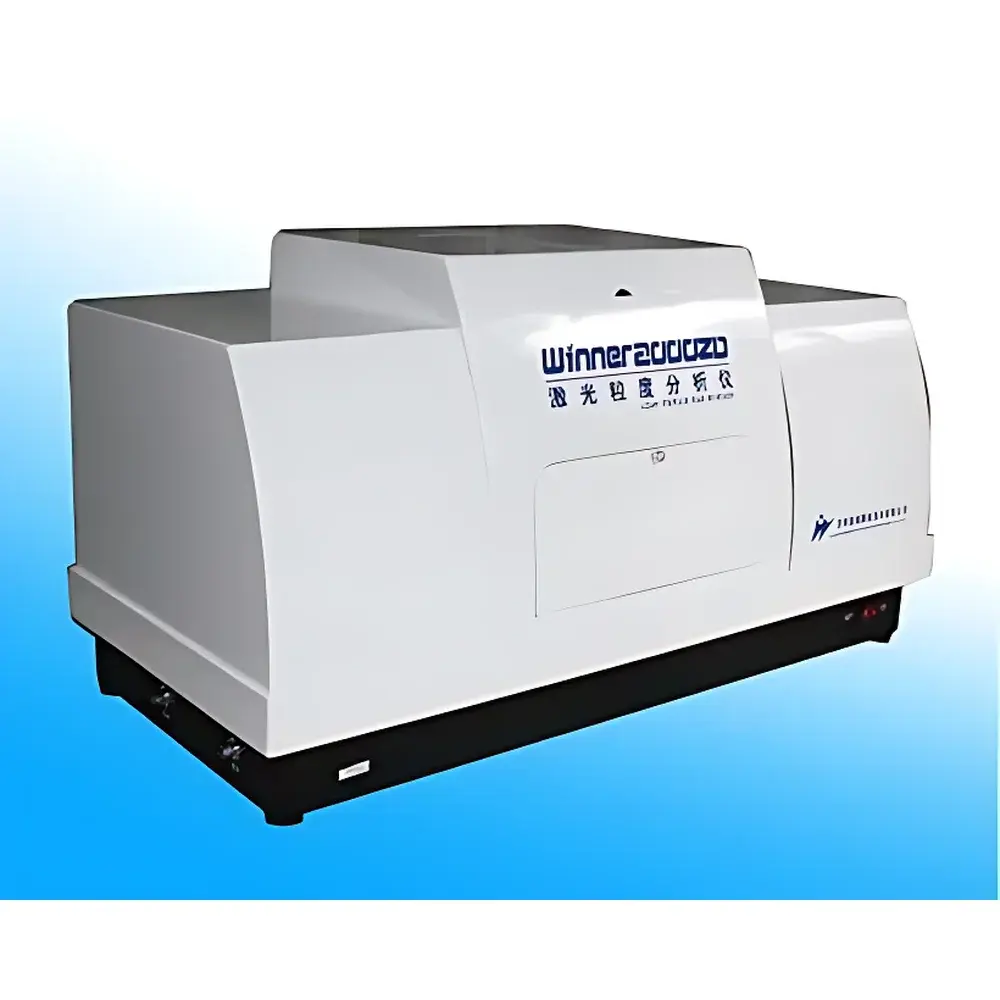

WinNano Winner603 Oil Particle Counter
| Brand | WinNano |
|---|---|
| Model | Winner603 |
| Measurement Principle | Light Obscuration (LO) |
| Particle Size Range | 1–200 µm |
| Repeatability | ≤5% at 10,000 particles/mL |
| Measurement Time | 30 s per sample |
| Dispersion Method | Wet Dispersion |
| Sample Volume | 5–100 mL (±1% accuracy) |
| Flow Rate | 5–25 mL/min |
| Operating Pressure Range | −0.1 to 0.7 MPa |
| Max. Fluid Viscosity | 350 mm²/s |
| Laser Source | Semiconductor laser, λ = 650 nm |
| Compliance Standards | NAS 1638, ISO 4406:1999 (GB/T 14039–2002), ISO 11218:1993 (GJB 420A–1996), DL/T 432–2007, ISO 11171:1999 (GB/T 18854–2002) |
Overview
The WinNano Winner603 Oil Particle Counter is a dedicated, benchtop optical particle counter engineered for quantitative assessment of solid particulate contamination in liquid lubricants and hydraulic fluids. It operates on the light obscuration (LO) principle—also known as the light blockage or photoelectric blocking method—in accordance with ISO 11171:1999 (adopted as GB/T 18854–2002 in China) for calibration traceability and ISO 4406:1999 (GB/T 14039–2002) for reporting. As particles suspended in a flowing fluid stream pass through a collimated laser beam (650 nm semiconductor source), each particle generates a transient reduction in detected light intensity proportional to its cross-sectional area. The amplitude and frequency of these voltage pulses are digitized and classified into user-defined size channels (e.g., ≥4 µm, ≥6 µm, ≥14 µm, ≥21 µm, ≥38 µm, ≥70 µm), enabling direct calculation of particle concentration (particles per milliliter) and assignment of standardized cleanliness codes per NAS 1638, ISO 4406, or GJB 420A.
Key Features
- Integrated dual-control fluid handling system combining a precision piston pump with ultra-stable electromagnetic flow regulation, ensuring volumetric accuracy better than ±1% and consistent flow rates from 5 to 25 mL/min.
- Self-contained sampling chamber with programmable positive/negative pressure control, supporting degassing of volatile samples and reliable analysis of high-viscosity oils up to 350 mm²/s.
- Onboard color LCD touchscreen interface with intuitive navigation—no external PC required for operation, data review, or report generation.
- Built-in thermal printer for immediate hard-copy output of particle counts, size distribution histograms, and certified contamination grade codes (e.g., ISO 4406:20/18/15).
- Optimized optical path design minimizing stray light and background noise; resolution validated to <10% relative standard deviation per ISO 11171 Annex B.
- Compliance-ready architecture: supports audit trails, user access levels, and electronic signature functionality aligned with GLP/GMP documentation practices.
Sample Compatibility & Compliance
The Winner603 is validated for use with mineral- and synthetic-based hydraulic oils, turbine oils, transformer (insulating) oils, gear oils, aviation fuels (Jet A-1, JP-8), engine oils, and non-aqueous solvents including polymer solutions and ester-based dielectric fluids. It meets the physical and metrological requirements specified in multiple international standards: NAS 1638 for aerospace hydraulic systems; ISO 4406:1999 for general industrial fluid cleanliness grading; GJB 420A–1996 (equivalent to ISO 11218:1993) for military aircraft hydraulic fluid classification; DL/T 432–2007 for power industry insulating oil testing; and ISO 11171:1999 for instrument calibration using NIST-traceable latex sphere suspensions. All internal wetted components are chemically resistant to common hydrocarbon and phosphate ester fluids.
Software & Data Management
Although fully functional as a standalone unit, the Winner603 supports optional USB and RS-232 connectivity for integration into centralized laboratory information management systems (LIMS). Raw pulse data and classified count tables are exportable in CSV format. Firmware includes configurable reporting templates compliant with ASTM D7619 and ISO 11171 Annex D requirements for calibration verification logs. Electronic records retain timestamps, operator ID, sample ID, and environmental metadata (temperature, pressure), satisfying FDA 21 CFR Part 11 expectations for electronic signatures and audit trail integrity when deployed in regulated environments.
Applications
This instrument serves critical condition monitoring and quality assurance functions across sectors where fluid cleanliness directly impacts system reliability and service life. In aerospace maintenance, it verifies compliance of hydraulic fluid prior to aircraft return-to-service. In power generation, it monitors particulate load in turbine and transformer oils to prevent dielectric breakdown and bearing wear. In heavy machinery and mobile hydraulics, it supports predictive maintenance by trending contamination levels against OEM-recommended thresholds. Additional applications include incoming inspection of new oil batches, filtration efficiency validation, and R&D studies of additive-induced particle generation or degradation byproducts in lubricant formulations.
FAQ
What particle size standards does the Winner603 calibrate against?
It follows ISO 11171:1999 using NIST-traceable polystyrene latex (PSL) reference materials, with calibration verification performed per Annex D protocols.
Can the instrument analyze opaque or highly colored oils?
Yes—the 650 nm red laser provides sufficient penetration depth for most mineral and synthetic base oils; however, strongly absorbing fluids (e.g., some coal-tar derivatives) may require dilution or alternative validation.
Is method validation support available for regulated laboratories?
WinNano provides IQ/OQ documentation templates, calibration certificates, and technical notes aligned with ISO/IEC 17025 and ASTM D7619 for method transfer and regulatory submission.
How is carryover minimized between samples?
The fluidic path features automated rinse cycles with programmable solvent flush volume and duration, validated to reduce residual particle carryover to <0.1% under worst-case conditions.
Does the system meet FDA 21 CFR Part 11 requirements?
When operated with enabled user authentication, electronic signature logging, and audit trail retention (via optional firmware module), it satisfies core Part 11 criteria for electronic records and signatures in pharmaceutical and medical device manufacturing settings.
Related Products



