
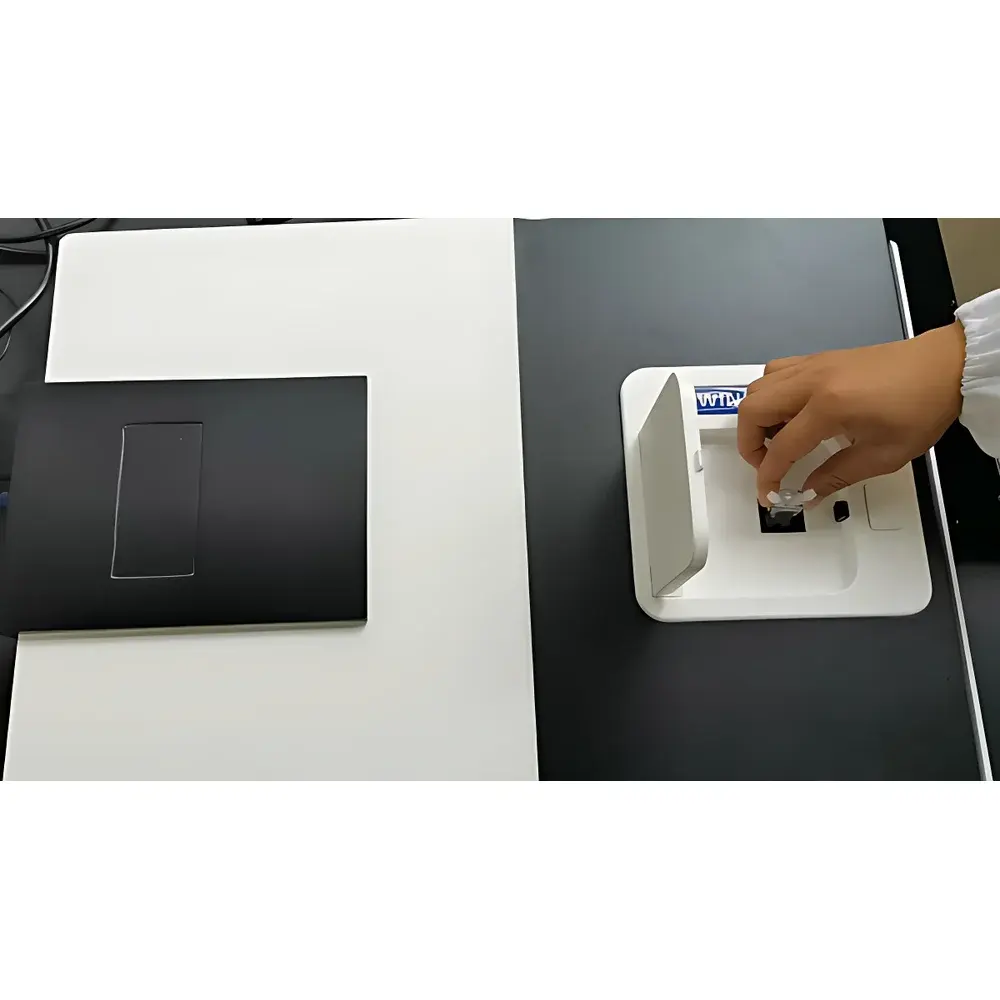
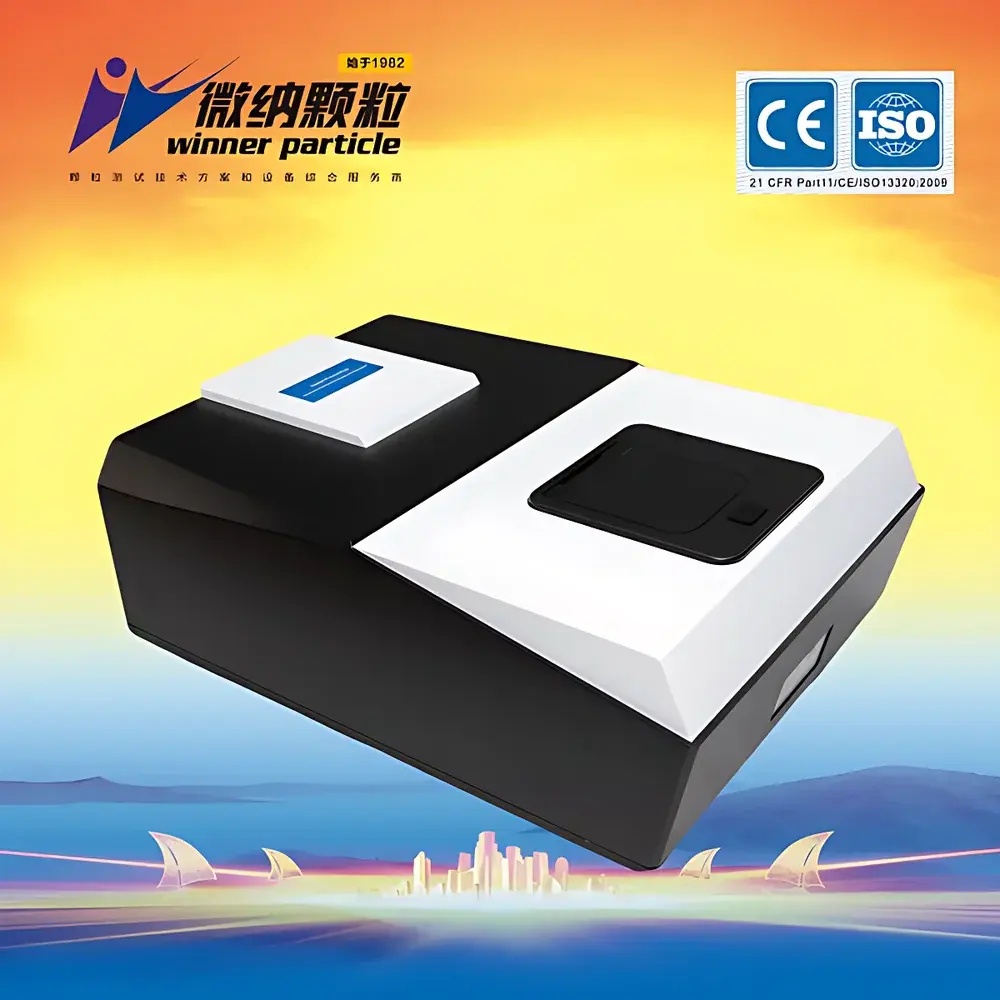
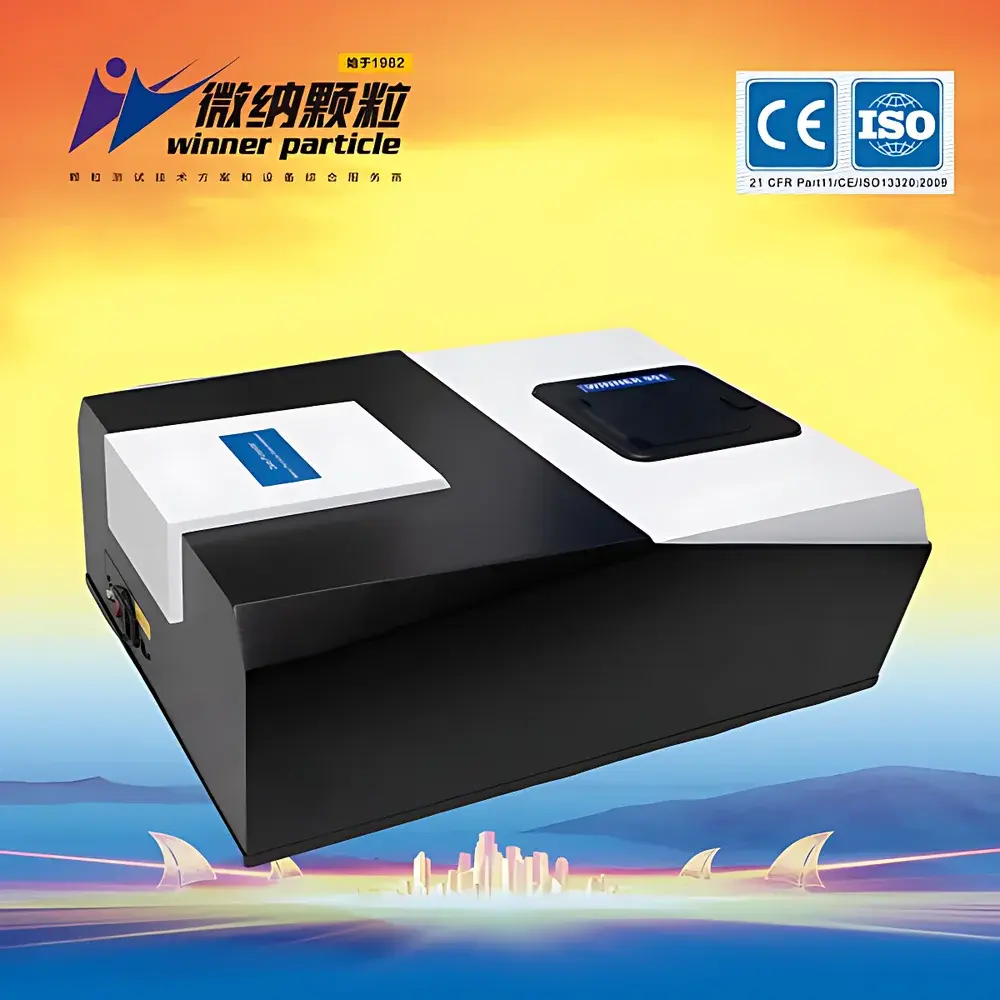
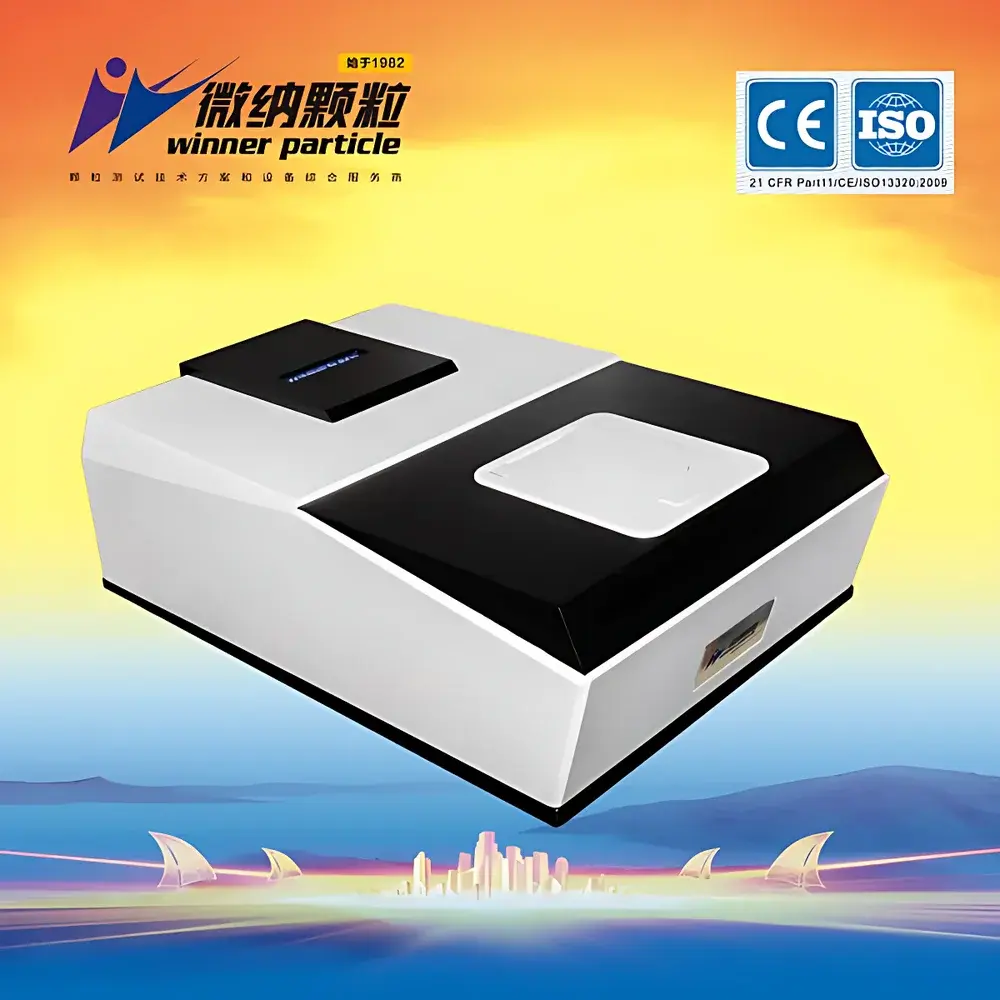
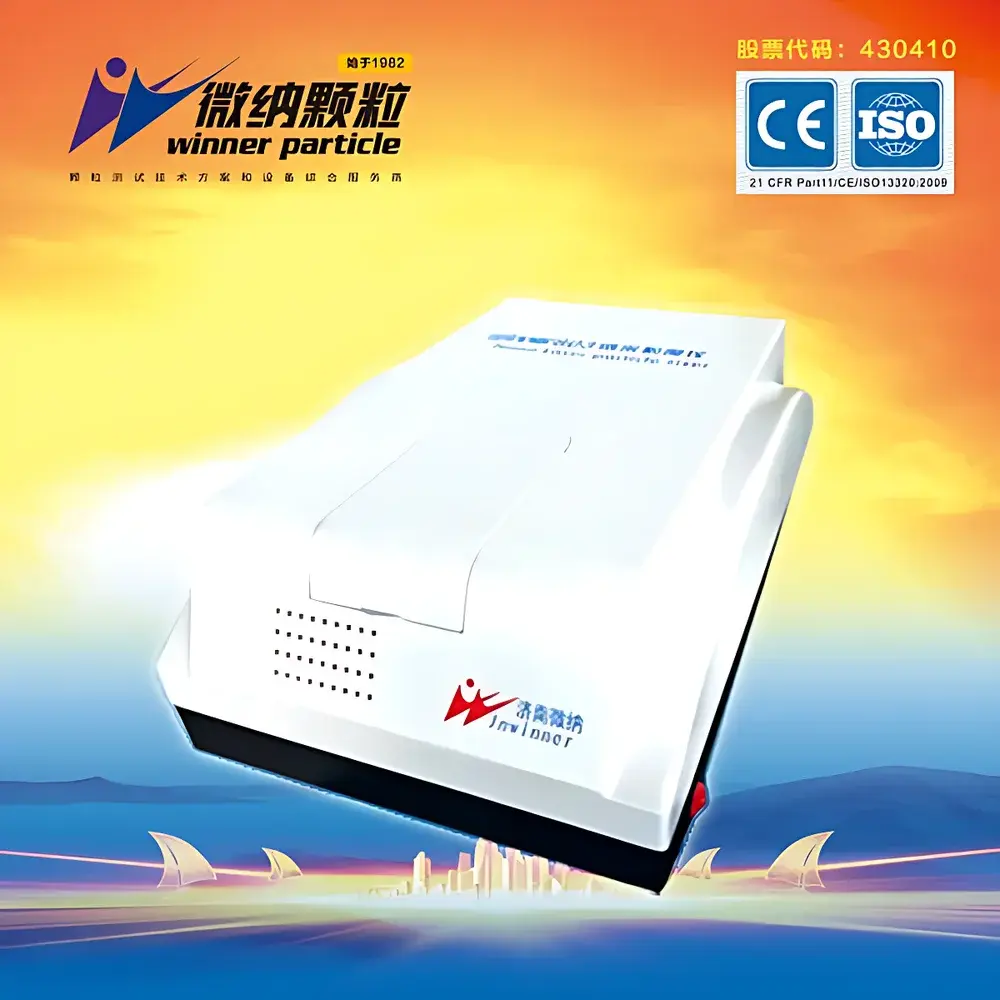
WinNano Zeta Potential & Nanoparticle Size Analyzer Winner601
| Brand | Jinan Winner |
|---|---|
| Origin | Shandong, China |
| Manufacturer Type | Direct Manufacturer |
| Country of Origin | China |
| Model | Winner601 |
| Price Range | USD 35,000–42,000 (FOB) |
| Zeta Potential Range | ±500 mV |
| Operating Temperature Range | 5–45 °C |
| Temperature Resolution | 0.1 °C |
| Accuracy | ≥85% (per ISO 22412:2017 reference materials) |
| Repeatability | ≥85% (intra-instrument, 10-run avg.) |
| Particle Size Range | 1–10,000 nm (sample-dependent) |
| Concentration Range | 0.1–100 mg/mL (sample-dependent) |
| Electrophoretic Mobility Range | > ±20 µm·cm/V·s |
| Max. Conductivity | 200 mS/cm |
| Laser Source | Semiconductor diode, λ = 635 nm, power adjustable 1–40 mW |
| Detector | High-gain photomultiplier tube (PMT) |
| Scattering Angle | 90° and 18° dual-angle configuration |
| Sample Cell Dimensions | 10 × 10 × 40 mm (1–4 mL) / 10 × 10 × 60 mm (1 mL) |
| Digital Correlator | HA1024, 892 autocorrelation channels, 4 baseline channels, 5000 physical channels, delay time range 1 µs–10 ms (adjustable) |
| Dimensions | 560 × 450 × 300 mm |
| Weight | 20 kg |
Overview
The WinNano Zeta Potential & Nanoparticle Size Analyzer Winner601 is a dual-function benchtop instrument engineered for simultaneous measurement of zeta potential and hydrodynamic particle size distribution in colloidal dispersions and nanosuspensions. It operates on two complementary physical principles: electrophoretic light scattering (ELS) for zeta potential determination and photon correlation spectroscopy (PCS), also known as dynamic light scattering (DLS), for nanoparticle sizing. In ELS mode, the instrument applies a controlled electric field across a capillary cell; charged particles undergo electrophoretic migration, inducing a Doppler frequency shift in the scattered 635 nm laser light. The magnitude and sign of this shift—measured at both 90° and 18° scattering angles—are mathematically converted into electrophoretic mobility and subsequently into zeta potential using the Henry equation and Smoluchowski or Hückel approximations. In DLS mode, Brownian motion-induced intensity fluctuations are captured by a high-sensitivity photomultiplier tube and processed via real-time autocorrelation using the HA1024 digital correlator, enabling robust polydispersity index (PDI) and intensity-weighted size distribution (Z-average) calculations.
Key Features
- Dual-angle scattering optics: Independent 90° and 18° detection paths minimize angular dependence artifacts and improve accuracy for anisotropic or aggregated systems.
- High-fidelity digital correlation: The HA1024 correlator delivers 892 autocorrelation channels with sub-microsecond temporal resolution (1 µs–10 ms adjustable delay), ensuring precise capture of fast and slow diffusion modes.
- Thermally stabilized measurement environment: Solid-state Peltier temperature control maintains sample temperature within ±0.1 °C over the full 5–45 °C operating range, mitigating viscosity- and diffusion-related drift during extended runs.
- Optimized optical architecture: Fiber-coupled beam delivery and acousto-optic frequency shifting eliminate mechanical vibration sensitivity and enhance signal-to-noise ratio (SNR) without compromising optical alignment stability.
- Wide dynamic range: Supports samples from dilute colloids (0.1 mg/mL) to highly concentrated suspensions (100 mg/mL), with conductivity tolerance up to 200 mS/cm—enabling analysis of electrolyte-rich formulations common in pharmaceutical and battery slurry applications.
Sample Compatibility & Compliance
The Winner601 accommodates aqueous and organic dispersions, including surfactant micelles, liposomes, polymeric nanoparticles, protein aggregates, quantum dots, and ceramic colloids. Its standardized 10 × 10 mm square capillary cells (1–4 mL volume) are compatible with low-volume disposable or reusable quartz cuvettes. The system complies with ISO 22412:2017 (DLS) and ISO 13321:1996 (ELS) for method validation, and supports traceable calibration using NIST-traceable polystyrene latex standards (e.g., NIST SRM 1963). Data acquisition and reporting workflows align with GLP documentation requirements, including user-defined audit trails, electronic signatures, and raw correlation function export for third-party reanalysis.
Software & Data Management
WinNano Control Suite v4.x provides intuitive instrument control, real-time correlation curve visualization, and automated multi-parameter reporting. The software implements ISO-compliant data reduction algorithms—including CONTIN regularization for multimodal distributions—and allows batch processing of sequential measurements under varying pH, ionic strength, or temperature conditions. All raw intensity autocorrelation functions, mobility histograms, and size distribution profiles are stored in vendor-neutral HDF5 format. Export options include CSV, PDF, and XML for integration into LIMS or statistical process control (SPC) platforms. The system supports 21 CFR Part 11-compliant user access levels, password-protected method templates, and immutable electronic records with timestamped operator logs.
Applications
- Formulation development of injectable nanomedicines, where zeta potential correlates with colloidal stability and in vivo circulation half-life.
- Quality control of inkjet inks and pigment dispersions, where surface charge governs jetting reliability and film uniformity.
- R&D of lithium-ion battery cathode slurries, monitoring particle agglomeration and binder interaction via zeta potential shifts during solvent evaporation.
- Stability assessment of cosmetic emulsions and food-grade nanoencapsulates under accelerated aging protocols.
- Surface modification validation—e.g., PEGylation efficiency or silane coupling agent coverage—through isoelectric point (IEP) mapping across pH gradients.
FAQ
What standards does the Winner601 comply with for zeta potential measurement?
It adheres to ISO 13321:1996 and ASTM D7854-15 for electrophoretic mobility determination, with traceability to NIST Standard Reference Materials.
Can the instrument measure samples with high ionic strength?
Yes—up to 200 mS/cm conductivity—enabled by optimized electrode geometry and high-voltage pulse modulation to suppress electrode polarization effects.
Is temperature control active during both zeta potential and size measurements?
Yes. The Peltier module remains engaged throughout the entire measurement sequence, ensuring thermal equilibrium for both ELS and DLS acquisitions.
How is data integrity ensured for regulated environments?
The software enforces role-based access control, audit-trail logging, electronic signatures, and immutable raw data archiving per FDA 21 CFR Part 11 and EU Annex 11 requirements.
Does the system support custom dispersants beyond aqueous media?
Yes—organic solvents including ethanol, THF, DMF, and chloroform are supported with appropriate cuvette selection and refractive index input.



