
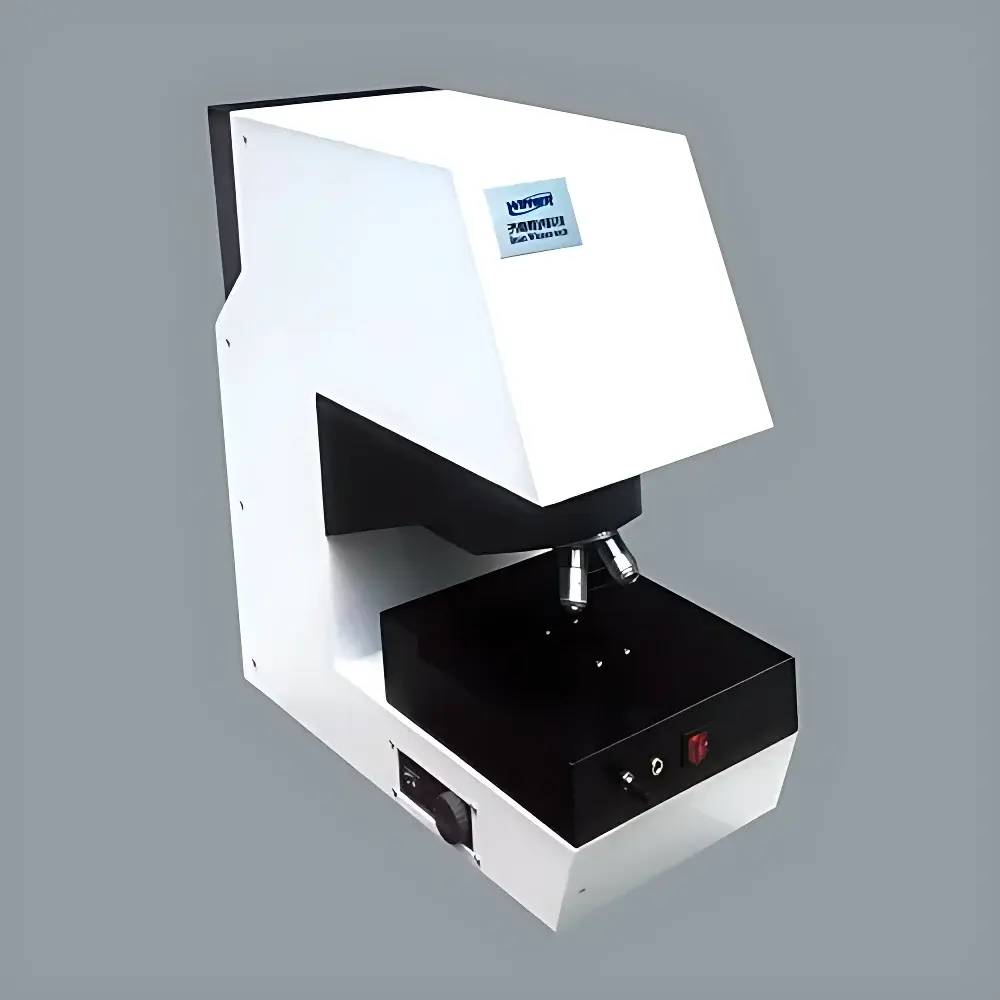
Winner219 Micro-Nano Automatic Image-Based Particle Analyzer
| Brand | Jinan Winner |
|---|---|
| Origin | Shandong, China |
| Manufacturer Type | Direct Manufacturer |
| Regional Category | Domestic (China) |
| Model | Winner219 |
| Price Range | USD 1,400 – 42,000 |
| Application Classification | General Industrial & Research |
| Instrument Type | Static/Dynamic Hybrid |
| Number of Lenses | 2 |
| Measurement Range | 1–3000 µm |
| Dispersion Method | Wet Dispersion |
| Image Resolution | 1920×1080 |
| Measured Parameters | Area-equivalent Diameter, Perimeter-equivalent Diameter, Martin Diameter, Perimeter, Projected Area, Particle Length, Particle Width, Estimated Surface Area, Estimated Volume, X-tangent, Y-tangent, Tangent Diameter, Sphericity, Aspect Ratio |
Overview
The Winner219 Micro-Nano Automatic Image-Based Particle Analyzer is a dual-mode (static and dynamic), high-resolution optical imaging system engineered for quantitative morphological and dimensional characterization of particulate solids across a broad size range—from 1 µm to 3000 µm. Unlike laser diffraction or sieve-based methods, this instrument employs direct digital microscopy coupled with advanced edge-detection algorithms to extract geometric descriptors from individual particle silhouettes in two-dimensional projection. Its core principle relies on calibrated pixel-to-micron mapping, enabling traceable measurement of both size distribution (via equivalent diameters) and shape descriptors (e.g., sphericity, aspect ratio, circularity) under ISO 9276-6 and ASTM E2457-compliant workflows. Designed for laboratories requiring regulatory-grade repeatability and morphological insight—not just size—the Winner219 serves as a primary or orthogonal tool in QC/QA, R&D, and process validation settings where particle geometry directly influences functional performance (e.g., flowability, dissolution rate, packing density, or catalytic surface exposure).
Key Features
- Dual operational modes: static imaging for high-fidelity morphology analysis of fixed samples (e.g., mounted slides, dried deposits) and dynamic imaging for statistically robust sampling of dispersed suspensions flowing across the observation window.
- Automated XYZ motion control: precision motorized stage (60 mm × 60 mm travel, Hall-effect position sensing) and electric focus drive (50 mm stroke, 1 µm microstepping resolution) enable programmable scanning paths, multi-point memory recall (up to 10 positions), and auto-focus based on contrast gradient optimization.
- Modular optical architecture: includes interchangeable long-working-distance achromatic plan objectives (4×, 10×, 40×, 100× oil immersion), anti-distortion field lens, and adjustable LED illumination—supporting both brightfield and oblique contrast configurations.
- High-fidelity image acquisition: 3.1 MP progressive-scan CMOS sensor (1/1.8″ format), native resolution 2048 × 1536, frame rates up to 30 fps at VGA resolution—optimized for real-time dynamic capture and batch processing of >10,000 particles per dataset.
- Comprehensive automated image processing suite: 12 dedicated tools—including agglomerate splitting, noise suppression, boundary completion, hollow-fill correction, and edge smoothing—ensure metrologically sound segmentation prior to parameter extraction.
- Onboard computing platform: embedded industrial PC (AMD low-power CPU, 4 GB RAM, 500 GB HDD, Windows 7 OS) provides standalone operation without host dependency, reducing software conflicts and simplifying GLP-aligned system validation.
Sample Compatibility & Compliance
The Winner219 accommodates dry powders, wet suspensions (aqueous or organic), and fixed-mount specimens via standardized sample holders and optional wet-cell modules. Its wet dispersion configuration meets ISO 13322-1 requirements for image-based particle sizing and supports compliant reporting per USP , ISO 13322-2 (dynamic mode), and API RP 58 for roundness/maturity assessment in geological and petroleum applications. All calibration procedures adhere to traceable standards (NIST-traceable stage micrometers); software audit trails support FDA 21 CFR Part 11 compliance when deployed in GMP environments. The system permits full documentation of raw images, processed masks, and metadata—enabling retrospective review and re-analysis in accordance with ALCOA+ principles.
Software & Data Management
The proprietary WinAnalyze™ software implements a task-centric workflow architecture, ensuring version-controlled data lineage from acquisition to report generation. Key capabilities include: real-time video/image capture with timestamped metadata; customizable scale calibration using certified reference grids; parametric measurement (length, angle, polygonal area); mosaic stitching for large-area coverage; and batch-mode image processing scalable to terabyte-level datasets. Statistical outputs include number-, area-, length-, and volume-weighted distributions (Xnl, Xns, Xnv, Xls, Xlv, Xsv), plus granular shape histograms (circularity, sphericity, aspect ratio). Reports are exportable in PDF, Excel, and XML formats—with configurable headers, logos, operator fields, and embedded annotated images suitable for peer-reviewed publication or regulatory submission.
Applications
- Pharmaceutical solid dosage development: quantifying crystal habit changes during milling, drying, or granulation; correlating aspect ratio with tablet tensile strength.
- Mineral processing & geosciences: classifying sediment roundness and sphericity per API RP 58 for reservoir quality prediction.
- Advanced ceramics & battery materials: evaluating secondary particle agglomeration state and primary particle anisotropy in cathode slurries.
- Food & agricultural powders: assessing grinding uniformity, flake morphology in starches, or crystallinity in cocoa butter analogs.
- Coatings & pigments: measuring aspect ratio distribution of platy TiO₂ or mica particles to predict opacity and rheology.
- Quality control labs: validating supplier specifications against contractual shape tolerances (e.g., minimum sphericity ≥ 0.85).
FAQ
What distinguishes static vs. dynamic imaging modes on the Winner219?
Static mode captures high-resolution still images of immobilized particles for detailed morphological evaluation; dynamic mode acquires sequential frames of particles in laminar flow—enabling statistically significant population sampling (>5,000 particles) without manual intervention.
Does the system support compliance with FDA 21 CFR Part 11?
Yes—when configured with user authentication, electronic signatures, and audit trail logging enabled, the WinAnalyze™ software meets foundational requirements for electronic records and signatures in regulated environments.
Can I integrate the Winner219 into an existing LIMS or MES infrastructure?
Raw data exports (CSV, XML) and measurement reports (PDF, Excel) are fully scriptable; optional OPC UA or REST API add-ons facilitate automated data ingestion into enterprise systems.
Is calibration verification required before each analysis session?
While daily verification using a certified stage micrometer is recommended for GLP/GMP use, the system retains calibration profiles per objective lens and magnification setting—reducing recalibration frequency without compromising traceability.
What maintenance is required for long-term optical stability?
Annual optical alignment verification and LED intensity calibration are advised; no consumables are required beyond standard cleaning supplies for lenses and fluidic components.



