
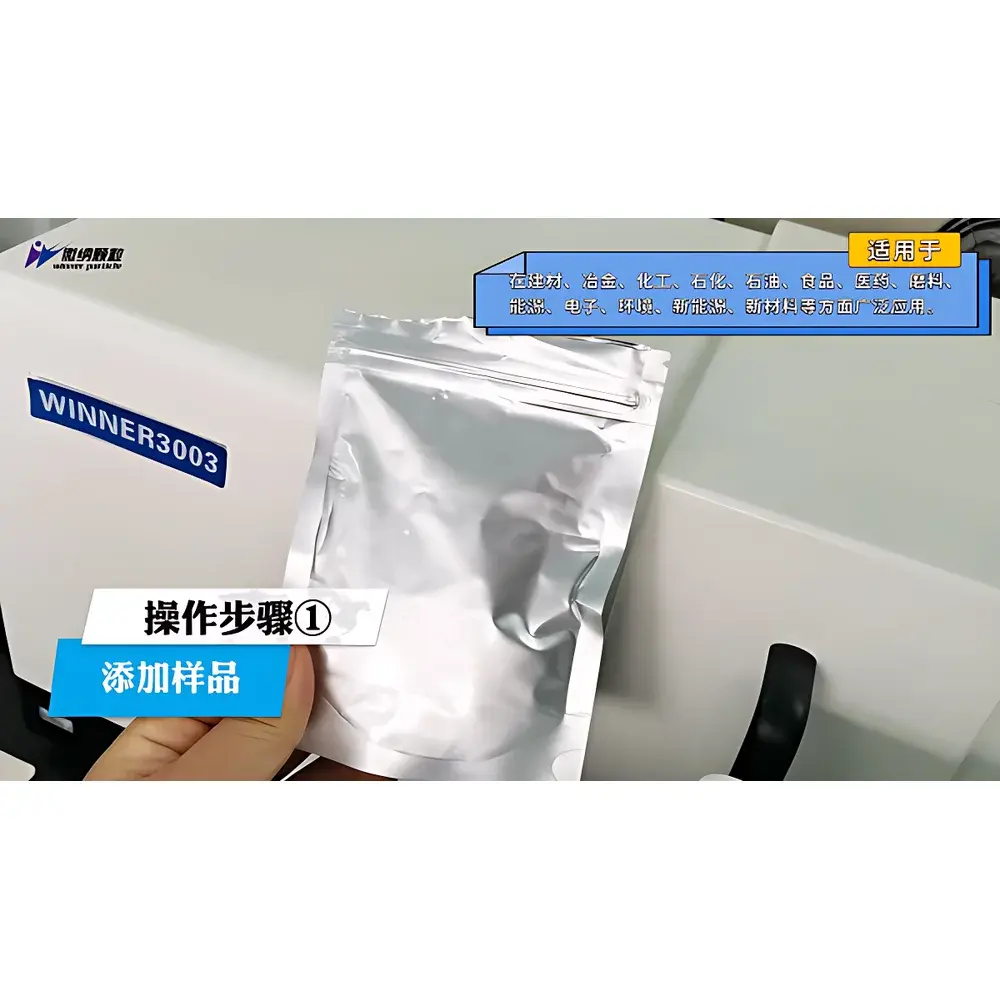
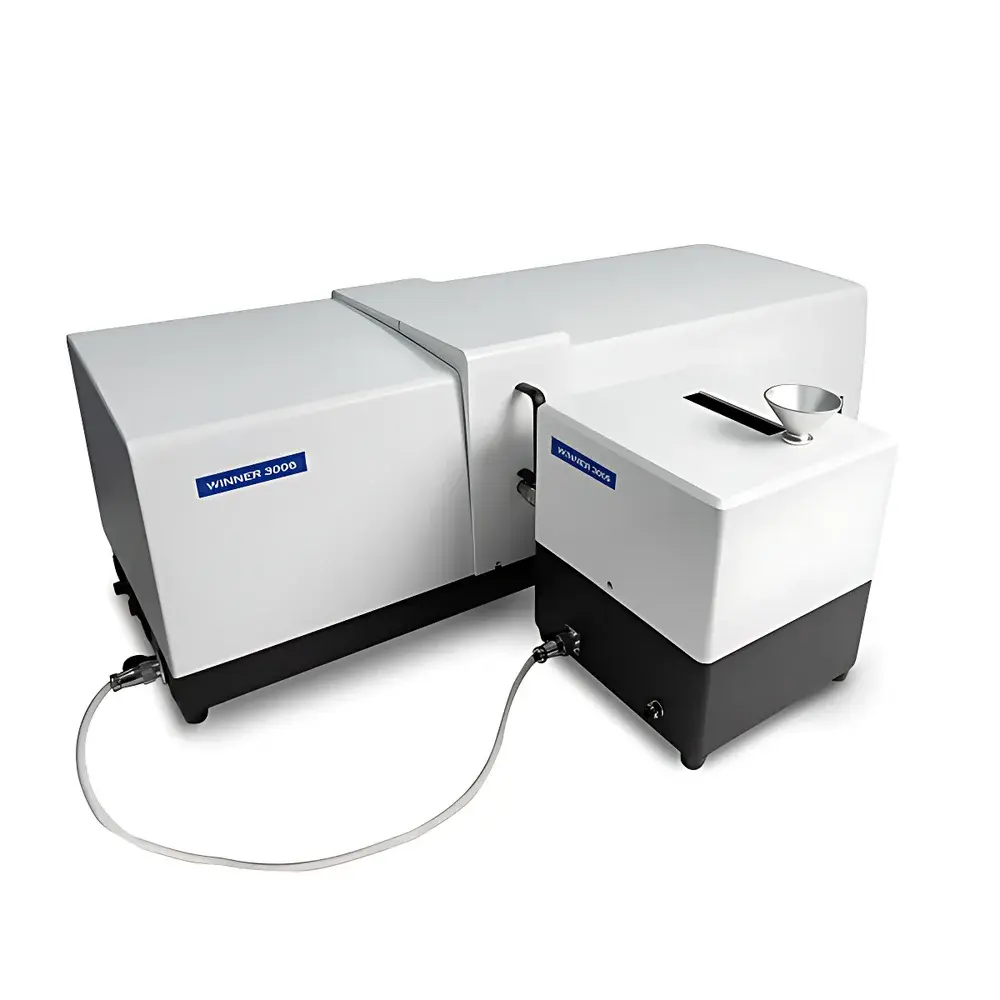
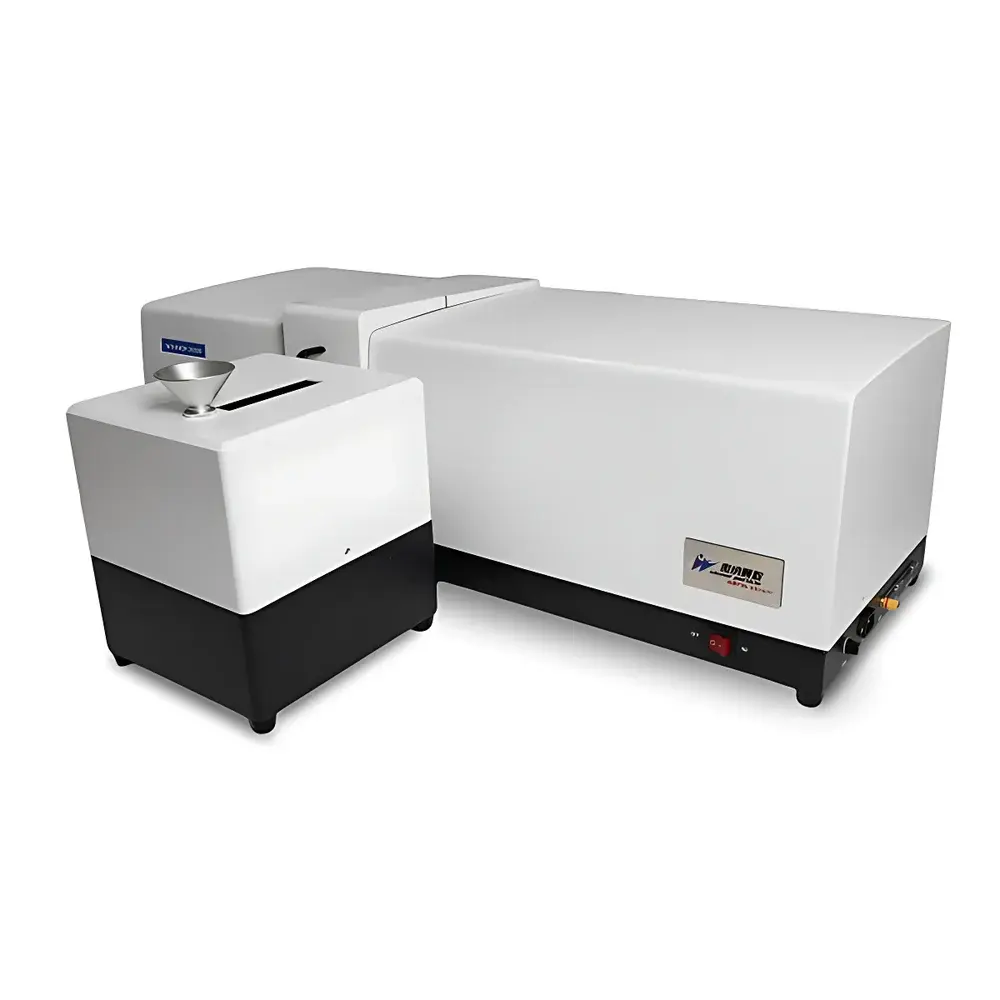
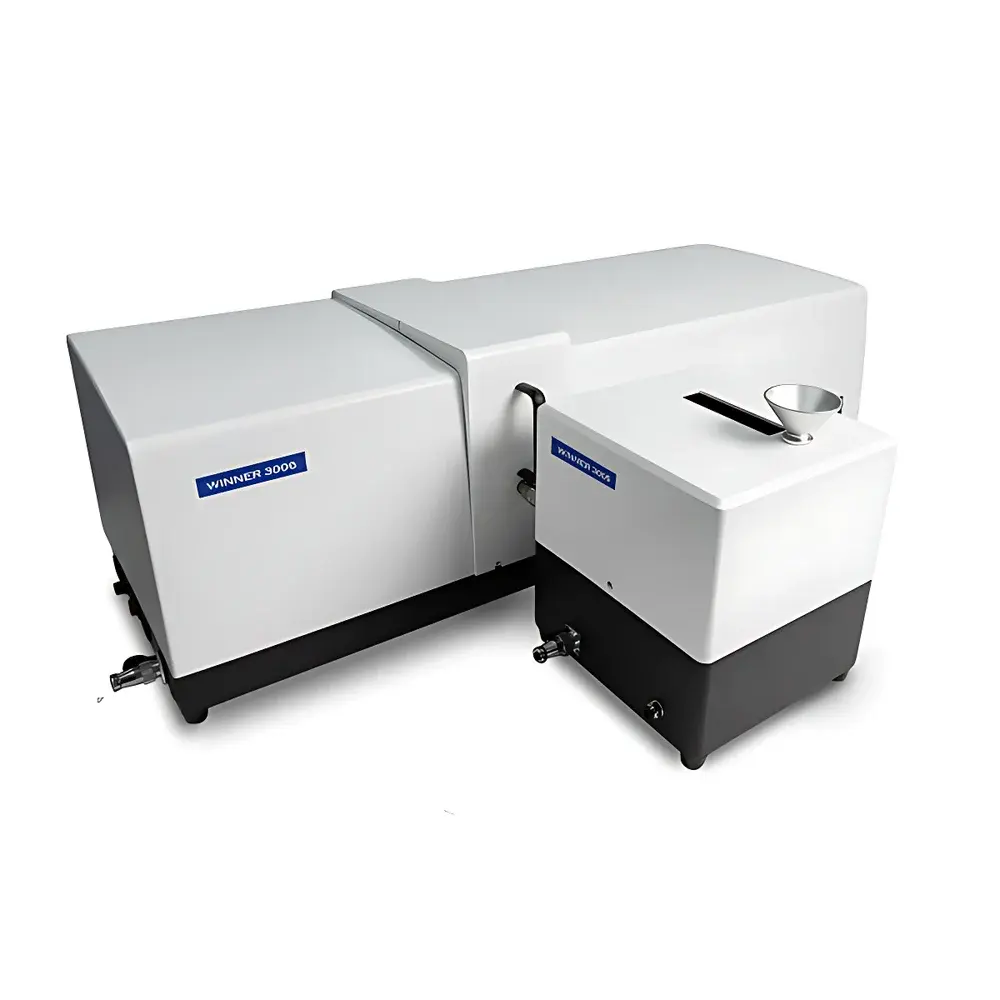
Winner3006 Fully Automated Dry-Dispersion Laser Particle Size Analyzer
| Brand | Jinan Winner |
|---|---|
| Origin | Shandong, China |
| Manufacturer Type | Direct Manufacturer |
| Instrument Type | Laboratory Laser Particle Size Analyzer |
| Measurement Range | 0.1–600 µm |
| Repeatability | ≥99% |
| Measurement Time | 10–120 s |
| Dispersing Medium | Compressed Air |
| Compliance Standards | GB/T 19077–2016, ISO 13320:2020 |
| Laser Source | λ = 639 nm, Power > 2 mW |
| Optical Design | Convergent Beam Fourier Transform |
| Dispersion Technology | Patented Turbulent Flow Dispersion (ZL.200720018648.7) + Normal Shock Shear |
| Key Components | Wear-Resistant Ceramic Nozzles |
| Data Fitting | Unconstrained Free-Fitting Algorithm |
| SOP Support | Yes |
| Auto-Alignment | Yes |
| Sample Throughput | Up to 30 samples/hour |
Overview
The Winner3006 Fully Automated Dry-Dispersion Laser Particle Size Analyzer is an industrial-grade laboratory instrument engineered for precise, reproducible particle size distribution (PSD) analysis of free-flowing dry powders. It operates on the principle of laser diffraction—specifically, convergent beam Fourier transform optical geometry—which enhances angular resolution and signal-to-noise ratio for submicron particles (down to 0.1 µm). Unlike wet dispersion systems, the Winner3006 uses compressed air as the sole dispersing medium, eliminating risks associated with solvent incompatibility, hydration-induced agglomeration, or chemical degradation. This makes it particularly suitable for active pharmaceutical ingredients (APIs), hygroscopic food powders, reactive metal alloys, magnetic oxides, cement clinkers, and other materials that undergo structural or chemical changes upon contact with liquids. Designed for routine QC/QA workflows and R&D applications, the system complies with internationally recognized metrological standards including ISO 13320:2020 and GB/T 19077–2016.
Key Features
- Patented turbulent flow dispersion system integrated with normal shock shear technology ensures complete de-agglomeration of cohesive powders without mechanical grinding or ultrasonication.
- Wear-resistant ceramic nozzles and dispersion chamber components extend service life under high-throughput operation with abrasive samples such as carbides, silicon carbide, or alumina.
- Convergent beam Fourier transform optical path increases sensitivity to fine particles (<1 µm), delivering improved resolution in the critical submicron region where many functional material properties are defined.
- Unconstrained free-fitting algorithm eliminates reliance on pre-assumed distribution models (e.g., Rosin-Rammler or log-normal), enabling unbiased representation of multimodal, skewed, or irregular PSDs.
- Fully automated workflow: auto-alignment, SOP-driven measurement sequences, real-time data validation, and one-click reporting reduce operator dependency and improve inter-laboratory reproducibility.
- Modular architecture supports future upgrades—including optional vacuum-assisted feeding, inert gas purging for pyrophoric materials, and integration with LIMS via OPC UA or ASTM E1384-compliant interfaces.
Sample Compatibility & Compliance
The Winner3006 accommodates a broad spectrum of dry particulate materials—from friable organic powders (e.g., lactose, starch, cocoa) to hard, dense inorganic particles (e.g., tungsten carbide, titanium dioxide, fly ash). Its air-based dispersion avoids contamination, oxidation, or phase transformation during analysis. The instrument meets regulatory expectations for analytical instrumentation used in GMP environments: audit trail logging, user access control, electronic signature support, and data integrity features align with FDA 21 CFR Part 11 requirements when deployed with compliant software configurations. Calibration traceability is maintained through NIST-traceable polystyrene latex standards (PSL), and performance verification follows ISO 13320 Annex B protocols using certified reference materials (CRMs) such as SRM 1963 and SRM 2800.
Software & Data Management
The embedded WinPAS v5.2 software provides intuitive graphical interface navigation, customizable report templates (PDF/Excel/XML), and raw scattering pattern visualization. All measurement parameters—including flow rate, pressure, feed rate, and laser intensity—are logged with timestamps and metadata. Raw intensity data is stored in HDF5 format to preserve full fidelity for retrospective reprocessing. The system supports batch processing of up to 99 samples per session, with automatic outlier detection based on statistical deviation thresholds. For enterprise deployment, optional network licensing enables centralized calibration management, remote diagnostics, and secure cloud backup aligned with ISO/IEC 27001 data governance frameworks.
Applications
- Pharmaceutical development: monitoring granulation endpoints, assessing blend uniformity, and characterizing inhalable dry powder aerosols (DPIs).
- Food science: evaluating particle size impact on solubility, mouthfeel, and shelf-life stability of powdered dairy, spices, and nutritional supplements.
- Advanced ceramics & metallurgy: controlling green body density, sintering behavior, and final microstructural homogeneity in additive manufacturing feedstocks.
- Cement & construction materials: quantifying fineness modulus, optimizing grinding energy consumption, and verifying compliance with ASTM C114 and EN 196-6.
- Electronics & battery materials: analyzing cathode/anode active material distributions (e.g., LiCoO₂, graphite) to correlate PSD with electrode coating uniformity and electrochemical performance.
FAQ
What types of samples are incompatible with the Winner3006?
Samples exhibiting extreme electrostatic charge retention, excessive moisture content (>0.5% w/w), or strong interparticle van der Waals adhesion may require pre-conditioning (e.g., drying, surface treatment) prior to analysis.
Can the Winner3006 be validated for use in regulated pharmaceutical environments?
Yes—when operated with documented IQ/OQ/PQ protocols, version-controlled software, and calibrated against traceable CRMs, the system satisfies ALCOA+ data integrity principles required by EMA and FDA for method validation.
Is external compressed air supply mandatory?
Yes—the system requires clean, oil-free, desiccated compressed air at 0.6–0.8 MPa and ≥20 L/min flow rate. An integrated air dryer and filter module is available as an accessory.
How does the unconstrained fitting algorithm differ from Mie theory-based inversion?
The algorithm solves the inverse problem directly from measured intensities without imposing parametric assumptions; Mie theory remains applied only for optical property input (refractive index, absorption coefficient), preserving physical accuracy while avoiding model bias.
What maintenance intervals are recommended for routine operation?
Optical alignment verification every 3 months; ceramic nozzle inspection after 500 hours of cumulative operation; annual recalibration using PSL standards and CRM verification kits.



