
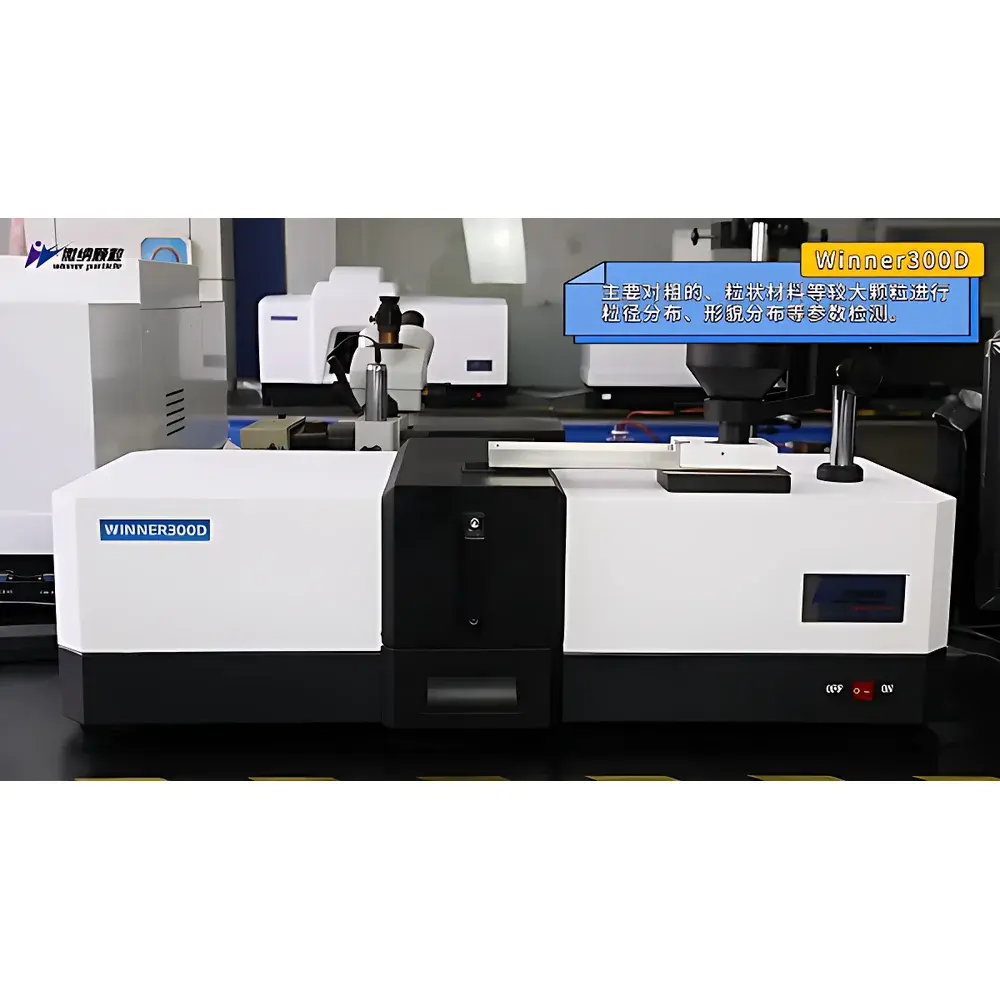
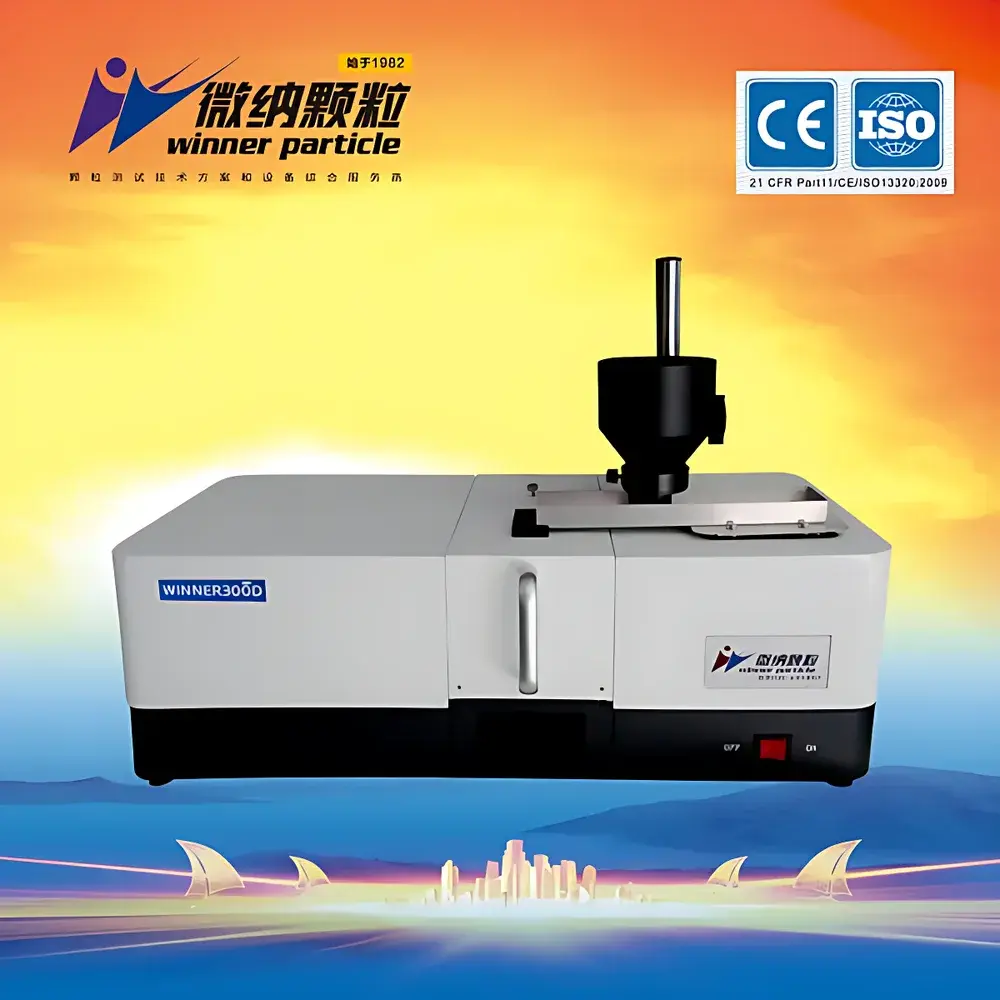
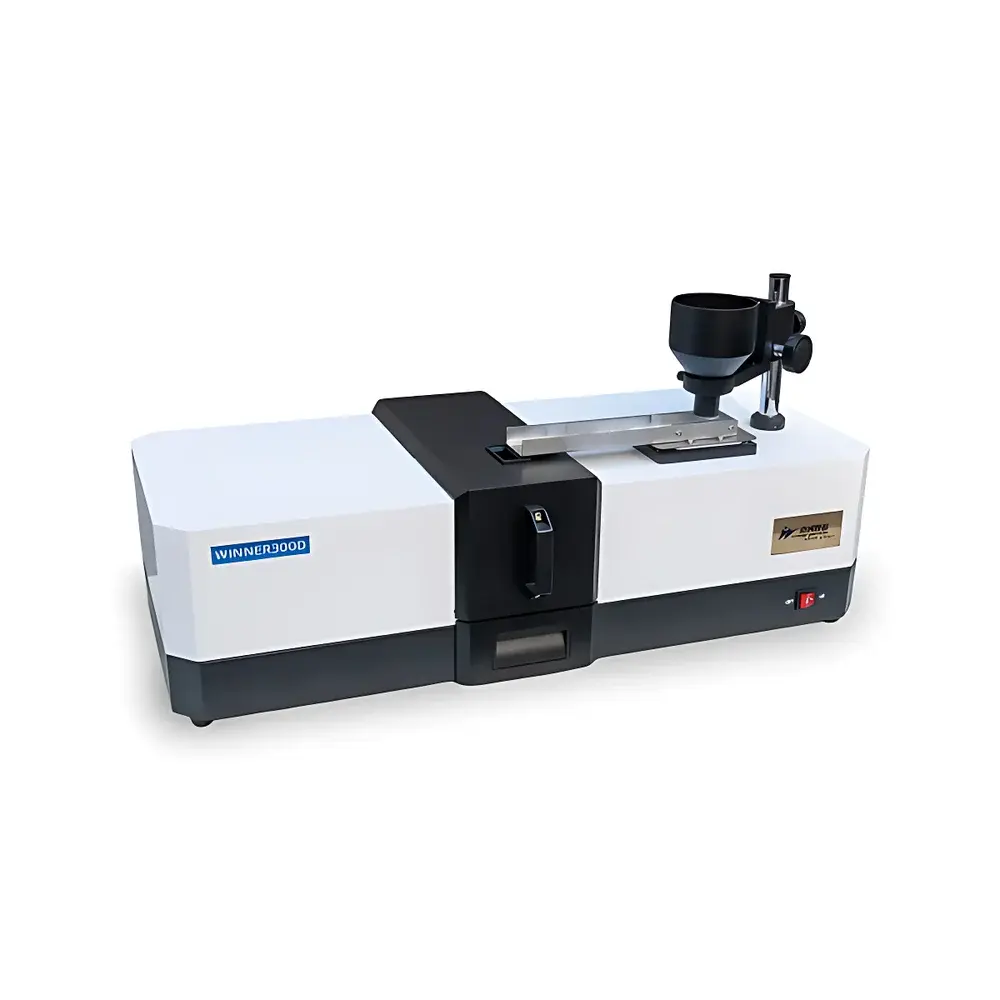
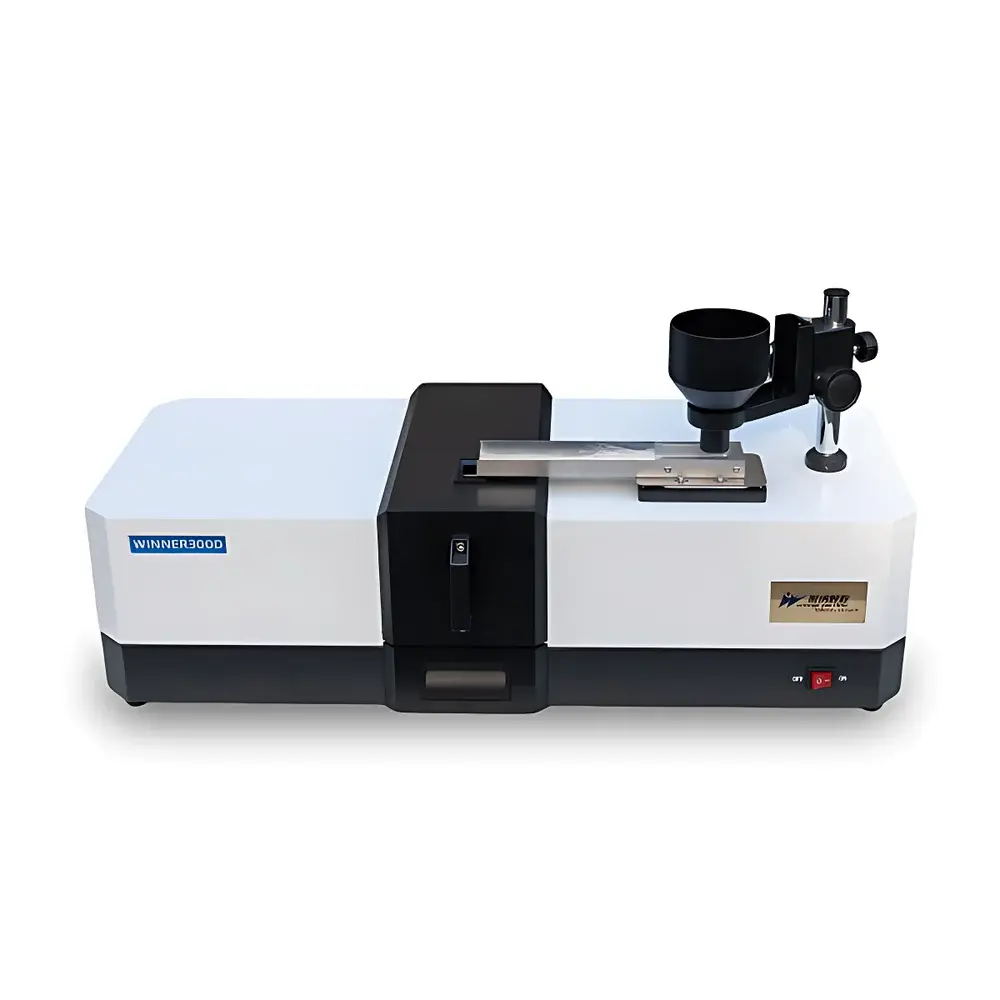
Winner300D Dry-Method Dynamic Image-Based Particle Size and Shape Analyzer
| Brand | Jinan Winner |
|---|---|
| Origin | Shandong, China |
| Manufacturer Type | Direct Manufacturer |
| Origin Category | Domestic |
| Model | WINNER300D |
| Quotation | Upon Request |
| Instrument Type | Dynamic |
| Measurement Range | 10–10,000 µm |
| Sample Dispersion Method | Electromagnetic Vibration + Ultrasonic Dispersion |
| Measured Parameters | Particle Size Distribution, Sphericity, Aspect Ratio |
Overview
The WINNER300D is a dry-method, dynamic image-based particle size and shape analyzer engineered for high-throughput, direct visualization and quantitative morphological characterization of free-flowing dry powders. Unlike indirect scattering-based techniques (e.g., laser diffraction), the WINNER300D employs real-time digital imaging under controlled aerodynamic dispersion to capture individual particle silhouettes at scale—enabling true geometric measurement of size, shape, and spatial distribution. Its optical architecture integrates a high-resolution telecentric lens system with collimated parallel illumination and a constrained planar sampling window, minimizing perspective distortion and depth-of-field artifacts. The instrument complies with ISO/DIS 13322-2:2023 (“Particle size analysis — Image analysis methods — Part 2: Dynamic image analysis”), ensuring methodological traceability for regulatory and quality assurance workflows in R&D, production QA, and materials science laboratories.
Key Features
- Dynamic Imaging Architecture: Captures >100,000 particles per minute at up to 120 fps using a high-speed CMOS imaging module synchronized with electromagnetic pulse feeding and ultrasonic dispersion—ensuring statistical robustness without manual sample preparation or static mounting.
- Extended Measurement Range: Validated for particles from 10 µm to 10,000 µm (10 mm), with reliable resolution down to single-digit microns when combined with optional high-magnification telecentric optics.
- Comprehensive Morphometric Analysis: Computes industry-standard shape descriptors—including sphericity, circularity, aspect ratio, convexity, and sharpness—derived directly from binary particle contours, not inferred models.
- Dual Operational Modes: Supports both offline batch analysis (sample loaded into vibration-fed hopper; results in ≤2 min) and at-line monitoring via modular sampling interface for continuous process integration.
- Optical Integrity Design: Far-field telecentric optics eliminate parallax error; rigid planar sampling zone ensures consistent focus across field of view; high-intensity collimated LED illumination enhances edge contrast for low-reflectivity or translucent particles.
Sample Compatibility & Compliance
The WINNER300D is optimized for dry, non-cohesive, and moderately free-flowing particulates—including metal powders, ceramic granules, pharmaceutical excipients, catalysts, agrochemicals, and mineral aggregates. It excludes highly adhesive, fibrous, or liquid-suspended samples without prior drying and de-agglomeration. All measurements adhere to ISO/DIS 13322-2, supporting audit-ready documentation for GLP and GMP environments. While not FDA 21 CFR Part 11–certified out-of-the-box, its software architecture supports timestamped audit trails, user-access controls, and electronic signature integration upon customer-configured validation protocols.
Software & Data Management
The proprietary WINNER Image Analysis Suite (v5.x) provides full control over acquisition parameters, region-of-interest masking, threshold optimization, and classification logic. It delivers standardized reports with customizable headers (including lab logo, operator ID, SOP version, and instrument serial number), configurable binning intervals, and export options for CSV, PDF, and XML (for LIMS integration). Batch task scheduling, historical comparison overlays, and statistical process control (SPC) charts are embedded. Raw image archives and metadata (exposure time, magnification, dispersion energy, frame count) are retained with each dataset to support root-cause analysis and method revalidation.
Applications
- Pharmaceutical solid dosage development: Monitoring granule sphericity and flowability during fluid bed drying or roller compaction.
- Additive manufacturing powder qualification: Assessing satellite formation, irregular fragmentation, and surface roughness in Ti-6Al-4V or Inconel 718 feedstocks.
- Cement and concrete admixture optimization: Quantifying angularity and flakiness index of crushed aggregates per ASTM C1252.
- Food ingredient consistency: Verifying uniformity of spray-dried dairy powders or milled spices across production lots.
- Environmental particulate source apportionment: Differentiating wind-blown soil vs. industrial fly ash based on shape factor clustering.
FAQ
What distinguishes dynamic image analysis from static image analysis?
Dynamic analysis captures particles in motion through a defined imaging plane, enabling statistically significant populations (>10⁵ particles) without operator bias in selection or focus—critical for heterogeneous or polydisperse systems.
Can the WINNER300D replace laser diffraction for routine QC?
It complements—not substitutes—laser diffraction: preferred where shape-sensitive decisions matter (e.g., coating efficiency, dissolution rate, or packing density), but less suitable for sub-10 µm colloids or opaque slurries.
Is calibration traceable to NIST or other national standards?
Yes—calibration uses certified reference microspheres (e.g., Duke Scientific traceable latex standards); system verification follows ISO 13322-2 Annex B protocols with documented uncertainty budgets.
How is data integrity ensured during long-duration at-line runs?
The system logs timestamped frame metadata, monitors dispersion energy drift in real time, and triggers alerts if particle flux falls below 90% of baseline—preventing silent data degradation.
Does the software support multi-user role-based access?
Yes—administrator, analyst, and reviewer roles enforce separation of duties; password policies, session timeouts, and change logs meet ALCOA+ principles for regulated labs.



