
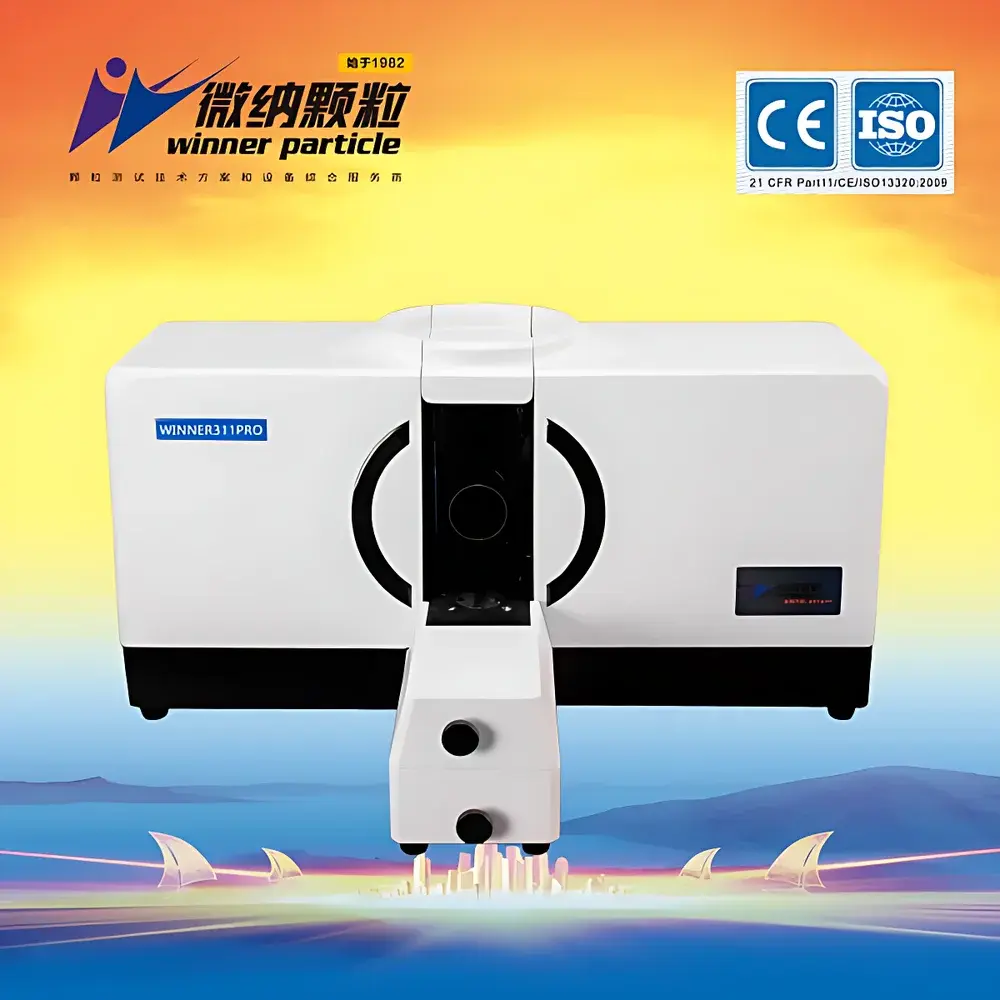
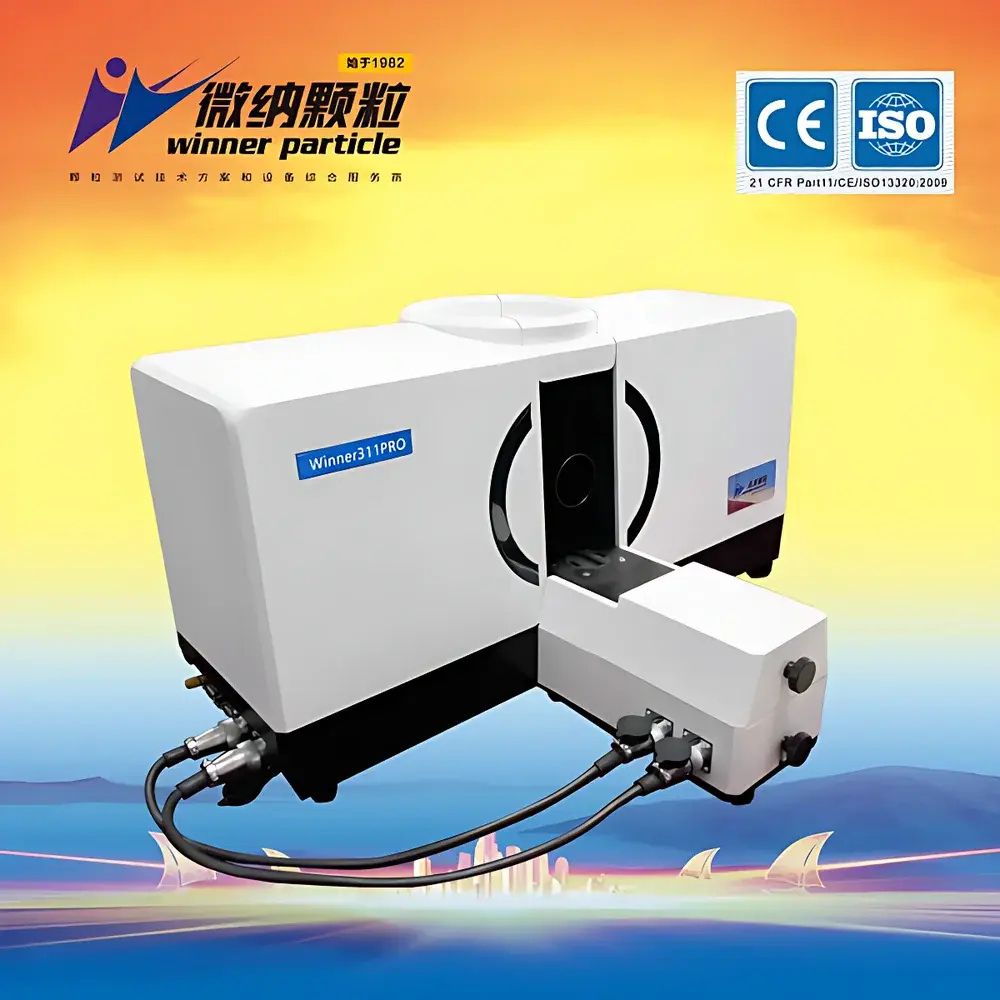
Winner311PRO Desktop Spray Laser Particle Size Analyzer
| Brand | Jinan Winner |
|---|---|
| Origin | Shandong, China |
| Manufacturer Type | Direct Manufacturer |
| Instrument Type | Laboratory Laser Particle Size Analyzer |
| Measurement Range | 0.1–100 µm |
| Repeatability | ≥99% |
| Measurement Time | 10–120 s |
| Compliance | GB/T 19077:2016, ISO 13320:2020, Q/0100JWN001-2024 |
| Laser Source | Semiconductor laser, λ = 650 nm, P > 1 mW |
| Detector Configuration | Dual-lens, dual-array detector system |
| Channel Count | 80 |
| Accuracy (D50) | ≤1% (NIST-traceable standard reference material) |
| Sample Zone Length | 60 mm |
| Dimensions | 720 × 620 × 370 mm |
| Weight | 30 kg |
Overview
The Winner311PRO Desktop Spray Laser Particle Size Analyzer is a purpose-built instrument engineered for non-contact, real-time measurement of droplet size distributions in airborne dispersions—including medical aerosols, nasal sprays, inhalers, nebulizer outputs, electronic cigarette mists, and cosmetic vaporizers. It operates on the principle of Fraunhofer diffraction and Mie scattering theory, enabling quantitative analysis of particle size distributions (PSD) across the full dynamic range of 0.1–100 µm. Unlike conventional wet-dispersion laser diffraction systems, the Winner311PRO employs an open-flow, tube-type measurement zone optimized for low-volume, high-velocity spray plumes. Its optical architecture—featuring a collimated single-beam path, dual-lens focusing optics, and an 80-channel dual-array photodetector array—ensures high angular resolution and enhanced signal fidelity at both fine (<1 µm) and coarse (>50 µm) ends of the distribution. The system is explicitly designed to meet pharmacopoeial requirements outlined in USP <601>, EP 2.9.31, and ChP 0982 for aerolized dosage forms, supporting regulatory submissions under FDA 21 CFR Part 11 and ICH Q5A frameworks.
Key Features
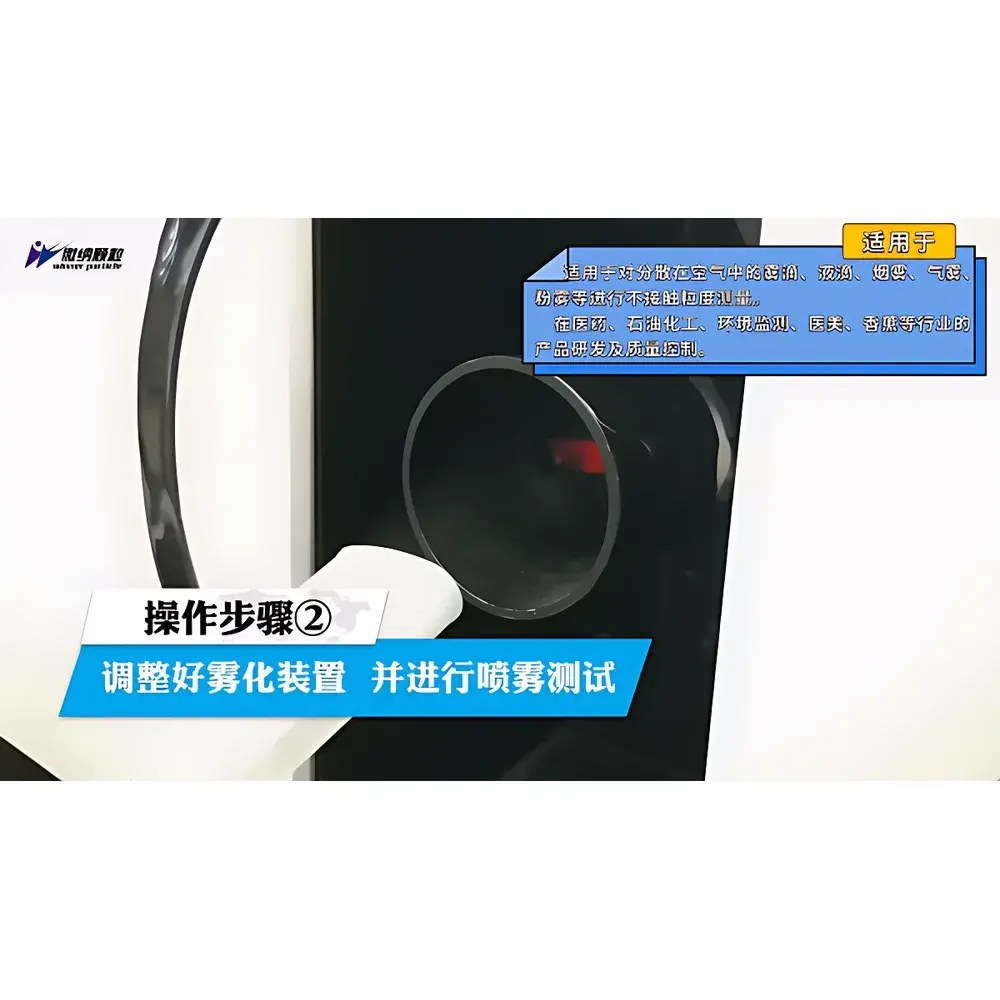
- Open-flow measurement zone (60 mm active length) with modular alignment—enables rapid integration with benchtop nebulizers, metered-dose inhalers (MDIs), dry powder inhalers (DPIs), and ultrasonic mist generators.
- Dual-lens, dual-array detector configuration improves angular coverage and scattering signal density, extending reliable detection down to 0.1 µm while maintaining robustness against edge-diffraction artifacts.
- Motorized, programmable sample positioning stage with SOP-defined coordinate memory and auto-return functionality—eliminates operator-induced positional variability and supports multi-point spatial profiling per ISO 27826:2022 Annex B.
- Integrated air-knife lens protection system combined with adjustable negative-pressure exhaust—prevents lens contamination during extended spray testing and accommodates variable flow rates from 0.5 to 20 L/min.
- GMP-compliant software suite with audit trail, electronic signature support (21 CFR Part 11), user access levels, and configurable report templates aligned with GLP/GMP documentation standards.
- Real-time data acquisition at up to 1 kHz sampling rate, with full PSD reconstruction completed within 10–120 seconds depending on statistical confidence thresholds and dispersion stability.
Sample Compatibility & Compliance
The Winner311PRO is validated for use with liquid aerosols (e.g., saline or propellant-based formulations), solid-laden respirable powders (e.g., lactose blends), and hybrid mist-powder systems. It complies with international standards including ISO 13320:2020 (laser diffraction particle sizing), GB/T 19077:2016 (Chinese national standard equivalent), and internal enterprise specification Q/0100JWN001-2024. All factory calibrations are traceable to NIST-certified PSL and silica reference materials. The instrument meets critical performance criteria for pharmaceutical aerosol characterization: D50 accuracy ≤1%, repeatability ≥99% (n=6, same sample, same operator), and inter-instrument agreement within ±1.5% across three independent units tested under identical environmental conditions (23±1°C, 40–60% RH).
Software & Data Management
The embedded Windows-based WinPAS v4.2 software provides full control over acquisition parameters, real-time visualization of scattering patterns, and granular post-processing options. Users may select volumetric (Vx), number-based (Nx), or surface-area-weighted (Sx) distribution modes; calculate standard metrics including VAD (volume-weighted mean), SMD (surface-area-weighted mean), NAD (number-weighted mean), R.S. (relative span), and N/V ratio (N50/V50). Reports are exportable in PDF, CSV, and XML formats—with optional digital signature embedding and timestamped audit logs. Software modules include batch mode operation, trend analysis across multiple SOPs, and automated pass/fail evaluation against user-defined specification limits per USP monographs.
Applications
Primary application domains include: formulation development and QC release testing of pressurized metered-dose inhalers (pMDIs); performance verification of soft-mist inhalers (SMIs) and dry powder inhalers (DPIs); regulatory compliance testing for nasal sprays and oral mucosal delivery systems; quality assessment of electronic nicotine delivery systems (ENDS); particle engineering studies for respirable biologics and peptide formulations; and R&D of industrial fogging agents, agricultural adjuvants, and fire-suppression mist systems. The instrument has been deployed in over 30 Class II/III medical device and pharmaceutical testing laboratories across China, including provincial drug control institutes and third-party GLP-compliant contract research organizations.
FAQ
Does the Winner311PRO require sample dilution or carrier fluid?
No—measurements are performed in situ on undiluted, airborne dispersions. No liquid suspension or dispersant is needed.
Can it measure both liquid droplets and solid particles simultaneously?
Yes—the optical model automatically adapts between Mie (for refractive index-matched solids) and Fraunhofer (for low-refractive-index liquids) assumptions based on user input.
Is the system compatible with ISO 27826-compliant inhaler actuation rigs?
Yes—standardized mounting interfaces and TTL-triggered acquisition synchronization enable seamless integration with mechanical actuation platforms.
What validation documentation is provided?
Each unit ships with a Factory Acceptance Test (FAT) report, IQ/OQ protocol templates, and a Certificate of Conformance referencing ISO/IEC 17025-accredited calibration procedures.
How is data integrity ensured during long-term deployment?
WinPAS enforces role-based access control, immutable audit trails, and encrypted local storage—all compliant with ALCOA+ principles for regulated environments.



