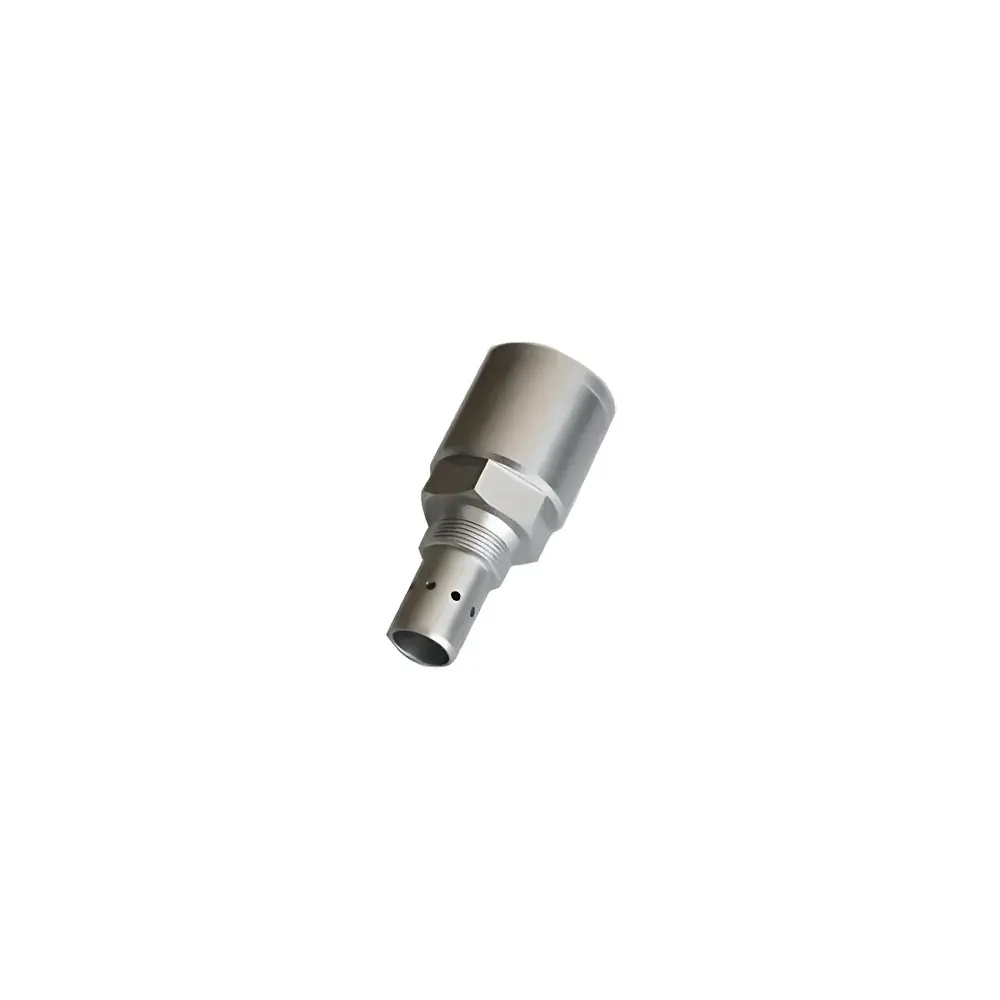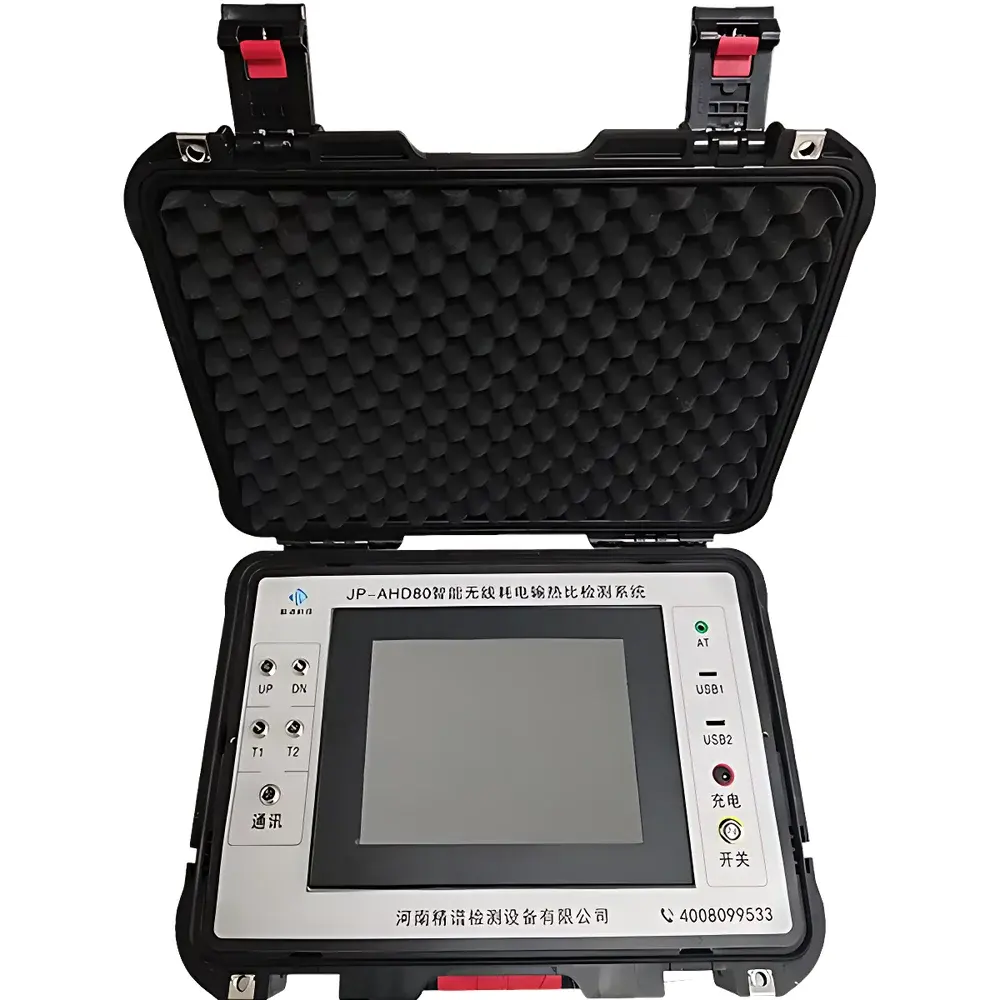
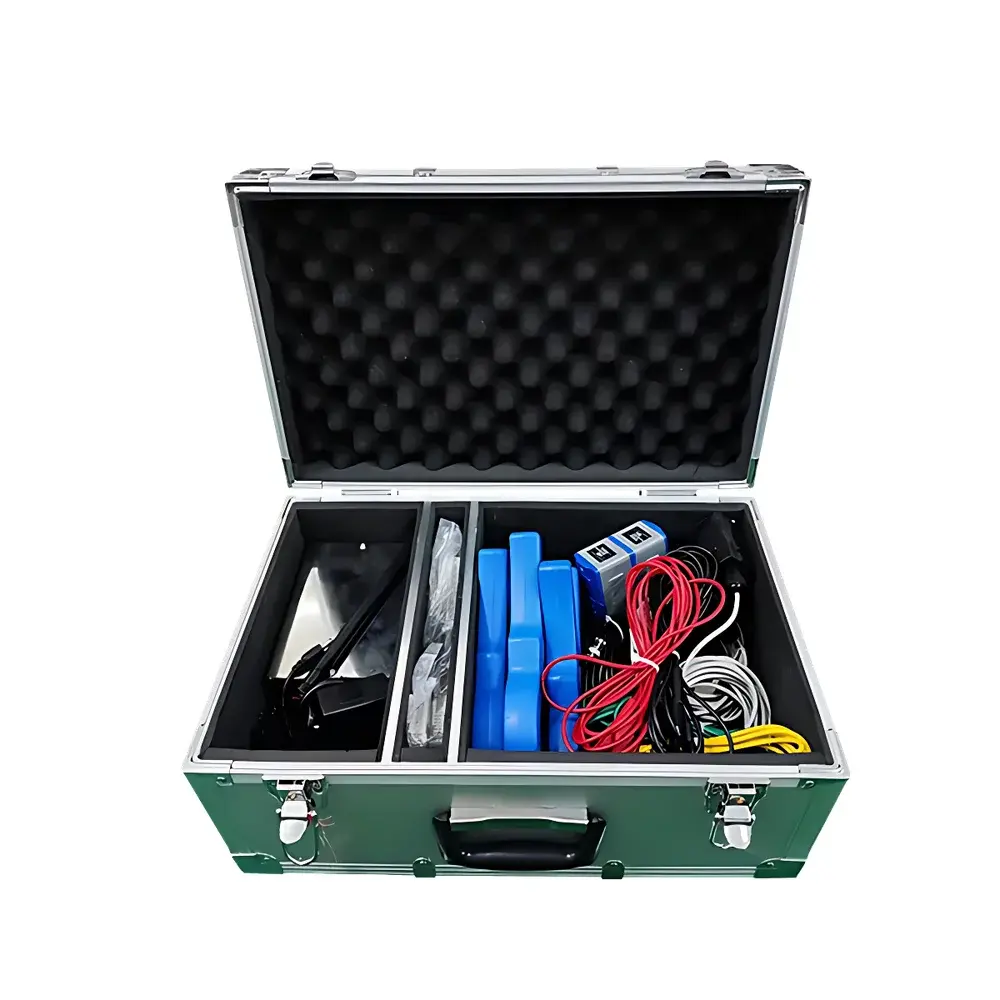
Wireless Energy Consumption to Heat Transfer Ratio Analyzer JP-AHD80
| Brand | Jingpu Technology |
|---|---|
| Origin | Henan, China |
| Manufacturer Type | Authorized Distributor |
| Country of Manufacture | China |
| Model | JP-AHD80 |
| Pricing | Upon Request |
| Flow Range | 0–1000 m³/h (±1% FS) |
| Return Water Temperature Range | 0–100 °C (Accuracy: ≤ 0.5 °C at 50 °C |
| Wireless Communication Distance | >1000 m (line-of-sight) |
| Sampling Interval | 0.5–60 min (adjustable) |
| Remote Data Transmission | Optional GPRS module |
Overview
The Jingpu Technology JP-AHD80 Wireless Energy Consumption to Heat Transfer Ratio Analyzer is an engineered instrumentation system designed for continuous, non-intrusive performance evaluation of central heating and district thermal distribution networks. It operates on the principle of real-time energy balance analysis—calculating the ratio of electrical energy consumed by circulation pumps and auxiliary systems to the actual thermal energy delivered to end users (Qdelivered/Econsumed). This metric, commonly referenced in building energy auditing and HVAC efficiency certification, aligns directly with Chinese national standards JGJ/T 26-95, GB/T 50189, and JGJ/T 132. The device integrates high-stability ultrasonic flow measurement with dual-point Pt100 temperature sensing (supply and return), enabling synchronized acquisition of volumetric flow rate and differential temperature across heat exchangers or building service loops. Its wireless architecture eliminates the need for trenching or conduit installation, significantly reducing commissioning time and infrastructure cost in retrofit applications.
Key Features
- High-accuracy ultrasonic transit-time flow sensor with ±1% full-scale repeatability across 0–1000 m³/h range, calibrated per ISO 4064-2 for liquid water applications;
- Dual-channel temperature measurement using Class A Pt100 RTDs compliant with IEC 60751, supporting dynamic compensation for thermal drift in return water lines up to 100 °C;
- Low-power wide-area wireless telemetry platform with >1000 m line-of-sight transmission range, operating in the 433 MHz ISM band with adaptive signal strength optimization;
- Configurable sampling interval from 30 seconds to 60 minutes, programmable via local IR interface or remote GPRS command set;
- Modular hardware design: flow transducer, temperature probes, and data concentrator are decoupled for flexible mounting—ideal for constrained mechanical rooms or existing pipe configurations;
- IP67-rated enclosure with stainless-steel wetted parts, certified for continuous operation in humid, vibration-prone HVAC plant environments.
Sample Compatibility & Compliance
The JP-AHD80 is validated for use with clean, low-turbidity water (typical of closed-loop hydronic heating systems). It is not intended for steam, glycol mixtures above 30%, or abrasive slurries. All measurement subsystems comply with electromagnetic compatibility requirements per GB/T 17626 (equivalent to IEC 61000-4 series) and functional safety guidelines under GB/T 20438 (IEC 61508). Data reporting formats conform to CJJ/T 152-2010 “Technical Specification for Energy Monitoring Systems in Public Buildings”, ensuring interoperability with municipal-level energy management platforms. While not CE-marked or UL-listed, its electrical design adheres to GB 4208 (IP67) and GB/T 16839.1 (thermocouple/RTD interface specifications).
Software & Data Management
Data from the JP-AHD80 is transmitted to a central gateway via proprietary RF protocol or optional GPRS modem. Local edge storage retains 30 days of 15-minute interval records (flow, ΔT, calculated ratio, pump runtime, ambient humidity) in non-volatile memory. The companion Jingpu Energy Analytics Suite (v3.2+) supports CSV/Excel export, time-series visualization, deviation alerts (e.g., ratio < 0.85 indicating excessive pumping energy), and automated report generation aligned with GB/T 50189 Annex D. Audit trails include user login history, parameter change logs, and firmware update timestamps—supporting GLP-aligned documentation practices. For enterprise integration, RESTful API endpoints enable bidirectional communication with BMS platforms (BACnet/IP, Modbus TCP) and cloud-based digital twin infrastructures.
Applications
- Performance verification of heat metering stations in district heating networks;
- Commissioning support for newly installed variable-speed pump systems in commercial high-rises;
- Long-term trend analysis of HVAC energy intensity (kWh/m²·a) in government-owned public buildings;
- Baseline establishment prior to retro-commissioning projects targeting pump optimization or valve replacement;
- Compliance monitoring for mandatory energy disclosure programs under China’s “Dual Carbon” policy framework;
- Academic research on hydraulic imbalance quantification and its correlation with thermal comfort indices (PMV/PPD).
FAQ
Does the JP-AHD80 require external power at the sensor location?
No—it operates on replaceable lithium-thionyl chloride (Li-SOCl₂) batteries rated for ≥5 years at 15-minute sampling intervals.
Can it measure both supply and return temperatures simultaneously?
Yes—two independent Pt100 inputs are provided, factory-calibrated for matched thermal response characteristics.
Is the GPRS module included by default?
No—the GPRS communication option is field-installable and requires separate configuration via AT command set and APN provisioning.
What is the maximum allowable pipe diameter for accurate flow measurement?
The standard ultrasonic clamp-on transducers support pipes from DN50 to DN600; larger diameters require custom transducer spacing verification per ISO 4064-4.
How is measurement traceability maintained during calibration?
Each unit ships with a NIST-traceable calibration certificate (issued by CNAS-accredited lab), including flow coefficient tables and temperature offset matrices per operating point.