
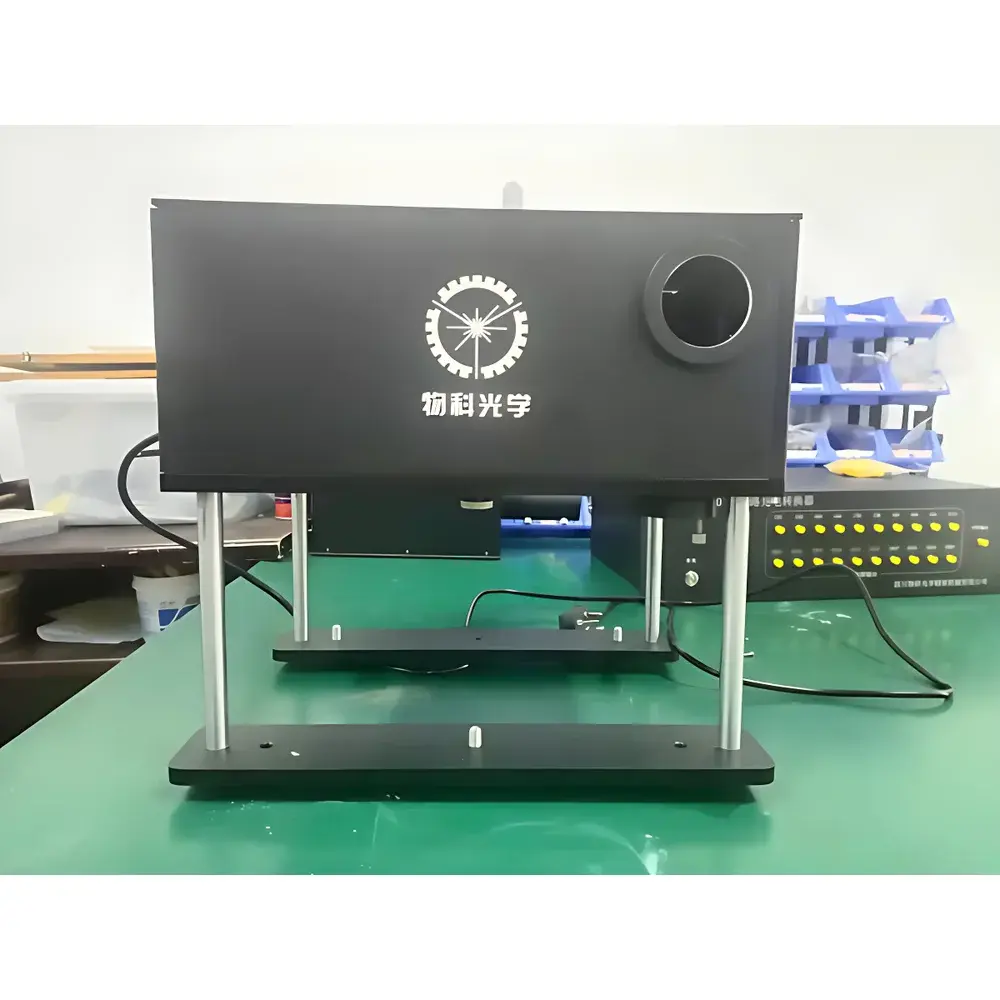
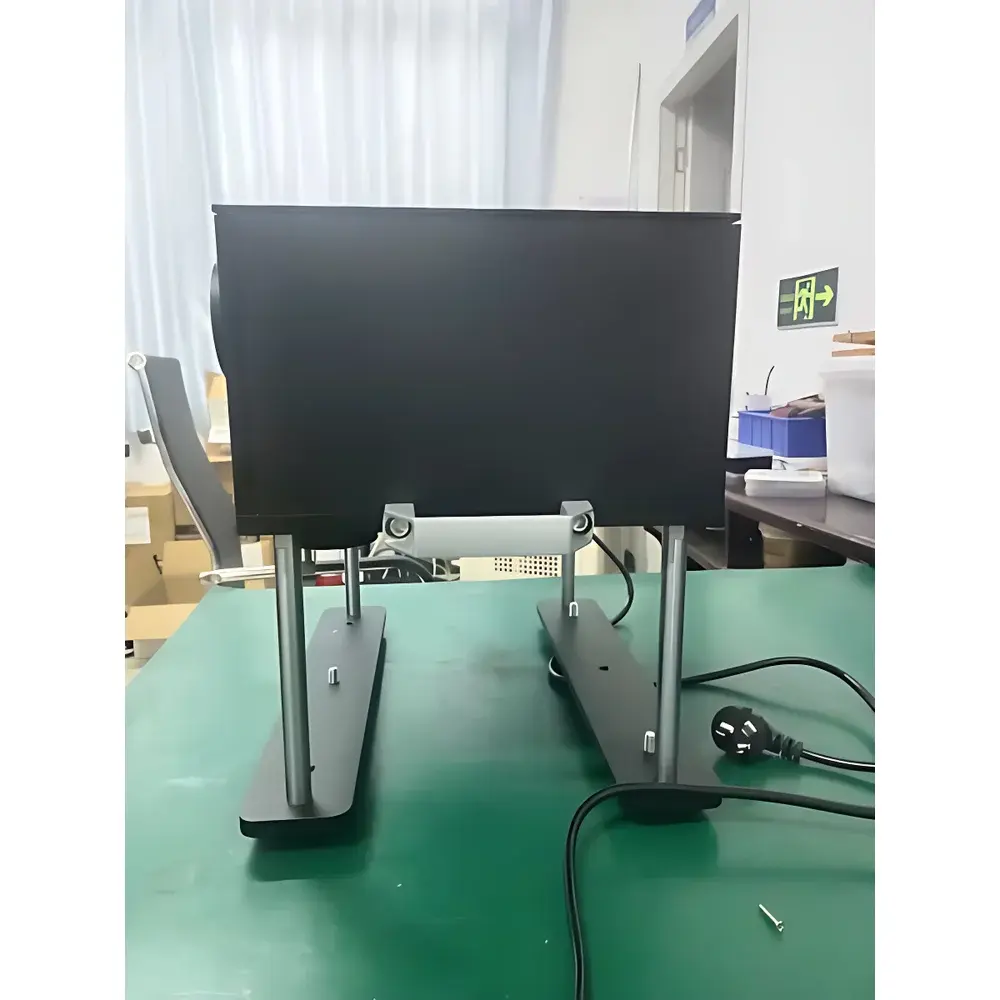
WK-OPTICS WKGX-B Portable Projection Schlieren Instrument
| Brand | WK-OPTICS |
|---|---|
| Origin | Sichuan, China |
| Manufacturer Type | Authorized Distributor |
| Country of Origin | China |
| Model | WKGX-B |
| Aperture | 150 mm |
| Resolution | 2048 × 2048 |
| Primary Mirror Material | K9 Optical Glass |
| Surface Figure Accuracy | < λ/10 @ 632.8 nm |
| Reflectivity | ≥90% |
| Coating | Vacuum-deposited Aluminum + SiO₂ Protective Layer |
| Light Source | Adjustable-intensity, Air-cooled LED or Halogen |
| Slit Assembly | Rotatable Aperture with Precision Adjustment |
| Mounting | Standard ISO 1222 Threaded Base Holes (M6) |
| System Architecture | Two-Platform Configuration (Collimation Platform + Schlieren Imaging Platform) |
Overview
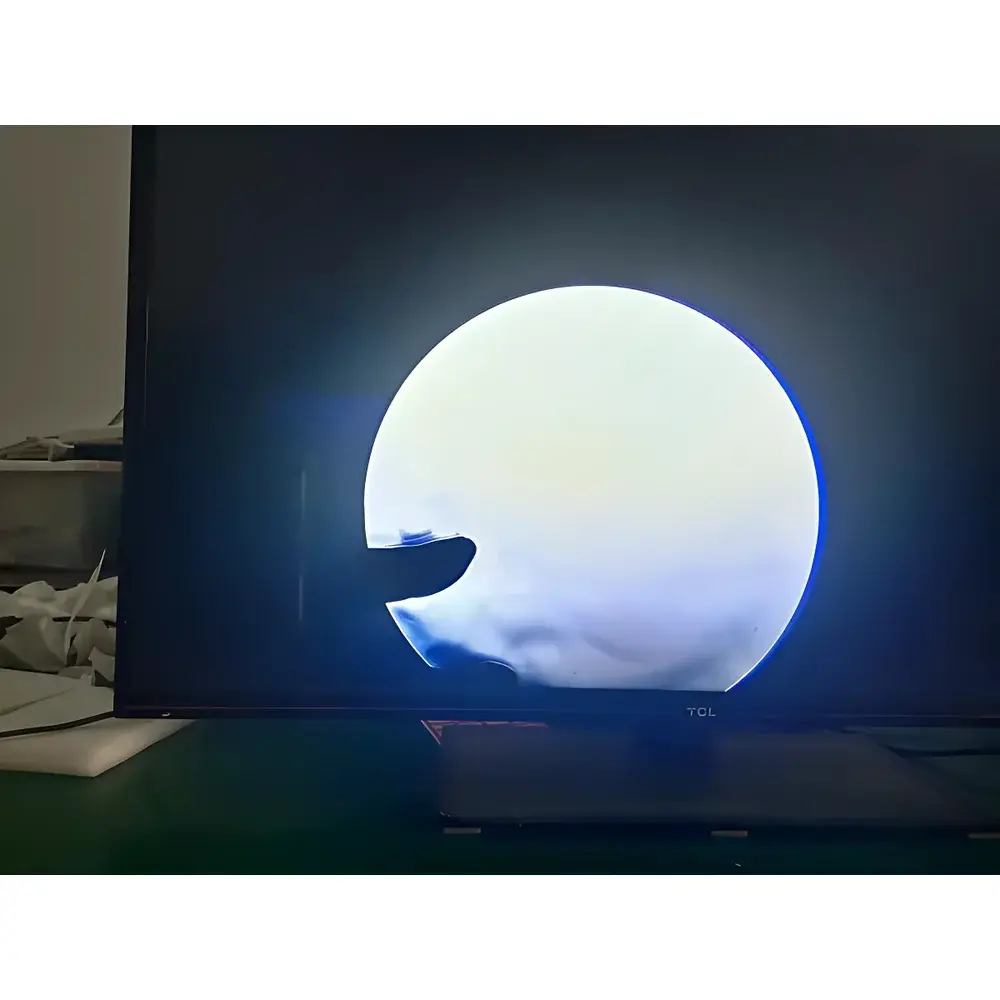
The WK-OPTICS WKGX-B Portable Projection Schlieren Instrument is a compact, field-deployable optical diagnostic system engineered for qualitative and semi-quantitative visualization of density gradients in transparent media. Based on the classical Toepler schlieren principle—first described in 1864—the instrument exploits the fact that spatial variations in refractive index (directly proportional to local density gradients in gases or liquids) deflect light rays passing through a test region. A collimated light beam traverses the flow field; subsequent deflections are converted into intensity modulations at the imaging plane via a precisely positioned knife-edge stop. This enables high-contrast projection of shock waves, thermal plumes, combustion fronts, acoustic disturbances, and other transient density structures without intrusive probes or seeding particles.
Unlike conventional z-type or focused-beam schlieren configurations, the WKGX-B adopts a two-platform projection architecture: one platform houses the slit-source collimation subsystem (including adjustable slit, air-cooled broadband source, and primary spherical mirror), while the second hosts the imaging subsystem (second spherical mirror, knife-edge assembly, and projection screen or camera interface). This modular design enhances mechanical stability, simplifies alignment, and supports rapid reconfiguration for varying test section dimensions or experimental constraints.
Key Features
- Portable dual-platform architecture with ISO-standard M6 mounting interfaces for rigid integration onto optical tables, wind tunnel frames, or mobile test rigs
- 150 mm clear aperture spherical mirrors fabricated from precision-polished K9 optical glass, surface figure accuracy better than λ/10 @ 632.8 nm
- Vacuum-deposited aluminum reflective coating with SiO₂ overcoat ensuring ≥90% reflectance across visible spectrum (400–700 nm) and long-term environmental stability
- Adjustable slit width and rotation capability enabling optimization of sensitivity vs. depth-of-field trade-offs for specific flow regimes
- Air-cooled, intensity-tunable light source (LED or halogen) minimizing thermal drift during extended acquisition sessions
- Knife-edge positioning mechanism with micrometer-driven translation for precise contrast control and directional gradient selectivity
- Native compatibility with 2048 × 2048 resolution imaging sensors (e.g., scientific CMOS or sCMOS cameras), supporting frame rates up to 1 kHz depending on illumination and exposure settings
Sample Compatibility & Compliance
The WKGX-B is optimized for non-intrusive observation of compressible and incompressible flows in gases (air, He, N₂, combustion products), liquids (water, ethanol, glycerol solutions), and plasma environments. It accommodates test sections ranging from 50 mm × 50 mm to 300 mm × 300 mm, provided optical access paths remain unobstructed. The system complies with standard laboratory safety requirements for Class 1 or Class 2 optical setups per IEC 60825-1:2014. Mirror coatings meet MIL-C-48497A specifications for durability under controlled ambient conditions (20–25°C, RH < 60%). While not certified to ISO/IEC 17025, its optical performance is traceable to NIST-calibrated interferometric flatness standards used during mirror fabrication and testing.
Software & Data Management
The WKGX-B operates as a hardware platform requiring external imaging and analysis tools. It integrates seamlessly with industry-standard acquisition software (e.g., Thorlabs DCx, FLIR Spinnaker SDK, or MATLAB Image Acquisition Toolbox) for synchronized triggering, exposure control, and real-time preview. For quantitative analysis, users commonly apply open-source or commercial tools—including Schlieren Processing Toolkit (SPT), PIVLab, or custom Python scripts using OpenCV and SciPy—to extract gradient magnitude fields, perform temporal differencing, or reconstruct pseudo-density maps via background-oriented schlieren (BOS) post-processing. Audit trails, metadata embedding (EXIF/XMP), and timestamp synchronization support GLP-compliant documentation workflows when paired with time-stamped NTP-synchronized controllers.
Applications
- Shock wave dynamics in supersonic nozzles and blast tube experiments
- Thermal convection and buoyancy-driven flows in heat exchangers and electronic cooling systems
- Flame structure, soot formation, and extinction limits in laminar and turbulent premixed/non-premixed burners
- Laser-induced breakdown (LIBS) and plasma plume expansion kinetics
- Interfacial instabilities in multiphase flows (e.g., Richtmyer-Meshkov, Rayleigh-Taylor)
- Ballistic and internal ballistics studies including propellant gas expansion and muzzle blast visualization
- Acoustic wave propagation and resonance mode identification in enclosed cavities
- Validation of CFD simulations—particularly LES and DNS models requiring high-fidelity density gradient data
FAQ
What types of light sources are compatible with the WKGX-B?
The system accepts both continuous-wave halogen lamps (300–500 W) and high-luminance LED modules (450–650 nm peak), provided they couple efficiently into the 100 µm–1 mm adjustable slit. Fiber-coupled sources may be integrated via optional collimator adapters.
Can the WKGX-B be used underwater or in vacuum environments?
No—the optical path requires atmospheric or controlled-gas conditions. Mirrors and mounts are not hermetically sealed; operation in vacuum or liquid immersion necessitates custom pressure-rated housings and anti-reflection coated windows, which fall outside standard configuration.
Is knife-edge calibration traceable to a national standard?
Knife-edge position is manually adjusted via calibrated micrometers (±1 µm repeatability); absolute edge location is not NIST-traceable but can be verified interferometrically using a reference Ronchi ruling or shear plate during setup.
Does the system support color schlieren imaging?
Yes—by inserting a broadband white-light source and a prism-based spectral disperser upstream of the knife-edge, users can implement classic color schlieren (Holde & North, 1952) to encode gradient directionality; full-color reconstruction requires multi-channel image registration.
What is the minimum resolvable density gradient in air at STP?
Under optimal alignment and illumination, the system resolves refractive index gradients down to Δn/Δx ≈ 1 × 10⁻⁶ m⁻¹—equivalent to ~0.1 K temperature fluctuations or ~0.3% local pressure variation in ambient air.





