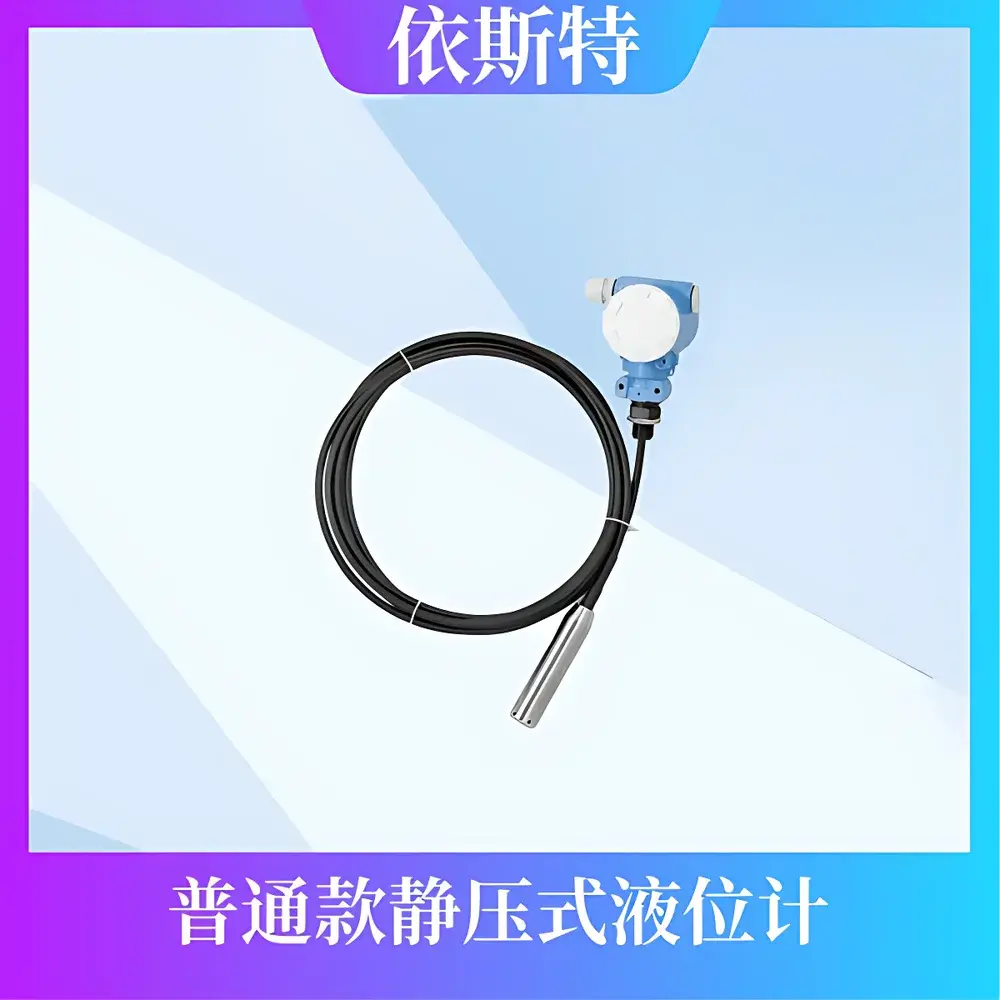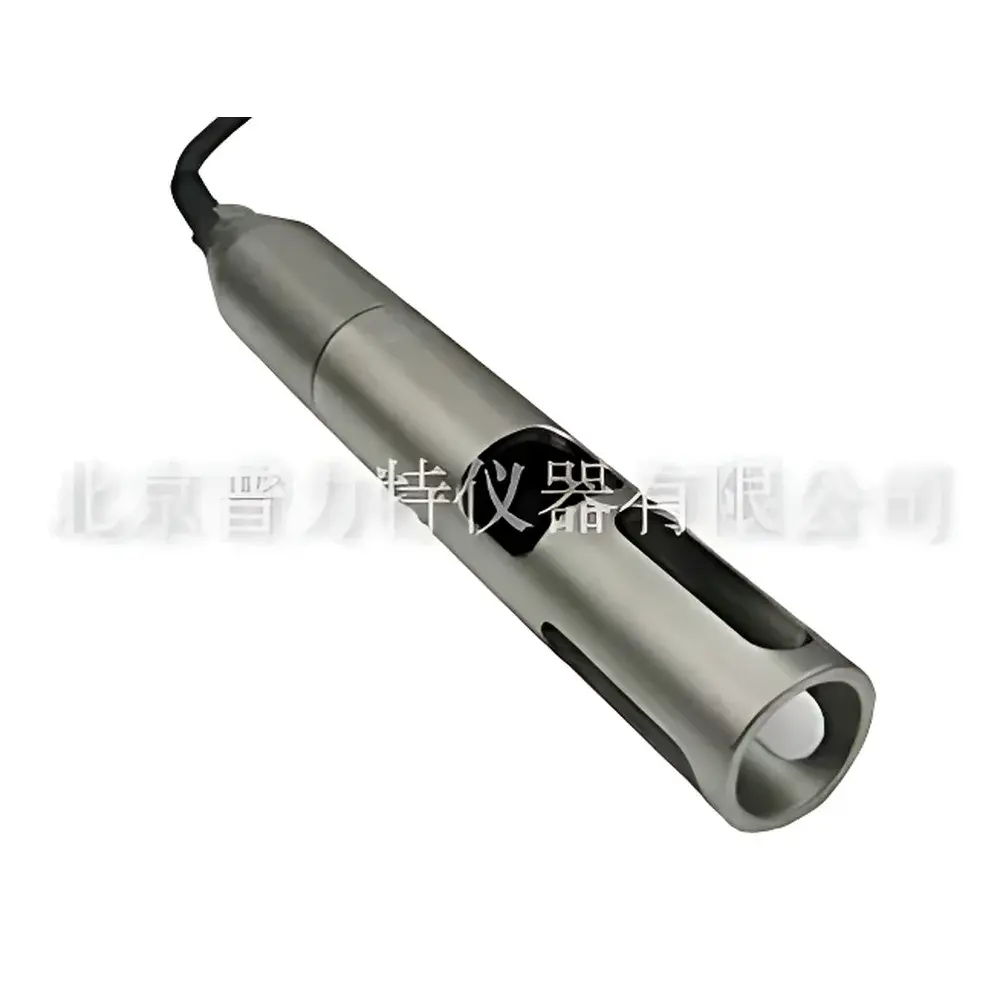
WQ-FDO Optical Dissolved Oxygen Sensor
| Origin | USA |
|---|---|
| Manufacturer Type | Authorized Distributor |
| Origin Category | Imported |
| Model | WQ-FDO |
| Pricing | Available Upon Request |
Overview
The WQ-FDO Optical Dissolved Oxygen Sensor is a high-stability, maintenance-optimized analytical instrument engineered for continuous, in-situ measurement of dissolved oxygen (DO) concentration in aqueous media using fluorescence quenching principles. Unlike electrochemical sensors based on galvanic or polarographic cells, the WQ-FDO employs a solid-state optical transduction mechanism: a proprietary fluorophore embedded in a hydrophobic,斜面-structured (angled-surface) sensing membrane is excited by low-energy green light (typically ~520 nm). Molecular oxygen diffuses into the membrane and dynamically quenches the excited-state lifetime of the fluorophore; the degree of fluorescence decay—quantified via phase-shift or time-resolved luminescence lifetime measurement—is linearly correlated with partial pressure of oxygen (pO₂), enabling precise DO calculation after temperature and salinity compensation. This non-consumptive, zero-current measurement principle ensures long-term drift stability, eliminates flow dependence, and supports deployment in static or low-flow environments—including groundwater monitoring wells, fermentation tanks, and municipal wastewater treatment basins.
Key Features
- Optical fluorescence-based detection with no oxygen consumption, electrode degradation, or electrolyte refilling required
- Angled-surface fluorophore membrane design minimizes interference from bubbles, aeration, and surface fouling
- Dual-channel optical architecture (measurement + reference) actively compensates for photobleaching and LED aging, extending calibration interval to up to 12 months
- Low-power excitation using green-light LEDs enhances fluorophore photostability and suppresses photobleaching-induced signal drift
- Robust mechanical construction: acetyl housing, stainless steel end cap, and epoxy-sealed optics rated for continuous submersion at ≤35 psi (≈25 m H₂O)
- Integrated dual 4–20 mA analog outputs—one for DO (0–20 mg/L or 0–200% saturation), one for temperature—enabling direct PLC/SCADA integration without external signal conditioning
- Fast thermal stabilization (8 s warm-up) and rapid response time (t₉₀ ≤ 60 s) suitable for dynamic process control applications
Sample Compatibility & Compliance
The WQ-FDO sensor demonstrates broad compatibility across diverse liquid matrices, including potable water, surface water, seawater (with salinity compensation), activated sludge, anaerobic digestate, wine must, beer wort, pasteurized milk, and pharmaceutical process streams. Its optical method is inherently insensitive to color, turbidity, hydrogen sulfide, chlorine, or redox-active ions that commonly interfere with amperometric DO probes. The sensor complies with fundamental performance expectations outlined in ASTM D888-22 (Standard Test Methods for Dissolved Oxygen in Water) for optical methods and supports data integrity requirements aligned with GLP and GMP frameworks. While not certified to IEC 61508 or SIL standards out-of-the-box, its dual-channel architecture and diagnostic output capability facilitate integration into safety-instrumented systems when deployed with appropriate system-level validation.
Software & Data Management
The WQ-FDO operates as a standalone analog transmitter but is fully compatible with industry-standard industrial communication protocols via optional interface modules (e.g., Modbus RTU over RS-485). Its dual 4–20 mA outputs support simultaneous connection to local DCS/PLC systems and remote telemetry units. When paired with vendor-supplied configuration software (via USB or Bluetooth adapter), users can perform field calibration verification, adjust temperature compensation coefficients, configure alarm thresholds, and retrieve internal diagnostics—including LED drive current, reference channel stability index, and accumulated operational hours. All configuration changes are timestamped and stored in non-volatile memory, supporting audit trails required under FDA 21 CFR Part 11 when used in regulated bioprocessing or beverage QA/QC environments.
Applications
- Real-time DO monitoring in activated sludge basins, anoxic zones, and membrane bioreactors (MBRs)
- In-line quality assurance during wine de-aeration, beer spunding, and dairy product packaging
- Long-term groundwater and aquifer monitoring in environmental compliance programs
- Bioreactor and fermenter DO control in biopharmaceutical upstream processing
- Regulatory reporting for NPDES permits and EPA Clean Water Act compliance
- Research-grade DO profiling in limnological and marine ecological studies
FAQ
Does the WQ-FDO require frequent recalibration?
No—its dual-channel optical compensation enables calibration intervals of up to 12 months under typical operating conditions (0–40 °C, non-abrasive media). Field verification with air-saturated water or Winkler titration is recommended quarterly for critical applications.
Can it be installed in pressurized pipelines?
Yes—the sensor housing is rated for continuous operation at ≤35 psi (241 kPa); optional threaded NPT or DIN 19213 mounting kits support direct insertion into pressurized flow cells.
Is temperature compensation automatic?
Yes—an integrated Pt1000 RTD provides real-time temperature measurement with ±0.1 °C accuracy; DO values are automatically compensated across 0–50 °C using the Benson-Krause equation implementation.
What is the expected service life of the sensing membrane?
Under normal use (non-aggressive oxidants, pH 4–10), the fluorophore membrane maintains functional integrity for ≥24 months; the overall sensor lifetime is typically limited by electronics longevity rather than membrane degradation.
How does it handle biofouling in wastewater applications?
The angled membrane geometry reduces sediment accumulation; for high-fouling environments, optional ultrasonic cleaning modules or retractable housings are available to enable periodic in-situ cleaning without process interruption.