
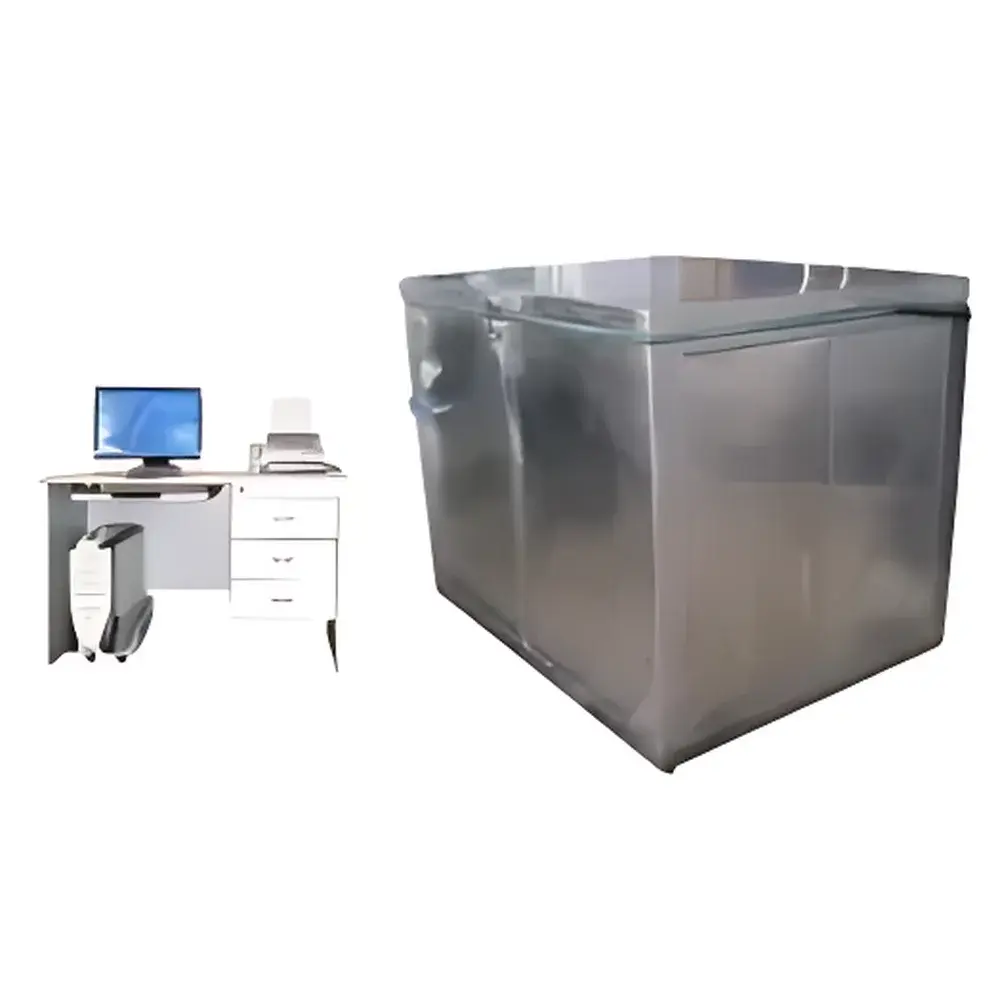
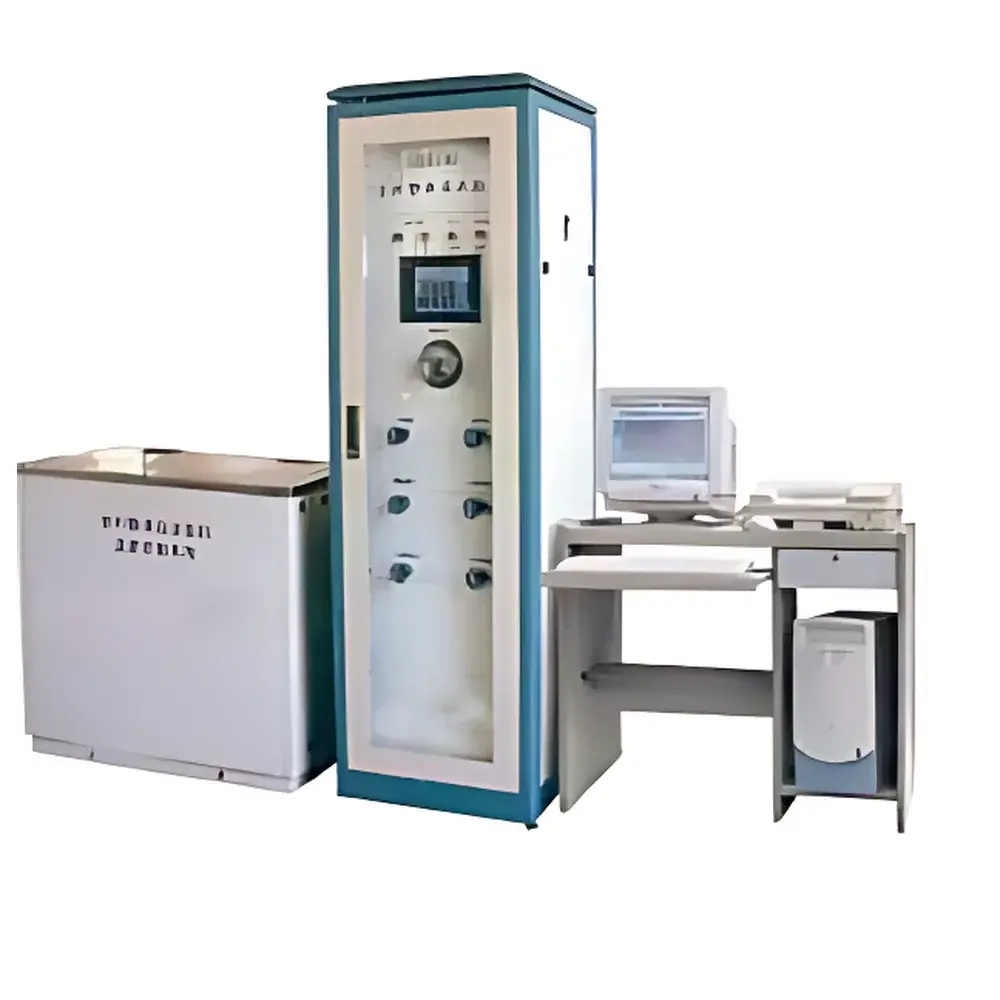
WSB-16 Microcomputer-Controlled Pipe Burst and Hydrostatic Pressure Testing Machine
| Origin | Jilin, China |
|---|---|
| Manufacturer Type | Authorized Distributor |
| Product Origin | Domestic (China) |
| Model | WSB-16 |
| Pricing | Available Upon Request |
| Max. Test Pressure | 0–16 MPa |
| Max. Specimen OD | ≤110 mm |
| Pressure Accuracy | ≤±1% FS |
| Constant-Pressure Control Band | –1% to +2% of setpoint |
| Temperature Range | Ambient to 95 °C |
| Temp. Uniformity & Stability | ≤±1 °C |
| Pressure Sampling Interval | 0.3 s |
| Test Duration Range | 1 s – 9999 h |
| Concurrent Test Channels | 3 independent circuits |
| Power Supply | 3-phase AC 380 V, 50 Hz |
| Control Cabinet Dimensions | 650 × 600 × 1800 mm |
| Heating Medium | Stainless Steel Water Bath with External Circulation System |
| Compliance | GB/T 6111–2003, GB/T 15560–1995, ISO 1167-1:2014, ASTM D1598, EN ISO 1167-2:2014 |
Overview
The WSB-16 Microcomputer-Controlled Pipe Burst and Hydrostatic Pressure Testing Machine is a precision-engineered system designed for evaluating the long-term hydrostatic strength and instantaneous burst resistance of thermoplastic and composite piping materials under controlled thermal and pressure conditions. It operates on the principle of sustained internal hydraulic pressure application, enabling standardized evaluation of time-dependent failure mechanisms—including creep rupture, slow crack growth, and catastrophic burst—per established international test protocols. The dual-mode architecture supports both constant-pressure endurance testing (e.g., ISO 1167-1) and rapid pressurization-to-failure (e.g., ISO 1167-2), with full compliance to regulatory frameworks governing pipe certification in construction, potable water distribution, and industrial fluid conveyance systems.
Key Features
- Triple-solenoid pressure regulation per channel: fast-fill valve, micro-adjustment make-up valve, and rapid dump valve—ensuring dynamic control within ±1% to +2% of target pressure, minimizing overshoot and drift during extended tests.
- High-frequency pressure acquisition at 0.3-second intervals, significantly reducing signal latency between physical pressure transients and software visualization—critical for detecting early-stage leakage or incipient wall deformation.
- Three independent, isolated test circuits with real-time monitoring; each channel features autonomous pressure/temperature logging, rupture detection, and leak identification via pressure decay slope analysis.
- Integrated stainless steel thermostatic bath with external recirculation loop and PID-controlled heating, maintaining uniform temperature distribution (≤±1 °C) across the entire test volume from ambient up to 95 °C.
- Danish-designed A-type clamping fixtures with O-ring sealing geometry—optimized for rapid specimen loading/unloading, minimal axial stress transfer, and zero-leak integrity across diverse polymer pipe geometries (PVC-U, PE 80/100, PP-R, PEX-a/b/c, multilayer composites).
- Hydraulic intensifier-based pressurization using imported high-reliability triplex plunger pump; augmented by nitrogen-charged accumulator for passive pressure stabilization—reducing motor cycling, extending service life, and improving long-term pressure fidelity.
- Industrial-grade electrical architecture incorporating CE-certified PLC controllers, Class I insulation components, and redundant safety interlocks—including overpressure cut-off, thermal runaway protection, and emergency depressurization.
Sample Compatibility & Compliance
The WSB-16 accommodates rigid and flexible thermoplastic pipes with outer diameters up to 110 mm, including but not limited to PVC, PE (HDPE, MDPE), PP-R, PEX (cross-linked polyethylene), ABS, and multi-layer composites (e.g., aluminum-plastic, steel-plastic). Its mechanical and thermal performance envelope satisfies mandatory testing requirements defined in GB/T 6111–2003 (“Determination of time to failure under constant internal pressure”), GB/T 15560–1995 (“Hydrostatic pressure burst and endurance testing of plastic pipes for fluid conveyance”), ISO 1167-1:2014 and ISO 1167-2:2014, ASTM D1598 (“Time-to-Failure of Plastic Pipe Under Constant Internal Pressure”), and EN ISO 1167-2:2014. All pressure and temperature control subsystems are traceable to national metrological standards, supporting GLP-compliant validation and audit readiness.
Software & Data Management
The embedded Windows-based control interface provides synchronized real-time visualization of pressure vs. time curves for all active channels, with configurable alarm thresholds for pressure deviation, temperature excursion, and abnormal decay events. Raw data—including timestamped pressure, temperature, and elapsed duration—is stored in binary-structured .dat files with embedded metadata (operator ID, test standard, specimen ID, environmental conditions). Export formats include CSV, PDF report templates (customizable per client QA/QC workflows), and XML for LIMS integration. Audit trail functionality complies with FDA 21 CFR Part 11 requirements, recording all user actions, parameter modifications, and calibration events with immutable timestamps and digital signatures.
Applications
- Quality assurance of production batches for municipal water supply pipes (ISO 4427, ISO 4437).
- Material qualification and comparative ranking of polymer formulations under accelerated aging conditions.
- Validation of pipe joint integrity (fusion, electrofusion, mechanical fittings) per ISO 13954.
- Supporting technical documentation for CE marking, WRAS approval, and NSF/ANSI 61 certification submissions.
- Research into pressure–time–temperature superposition behavior of novel thermoplastic alloys and nanocomposite pipe matrices.
FAQ
What standards does the WSB-16 fully support for hydrostatic endurance testing?
It conforms to GB/T 6111–2003, ISO 1167-1:2014, ASTM D1598, and EN ISO 1167-2:2014 for both long-term static pressure and burst testing.
Can the system perform simultaneous tests on different pipe materials?
Yes—each of the three independent channels operates autonomously with separate pressure/temperature setpoints, allowing concurrent evaluation of heterogeneous specimens.
Is the temperature control system validated for GMP/GLP environments?
The stainless steel bath, PID algorithm, and ±1 °C uniformity meet IQ/OQ protocol requirements; full 3Q documentation packages are available upon request.
How is pressure stability maintained during multi-hour tests?
Through hybrid actuation: servo-controlled pump for coarse adjustment, accumulator-assisted fine regulation, and triple-valve logic for sub-second correction cycles.
Does the software support automated report generation for regulatory submission?
Yes—preconfigured templates align with ISO/IEC 17025 reporting conventions and include digital signature fields, revision history, and raw data appendices.



